

This article is part of the series: History beyond Academia
Meg Lauren’s song “Harriet Ross” tells the story of a fourteen-year-old factory worker from Scranton, Pennsylvania. While working at the Texas State Library and Archives Commission (TSLAC), Lauren had the opportunity to read a letter, written on March 21, 1911, addressed to the governor of Texas. In the letter, Harriet Ross expressed her desire to “correspond with a cowboy.” The first time I heard the song at the Cactus Café open mic on the UT Campus, it struck me as a great example of creative engagement with a primary source that I could potentially share with students. When Raquel, the Associate editor of Not Even Past, mentioned that they were doing a series on “history beyond academia,” her song was the first thing that came to mind. The three of us met back in October 2025 outside of Epoch Coffee to talk about Meg’s approach to writing the song and to record a video of her performing it. Though distinct from the kind of research and writing typical of academic histories, the story of this song’s journey from the archive to a live audience parallels some of the ways that historians engage in historical reconstruction from fragmentary or partial primary source evidence.
Austin musician Meg Lauren, originally from Northern California, has been playing music for about fifteen years. “Both of my parents are musically inclined,” she told me, “but my dad was more of a gigging musician—he played guitar and sang in different bands, so I grew up watching him perform.” Her mother, meanwhile, worked as a county librarian, a line of work that she also found herself drawn to. Meg and her husband moved to Austin after the 2018 wildfires displaced them from their home in Northern California. Shortly after relocating to Texas, Meg found a job at TSLAC, initially working as a library assistant before moving into the archives. “This was different from the more public-facing library jobs I’d done before—I spent most of my time in the stacks, behind the scenes,” she explained. “It’s a research library—most of the materials are in closed stacks.” That archival work would unexpectedly shape her songwriting.
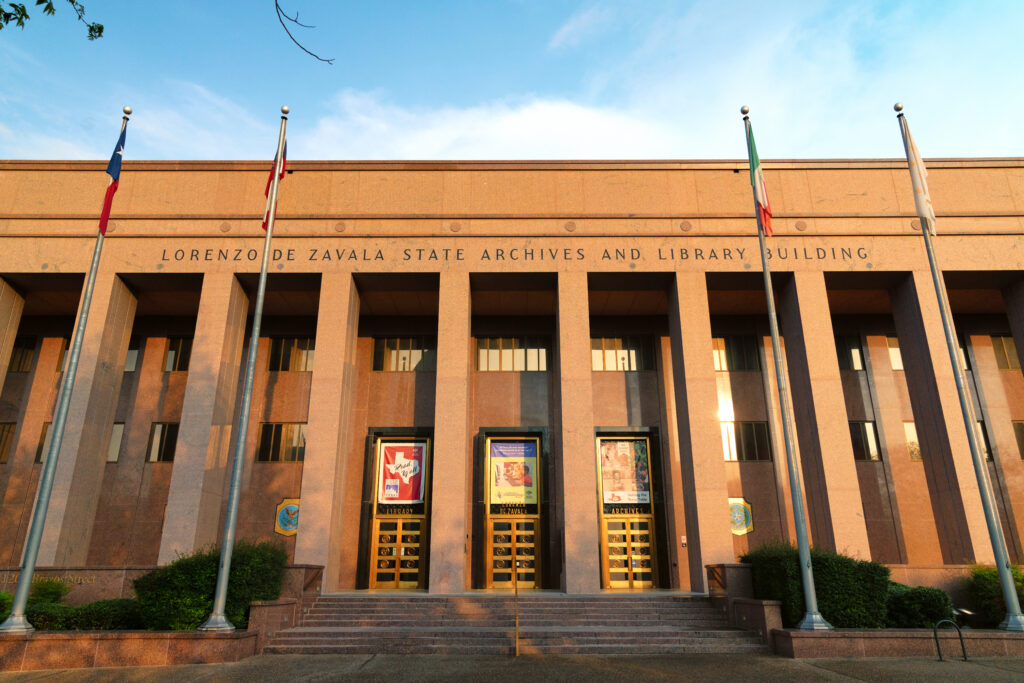
The Lorenzo de Zavala State Archives and Library Building in Austin, home of the TSLAC. Photograph by Tony Webster. Source: Wikimedia Commons
The inspiration for the song came when an archivist at the library was working to fulfill a request that required sifting through the records of the Texas Governor’s office. As anyone who has done archival research could tell you, it’s not uncommon for interesting and/or surprising material to come up in the process, even if it may have little to do with the main topic of interest. Finding a brief letter from Harriet Ross, the archivist called Meg and the rest of the team over to take a look. She and the other employees at TSLAC were immediately struck by it. Meg recalled, “Being a musician, when I read the letter, I was like, ‘This should be a song. No doubt about it.’” She took a photograph of the letter and kept it, though she did not write the song immediately. In July 2024, after having left TSLAC, she revisited the letter and began research to inform the songwriting process.
The first clue for learning more about Harriet Ross’s world was the return address on her letter, which traced back to the Sauquoit Silk Mill in Pennsylvania. After looking through resources from historical associations in Scranton and finding only minimal information about this mill where Ross presumably worked or at least lived, Meg turned to a documentary on a silk mill in New Jersey, featuring interviews with former workers—most, if not all of them women—who could elaborate on the working conditions. “Similar to how young boys, called ‘breaker boys’, would help in the coal mines, young women and girls, often recent immigrants, would be hired to work ten-hour days six or seven days a week in the silk mills,” Meg explained. The limited specific evidence available about Ross meant that she had to fill in the gaps with a mix of empathy and imagination. “I could assume that she wanted to escape the life that she was living”, she explained, adding, “And who knows where she first heard about the idea of a cowboy. Some people I asked suggested that she might have read dime-store magazines, which could have given her a romantic image of the ‘Wild West.’ I could only imagine that escaping to Texas to live with a cowboy sounded like the complete opposite of the dark, industrialized atmosphere she lived in.” As an art form, songwriting allows a more imaginative approach to source analysis than one might find in academic writing. At the same time, the use of detail and terminology grounded in background research helps make the song’s image of the past more convincing.
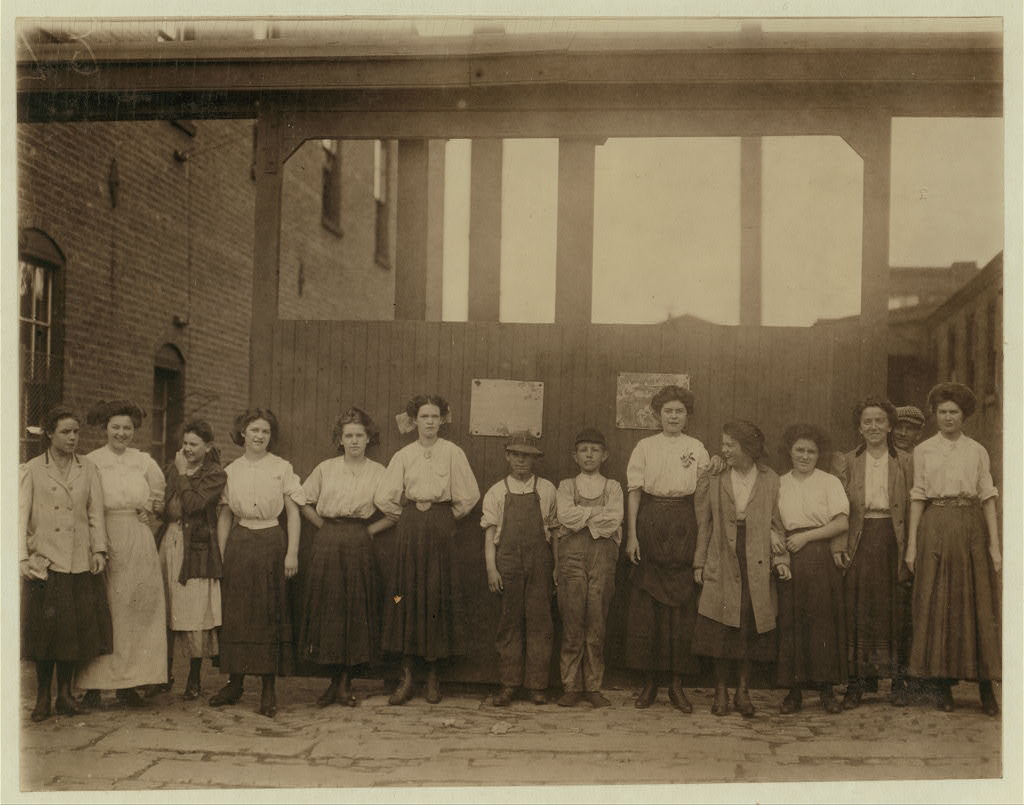
Workers at Hand Silk Mill in Wilmington, Delaware, May 1910. Photograph by Lewis Wickes Hine. Source: Library of Congress
For Meg Lauren, the value of writing and performing a song like “Harriet Ross” comes from its ability to draw attention to the experiences of historical actors typically left out of dominant narratives. “A lot of our history is often told through the eyes of certain groups, primarily white men, and as a consequence, there isn’t a lot of documentation of working class or poor immigrant men and women, especially young girls that would have been in Harriet Ross’s position”, she observed, “Because there’s not this whole picture I can paint of her life, I can use my own artistic imagination to create her whole world or at least a snapshot of what her world would have been like and elevate a story of someone who would otherwise remain unknown.” Besides coming across as endearing and somewhat sweet, telling the story of Harriet Ross’s letter to the governor also allows audiences to feel a connection with, and gain awareness of, a historical actor who would otherwise be unlikely to appear in a history textbook. The audiences that the song can reach, moreover, very likely include people who might be less likely to read about history in the first place, adding to the potential value and meaning of a song like Harriet Ross. With its relatable and memorable lyrics, Meg’s song demonstrates how even fragmentary archival evidence can inspire new forms of historical storytelling and bring subaltern actors from the past to life.
While her song Harriet Ross has not been released, she hopes to record it either at the end of this year or the beginning of the next one. Meg Lauren’s other music can be found on Spotify, Apple Music, and other streaming platforms. On May 29, she released her EP, Strawberry Season.
Timmy Vilgiate (they/them) is a Ph.D. student in History at The University of Texas at Austin. They earned their B.A. and M.A. in History from the University of Colorado Colorado Springs. Their research looks at the relationship between assimilationist development projects and the study of psychedelic flora in the Sierra Mazateca from the late 19th Century to the mid-20th Century. Outside of history, they also enjoy playing music, sewing, and spending time with their cat Pedro.
The views and opinions expressed in this article or video are those of the individual author(s) or presenter(s) and do not necessarily reflect the policy or views of the editors at Not Even Past, the UT Department of History, the University of Texas at Austin, or the UT System Board of Regents. Not Even Past is an online public history magazine rather than a peer-reviewed academic journal. While we make efforts to ensure that factual information in articles was obtained from reliable sources, Not Even Past is not responsible for any errors or omissions.





.jpg)