What Is the Equipment for Distillation? A Complete Guide to Distillation Equipment and Apparatus

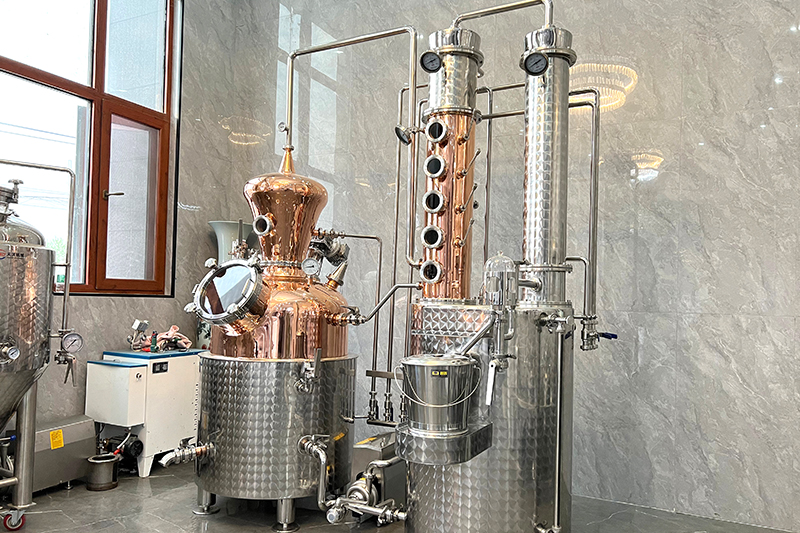
Choosing the right distillation equipment can directly affect product purity, energy use, and production efficiency. Many beverage producers, distilleries, and industrial users understand the distillation process but are unsure which apparatus they actually need. The wrong setup can create quality issues and unnecessary investment.
Distillation equipment includes heating vessels, boiling flasks, condensers, collection vessels, columns, and control systems used to separate components in a liquid mixture based on different boiling points. The required apparatus depends on the application, such as simple distillation, fractional distillation, steam distillation, or industrial distillation systems.
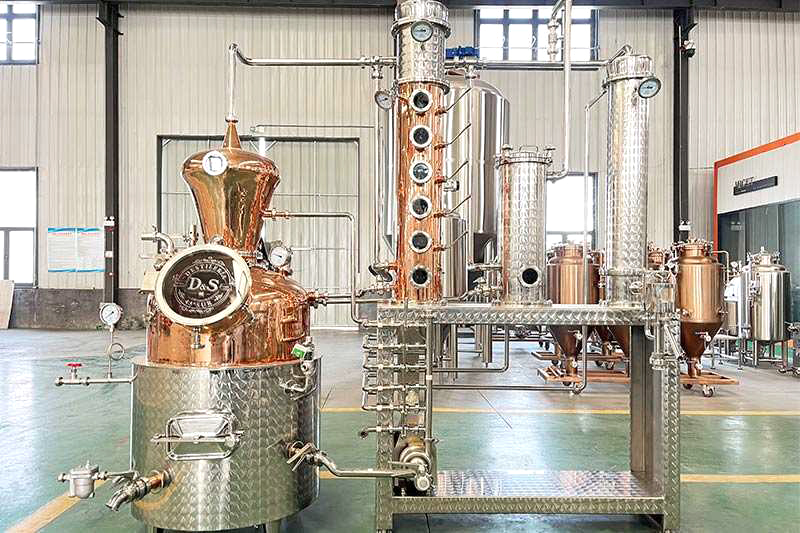
What Equipment Is Used in the Distillation Process?
The equipment used for distillation depends on what materials need to be separated and the required purity level. In a basic setup, the apparatus heats a liquid mixture, converts part of it into vapor, then cools the vapor back into liquid form.
The core pieces of distillation equipment include:
| Equipment | Function |
|---|---|
| Heating vessel / boiling flask | Provides heat to evaporate the liquid |
| Condenser | Cools vapor and turns it back into liquid |
| Collection vessel | Collects the final distillate |
| Fractionating column | Improves separation between components |
| Reboiler | Supplies heat in larger systems |
| Control system | Monitors temperature and pressure |
During the distillation process, the system uses differences in boiling points to separate components. A substance with a lower boiling point usually evaporates first, while components with higher boiling points remain in the original mixture.
For beverage applications, especially spirits production, the distillation system must provide stable heating, accurate temperature control, and sanitary operation. As a manufacturer of customized stainless steel beverage equipment, we help customers design equipment solutions based on production goals, product type, and required capacity.
How Does the Distillation Process Work?
The process of distillation is based on controlled evaporation and condensation. When a liquid mixture is heated, the component with higher volatility turns into vapor more easily. The vapor then moves into a condenser, where cooling changes it back into a liquid.
A basic distillation process follows these steps:
- Heat the liquid mixture
- Create vapor from lower boiling components
- Transfer vapor through the system
- Cool vapor inside the condenser
- Collect the purified liquid
For example, ethanol and water have different boiling points. During distillation, the brewer or distiller controls temperature and equipment conditions to increase ethanol concentration.
The quality of the final product depends on many factors, including:
- Temperature control
- Heating speed
- Column design
- Condensation efficiency
- Material quality
- Operator experience
A professional distillation system is designed to make these variables easier to control.
What Are the Main Parts of a Distillation Apparatus?
A distillation apparatus is a combination of connected components that work together. Each part has a specific role in separating and collecting the desired product.
Heating Vessel
The heating vessel, often called a flask or pot, contains the liquid mixture. Heat causes the liquid to evaporate and creates vapor.
In laboratory work, a boiling flask may be used. In commercial distillation, larger vessels and stainless steel tanks are common because they provide durability and easier cleaning.
Condenser
The condenser is one of the most important parts of the apparatus. It allows vapor to cool and return to liquid form through condensation.
Common condenser designs include:
- Liebig condenser
- Shell and tube condenser
- Plate heat exchanger systems
A well-designed condenser improves the efficiency of the distillation system by ensuring effective heat transfer.

Collection Vessel
After condensation, the distillate flows into a collection container. The design depends on the product type and production scale.
For spirits, essential oils, and chemical applications, collection control affects final quality and consistency.
What Is the Difference Between Simple Distillation and Fractional Distillation?
There are different types of distillation because different mixtures require different separation methods.
Simple Distillation
Simple distillation is used when components have a significant difference in boiling points. It is suitable for separating a liquid from non-volatile substances or separating liquids with widely different boiling points.
The basic setup includes:
- Heating flask
- Condenser
- Collection vessel
This method is common in laboratory settings and smaller-scale applications.
Fractional Distillation
Fractional distillation is used when components have closer boiling points. It uses a fractionating column to improve separation.
Inside the column, repeated evaporation and condensation occur. This increases the number of separation stages and improves purity.
Fractional distillation is widely used in:
- Spirits production
- Petroleum processing
- Chemical manufacturing
The closer the boiling points of the components, the more important column design becomes.
What Are the Different Types of Distillation Equipment?
Different industries use different distillation techniques depending on their products.
Common forms include:
| Type | Application |
|---|---|
| Simple distillation | Basic liquid separation |
| Fractional distillation | High-purity separation |
| Steam distillation | Essential oil extraction |
| Vacuum distillation | Heat-sensitive materials |
| Short path distillation | Small-volume high-value products |
| Azeotropic distillation | Difficult mixture separation |
Steam Distillation
Steam distillation uses steam to help extract compounds that may degrade at high temperatures. It is often used for essential oil production.
Vacuum Distillation
Vacuum distillation reduces pressure inside the system. Lower pressure decreases boiling points, allowing materials with high boiling points to be processed at lower temperatures.
This method is useful when heat-sensitive products require gentle treatment.
Short Path Distillation
Short path systems reduce the distance vapor travels between evaporation and condensation. This improves efficiency for certain high-value products.
How Does Distillation Equipment Separate a Liquid Mixture?
The main principle behind distillation is the difference in boiling points. When a mixture contains multiple components, each component has different volatility.
During heating:
- Lower boiling components evaporate first
- Higher boiling components remain longer
- Vapor travels through the system
- Condensation creates the collected distillate
For example, a mixture containing ethanol and water can be separated because ethanol has a lower boiling point than water.
However, when components have very similar boiling points, simple heating is not enough. The system may require fractional distillation, additional column stages, or special operating conditions.
The number of theoretical plates in a column affects separation performance. More stages usually provide better separation but may increase equipment complexity.

What Distillation Equipment Is Needed for a Distillery?
A commercial distillery requires more than a simple laboratory apparatus. The equipment must support repeated production, cleaning, safety, and consistent quality.
Typical distillation equipment includes:
- Fermentation vessels
- Distillation kettle or pot still
- Column system
- Condenser
- Collection tanks
- Storage vessels
- Control systems
For beverage production, the upstream fermentation process is also important. The quality of the fermented liquid entering the still affects the final spirit.
Modern distilleries often combine fermentation equipment, stainless steel tanks, and customized distillation systems to create a complete production line.
As a beverage equipment manufacturer, we provide customized solutions for distilleries, wineries, breweries, and beverage companies requiring reliable stainless steel processing equipment.
How Do Industrial Distillation Systems Work?
Large-scale industrial distillation uses continuous systems designed for high production efficiency. Unlike small batch distillations, industrial systems often operate continuously.
Industrial equipment may include:
- Large distillation columns
- Reboilers
- Multiple separation stages
- Automated controls
- Heat recovery systems
Industries such as petroleum, pharmaceuticals, and chemicals rely heavily on distillation columns to separate large volumes of materials.
The efficiency of the distillation depends on:
- Column pressure
- Temperature control
- Heat transfer design
- Number of separation stages
- Feed composition
Industrial processes require careful engineering because small changes can influence energy consumption and product quality.
How to Choose the Right Distillation Apparatus?
Choosing the correct apparatus depends on your product, production volume, and separation requirements.
Before selecting equipment, consider:
| Question | Why It Matters |
|---|---|
| What material will you distil? | Determines system design |
| What purity is required? | Determines separation method |
| What is the production scale? | Determines equipment size |
| Is heat sensitivity important? | May require vacuum systems |
| Is continuous production needed? | Influences column design |
For beverage companies, equipment should also consider:
- Sanitary design
- Cleaning requirements
- Material quality
- Energy efficiency
- Expansion plans
A small startup may need a compact distillation setup, while an established distillery may require a complete distillation system integrated with fermentation and storage equipment.
Why Is Stainless Steel Important for Distillation Equipment?
Material selection directly affects durability, hygiene, and maintenance. Professional beverage distillation equipment is commonly made from stainless steel because it offers corrosion resistance and long service life.
Benefits include:
- Easy cleaning
- Strong mechanical performance
- Good temperature resistance
- Sanitary production conditions
For beverage applications, equipment quality influences flavor consistency. Poorly designed systems may create unwanted reactions, cleaning difficulties, or inconsistent output.
A reliable manufacturer should provide not only individual pieces of equipment but also engineering support, installation guidance, and after-sales service.
How Can a Distillation Equipment Manufacturer Support Your Project?
Selecting distillation equipment is only one part of building a successful beverage production system. A complete project requires planning around raw materials, fermentation, distillation, storage, and packaging.
Our team provides customized stainless steel beverage equipment solutions for global B2B customers, including:
We work with distilleries, breweries, beverage startups, and engineering contractors to design equipment based on production requirements.
A successful distillation project combines the right apparatus, proper engineering, reliable manufacturing, and long-term technical support.
Frequently Asked Questions
What is the main equipment used in distillation?
The main equipment includes a heating vessel, condenser, collection vessel, and sometimes a fractionating column. Larger systems may also include reboilers, control systems, and storage tanks.
What is the difference between simple distillation and fractional distillation?
Simple distillation is used when components have large boiling point differences. Fractional distillation uses a column to improve separation when components have similar boiling points.
Why is a condenser important in distillation?
A condenser cools vapor and converts it back into liquid. Efficient condensation is essential for collecting the desired distillate.
What type of distillation is used for spirits?
Many spirits use pot stills or column distillation systems. The best method depends on the product style, alcohol concentration, and desired flavor profile.
Can stainless steel be used for distillation equipment?
Yes. Stainless steel is widely used because it provides durability, corrosion resistance, and sanitary performance for beverage production.
Key Points to Remember
- Distillation equipment separates components through controlled evaporation and condensation.
- The main apparatus includes heating vessels, condensers, collection vessels, and columns.
- Simple distillation works for large boiling point differences, while fractional distillation improves separation.
- Different industries use different types of distillation systems based on product requirements.
- Beverage distillation projects require equipment that supports hygiene, efficiency, and consistent quality.
- Choosing an experienced manufacturer helps create a reliable distillation system from design to installation.