
Nancy Shang | Founder & CEO, MICET | Published September 18, 2026
“Conical fermenter” describes the cone-bottomed shape most craft breweries use; “cylindrical” or flat-bottom tanks skip the cone. The shape changes yeast harvesting, sediment removal, and floor footprint — but it matters less than batch size and cleaning workflow for most new breweries.
Tank dimensions, material specs, and certification references below reflect information current as of September 2026. Confirm current lead times and quote pricing directly with your supplier before finalizing a purchase

What “Conical” and “Cylindrical” Actually Mean
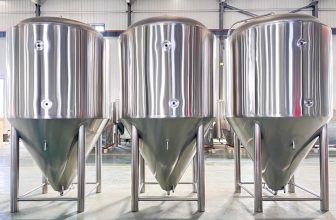
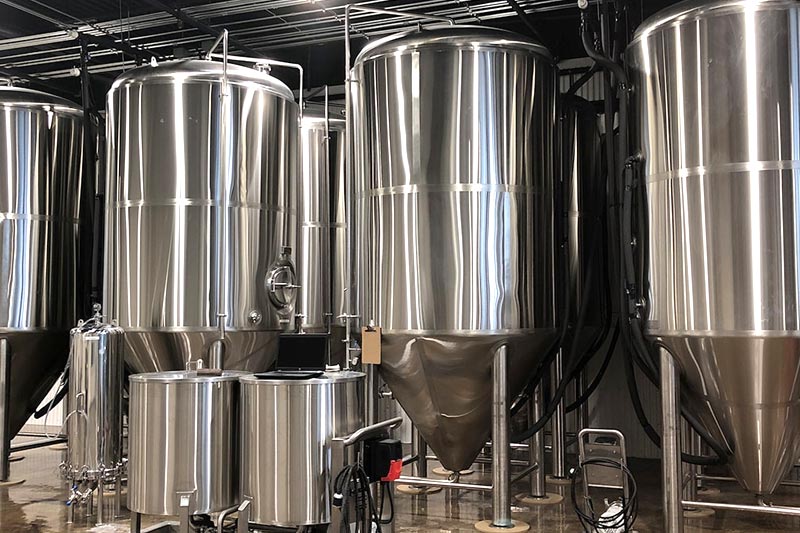
Every fermentation vessel is technically cylindrical in its main body — the distinction that matters is the bottom. A conical fermenter tapers to a point at the base, letting yeast and trub settle into a narrow cone that can be drained through a bottom valve without disturbing the beer above it. A flat-bottom cylindrical tank (sometimes called a unitank without the cone, though that term gets used loosely) has no taper; sediment spreads across the floor and typically gets removed by racking off the top or through a side port rather than a bottom dump.
Most commercial craft equipment sold today is conical. Flat-bottom tanks still show up in specific situations, which is where this comparison gets useful.
Conical vs. Cylindrical Fermenter: Side by Side
| Dimension | Conical Fermenter | Cylindrical (Flat-Bottom) |
| Yeast/trub removal | Bottom dump through cone, in-place, no racking required | Requires racking off top or side port |
| Cleaning between batches | Faster — sediment concentrates in one spot | Slower — sediment spread across floor |
| Floor footprint per liter of capacity | Larger — cone adds vertical height without adding volume | Smaller — more volume per floor square foot at a given ceiling height |
| Ceiling clearance needed | Higher, due to cone | Lower |
| Manufacturing cost | Higher per liter, more fabrication | Lower per liter |
| Typical use case | Standard craft brewery, most nano through commercial scale | Very large-volume operations or ceiling-constrained retrofits |
| Yeast reuse practicality | High — clean harvest through bottom valve | Lower — harvest is messier |
The floor footprint line is where most first-time buyers get surprised. A conical tank isn’t just “the same tank with a point on the bottom” — the cone adds height, which matters if you’re fitting equipment into a converted retail space or a building with a low ceiling.
When Geometry Actually Changes Your Outcome
The common assumption is that conical is simply the better design and flat-bottom is a budget compromise. That’s true for most craft-scale operations, but it breaks down at two points. First, breweries working with very limited ceiling height — a converted storefront with 10-foot clearance, for instance — sometimes can’t fit a conical tank at the volume they need, and a flat-bottom design becomes the practical choice rather than the cheap one. Second, at large industrial volumes, some operations use flat-bottom or horizontal tanks specifically because floor space costs more than the extra labor of manual sediment removal.
For a typical 5–30 barrel craft brewery with standard ceiling height, none of that applies, and the conical format’s easier yeast harvest and faster turnover generally outweigh the cost difference.

Fermentation Tank Specifications
MICET’s fermentation tank line covers beer, wine, cider, and kombucha applications, in sizes from 500L, 600L, 700L, 800L, 1000L, and 2000L up through 2500L and larger formats at 40BBL, 50BBL, and 60BBL. Construction is SUS304 stainless steel as the baseline, with 304/316 stainless available on select configurations. Standard features across the line include a glycol jacket for temperature control, a pressure-reducing valve, and a CIP cleaning nozzle built into the cylindrical-conical design.
| Spec | Detail |
| Capacity range | 500L–2500L (mid-scale); 40BBL–60BBL (large-scale) |
| Material | SUS304 standard; 304/316 on select configurations |
| Geometry | Cylindrical-conical |
| Temperature control | Glycol jacket |
| Pressure management | Pressure-reducing valve |
| Cleaning | Integrated CIP nozzle |
| Published pricing | Not disclosed publicly — requires direct quote |
Fermentation and pressure vessel equipment in this category, including fermenters, carries verification of conformity ICR/VC/HM2507146, issued by ICR Co., Ltd. under PED 2014/68/EU and the EN 1626:2008 and EN 10204:2004 standards, valid through July 2030 — worth confirming with any supplier before ordering into a market that requires it.
A Short Checklist for Deciding
- Measure your available ceiling height before comparing tank models — this rules out or confirms conical geometry before you look at price.
- Estimate your batch cycle frequency; if you’re turning tanks over weekly, faster cleaning from a conical bottom compounds over a year.
- Check whether your target volume is available in a conical configuration at your budget, since larger conical tanks cost more per liter than equivalent flat-bottom units.
- Confirm jacket and CIP inclusion rather than assuming they’re standard — some budget tanks sell these as add-ons.
Trade-offs Worth Weighing
Conical geometry costs more to manufacture and needs more vertical clearance, and that added cost buys faster yeast harvest and easier cleaning — a real advantage if you’re running frequent batches, less of one if you brew infrequently at low volume. Flat-bottom tanks save floor-to-ceiling space and manufacturing cost, at the price of slower, messier sediment removal that adds labor to every batch cycle. Neither shape solves for both cost and convenience at once; the right choice depends on how often you’re cycling tanks and what your ceiling allows.
FAQ
Q: Is a conical fermenter always better than a cylindrical one?
A: Not universally. It’s the better choice for most standard craft breweries, but ceiling-height-constrained spaces and very large industrial volumes sometimes favor flat-bottom designs.
Q: What material are fermentation tanks typically made from?
A: SUS304 stainless steel is the baseline for most craft-scale fermenters, with 304/316 available where corrosion resistance needs to be higher.
Q: Does a conical shape actually improve beer quality?
A: It improves yeast harvest and sediment removal, which supports batch-to-batch consistency, but it doesn’t change fermentation chemistry itself.
Q: How much more does a conical fermenter cost than a flat-bottom tank?
A: Cost varies by manufacturer and volume; published pricing for this fermenter line isn’t disclosed, so a direct quote is the way to get a real comparison for your target capacity.
Q: Can I reuse yeast from a flat-bottom tank as easily as from a conical one?
A: Less easily. Flat-bottom tanks spread sediment across the floor, so harvesting clean yeast typically takes more effort than a bottom-valve draw from a cone.
Q: What certification should I check for fermentation tanks bound for the EU?
A: Ask for Pressure Equipment Directive (2014/68/EU) verification specific to fermentation/pressure vessel equipment, not just a general CE mark.
The measurement most buyers skip until it’s too late is available ceiling clearance at the install site — worth confirming before comparing tank prices, since it can eliminate an entire category of options before cost even becomes the deciding factor.