

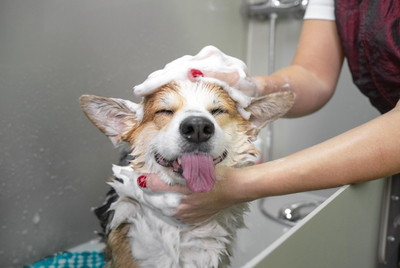

At one time or another, every dog owner will decide their dog needs a bath. For many dogs, bathing is an infrequent event, but for some of my older or ailing patients, the need for a bath becomes more common.
I was talking with a dog owner the other day about the difficulties of bathing her 60-pound dog and decided I should share parts of the conversation in case it helps any of my readers keep their dog clean.
Where should I bathe my dog?
The best place to bathe your dog depends on your dog’s size.
Small dogs can easily be bathed in a kitchen or laundry-room sink, where a handheld sprayer makes rinsing easy.
For dogs too big for the sink, your options are usually the bathtub or the shower. Personally, I would choose the one with a handheld showerhead to make wetting and rinsing easy. Others might find the walk-in shower more convenient. A closed shower door helps keep the splashes contained, and a big dog doesn’t need to be lifted into the tub, saving your back.
If you have access to an outdoor space, an outdoor bath using the garden hose is another option on a warm day. But beware of the water temperature in the hose. A hose sitting in direct sunlight can become surprisingly hot, hot enough to burn your dog’s skin. Be sure to check the temperature before spraying your dog.
What supplies do I need to bathe my dog?
The most obvious necessity is shampoo. I don’t recommend using your own shampoo on your dog. Dogs can be wiggly and slippery during their bath. You don’t want shampoo to splash in their eyes as it can cause a corneal ulcer.
Unless your veterinarian has recommended a medicated shampoo, I generally recommend using a gentle, tear-free baby shampoo. Another way to protect the eyes is to apply a small amount of sterile ophthalmic petrolatum. This product is often marketed for dry eye or treatment of styes.
When bathing your dog indoors, be sure to have a big pile of towels available to dry your dog off and mop up any stray splashes.
How often should I bathe my dog?
The ideal bathing schedule depends on your dog’s coat type, lifestyle, and medical needs. Most dogs don’t need a weekly bath.
Many of my patients get bathed regularly because they are sick and unable to groom themselves adequately. A full bath isn’t always necessary. For example, a dog with a dirty hind end may only need that area cleaned. A dog with a messy face or chest because they are having difficulty eating may only need those areas cleaned up.
The important thing is to remove urine, feces and food from the fur promptly. When these materials stay on the fur, the skin can become irritated and infected, leading to discomfort for your dog.
What should I do if my dog gets sprayed by a skunk?
A skunk encounter is one situation when there’s no debating whether your dog needs a bath. If your dog gets sprayed, AMC’s Usdan Institute for Animal Health Education has suggestions on how to deskunk your dog.

What if my dog hates baths?
Some dogs tolerate baths. Others do not. If your dog is difficult to handle or simply too large for you to bathe safely at home, a professional groomer may have equipment that makes the process easier.
These suggestions should help make bathtime easier on both you and your dog. Don’t forget: if a home bath is too much for either you or your dog, a professional bath may be the easier—and drier—solution.
Tags:
bathing, corneal ulcers, dog bathing, skunks,