Cold As Ice: Analyzing The Results From Past exBEERiments On Lager Fermentation Temperature


Author: Marshall Schott
Among the most repeated pieces of advice when it comes to making lager styles is to ferment cold, as warmer temperatures are widely associated with undesirable off-flavors, namely fruity esters that hinder the expected clean character of such beers. Whereas many brewers adhere to this guidance closely, viewing precise fermentation temperature as highly consequential, some modern brewers have reported positive results from warmer fermentations, countering over a century of conventional wisdom.
Of the myriad variables we’ve tested over the years, fermentation temperature has been examined more than any other, and the results have had a palpable impact, from validating the dirty little secret of some to angering those who view tradition as mandate. Despite the trillions of times we’ve overtly stated that our xBmt results do not imply that fermentation temperature doesn’t matter, we continue to be accused of this quite regularly. Misinformed as this is, it does seem to indicate that fermentation temperature of lagers remains curiously controversial, and that some really seem to care a lot about the way others choose to brew their beer.
The truth is, when I performed the first lager fermentation temperature xBmt all those years ago, my intention was to learn for myself why keeping it cool was necessary. Lo and behold, I ended up learning something completely different – that what I’d been led to accept as hard fact didn’t appear to be accurate. This only served to motivate further investigation into the impact fermentation temperature has on lager beers.
| Framework |
To reiterate our standard approach – we rely on the triangle test, which involves serving two identical samples of beer and one different sample of beer to tasters who are blind to the variable, then asking them to identify the unique sample. Using a binomial proportions test, statistical significance is reached when the p-value is lower than 0.05, which indicates that a certain number more tasters than would be expected by random guessing were able to identify the odd-beer-out. A p-value higher than 0.05 suggests the variable did not produce a perceptibly different beer, not that the variable in question doesn’t have an impact. This matters because we’re not asking if a variable leads to a measurable difference; rather, we’re asking the more practically important question of whether regular beer drinkers perceive a difference.
| exBEERiments |
Each of these xBmts relied on the triangle test where blind tasters are given three samples, two of which are the same beer and one of which is different, and asked to identify the unique sample. When tasters fail to identify the different sample more often than chance would predict, that result is treated as evidence the variable in question isn’t reliably perceptible to the group tested. A non-significant result does not indicate a variable has no effect on the finished beer, only that a panel of blind tasters couldn’t reliably distinguish the beers.
White Labs WLP 800 Pilsner Lager In A Czech Premium Pale Lager

I performed the very first lager fermentation temperature xBmt back in 2015, knowing I would be collecting data at that year’s National Homebrewers Conference where a bunch of arguably qualified palates would be in attendance. For this one, I went with the popular White Labs WLP800 Pilsner Lager yeast, which is widely believed to have been sourced from Pilsner Urquell.
Participants: 39
Expected correct: 19
Actual correct: 13
p-value: not reported – not significant
Only 1 in 3 tasters picked out the odd sample, which is precisely what would be expected with random guessing. And these weren’t just my Miller Lite drinking neighbors, but folks acquainted enough with brewing to attend the world’s largest homebrewer gathering including BJCP judges and well-known industry figures. Interestingly, when isolating the performance of just the 19 BJCP judges, they fared no better, with just 7 identifying the odd-beer-out. For a first pass at a 16°F/9°C spread, these results admittedly took me by surprise. And just to be sure, even with full awareness of the nature of the xBmt and knowing which beers were in the glasses, I couldn’t tell these beers apart in the slightest.
Fermentis SafLager W-34/70 In A German Helles Exportbier

When we published that first lager fermentation temperature xBmt, readers were rather quick to share their explanations/beliefs as to why it was non-significant and offer suggestions for a follow-up xBmt. Two of the most common recommendations were to use the W-34/70 German Lager yeast, as it’s marketed as being the most popular lager yeast in the world, and to widen the temperature gap a bit. I did both and opted to compare a German Helles Exportbier fermented at 50°F/10°C to one fermented at 70°F/21°C.
Participants: 26
Expected correct: 13
Actual correct: 12
p-value: 0.083 – not significant
While the data was closer to significance than the prior xBmt, it failed to reach the established threshold, indicating tasters could not reliably distinguish these beers fermented 20°F/11°C apart from each other. Out of my 4 triangle test attempts, I identified the unique sample just once.
Fermentis SafLager W-34/70 In A Munich Helles

The next xBmt also used the W-34/70 strain, though for this one, contributor Greg Foster went a bit more extreme by comparing a Munich Helles fermented at 60°F/16°C to one fermented at 82°F/27°C, a temperature well above any recommendation. While Greg was surprised with how similar these beers were, he noted a distinct sulfur aroma in one that helped him tell them apart. He made no mention of esters.
Participants: 21
Expected correct: 12
Actual correct: 12
p-value: 0.021 – significant
And there it is, a significant finding! Interestingly, the exact number of tasters needed to cross the threshold is precisely how many got the triangle test correct, despite the one beer being fermented 32˚F/17˚C warmer than any recommendation. Moreover, among those who answered correctly, a majority preferred the warm fermented Helles (7) over the one fermented cool (2), with a few tasters noting a difference but expressing no preference either way.
Wyeast 2124 Bohemian Lager In A Czech Premium Pale Lager

Taken aback by the prior results, contributor Matt Del Fiacco decided to run his own iteration of this xBmt using the Wyeast equivalent to WLP800, 2124 Bohemian Lager, in a Czech Premium Pale Lager. For fermentation temperatures, he went with a traditionally cool 48°F/9°C versus a rather warm, though not terribly extreme, 72°F/22°C.
Participants: 20
Expected correct: 11
Actual correct: 8
p-value: 0.34 – not significant
Yet again, tasters were unable to reliably distinguish the beers, even though they were fermented 24˚F/13˚C apart from each other. Even Matt was forced to admit that he couldn’t taste any difference at all between the beers, and that’s with knowing everything about how they were brewed.
White Labs WLP940 Mexican Lager In A Vienna Lager
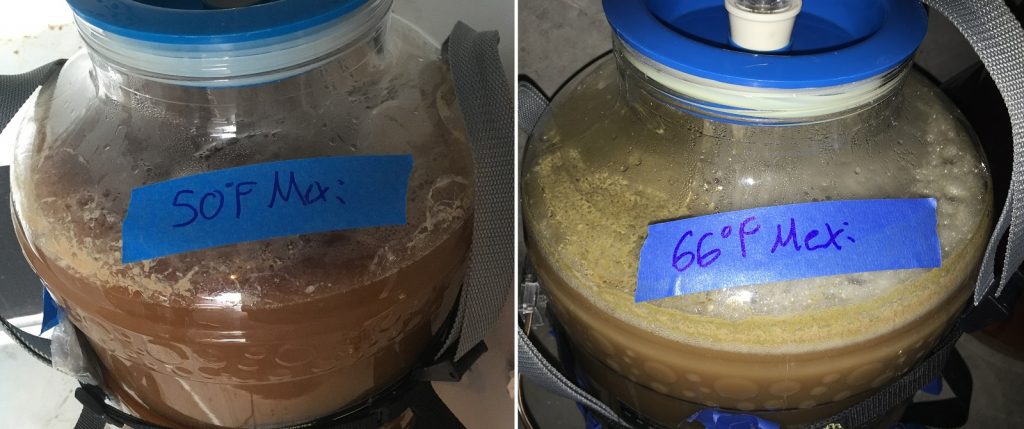
For his initial foray into lager fermentation temperature xBmts, contributor Jake Huolihan opted for a yeast we’d yet to focus on – White Labs WLP940 Mexican Lager, which is said to have been sourced from Grupo Modelo. Given the history of darker than pale lager in Mexico, Jake compared a Vienna Lager fermented at 50°F/10°C to one fermented at a blasphemously balmy 66°F/19°C.
Participants: 27
Expected correct: 14
Actual correct: 14
p-value: 0.036 – significant
Similar to the first significant lager fermentation temperature xBmt, the expected number of correct tasters is exactly how many actually identified the odd-beer-out. However, in this case, the vast majority of tasters (11) preferred the version fermented cool while none preferred the warm fermented Vienna Lager; the others were split between no preference and no perceived difference. While Jake was ultimately able to tell these beers apart, he admitted that it was more difficult than expected, and he had a slight preference for the cool fermented version, which he perceived as being more crisp and smooth.
Imperial Yeast L13 Global In A Märzen
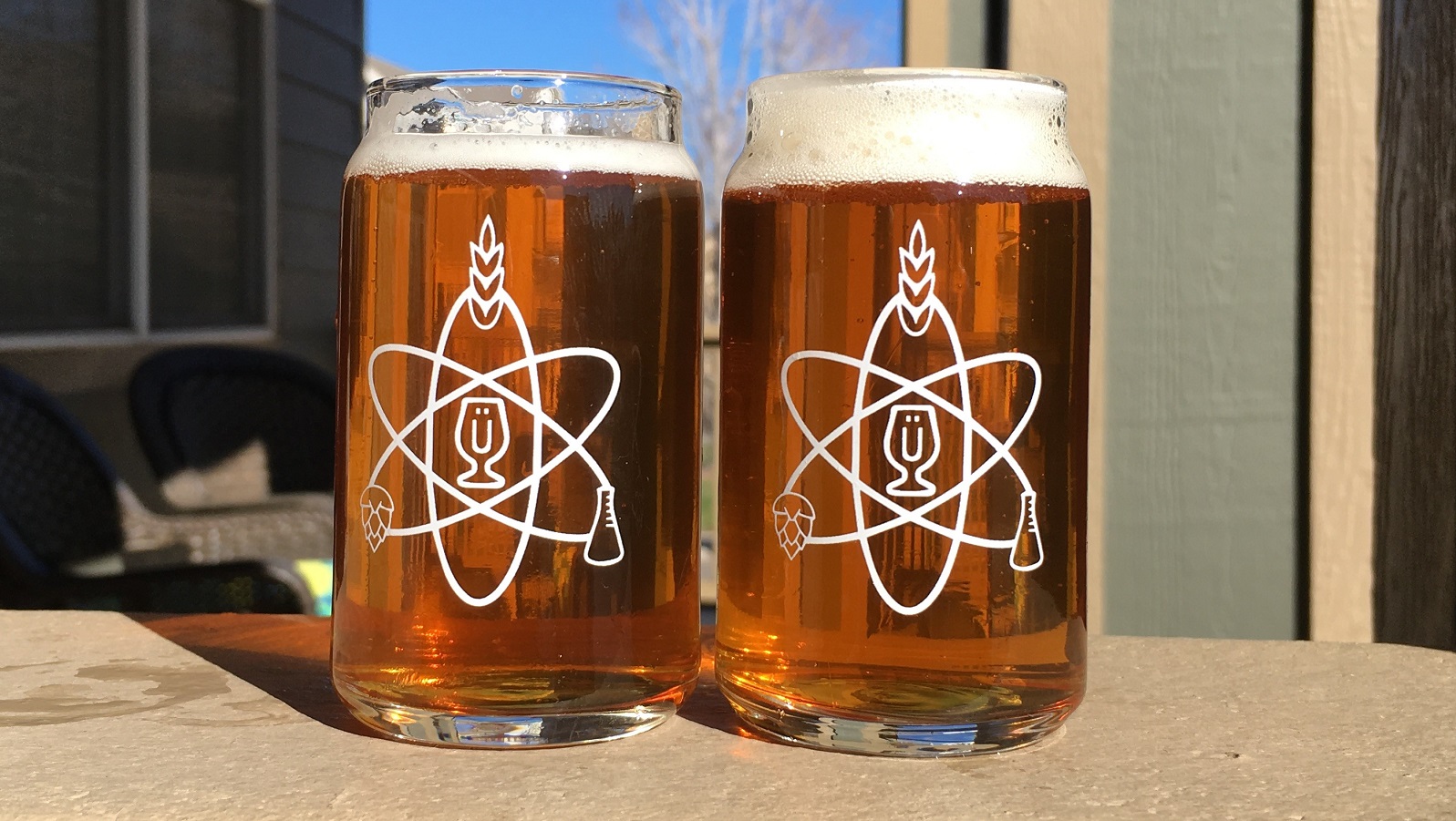
Never one to leave well enough alone, Jake revisited this variable a few months later, only this time using Imperial Yeast L13 Global, which is their version of the W-34/70 Weihenstephaner lager strain. Similar to Matt’s prior xBmt, Jake went with a fairly notable spread by comparing a Märzen fermented at 50°F/10°C to one fermented at 72°F/22°C.
Participants: 22
Expected correct: 12
Actual correct: 8
p-value: 0.46 – not significant
Womp womp. Another datapoint indicating blind tasters could not distinguish lagers fermented 22˚F/12˚C apart. Furthermore, despite his confidence given his prior performance, Jake admitted he simply could not taste a difference between these beers at all, they were perceptibly identical.
Imperial Yeast L17 Harvest In A German Pilsner
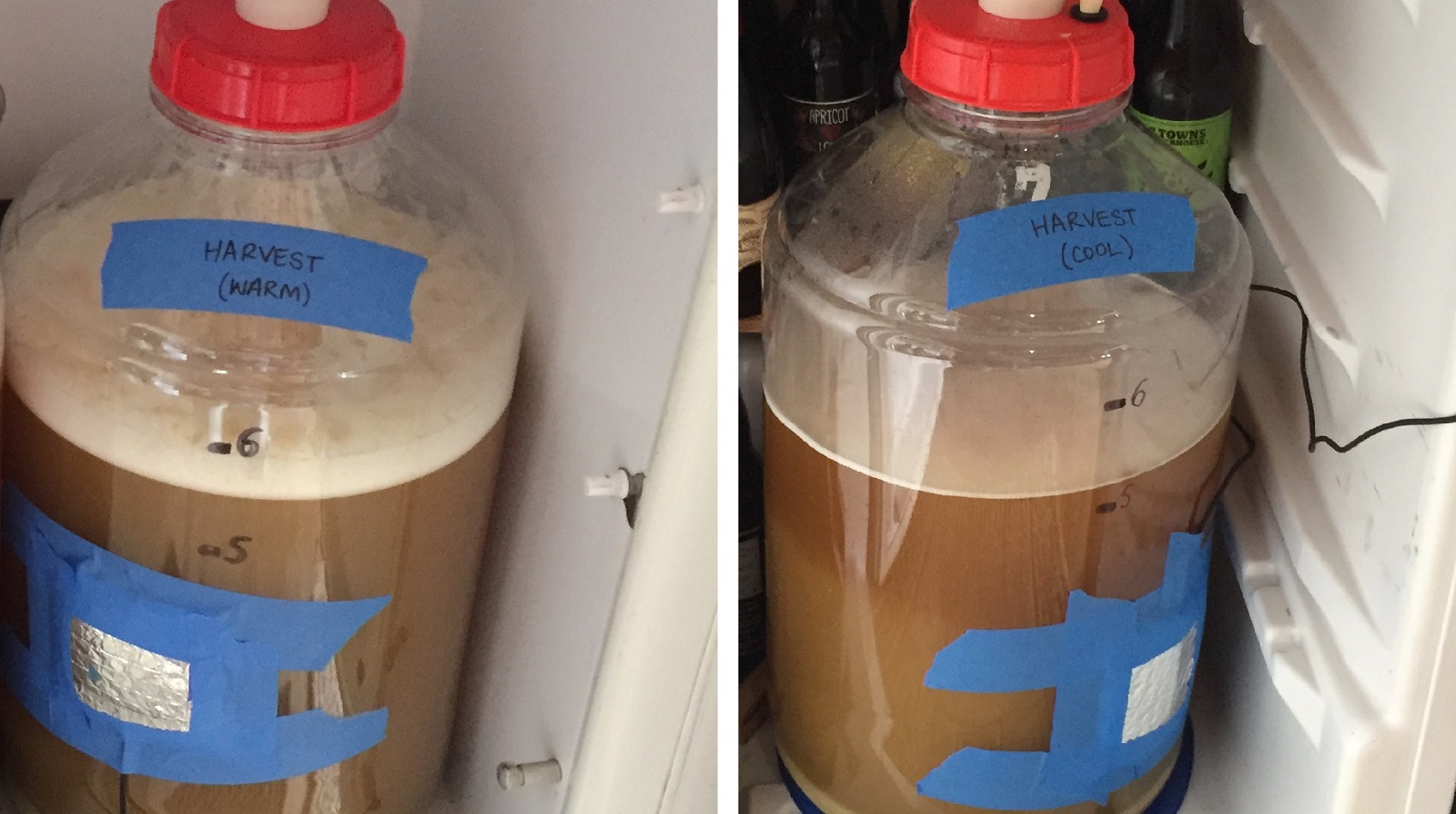
In preparation for Homebrew Con 2018, we collaborated with local Portland homebrewer, Jake Freshour, on an xBmt to serve during the conference. Given the how loved and loathed the past fermentation xBmts were, we selected that as the variable, only this time using Imperial Yeast L17 Harvest, which is purportedly sourced from the incredible Augustiner brewery in Germany.
Participants: 47
Expected correct: 21
Actual correct: 25
p-value: 0.004 – significant
Bam! Another significant result from a yeast that’s not the Weihenstephaner strain. In post-survey conversations with tasters, those who were correct on the triangle test didn’t agree on what made the beers different, with some describing the warm ferment version as having a slightly thinner mouthfeel while others detected a sulfur note in the batch fermented cool. Notably, neither the brewer nor tasters mentioned the fruity esters one might expect from a lager fermented so warm, and in fact, a majority (14) preferred the warm fermented version including yours truly.
Imperial Yeast L28 Urkel In A Czech Pale Lager

Having performed a couple lager fermentation temperature xBmts, contributor Jake Huolihan was motivated to continue exploring potential factors that could be contributing to the hard-to-accept results. An idea he had was that, more than temperature alone, variability in temperature during fermentation may have an influence. As such, he compared a Czech Pale Lager fermented with Imperial Yeast L28 Urkel, their version of the Pilsner Urquell strain, held steady at 50˚F/10˚C to one that was allowed to have a temperature swing of 6˚F/3˚C, meaning once it hit 56˚F/13˚C, it would be chilled back to 50˚F/10˚C.
Participants: 19
Expected correct: 10
Actual correct: 6
p-value: 0.65 – not significant
Interesting hypothesis, but it was not backed up by the results. Less than 33% of tasters correctly identified the unique sample, which aligns with random guess, which is what Jake admitted he did in his own semi-blind trials.
Imperial Yeast L13 Global In A Festbier
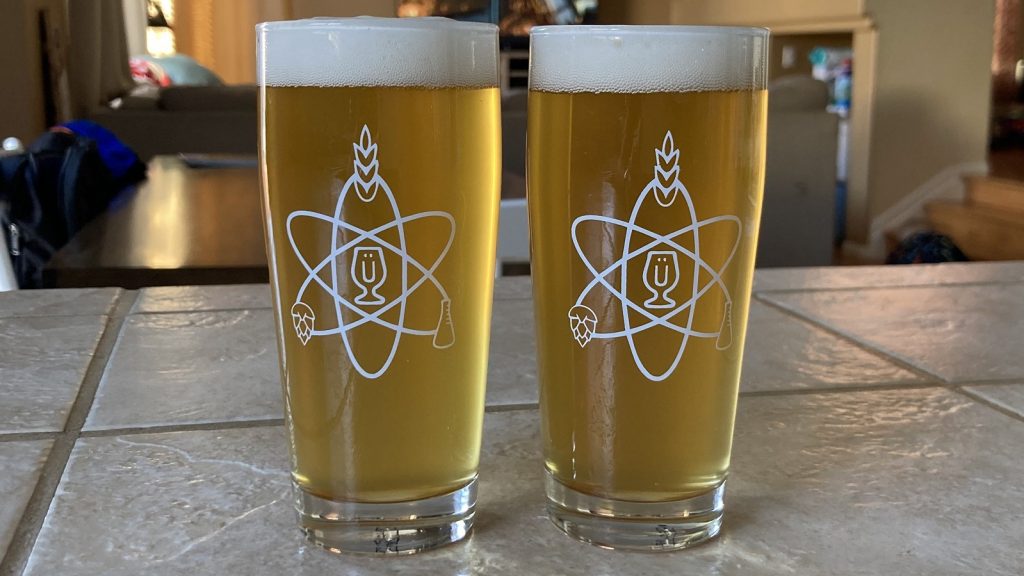
During the height of the Covid-19 pandemic, when we were unable to access tasters due to our concern for the health of others, we shifted to a semi-blind approach where the brewer would complete a series of triangle tests on variables we’d already tested pre-Covid. Still curious about lager fermentation temperature, contributor Jake Huolihan thought that perhaps OG may be a factor and designed an xBmt comparing a stronger Festbier fermented with Imperial Yeast L13 Global at 50°F/10°C to one fermented at 72°F/22°C.
Trials: 10
Expected correct: 7
Actual correct: 3
p-value: 0.70 – not significant
Not even undeniable bias as the brewer of these beers helped Jake in his triangle tests – his performance was no better than chance. He felt both beers were equally clean, malty, and free of esters, phenols, or fusel character.
Imperial Yeast L25 Hygge In A German Helles Exportbier
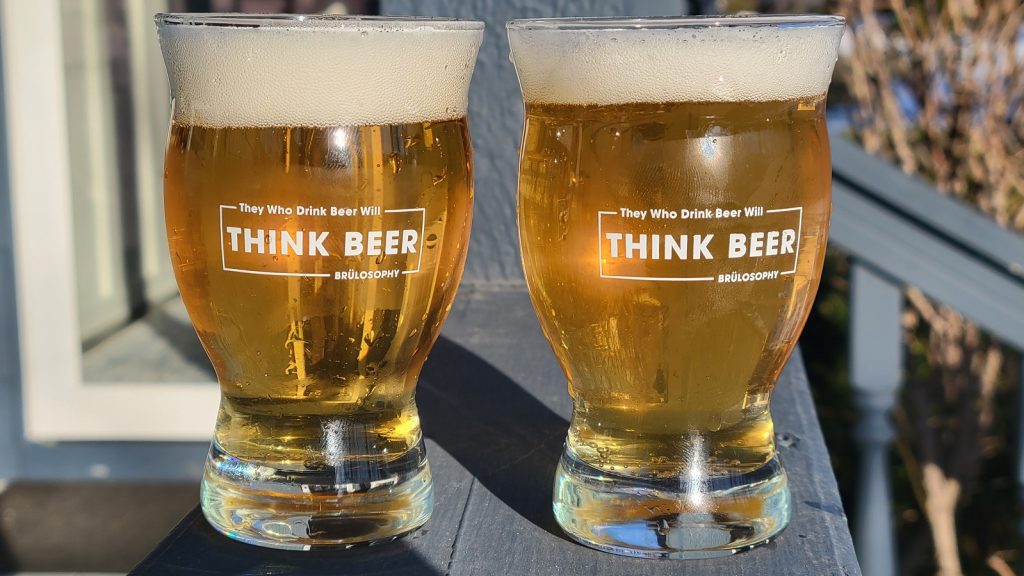
For our first post-Covid lager fermentation temperature xBmt, contributor Mike Neville was also curious of the impact of beer strength, so he compared a German Helles Exportbier fermented at 56°F/13°C to one fermented at 66°F/19°C. However, for this one, he went with a yet-to-be tested strain, Imperial Yeast L25 Hygge, which is said to be sourced from Carlsberg Brewery in Copenhagen.
Participants: 20
Expected correct: 11
Actual correct: 7
p-value: 0.52 – not significant
Often traced back to the historic Saccharomyces pastorianus/Carlsbergensis lineage, this strain is viewed as a quintessential Saaz-type lager yeast as opposed to the more common Frohberg-type. And yet tasters still couldn’t tell the beers apart with any consistency, in fact about as many as would be expected by chance selected the unique sample in this xBmt. Mike guessed the odd-beer-out in 3 out of 5 of his semi-blind trials, and he reported perceiving no off-flavors in either beer.
Imperial Yeast L26 Pilgrimage In A Munich Helles

Lager purist that he his, contributor Jordan Folks was stumped by many of our past results and posited that yeast pitch rate may be at play, as nearly all past lager fermentation temperature xBmts held pitch rate constant between the batches. To test his hypothesis, he compared a Munich Helles fermented with the recommended amount (~340 billion cells) of Imperial Yeast L26 Pilgrimage at 48°F/9°C to one fermented at 66°F/19°C with the recommended ale pitch rate (~170 billion cells).
Participants: 18
Expected correct: 10
Actual correct: 8
p-value: 0.22 – not significant
While the blind taster data did not cross the threshold of significance, Jordan somehow went 100% on his trials, describing the warm fermented beer as sharper with more fruity ester character and the cool fermented version as softer with a light sulfur note. Bias? It’s impossible to say for sure, but interesting nonetheless.
Imperial Yeast L13 Global In A West Coast Pilsner

Having learned that many brewers opt for warmer fermentation temperatures when making West Coast Pilsner, contributor Jordan Folks was curious to see how one made such a way would compare to a version fermented cool, which is his standard approach. For this xBmt, he went with Imperial Yeast L13 Global, his go-to for this style, at either 46°F/8°C or 66°F/19°C.
Participants: 28
Expected correct: 15
Actual correct: 11
p-value: 0.31 – not significant
Similar to his prior xBmt on the same variable, the blind taster results were non-significant while Jordan went 5-for-5 on his semi-blind triangle tests. Perhaps he’s more sensitive to the impact of fermentation temperature when using the popular Weihenstephaner lager yeast, or maybe something else is at play. Either way, even Jordan noted the beers to be more similar than different, saying he was perfectly happy to have both on tap.
| CONCLUSION |
Out of the 12 xBmts we’ve performed on lager fermentation temperature, just 3 produced statistically significant results, and the only one of those where the popular Weihenstephaner strain was used went to the extreme by fermenting at 82°F/27°C. Tasters in the other 5 xBmts using the most popular lager yeast in the world could not reliably distinguish versions fermented at traditionally cool temperatures from their warmer fermented counterparts. Moreover, the 3 xBmts using the Pilsner Urquell strain, all from different labs, returned non-significant results. What’s so interesting about this is the fact the Weihenstephaner strain is Frohberg-type while the Pilsner Urquell strain in Saaz-type, a distinction we initially presumed was a factor in these results.
Briefly, while all lager strains belong to the Saccharomyces pastorianus species, genomic sequencing divides them into two distinct lineages – Frohberg (Group 2) and Saaz (Group 1). Frohberg-type strains (e.g., Weihenstephaner, Augustiner, Modelo) are tetraploid hybrids equipped to ferment maltotriose efficiently, yielding higher attenuation, faster fermentation, and a clean, dry finish. By contrast, Saaz-type strains (e.g., Pilsner Urquell, Carlsberg) are triploid hybrids with a higher proportion of S. eubayanus DNA, which typically lack full maltotriose utilization, resulting in lower attenuation, slightly more residual body, and lower tolerance for warm fermentation temperatures.
So, then, what do we make of the fact the only significant xBmts were those fermented with Augustiner, Modelo, and Weihenstephaner yeasts – all Frohberg-type strains?
I have zero desire to influence what other people choose to believe about beer, and my opinions on this particular matter are admittedly based on a combination of xBmt results, researching other data, and a healthy dose of personal anecdote; what I refuse to rely on is the anecdote-spun-as-fact by other brewers. With that said…
My simple position is that yeast is more robust than many give it credit for, and while temperature differences of 20˚F/10˚C might feel vast to some, it’s really not. I struggle to view the commonly held perspective of lager fermentation as being anything other than a historical carryover from a time when fermenting cold was a necessary defense against wild contamination as well as being a primitive form of temperature control, rather than a prerequisite for clean flavor. With modern sanitation and the availability of pure yeast strains, we’ve elevated to dogma a practice that was originally meant to solve problems we now handle far more effectively through other means.
I know many who disagree with me on this, some to the point of impassioned rage, and that’s okay. Appealing to tradition and authority won’t result in bad beer, and according to the aforementioned xBmt results, either will fermenting a lager at ale temperatures. The beauty of homebrewing is that we can do whatever the hell we want and it’s not going to hurt anybody, at least within reason… those 15% Barleywines can be dangerous.
If you have any thoughts about this xBmt, please do not hesitate to share in the comments section below!
Support Brülosophy In Style!


Follow Brülosophy on:
FACEBOOK | TWITTER | INSTAGRAM

If you enjoy this stuff and feel compelled to support Brulosophy.com, please check out the Support page for details on how you can very easily do so. Thanks!
Related