
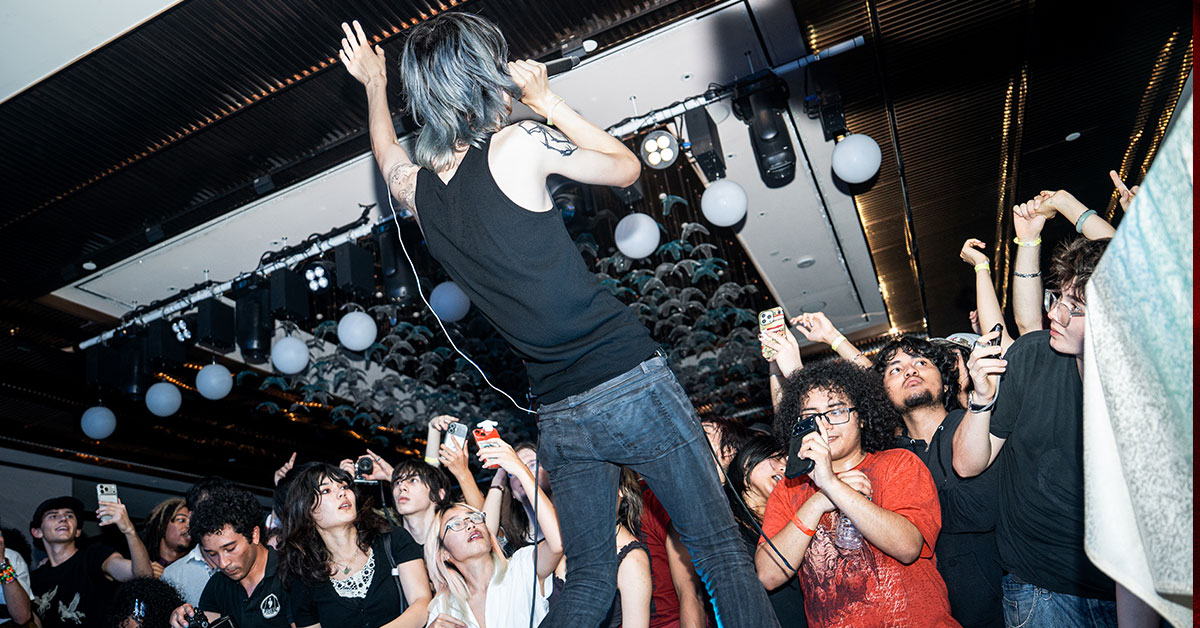
 I feel a lot of FOMO that I haven’t yet gotten to go to one of the concerts put on by 3rd Space, hosts of such spectacles as the Asian underground show at a dim sum lounge, the electronic set at a midtown Manhattan heliport, or the evening of harps and clarinets at a community garden. In an era of stunt-y dinner parties and corporate sponsors going rogue with experiential budgets, a cynic might say these are gimmicks. But I don’t see it that way. These days, apparently people don’t know how to dance at the club, or even how to put their phones down for a night to actually let loose. As Spencer Papandrea, 3rd Space’s founder, sees it, being intentional about his shows’ settings helps concertgoers fully immerse themselves, and that makes the experience so much better. Here’s how he and the team produce events.
This is an excerpt from Pre Shift, our newsletter for bartenders, restaurant workers and the hospitality industry. Subscribe for more perspectives like this in your inbox.
Pre Shift: Could you share what your background is, and why you started 3rd Space?
Spencer Papandrea: I have a few years in management consulting experience, and now I’m in my second year of law school. Other than that, I’m a huge live music fan. Over the past several years, I’ve been thinking about how to get more involved in the music scene, especially since I moved to New York, and [3rd Space] started very organically. About a year and eight months ago, I was walking around my neighborhood asking local business owners if they would want to host a show. That’s kind of how I started, with a [show at a] record store, then a dumpling shop shortly thereafter, then a laundromat, and then a smoke shop. The concept took shape over shows, and I found it really meaningful to have events at unique locations with concepts morphed around the actual event spaces. I found that created a more special experience for guests.
Were you feeling like the live music scene was missing an attention to the venues?
I have gone to hundreds and hundreds of shows, and no matter what, going to see live music will always be special. But Brooklyn Steel versus Webster Hall versus Terminal Five are all similar at the end of the day. It loses a little bit of the magic that I got when I was a kid going to these places for the first time.
Also, it seems like, post-Covid, there needs to be an extra variable to shows to get people to be more aware and off their phones. There’s a dearth of people dancing at shows nowadays, and I found that when you put people in more unique [settings] together, they’re more likely to put the phone down and enjoy being in the moment.
How does producing one of these shows work?
As an example, [we found this] underground soccer facility, and the World Cup was coming up, so we wanted to throw a show there with live matches going on at the same time as the concert. My team had a discussion, including my lead creative, so we could curate the actual lineup. From there, it’s all logistics: staffing the event, making sure we have the right equipment, setting up.
[I like to] shape the concept of the event around the spaces themselves. So when we had a pretty gritty dumpling restaurant, we had a punk show there. We just recently had a show at a heliport, so the music was very left-field, alternative, IDM-style music. We also just had this dim sum lounge show and we did it with Ginseng Museum, which is a cool curator of East Asian underground and alternative music, so we focused on East Asian performers and having [Chinese] food there. It changes every time, but the magic of it is making every show bespoke and a unique experience centered around what the actual venue’s appeal is.
What do you think about when you’re booking talent?
Typically me and a couple members of our team think about what music is exciting to us and what we’re enjoying listening to, particularly in the local scene. We think about new, innovative microgenres and artists that are bubbling up. Sometimes artists reach out to us… and if we resonate with [their music], we’ll do a show.
For Pre Shift’s purposes, I’m curious about booking restaurants. Are there any quirks about using a restaurant as your venue?
Typically, restaurants are easier to book than other venues. The places that have been most difficult are those that are not familiar with renting out their space for events or parties, like a laundromat or a boxing ring or the helipad. With restaurants, if you have food included, that’s an additional variable of serving the food, which can be a little tricky. Although there’s a very large range of what venues will charge, restaurants are a little bit more expensive because this is [an existing part] of their business, and you may be renting them out during their prime hours.
How does the food work? Do you collaborate on a menu?
For the dim sum restaurant, we worked with them to make a more streamlined menu that we thought our audience would enjoy. Typically they have 10-15 menu items for these private parties, but we got it down to four based on their most popular dishes, like the barbecue pork bun, and we wanted to have a vegetarian option, so we had their veggie spring rolls. Typically, people get the food and then stand for the show.
Do you have a dream venue?
Honestly, the weirder the venue and the more that you feel like there shouldn’t be a concert there, the more I like it. I would love to do a pool one day or an armory. One of the formative concert experiences I had before starting this was at 88 East Broadway, which is the mall under the bridge in Chinatown, with Fcukers in 2024. It was such a special experience, so I think a mall would be really fun. There are so many third spaces to explore. What about you?
A dream venue for me to see a show at? I’ve been ice skating a lot. So maybe an ice rink.
One idea that my booking manager brought up was Cameron Winter at the ice skating rink, because, like, winter time, ice. [Editor’s Note: I would attend.]
What are the people going to your shows typically like?
It really depends on the event. We do shows across genres, and that’s something we’re really keen on, making sure we’re not pigeon-holing ourselves in a certain subculture. We’ve had a hardcore punk show that had a lot of crust punk kids, and we’ve also had people from more of the hyperpop arena, which brought in more scene-type people. The one with Ginseng Museum had a lot of UDG, fashion-forward people. Something I’m really proud of is that we bring people from different scenes together, especially when we have diverse lineups. I’d say it’s mainly people in their early to mid 20s, and something I’ve seen time and again is people making friends or starting romantic relationships or meeting new connections. That’s really beautiful to me.