
Book Review: Ansam Abu Sitta’s ‘Bench of the Reserves’
Reviewed by Nada Hodali
Live in the present moment, do not miss out on what is happening there in front of you! Why are you always stuck in the past?
Most of us have had this line thrown at us in different situations. In the case of being a Palestinian, however, being stuck either in the past or the future has become a survival mechanism for them. It is their only solace and a way that allows them to cope with everything taking place right before their eyes.
As part of an initiative by Alaan Publishers to publish the works of 12 Gazan writers, Ansam Abu Sitta’s دكة الاحتياط (Bench of the Reserves), published in Arabic in 2026, is a collection of 18 short stories that move between realism and highly condensed symbolism. The collection captures the details of everyday life in the Gaza Strip, where waiting becomes a constant condition shaping the lives and trajectories of individuals and families. Although the work is fiction, its stories are grounded in true accounts of life during the genocide in Gaza. Its 18 characters—mothers, fathers, sons, daughters, and grandparents—each confront the horrors unfolding around them and attempt to find ways of coping. Some are named, while others remain unnamed, underscoring the sense that each story represents just one of countless devastating experiences endured in Gaza.
If, for one second, a Gazan, a Palestinian, decides to snap back into reality, decides to stop thinking about what could’ve been and what should have taken place, their entire world would collapse before them. Every story highlights the Palestinian struggle of having to continue living life nonetheless.
Palestinians are known to be very resilient; that is only the case because they know the price of falling apart. What is taking place is too much to cope with. If Palestinians stop at every hurdle, every obstacle placed by the occupation, they will never be able to truly move forward in life. To try and cope with the present, Palestinians are always working for the future, trying to learn from past stories and generations, attempting to make a better life for themselves. How could one possibly hold it together, though, when you come to find out that your house has been demolished? A loved one martyred as they were foraging for food to feed the family? Sometimes, guilt seeps in when someone tries to hope for a better future abroad, for how could they leave their family behind?
In Abu Sitta’s stories, you can see the different ways in which Abu Sitta highlights how Gazans cope with what has happened. In “The Slap,” one man is out looking for his father, who he found out was going to their house, the one located in the danger zone. He attempts to bring his father home safely, only to find him sitting under the tree, hallucinating, truly believing that he is surrounded by friends and neighbors. The reality was that all those surrounding him were martyred… What was once his home is now a mound of debris. He couldn’t take it anymore; it only led to a slap landing on his sons’ face. His son was simply trying to get him home safely. What could truly be done?
“My Liar Father!” is the story of the father trying to make his family feel better. “The war will end soon!” he says. “Humanitarian aid will be coming in any moment now. Our home still stands! We will return to our home.” These lines give his daughter a beam of hope, that everything will be alright, only for it to be shattered when children in the refugee camp tell her that all of the houses in that neighborhood have turned into rubble. These “white lies”… do they truly help us out, or are they making things worse and harder to take in?
Then you have stories of individuals helping others out with the bare minimum that they have: the veiled woman who used her veil to honor a martyr; a man who used his body as a shield to protect the injured child from the quadcopter; and the lady suffering from immense emotional pain and horror for her detained husband, who was detained a couple of days after their wedding and remains in Israeli prisons 15 years later.
One particular quality that stands out in the title of each story is its compression. One or two words describe the despair present amongst people… “Numbers,” “Work Permit,” “Behind the Walls,” “The Taste of my Humanity,” “Painkillers,” “War of the Rain.”
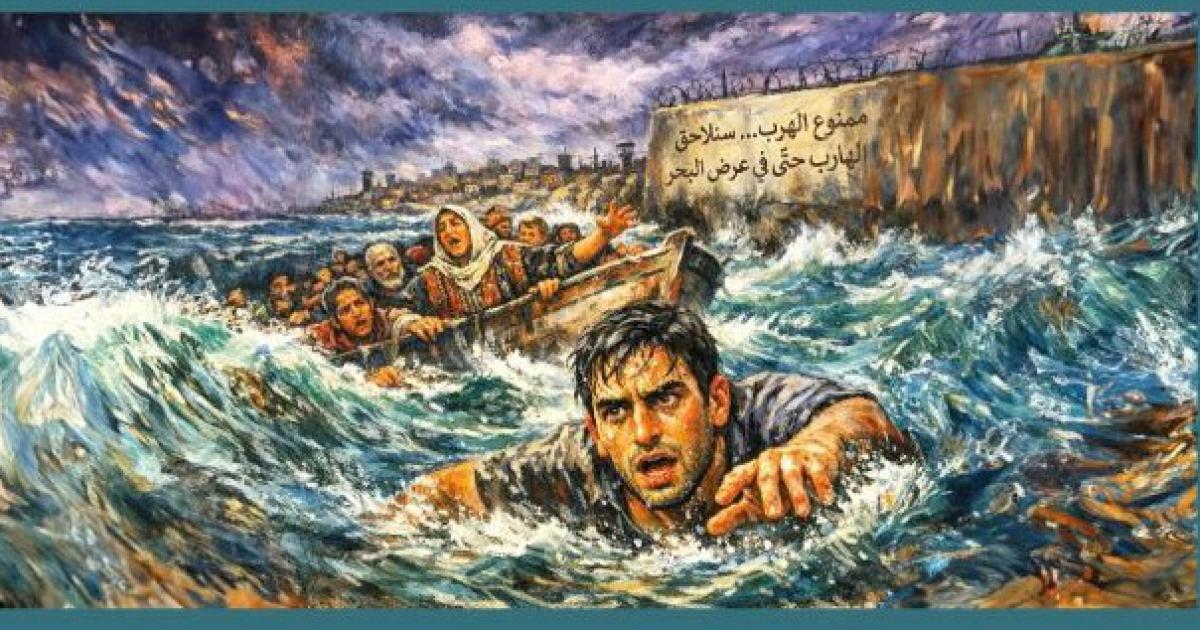
These are not merely 18 random stories. Through them, Abu Sitta has successfully reflected the lives of Gazans living through the genocide for years on end. They echo the flicker of hope that is keeping them alive; they reflect the humanity that still remains despite everything; they mirror the struggles they have to go through if they attempt to escape by sea.
“My Liar Father!” fully stood out to me. It highlights the fact that everyone is tired of the false promises given to them: that the war is ending, that food is coming in, that houses are still standing upright. “Painkiller” is the story of a lady suffering from intense leg pain but who keeps delaying going to the hospital. Once at Al-Ma’madani Hospital, she minimizes her own pain when she sees the horrors that other people are going through: people looking like zombies, bodies everywhere. The war drained the life out of everyone. One story which strikes a chord for every parent is “Birthday.” The war led to constant fights amongst family members, mothers ridden with guilt for not being able to provide their children with simple requests, such as a birthday. Mothers want to wipe away all the pain and remember the happy moments they lived through prior to the war.
Palestinians are widely known to throw in proverbs and sayings mid-conversation. With that, every story here begins with a proverb or a line, one that attempts to guide a person on how they can deal with the atrocities they’re surrounded by.
Ensure that destruction is around you, never within you.
Be grateful for the moments where you survived!
Worry turns mountains into rubble.
You will live what you were destined to all along, no matter how old you are.
Throughout the stories, Ansam Abu Sitta’s writing poses existential questions stemming from living under constant bombardment and never-ending loss. It will allow readers to dive into the moment, to understand what something truly feels like. They will come to know feelings of loss and death, and a slit of light that comes in, persisting through the trauma present everywhere. Ansam Abu Sitta’s stories describe the present moment. Not the past, nor the future.
Ansam Abu Sitta is an award-winning Palestinian writer from Gaza whose work explores memory, displacement, loss, belonging, and the intimate ways conflict reshapes everyday life. She holds a bachelor’s degree in Chemistry and Methods of Teaching from Al-Aqsa University, and works in education and research, alongside her writing. Her stories and essays move between personal experience and collective memory, finding in ordinary lives and details a way into broader human questions. In addition to her short-story collection Bench of the Reserves, her work has appeared in several Arab publications, including القدس العربي. She won third place in the 2022 Palestine: A Homeland and a Cause Short Story Competition at the Arab level, second place in the Fatima Al-Khatib Short Story Competition in Gaza, and first place in Al-Aqsa University’s short-story competition.
Nada Hodali is a Palestinian literary translator working between Arabic and English. She holds degrees from Birzeit University and Durham University, BA English literature and MA Translation Studies. Committed to amplifying Arab voices, her work has appeared in journals such as ArabLit Quarterly, Mousse, and ANMLY, as well as with Interlink Publishing and TBA21. She has translated authors including Sahar Khalifeh and Najem Wali. Her recent projects include 30 Seconds from Gaza by Mohammad Sabaaneh (2025) and Safaa and the Tent by Safaa Odah (2025).