This article is part of my Ask Dr. Osborne series, where I answer real questions from my weekly live Q&A on nutrition, gluten sensitivity, supplements, autoimmune health, and more. Join me live every Thursday at 12:30 PM Central Time on my YouTube channel, where you can submit your questions and be part of the conversation.
How Do I Know If I Need Digestive Enzymes?
One of the biggest questions I get is also one of the most basic: How do you know whether you actually need digestive enzymes?
Sometimes your symptoms give you the first clue. If you regularly experience gas, bloating, intestinal discomfort, or a heavy feeling after eating, poor digestion may be part of the problem. Different enzymes help break down different components of your food. Amylase helps with starches and carbohydrates, lipase helps break down fats, proteases help break down proteins, and lactase helps break down lactose.
If you seem to struggle no matter what you eat, that’s where a good broad-spectrum digestive enzyme may make more sense.
There are also situations where I think enzyme support deserves additional consideration.
Chronic stress is one of them. When you’re chronically stressed, your body is essentially being told that this isn’t the time to digest food. It’s time to deal with danger. That can interfere with normal digestive function and may contribute to symptoms such as gas, bloating, discomfort, and poor digestion.
A history of damage to the gastrointestinal tract is another consideration. If you’ve dealt with inflammatory bowel disease, celiac disease, pancreatic problems, or surgery involving the stomach or intestines, your normal capacity to produce or utilize digestive enzymes may be affected.
I’ve also discussed people who have had gastric bypass surgery. Digestion is a chain reaction. You begin mechanically and enzymatically breaking down food in the mouth. Protein digestion begins in the stomach, and the pancreas and small intestine contribute additional enzymes farther downstream. When surgery alters that normal anatomy, enzyme support may become much more important.
The same basic reasoning applies when the pancreas has been damaged. If pancreatic function is impaired, the ability to produce and deliver digestive enzymes can potentially be impaired as well.
The important point is that you don’t have to guess blindly. Symptoms can provide clues, but testing can also help us investigate digestive function.
Can Digestive Enzymes Help With Gas and Bloating?
Yes, they can, particularly when the bloating is being driven by poor digestion.
Think about what happens when you don’t properly digest your food. That material still has to go somewhere. The microorganisms living in your gastrointestinal tract begin doing more of the work, and fermentation can produce gas. That gas creates distension, pressure, and bloating.
So the important question isn’t simply, “Am I bloated?” It’s why am I bloated?
If you’re having difficulty breaking down certain carbohydrates, proteins, fats, or plant fibers, the appropriate enzymes may help you digest those foods more effectively.
This is also why the type of enzyme matters.
Someone having difficulty digesting fat may need something different from someone who struggles with lactose. A person eating a high-protein diet who develops foul-smelling gas may want to consider additional protease support. Someone eating large amounts of plant material and struggling with bloating may benefit from enzymes that help break down complex plant fibers.
A broad-spectrum digestive enzyme can make sense when the problem isn’t obvious or when several types of foods seem difficult to digest.
But remember that symptom relief doesn’t necessarily answer the larger question. If your digestion suddenly changes or remains chronically poor, I still want to know why.
Can I Take Digestive Enzymes If I Don’t Have a Gallbladder?
Yes.
But I want to make an important distinction here because digestive enzymes and bile acids are not the same thing.
Your gallbladder stores and releases bile, which helps emulsify fats. In simple terms, bile helps make fat easier to work with in the watery environment of your digestive tract so that it can ultimately be digested and absorbed.
Digestive enzymes such as lipase actually participate in breaking fat down.
Those are related jobs, but they are not identical.
So if you’ve had your gallbladder removed and you’re struggling to digest fatty foods, digestive enzymes may help, but I would also consider bile acid support because you’ve lost the organ responsible for storing and appropriately releasing bile.
If you notice that you suddenly have difficulty tolerating foods such as full-fat dairy after gallbladder removal, don’t automatically assume the problem is lactose. The fat content of that food may now be part of the equation.
This is a good example of why I don’t like one-size-fits-all answers. You want to understand which part of digestion isn’t functioning properly and support that process accordingly.
Can Proteolytic Enzymes Help Reduce Inflammation and Pain?
When we’re talking about inflammation, I want to distinguish proteolytic enzymes from enzymes you’re taking primarily to digest a meal.
Proteolytic enzymes break down proteins, and this is an area where I discussed a number of studies during the live Q&A.
Bromelain, an enzyme derived from pineapple, has been studied for effects involving inflammatory pathways. I also discussed research involving combinations of proteolytic enzymes and plant compounds such as rutin in people with osteoarthritis.
One of the reasons I’m particularly interested in proteolytic enzymes is their potential use around chronic musculoskeletal problems and surgical recovery.
I’ve used them in people dealing with chronic joint, tendon, and ligament problems, and I also use enzyme support around surgery. The research I presented during the Q&A included studies examining outcomes such as inflammation, pain, recovery, and medication use.
That’s an entirely different reason for taking enzymes than simply trying to digest your dinner.
If you’re taking enzymes for digestive support, you’re generally trying to have those enzymes interact with the food you’re eating. If you’re considering proteolytic enzymes for systemic purposes, that’s a different strategy with a different goal.
That’s why simply asking, “Should I take enzymes?” isn’t specific enough.
What are you trying to accomplish?
That’s the question we need to answer first.
Will Taking Digestive Enzymes Make My Body Produce Less of Its Own?
This is a very common concern, and based on the research I discussed, we don’t have evidence showing that supplemental digestive enzymes shut down your body’s own enzyme production.
People sometimes compare this to taking an external hormone. With certain hormones, there can be a negative feedback loop where supplying the hormone externally reduces the body’s own production.
That same effect is sometimes theorized with digestive enzymes, but it has not been demonstrated in the same way.
Your digestive system responds largely to the presence of food. When food arrives, your digestive organs respond and enzymes are put to work breaking that food down.
So I would not avoid digestive enzymes because you’re afraid that taking them will somehow make your pancreas “lazy” or permanently switch off its ability to make enzymes.
That doesn’t mean everybody needs supplemental enzymes forever. It means the reason for using them should be based on what you’re trying to accomplish and what’s happening with your digestion.
Should I Take Digestive Enzymes With Every Meal?
It depends on why you’re taking them.
If you genuinely need digestive support, then taking digestive enzymes with meals makes sense because that’s when you need help breaking down your food.
But whenever possible, I like to test, not guess.
There are tests that can provide information about pancreatic and digestive function. Amylase and lipase can be measured in the blood. Pancreatic elastase can be measured in stool. Markers such as calprotectin and lactoferrin can provide information about intestinal inflammation that may also help us understand what’s happening in the gastrointestinal tract.
If a test shows impaired pancreatic enzyme production, that’s useful information. But I don’t want you to stop there. I still want to ask why the pancreas is underperforming.
That’s a recurring theme in how I approach health.
Don’t just name the problem. Ask why the problem is happening.
You can also pay attention to your body’s response. If you’re consistently bloated, heavy, uncomfortable, or having other digestive symptoms after meals, that’s information worth investigating.
The goal isn’t to take as many supplements as possible. The goal is to understand what your body needs and provide appropriate support.
Can I Get Enough Proteolytic Enzymes From Foods Like Pineapple?
You absolutely can get proteolytic enzymes from food.
Pineapple contains bromelain. Papaya contains papain. I’m a big advocate of getting nutrition from real food whenever that’s sufficient for what you’re trying to accomplish.
The issue comes down to dose and consistency.
If I’m trying to use an enzyme therapeutically, I want to know how much I’m giving. With a whole food, that can be difficult.
How much active bromelain is actually in that pineapple? How ripe is it? How was it stored? Was it heated or processed? How long has it been sitting? All of those variables can influence what you’re actually getting.
So if you’re healthy and simply want the nutritional benefits of enzyme-containing foods, have at it.
But if I’m dealing with someone who has a specific problem and I’m trying to achieve a particular effect, I prefer being able to standardize the dose. That’s where supplementation becomes useful because I know what is in the product and how much I’m using.
Food and supplementation aren’t necessarily competitors. They can serve different purposes.
Is There a Maximum Safe Dose for Digestive Enzymes?
I don’t like the idea that anything is completely incapable of causing problems at any dose.
Anything can potentially become problematic in a high enough quantity, and people respond differently.
That’s why I prefer the principle of the minimal effective dose.
If you’re starting a broad-spectrum digestive enzyme, don’t assume that more is automatically better. Start conservatively. For example, you might begin with one capsule shortly before a meal and see how your body responds.
If you tolerate it but aren’t getting the support you need, the dose can potentially be adjusted from there.
I’ve seen tremendous variability between individuals. Some people need more support. Others need very little.
You also have to consider the source of the enzyme itself. Bromelain comes from pineapple, for example. Someone who reacts to pineapple may need to be particularly careful about using a bromelain-containing product.
Most people tolerate digestive enzymes very well, but your individual response still matters.
Don’t go from zero to an aggressive dose simply because somebody told you enzymes are safe. Start conservatively, use good judgment, and pay attention to what your body is telling you.
And above all, remember what I’ve emphasized throughout this discussion: enzymes aren’t all the same, and neither are the reasons for taking them. Start by identifying what you’re trying to accomplish, then choose the enzyme and dose that make sense for that goal.
My Top Picks for Enzymes
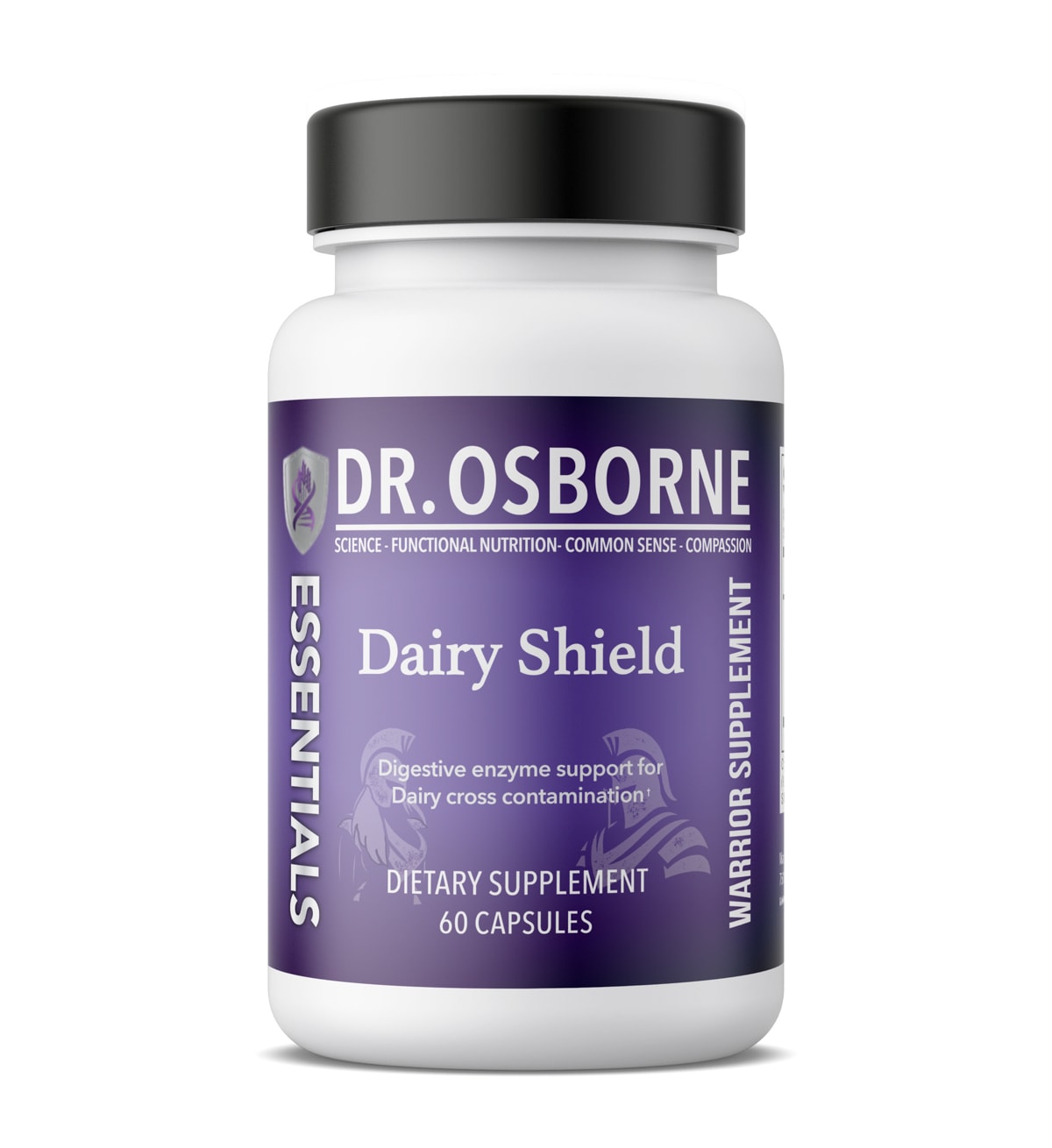
Dairy Shield
Dairy Shield provides targeted digestive support for dairy, combining lactase to help break down lactose with specialized protease enzymes that help digest dairy proteins. It also includes enzymes designed to help break down gluten from accidental cross-contamination, making it especially useful when eating away from home or in situations where you have less control over food preparation.
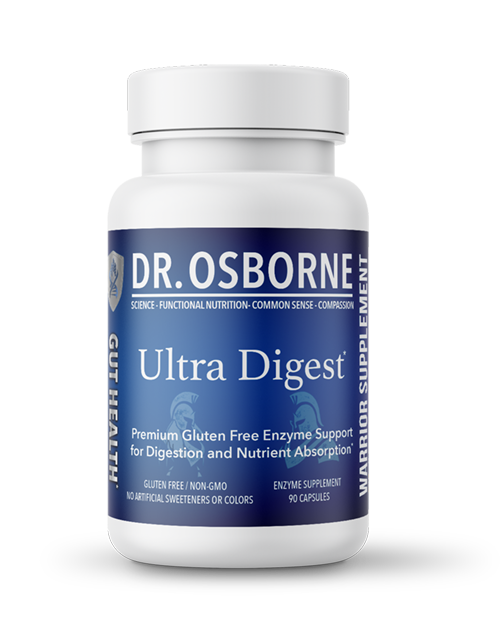
Ultra Digest
Ultra Digest is a broad-spectrum digestive enzyme formula designed to help you more completely break down the food you eat. Its combination of proteases, lipase, and carbohydrate-digesting enzymes supports the digestion of proteins, fats, and carbohydrates, making it a versatile option when digestive challenges aren’t limited to one particular type of food.
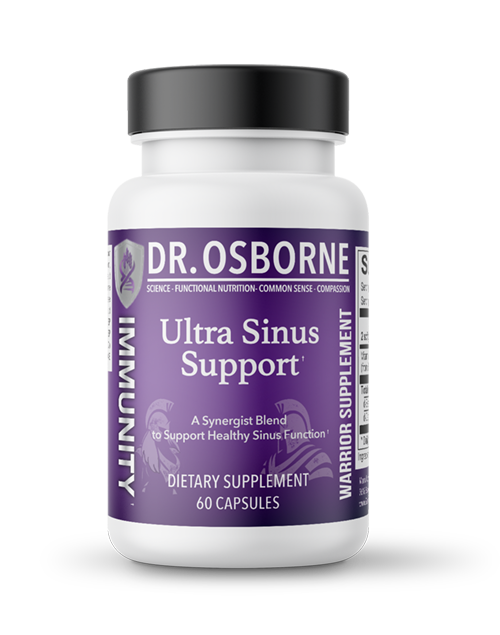
Ultra Sinus Support
Ultra Sinus Support takes enzyme support beyond digestion, pairing targeted nutrients and botanicals with ingredients such as NAC and bromelain to help thin and clear mucus, support healthy sinus tissue, and maintain open nasal and respiratory passages. It’s designed for times when sinus congestion, seasonal challenges, and thick mucus are the primary concern.
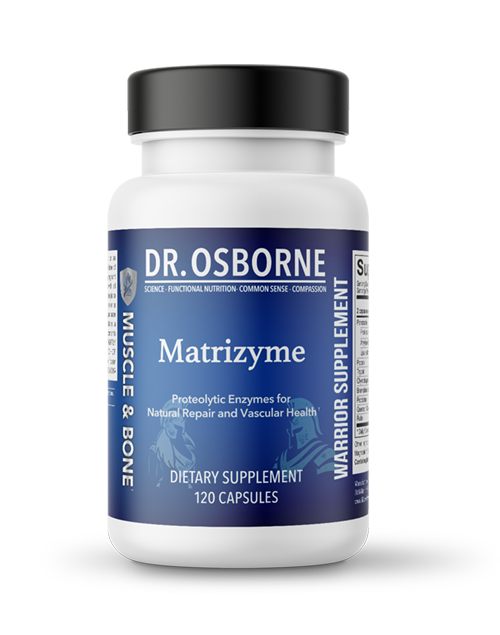
Matrizyme
Matrizyme is a systemic enzyme formula designed to support a healthy inflammatory response throughout the body rather than simply help digest a meal. Its combination of proteolytic enzymes and flavonoids supports healthy circulation, the breakdown of unwanted proteins, and the body’s natural recovery process, making it particularly relevant for physical stress, exercise recovery, and musculoskeletal support.
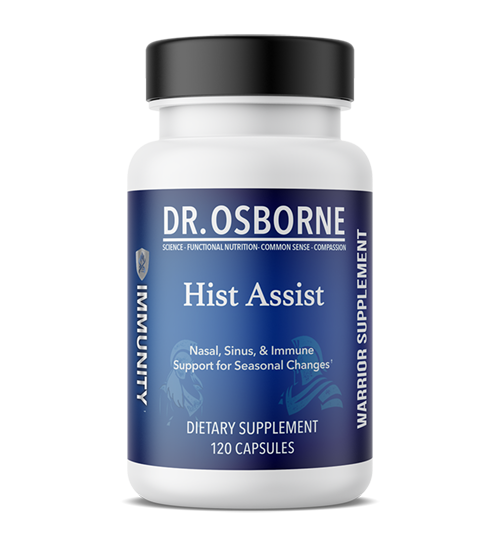
Hist Assist
Hist Assist is designed for people dealing with histamine and seasonal environmental challenges. It combines quercetin with bromelain, which supports quercetin absorption and mucosal tissue health, along with stinging nettle and NAC to support a balanced immune response, healthy mucus viscosity, and clearer nasal and sinus passages.
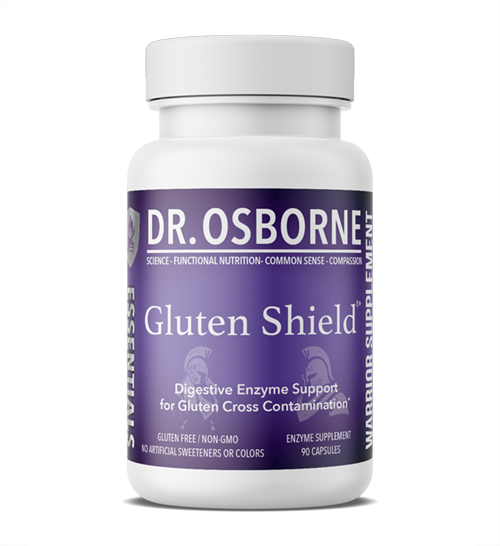
Gluten Shield®
Gluten Shield® provides an extra layer of digestive support for those times when accidental gluten exposure or cross-contamination may be outside your control. Its enzyme blend includes DPP-IV to support the breakdown of gluten proteins, along with additional enzymes for proteins, fats, and complex carbohydrates, plus probiotics and digestive herbs. It’s especially useful when traveling, dining out, or eating food you didn’t prepare yourself, but it is not a substitute for maintaining a strict gluten-free diet.
Digestive Enzymes FAQs
Can L-Glutamine help with weight loss?
L-glutamine may support weight management in certain people by stimulating GLP-1 release, improving blood sugar regulation, and supporting more efficient energy metabolism. Some studies have also reported reductions in fasting glucose, inflammation, body weight, and waist circumference. Its effects are likely to be most relevant when glutamine needs are elevated or metabolic dysfunction is present.
Does L-Glutamine increase GLP-1 naturally?
Yes. Oral glutamine can stimulate specialized L-cells in the intestine to release GLP-1. GLP-1 then helps regulate insulin secretion and blood sugar control, which may influence appetite, energy metabolism, and weight regulation.
Can L-glutamine help repair leaky gut?
Yes, but only if the underlying cause is also addressed. Glutamine is an important fuel source for intestinal cells and supports mechanisms involved in maintaining the intestinal barrier. It may also support IgA production, which helps protect the gastrointestinal tract. However, if intestinal permeability is being driven by gluten exposure, dysbiosis, mold, chemicals, medications, or food sensitivities, those triggers still need to be removed or corrected.
Why can L-glutamine cause anxiety in some people?
Glutamine can be converted into glutamate, an excitatory neurotransmitter. Glutamate is normally converted into GABA, a calming neurotransmitter, through a pathway that depends heavily on vitamin B6. Magnesium and manganese are also involved in glutamate and glutamine metabolism. If these nutrients are deficient, glutamate may accumulate and contribute to anxiety, headaches, heart palpitations, or nervous system overstimulation.
If I react badly to MSG, will I also react to L-glutamine?
Possibly, but not necessarily. MSG contains glutamate, and glutamine can be converted into glutamate inside the body. A person who has difficulty metabolizing glutamate because of low vitamin B6, magnesium, or manganese may be more likely to experience symptoms from either source.
How do I know if I am low in glutamine?
Testing is more reliable than symptoms alone. Plasma amino acid testing can measure circulating glutamine, although levels can be influenced by diet and other factors. Intracellular nutrient analysis can provide a more functional assessment of how cells respond to glutamine. Possible clinical clues include muscle wasting, difficulty building muscle, prolonged post-exercise soreness, and poor recovery, but these symptoms are not specific to glutamine deficiency.
Can L-glutamine improve muscle recovery?
Yes, particularly when glutamine demand is increased by intense exercise, chronic inflammation, injury, illness, surgery, or muscle wasting. Skeletal muscle is also one of the body’s major sources of glutamine production, so loss of muscle mass can reduce the body’s ability to manufacture glutamine while simultaneously increasing the need for it.
Can L-glutamine help with detoxification?
Glutamine contributes to the production of glutathione, one of the body’s major antioxidants. Glutathione is heavily involved in liver detoxification pathways, so adequate glutamine may be important when oxidative stress, inflammation, infection, or toxic exposure increases demand for glutathione.
Does L-glutamine feed cancer?
Glutamine can be used by cancer cells as a fuel source, but that does not mean glutamine supplementation necessarily promotes tumor growth. Glutamine is also an important fuel source for immune cells, including T cells and natural killer cells. It has been studied in cancer patients for helping reduce treatment-related gastrointestinal damage, mucositis, neuropathy, and muscle wasting. Decisions about supplementation during cancer treatment should be made with an appropriately qualified oncology team.
Who should avoid or use caution with L-glutamine?
People with liver failure should use particular caution with high-dose glutamine supplementation because impaired ammonia metabolism can increase the risk of hyperammonemia. People who experience anxiety, headaches, or palpitations after taking glutamine should also consider whether deficiencies in vitamin B6, magnesium, or manganese may be affecting glutamate metabolism.