Every year (generally December and January) we’re presented with a new set of interiors trends: a colour we’re apparently all going to paint our walls, a new version of minimalism and a declaration that one previously fashionable material is “out”. While these micro-level ideas are great – the changes that really influence our homes rarely happen that neatly.
So to understand where interiors are heading, so that we can make smart purchasing decisions for our customers, I tend to look further upstream – at the ideas emerging from the world’s major design fairs, the materials designers are experimenting with and the furniture being launched by the international design houses. These are proven sources at a macro level that result in the more specific trends we see influencing UK homes.
Using this insight and from my experience of the shows, what has interested me most this year is that there isn’t one dominant “look”. What I saw coming through Milan, Copenhagen and Paris is actually something much bigger: a rejection of sameness.
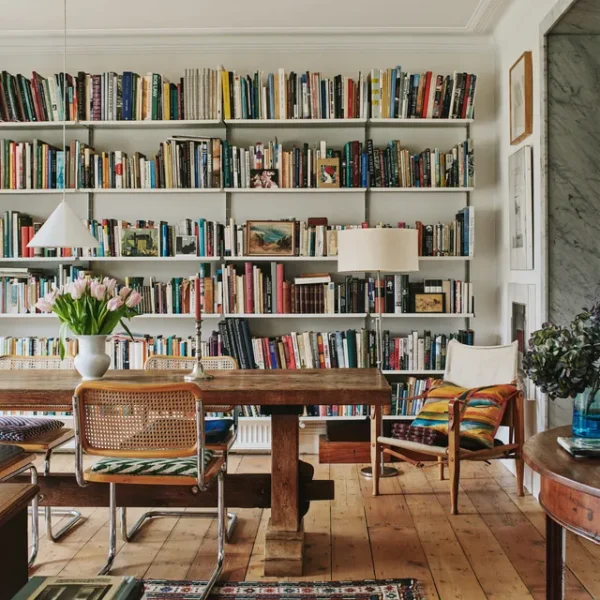
And this is what I’m tipping as my trend of 2027.
At Salone del Mobile and Milan Design Week, we saw exceptional craftsmanship, collectible pieces, expressive natural materials, sculptural furniture and unexpected combinations of old and new. Copenhagen’s 3daysofdesign reinforced the movement towards material provenance, longevity and furniture designed around a more relaxed way of living. Maison&Objet has similarly been talking about craftsmanship, distinctiveness and the relationship between past and future.
For me, these are the ideas that will move beyond the design shows and start influencing British homes in 2027, and these can be broken down as the following eight key trends.

1. The Collectible Home: We’re moving away from rooms that look “done” towards homes that look collected.
One of the most significant developments at Salone del Mobile this year wasn’t a particular sofa or colour. It was the launch of Salone Raritas, an entire platform devoted to collectible design, one-off pieces, limited editions, antiques and exceptional craftsmanship. For an international furniture fair historically associated with industrial production to give this much prominence to rarity and individuality tells us something about where design is moving.
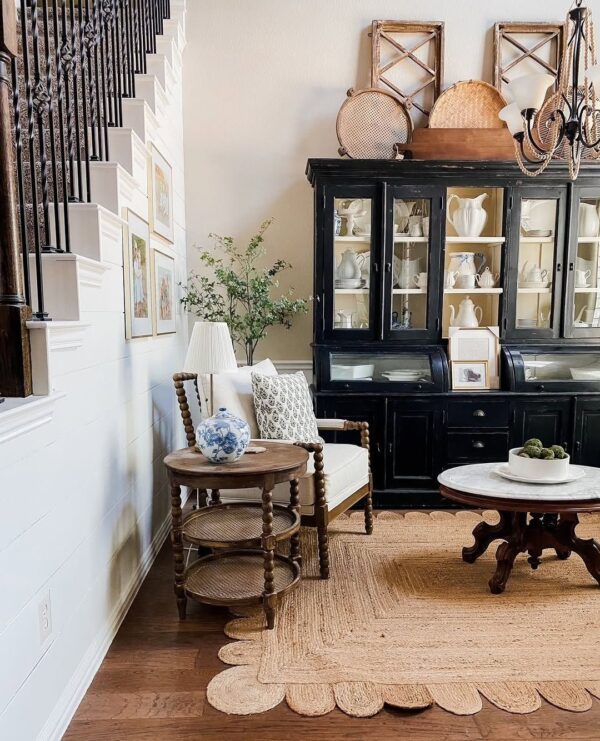
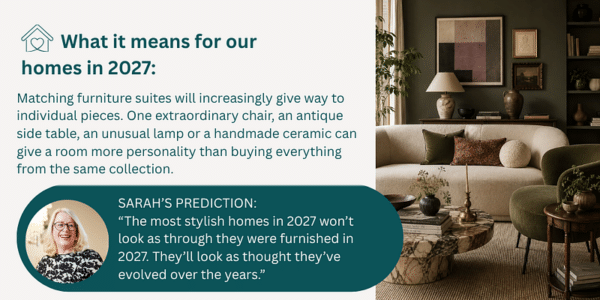
It doesn’t mean we all need to start buying investment-grade collectible furniture. The influence will be much broader than that. I think we’re going to see people becoming much more comfortable combining contemporary furniture with vintage pieces, inherited objects, handmade pieces and things they’ve found on their travels.
We’ve spent years being encouraged to make everything coordinate. Now the most interesting rooms are doing almost the opposite.
2. Furniture Becomes the Art: The statement piece is moving from the wall to the middle of the room.
Another thing that was impossible to ignore in Milan was how sculptural furniture has become.
Dining tables were particularly interesting. Designers including Ronan Bouroullec, Hannes Peer and Sebastian Herkner treated the table base almost as architecture, using expressive stone, unusual forms and exaggerated proportions.
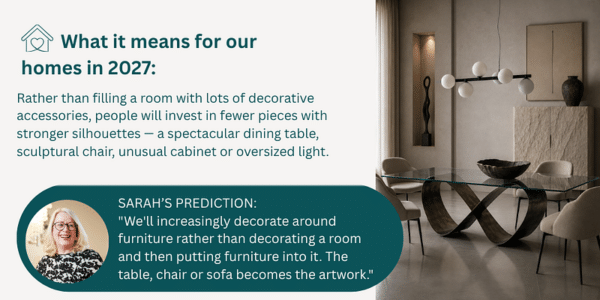
We’re seeing the same thing across cabinets, chairs, lighting and occasional furniture.
This isn’t simply another version of the “curved furniture” trend. It is about objects having enough presence to become the focal point of a room. After years of very restrained furniture designed to blend quietly into neutral interiors, that feels like an important shift.
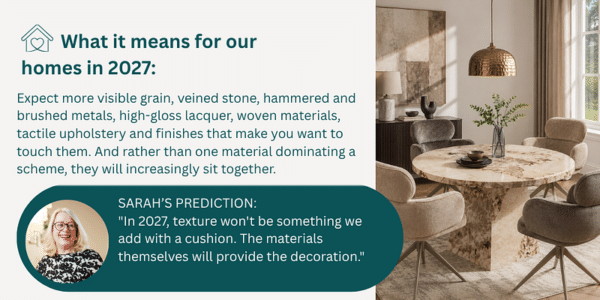
3. Materiality Will Matter More Than Colour: The question we’re going to ask is not just “what colour is it?” but “what is it made from?”
Firstly, what do we mean by materiality? It simply means making the material itself part of the design, not disguising it or treating it as secondary. And this is coming through as a big trend movement for 2027.
Salone’s own 2026 campaign was called A Matter of Salone, putting physical material at the centre of the conversation. And that idea ran right through Milan. Stone was shown with dramatic natural veining. Timber grain was celebrated rather than disguised. Glass was treated experimentally. We saw lacquer, metal, woven materials and highly tactile textiles used in increasingly unexpected ways.
Even in bathroom design, Salone identified materiality and durability as a new expression of luxury.
This is where I think some of the familiar “texture” conversation becomes much more sophisticated.
We’ve talked about adding texture to rooms for years. What’s changing is that the material itself becomes part of the design story.
4. Perfectly Matched Finishes Are Over: The next stage of materiality is contrast.
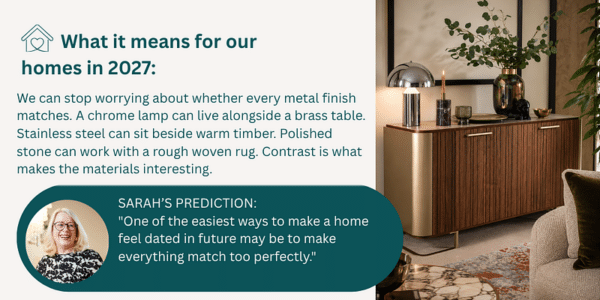
One of my favourite things about the latest international collections is how much freer designers have become about combining materials. At Milan, a number of observers spotted warm and cool metals being deliberately mixed; chrome alongside bronze and brass, and wood, stone, lacquer, glass and upholstery all appearing together throughout the show.
Copenhagen told a similar story. Stainless steel and aluminium were everywhere at 3daysofdesign, but importantly they weren’t necessarily presented as cold, industrial materials. Steel appeared alongside oak, Douglas fir, marble and other natural surfaces. And this is why I don’t think “chrome is back” – because this doesn’t quite capture what is happening. The more interesting story is material clash.
Cold with warm; glossy with matt; precise with imperfect; industrial with handmade.
5. Craft Goes High-Tech: Craftsmanship is still in-demand as a trend that’s evolving – but not in the nostalgic way we might expect.
This is one of the movements I think will become hugely influential. The entire 2026 edition of SaloneSatellite, the section of Milan devoted to emerging international designers, centred on Skilled Craftsmanship + Innovation. More than 700 young designers were invited to explore the relationship between making by hand, technology, new materials, circularity and production.
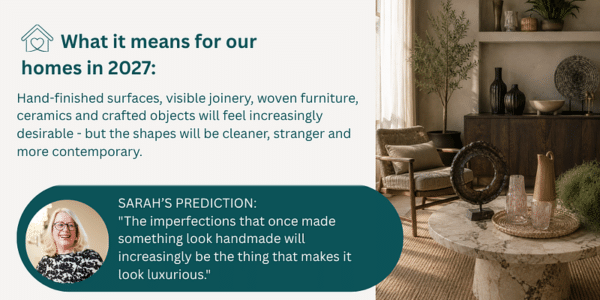
That is important because this isn’t a return to rustic craft. It is a new generation taking weaving, joinery, ceramics, basketry and other traditional techniques and combining them with digital design, unconventional materials and radically contemporary shapes.
We’re already seeing extraordinary woven furniture created using digital modelling, traditional timber joinery used in very contemporary furniture and waste materials transformed through new manufacturing processes.
6. The Low-Slung Living Room: Our furniture is starting to reflect the fact that we lounge more than we sit.
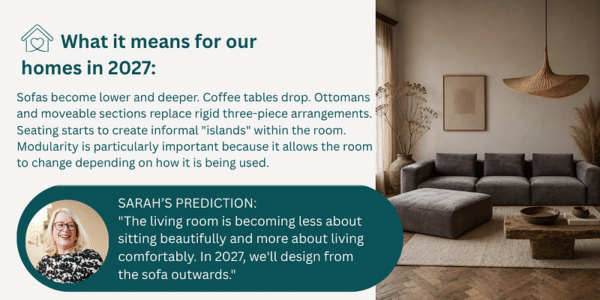
Copenhagen gave us one of the clearest signals here. Low seating was repeatedly seen at 3daysofdesign, including new pieces and reissued designs from the 1970s. Milan reinforced it with deep modular sofas, low platforms and furniture that spreads horizontally through a room.
I think this tells us something beyond aesthetics.
The traditional living room was organised around fairly upright seating – often facing a television or fireplace. Today’s living room has to accommodate sprawling, reading, working, talking, watching television, children, pets and entertaining. The furniture is adapting accordingly.
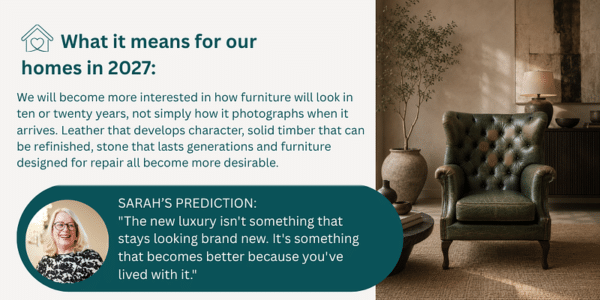
7. New Furniture That Is Designed to Get Old: Longevity is replacing perfection as a measure of luxury.
For years sustainability in interiors has largely been communicated through recycled materials and eco credentials. The design conversation is becoming much more interesting than that.
At Milan, durability, repairability, modular construction and the lifecycle of materials were recurring themes. Copenhagen also put provenance and lifespan firmly on the agenda — one kitchen manufacturer even chose to display an eleven-year-old kitchen. I love that idea. Because the most sustainable piece of furniture is often the one you don’t feel compelled to replace.
That leads us towards materials that patinate, furniture that can be repaired, components that can be replaced and pieces that don’t become aesthetically obsolete after three years.
8. The Return of the Interesting Room: Perhaps the biggest movement of all is away from designing homes to fit an aesthetic.
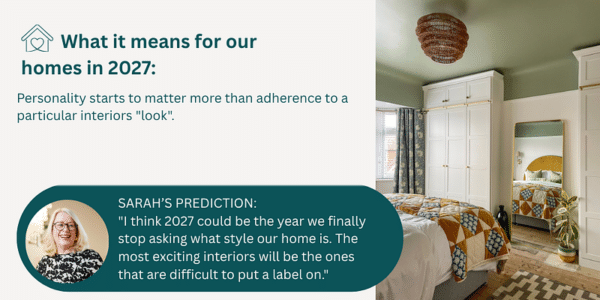
For the past decade social media has had an enormous influence on interiors. The result has been beautiful homes, but also an extraordinary amount of visual sameness: similar neutral palettes, similar curved furniture, similar accessories and increasingly similar rooms. The international design shows are starting to feel like an antidote to that.
Maison&Objet’s 2026 theme Past Reveals Future explored memory, craft and heritage, including contemporary interpretations of Baroque and folk traditions. Milan placed collectible objects, craftsmanship and narrative interiors firmly on the agenda. Its Aurea: An Architectural Fiction installation went as far as treating interiors as scenography – rooms designed to tell stories and create emotional experiences. And designers are revisiting archives rather than constantly trying to invent an entirely new aesthetic.
This doesn’t signal a return to traditional decorating. It signals permission to mix things again.
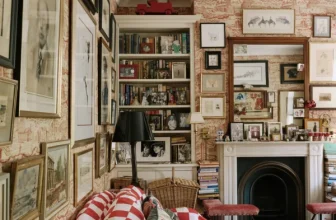
An inherited chair with a contemporary table. A highly modern sofa against decorative wallpaper. Patchwork alongside modern furniture. Art that doesn’t match the cushions.
So what will the 2027 home actually look like?
Not necessarily more maximalist; and certainly not simply more colourful. They will be more individual. So what’s on ‘trend’ spotlights will become much more challenging – but more fun because homes will be more diverse and inspirational (and so will our social media feeds hopefully).
The common thread running through the international design world is a renewed interest in things that have identity: interesting materials, skilled making, provenance, unusual forms, longevity, history and objects capable of creating an emotional response. In some ways, I think this is a reaction to the increasingly digital world around us.
The more perfect and frictionless technology becomes, the more attractive something unmistakably physical can feel; the grain of timber, an irregular ceramic glaze, the weight of stone, a piece shaped by a human hand.
Indian-born designer India Mahdavi recently summed it up brilliantly when talking about AI and our desire to look backwards towards things that feel familiar and comforting. But this isn’t about retreating into the past. The interesting designers are taking those very human qualities: craft, history, imperfection and emotion… and pushing them forward.
And that, rather than any single colour of the year, is what I think will define the best homes of 2027.
Written by Sarah Bianchi, CEO of Arighi Bianchi, the independent furniture and interiors retailer founded in Macclesfield in 1854. Sarah is the sixth generation of the Bianchi family to lead the business.