
More Masculine Archetypes – Daily Meditations with Matthew Fox


The third archetype that Matthew presents in his book The Hidden Spirituality of Men is that of Icarus, the son of Daedalus. This Greek myth serves to discuss the father-son relationship, which is so relevant to men’s healthy growing up, and yet is so often fraught with pain and miscommunication.
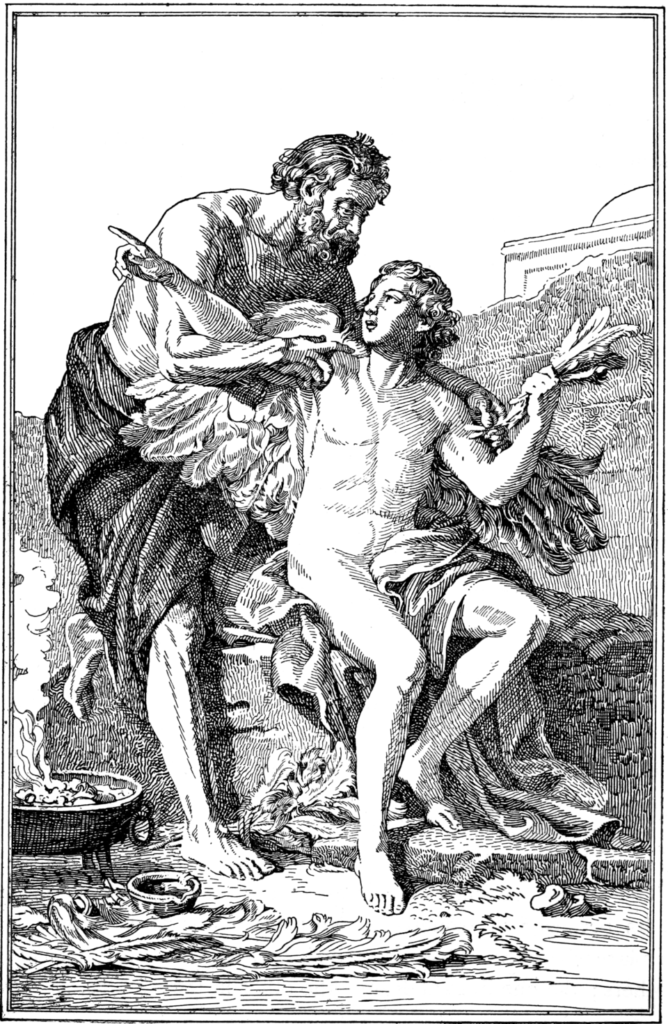
Putting on wings is itself an archetypal image and it is a powerful one for mysticism, Matthew writes. But when Icarus tries to reach the sun, is he a reckless youth who does not listen to his father’s wisdom, or is Daedalus to blame for his inability to communicate well with his son?
Perhaps both things are true. Essentially, this archetype serves as a warning. Healthy masculinity today depends on the restoration of good intergenerational communication. This is true at large, but is especially true between different generations of men.
The fourth archetype, that of hunters-gatherers, has to do with those character traits developed in the earlier phases of humanity, but much less appreciated in modernity and which need to come back and be honored again. Among these are keen intelligence, our powers of observation and relating to plants and animals, to the land and to the sky; a sense of egalitarianism and democracy, as opposed to bureaucracy and hierarchy; and a sense of community, family, and extended family.
Hunting means so many things, symbolically speaking, and leads Matthew naturally into his fifth archetype, that of the spiritual warrior. I believe that we have spoken quite often about this archetype in these meditations, as it is so much needed in the present context.
Some readers have challenged the connection of the warrior archetype to war. Our response has been essentially that the energy of rage must be channeled, not suppressed. In Matthew’s understanding, the spiritual warrior embodies nobility, generosity, and creativity for the community’s sake. It is an antidote to war rather than support for it.
The exploration of male sexuality is the topic of the sixth chapter. The archetypal image at work here it that of the phallus. There is a numinous dimension to it which has practically disappeared from today’s talk about sex and sexuality. In sexuality, Matthew writes, the powers of intimacy, intensity, and immensity all come together. Thus sexuality is a mystical experience.
The recovery of male sexuality is, of course, intended in a counter-patriarchal sense, and includes honoring sexual diversity. The exploration of the sacredness of sexuality is quite intense in this chapter, and takes its cue from Matthew’s conviction that the forgetfulness of sexual mysticism which played out in modernity was connected to the dulling of cosmic awareness (see the Father Sky archetype in the September 18 DM) which happened at the same time.
Naturally, the honoring of sexuality, together with the honoring of the connection with nature that emerges both in the Green Man archetype (see September 18 DM) and the hunter-gatherers archetype brings us to honoring the body as such. The seventh archetypal image is that of the human body not just as a mechanism or dull matter — which are strange and wrong modern ideas — but as both animal and cosmic.
It seems to me that focusing on the body as such — as distinct from sexuality — is an important choice. All religions talk about our bodies as temples. Yet where the spirit vs. matter dualism has taken roots, the body is ignored and mistreated. Treating our bodies well — including exercise, diet, and tenderness — is a spiritual endeavor in a society which devalues them.
Banner image: Bushmen hunting for porcupine, cropped. Photo by David Barrie. Wikimedia Commons.
Queries for Contemplation
If you are a man, how do you perceive these ideas in relation to your own self? If you are not a man, can you transpose them for yourself?
Related Reading by Matthew Fox
The Hidden Spirituality of Men: Ten Metaphors to Awaken the Sacred Masculine
Passion for Creation: The Earth-Honoring Spirituality of Meister Eckhart
A Way to God: Thomas Merton’s Creation Spirituality Journey
Audiobook (Digital): The Tao of Thomas Aquinas: Fierce Wisdom for Hard Times
Original Blessing: A Primer in Creation Spirituality
Charles Burack, ed., Matthew Fox: Essential Writings on Creation Spirituality




.jpg )
