Inside Abu Dhabi Falcon Hospital: Meet the desert wings of the UAE

Get up close and personal with the birds that have shaped the heritage of the UAE at Abu Dhabi Falcon Hospital
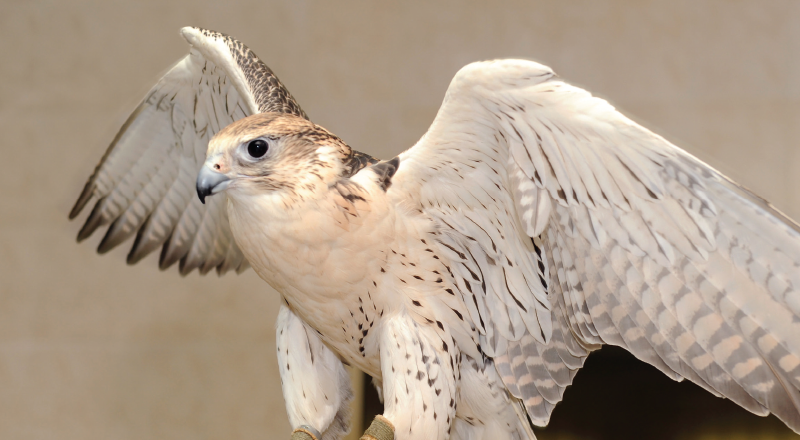
The falcon steps onto your gloved forearm before you’re quite ready for it. The weight of the majestic bird of prey pushes down on your arm, and as you sway to get the balance right, your attention remains fixated on the magnificent creature before you. Dr. Margit Gabriele Müller, Executive Director, Abu Dhabi Falcon Hospital (ADFH), has watched this moment play out thousands of times. She fondly says the moment is one of her favourite things to witness at the hospital.
“It is impossible to describe it fully as this has to be experienced,” she says, recounting reactions as a mix of surprise and pure delight. It’s a moment wherein language and culture cease to exist, and all that’s left is a person looking at the falcon sitting on their arm and thinking ‘I cannot believe I am actually doing this.’
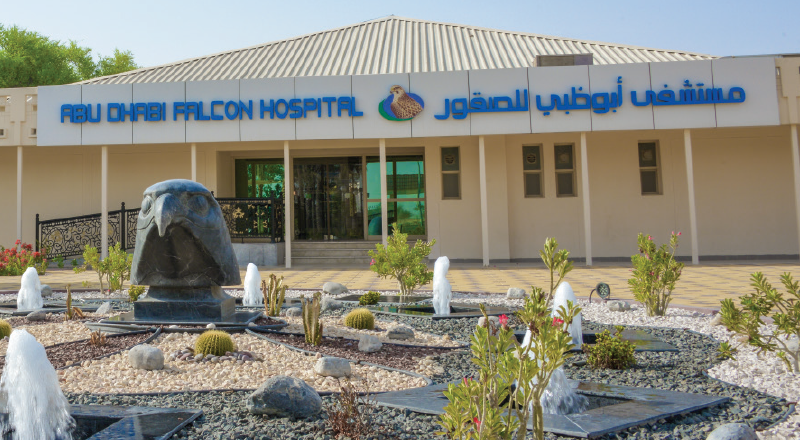
ADFH opened its doors in 1999, dedicated to providing advanced veterinary care for falcons. It was created at a time when falconry remained an immensely important part of Emirati heritage but lacked specialised veterinary services for these birds. From its beginnings as a specialist falcon hospital, ADFH progressively developed into a much broader institution encompassing veterinary medicine, research, conservation, education, animal welfare and tourism.
The hospital is open to the public during the week, offering visitors a special look into the rehabilitation of falcons and a learning experience like no other.
View more fun things to do in Abu Dhabi
The heritage of Emirati skies
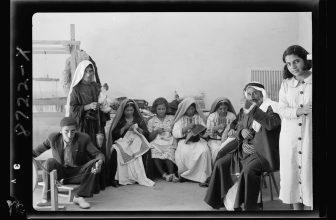
To understand why ADFH is so significant to the UAE, one must first know what falcons mean to the country. For centuries, falconry was closely connected to survival in the desert and became part of the relationship between people, animals and the environment. Today, falconry remains a vibrant living tradition, passed down from one generation to the next. For Emiratis whose heritage is deeply rooted in Bedouin culture, it offers a precious connection to their ancestors, their desert traditions and their cultural identity, helping to preserve this heritage in a rapidly changing modern world.
The skill of being a falconer is not easy to achieve. A captive-bred falcon can’t be domesticated in the way a dog is. It retains its wild instincts.
“The bond is built through patience, trust, consistency, love, and mutual understanding,” says Dr. Müller. An experienced falconer learns to recognise very small changes in the bird’s behaviour, posture, and temperament. And the falcon, in turn, learns to trust and respond to its falconer who considers it as his family member like a child. “This mutual love is precisely what makes the relationship so remarkable,” she explains.
For centuries, the migratory Saker Falcon and Peregrine Falcon have passed through the Arabian Peninsula, preserving the ecological order in the region. Since its establishment, ADFH has extended beyond its primary function of veterinary care for hunting falcons. Through the Sheikh Zayed Falcon Release Program, wild Saker and Peregrine falcons undergo comprehensive veterinary examinations, treatment and rehabilitation at ADFH. Falcons that are healthy and suitable for release are subsequently returned to the wild along their natural migratory routes.
In this way, ADFH contributes to the conservation of wild falcon populations while continuing an important principle at the heart of the UAE’s falconry heritage: respecting the falcon and being responsible for its future.
Getting up close and personal
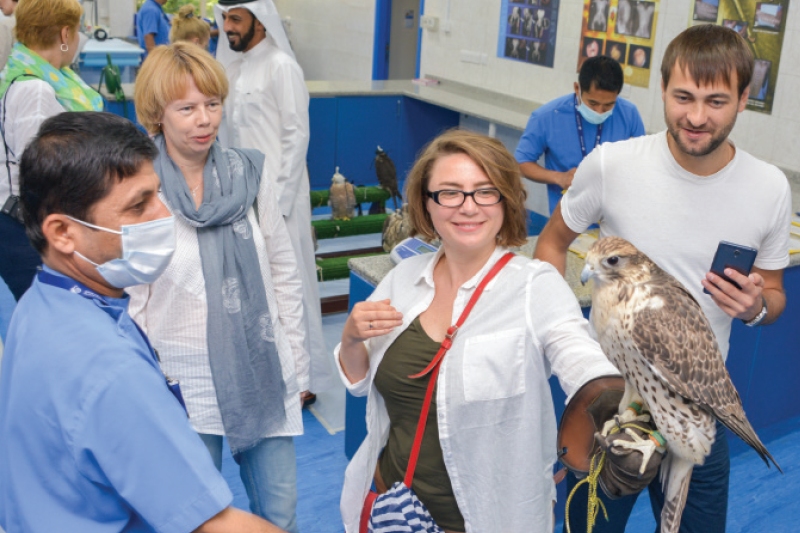
Falcons are extraordinary birds of prey, but to truly appreciate them you need to understand and feel them. This is why ADFH opened tours to the public in 2007. During the tour, visitors quickly learn that there is much more than meets the eye when it comes to falcons. They are highly intelligent birds that possess the powers of acute vision, flight speeds up to 320 kmph and exemplary hunting abilities from great distances. This education contributes to one of the most effective forms of conservation.
“Once people have stood close to a falcon, looked into its amazing magic black eyes and understood something about its life and its relationship with humans, they tend to care differently about protecting these birds,” says Dr. Müller.
The tour also offers something fundamentally different from a conventional tourist attraction. ADFH is a working veterinary hospital, and tours take visitors on a journey into an authentic environment in which falcons are cared for by specialists.
The tour begins with a walk through the venue’s falcon museum, where visitors get deep insights into the traditional heritage of falconry, with displays of special tools and equipment. The guide then explains how falcons are registered to the country’s records and presents key information about their unique falcon passports. After this, the tour takes a technical turn into the examination room, where visitors can see procedures such as feather repairs or talon pedicures.
Getting a first-hand look into what real-world care for these birds is a profound experience, unique to ADFH in the country. After soaking in the history, visitors stop by ADFH’s free-flight aviary to witness the birds’ true majesty. Finally, each member of the group gets a chance to capture the memory of bearing a falcon on their arm for a picture-perfect moment.
Tours run Sunday to Thursday at 10am and 2pm, and on Friday at 10am. The programme has quietly become one of Abu Dhabi’s most decorated cultural experiences: a two-time winner of the World Responsible Tourism Award, and a 13-time recipient of the Middle East Responsible Tourism Award.
More than 185,000 visitors have come through since 2007, including former US President George W. Bush and Queen Camilla – though the appeal isn’t really about star power. It’s about handing ordinary visitors, of every nationality, a genuinely authentic slice of Emirati identity.
Where tradition meets medical marvel
Falcons are deeply embedded in the history and identity of the UAE. Providing advanced veterinary medicine for these birds goes beyond an animal-health service; it supports the continuation of an important element of Emirati heritage while demonstrating how traditional practices can coexist with modern science, conservation and high standards of animal welfare. ADFH has seen a patient influx of more than 170,000 patients since its opening, going beyond falcon care to help rehab birds and animals of various species.
The hospital also serves as the UAE reference laboratory for avian influenza on behalf of the Ministry of Climate Change and Environment (MOCCAE). This adds an important national animal-health and biosecurity dimension to the hospital’s work, supporting the surveillance and diagnosis of a disease of major importance to animal and public health. Furthermore, the establishment of its Pet Care Centre in 2007 has treated more than 130,000 and its management of Abu Dhabi Animal Shelter since 2011 has rescued more than 9,000 dogs and cats.
The hospital aims to live by the late Sheikh Zayed bin Sultan Al Nahyan’s understanding, long before sustainability became a global conversation, that preserving heritage must go hand-in-hand with protecting nature.
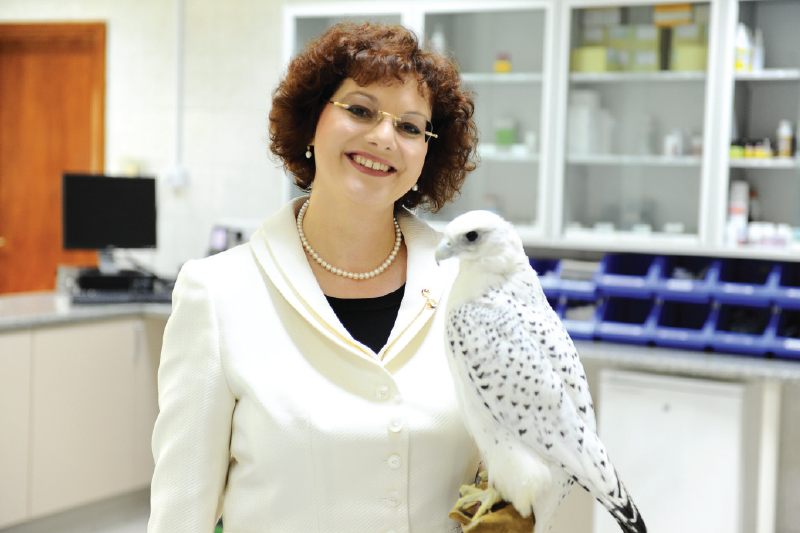
Dr. Margit Gabriele Müller, Executive Director, Abu Dhabi Falcon Hospital (ADFH).
The Sheikh Zayed Falcon Release Program is one of the clearest expressions of that philosophy. Wild falcons are medically examined, rehabilitated, and prepared for release so that they can return to nature and continue their natural life cycle.
While these are extremely technical facts and figures to digest, if you were to ask Dr. Müller what ADFH ultimately represents, she reaches past the clinical terminology to speak on behalf of falcons through their voice.
She says: “I think a falcon might say: ‘I am not just a bird of prey to you. I am part of your family, like your child. I know how deeply you care for me, and I trust you. I recognise your voice, your touch, and your presence. I love you in my own way, just as you love me.’”
That’s the case ADFH quietly makes through its two-hour tour: that preserving heritage paves the way forward to the future, and that the easiest way to understand Abu Dhabi’s history, is to stand and marvel at the falcon on your arm for a few minutes.
Plan your visit
Tours to Abu Dhabi Falcon Hospital must be booked in advance, up to 1 week prior for groups, and at least a 2 days prior for individuals. The two-hour tour takes visitors through three interconnected falconry worlds: falconry and heritage; falcon medicine and the falcon interaction.
Where: Abu Dhabi Falcon Hospital, Sweihan Road, Al Shamkah. Near the Abu Dhabi International Airport.
When: Tours run from Sunday to Thursday at 10am and 2pm and on Friday at 10am
Cost: Tours start from Dhs178.50
Contact: 02 885 8100
Images provided by Abu Dhabi Falcon Hospital