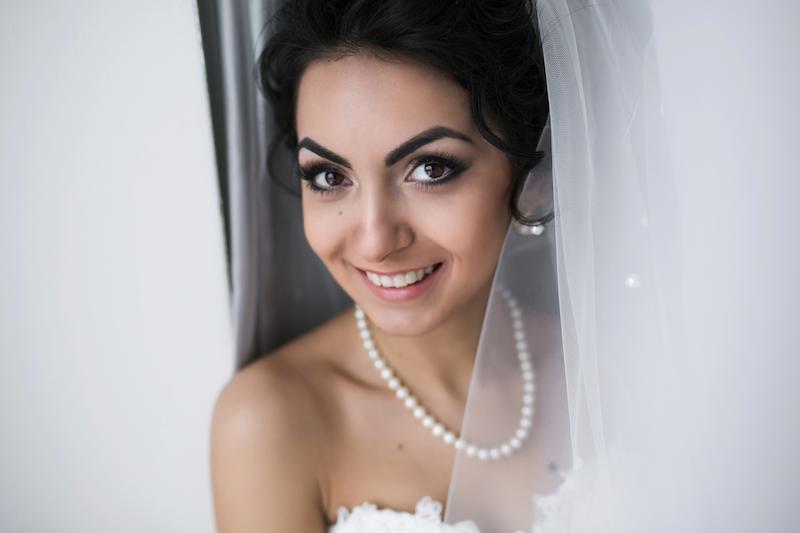
Wedding accessories are usually chosen in the middle of a very busy planning period, which can make even small decisions feel bigger than they are. Shoes, jewellery, veils, hair pieces and other details all need to work with the outfit, the venue and the overall mood of the day, but they also deserve to feel personal. If you’re trying to find the perfect bridal pearl jewellery, for example, it helps to think beyond what looks good in the moment and consider whether the piece will still feel meaningful years later.
Start With the Dress, But Don’t Let It Dictate Everything
Your wedding outfit should guide the accessories, but it doesn’t need to control every choice. A highly detailed dress may work best with simpler jewellery, while a pared-back silhouette can leave more room for a statement earring or necklace. Neckline, fabric and embellishment all matter, but so does your own style outside the wedding context.
If you rarely wear large jewellery in everyday life, the wedding day may not be the best time to suddenly choose something oversized purely because it photographs well. Accessories tend to age better when they feel like an elevated version of what you already love rather than a costume created for one day.
Timeless Usually Means Recognisable, Not Boring
The word “timeless” can sometimes sound like code for very safe, conservative choices, but that doesn’t have to be the case. A timeless accessory can still have personality. What usually helps is choosing materials, shapes and proportions that have already proven they can move through different eras without feeling completely tied to one trend.
Pearls, fine metalwork, simple studs, delicate drop earrings and understated hair pieces all have that quality because they can adapt to different styling. The aim isn’t to remove every trace of individuality. It’s to choose something distinctive enough to feel special without being so trend-driven that it immediately dates the photos.
Think About What You’ll Actually Wear Again
One of the nicest things about wedding accessories is that some of them can keep living long after the event. Jewellery especially has the potential to become part of anniversaries, formal dinners or family celebrations, which gives it a meaning that extends beyond the wedding itself.
That’s worth considering while you’re shopping. If you can imagine wearing the piece again in a different setting, it may be a stronger choice than something you know will go straight into a box afterwards. The same thinking can apply to shoes, bags or even hair accessories if they’re versatile enough.
Sentimental Value Often Outlasts Style Trends
Accessories with personal meaning have a habit of ageing well because their value isn’t purely visual. A piece from a parent or grandparent, a gift from your partner or something chosen to reference a family tradition can become far more important over time than a detail selected purely because it was fashionable.
That doesn’t mean every accessory needs a deep backstory. Sometimes the sentiment develops later simply because the piece becomes attached to such a major life event. But if there’s an opportunity to include something meaningful, it can give the final look more depth.
Comfort Matters More Than You Think
An accessory can look perfect in the mirror and still become annoying after several hours. Heavy earrings, stiff shoes or a hair piece that constantly needs adjusting can quickly become a distraction on a long day.
Try everything properly before the wedding. Wear the earrings for a few hours at home. Walk around in the shoes. Test the hair piece with the hairstyle you’re actually planning to wear. Those small experiments can reveal practical issues well before the day itself.
The best accessories are the ones you stop thinking about once they’re on.
Don’t Let Trends Push You Into Over-Accessorising
Wedding styling can become cluttered surprisingly easily because there are so many beautiful options available. A veil, earrings, necklace, bracelet, hair piece and statement shoes can all look appealing on their own, but together they may compete for attention.
It’s usually better to decide where you want the focus to sit and let the other pieces play supporting roles. If the earrings are the standout, the necklace can be more restrained. If the dress already has heavy embellishment, jewellery may only need to provide a subtle finish.
Editing the look often makes the strongest pieces feel even more special.
Consider How the Accessories Will Photograph
Wedding photographs have a long life, so it’s worth thinking about how smaller details will read in pictures. Very delicate jewellery can sometimes disappear completely, while extremely bold pieces may dominate more than expected. Scale matters, particularly in close-up portraits.
That said, photos shouldn’t be the only factor. Something that looks beautiful in person but understated on camera can still be the right choice if it feels more like you. The goal is balance rather than designing the entire look for the lens.
Choose the Piece You’d Still Pick Without the Wedding
A useful test is to imagine seeing the same accessory outside the wedding context. Would you still be drawn to it? Would it still feel elegant, interesting or meaningful without the dress around it?
If the answer is yes, there’s a good chance it’ll age well. Wedding style inevitably reflects its era to some extent, and that’s part of the charm, but the pieces people tend to treasure most are often the ones that feel genuinely personal rather than purely fashionable.
Twenty years from now, you probably won’t care whether every accessory matched the trend forecast perfectly. You’re much more likely to appreciate the pieces that felt right, looked like you and still carry the memory of the day every time you see them.