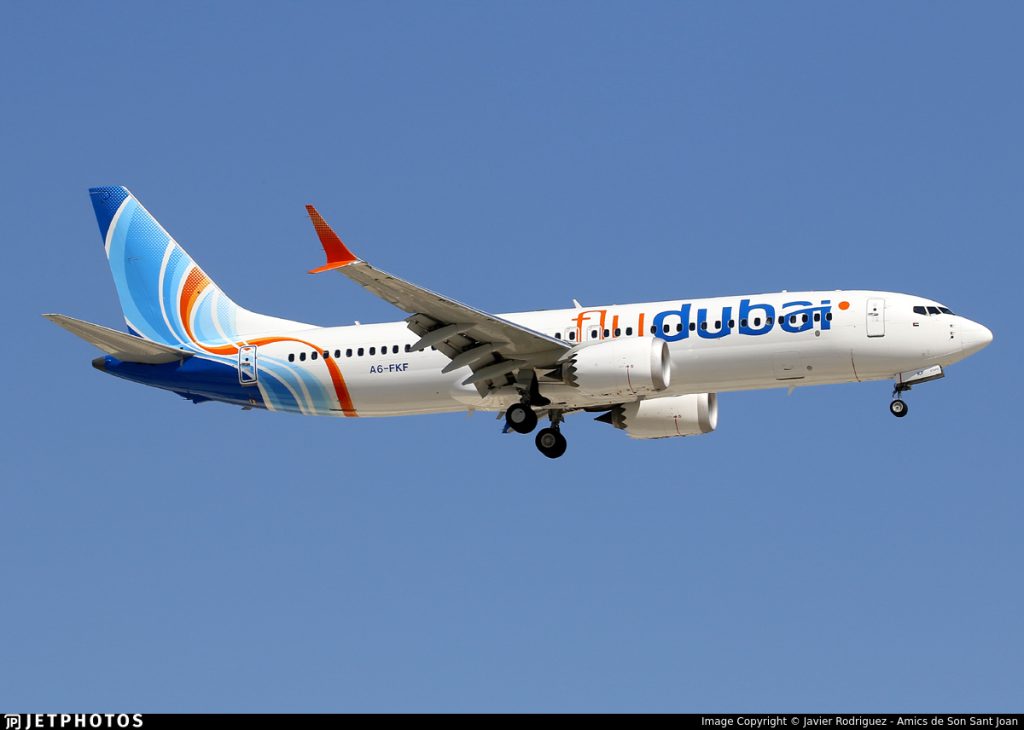
Flydubai 1073: What the incident could mean for aviation security


It’s been a week since Flydubai flight 1073 made the news. More details keep emerging. We’ve learned that the incident most likely was a failed hijacking attempt. We’ve read statements from people who were there. How the captain miraculously managed to fight his aggressor, the co-pilot of the flight, and open the flight deck door. We’ve learned that fellow passengers were given the opportunity to subdue and restrain the threat because of his actions. And finally, we’ve come to understand that so-called passive crew (basically pilots positioning for duty, occupying a regular seat in the cabin) sprang into action and managed to land the aircraft in the northwestern city of Tabuk (TUU/OETB), Saudi Arabia. Each detail surfacing somewhat helps us paint a slightly less hazy picture of what happened on the ill-fated morning service from Dubai to Tel Aviv on September 30th.

A 17,000-foot plunge in less than a minute

Flightradar24 quickly made granular ADS-B data from the flight available, centered on the incredible loss of altitude the aircraft experienced during a brief moment. For reference, the primary flight display (the main display combining the most vital information to a pilot) on the Boeing 737 MAX maxes out at displaying 6,000 feet per minute of vertical speed. An air traffic controller that wants separation between aircraft to improve will typically ask for a “rate of 1,500 feet or greater”. FlyDubai (FZ/FDB) Flight 1073 plunged 17,000 feet in less than one minute. It goes without saying that this is pushing the envelope of what the aircraft was designed to withstand.

The forces and strain put on the aircraft were clearly evident in pictures of the tail section that soon began spreading across the digital domains. Large parts of the rudder were gone, with both the vertical and horizontal stabilizers, however, appearing intact—proving that the design may be old, but nonetheless sturdy and robust when put to the test.

The cockpit has become a fortress

But let’s move beyond digits and startling facts. Let’s instead focus on what long-term impact Flydubai 1073 can be expected to have on aviation. And more importantly, how we can avoid seeing an incident like this occur again.

Since September 11, 2001, aviation security has placed enormous emphasis on protecting the flight deck from external threats. Long gone are the days when the door could be swung open, passengers (young and not-so-young) curiously peeking in at the myriad of dials and buttons. 

That approach has been highly effective at addressing the threat it was designed for. That’s why you will struggle to remember the last time you heard of an assailant making it into the inner sanctum that is the flight deck. What happened aboard Flydubai FZ1073 presents a rather different problem. This time, the threat obviously came from inside the flight deck itself. And that obviously is quite a different nut to crack for safety departments and regulators alike.

The difficult question of pilot vetting

The most obvious area for renewed scrutiny will be pilot recruitment and background checks.

Improved international cooperation will be key here. A pilot’s professional history can cross several borders during a career. Training may take place in one country, a licence may be issued by another, the needed medical certificate in yet another nation, an airline may be based somewhere else and the pilot may operate internationally almost every day. Is your head spinning yet? Perhaps it is no surprise then that people responsible for background checks naturally may struggle in certain outlier cases. And not for lack of trying. Getting the full overview and complete history of an individual can, for reasons described above, be tricky. 

FZ1073 is then likely to encourage regulators and airlines to look much more closely at that problem. We could see more extensive international information sharing and more comprehensive checks as pilots move between employers. Initial reporting indicates that the latter faltered, to put it mildly, when the attacker involved in last week’s incident was hired by his current employer.

Mental health and security are not the same thing

Regulators also have to think twice about how to deal with the relationship between mental health and security screening.

After the horrific Germanwings incident in 2015, the aviation industry soon decided to focus more on psychological assessment and support for pilots. Those measures remain important. There is however a fundamental difference between identifying someone who is struggling with their mental health and identifying someone who poses a deliberate security threat. The two should not and cannot be treated as interchangeable.

The vast majority of pilots (and people in general) who experience depression, anxiety or stress are not security threats. In fact, many argue that overly aggressive screening may lead to individuals becoming less willing to seek help—if they believe that disclosing a problem will automatically put their licence (and thus career) at risk.

From a safety perspective, that would be counterproductive. Airlines need pilots to report problems early, whether those problems involve fatigue, health, workload or personal circumstances. A healthy safety culture depends on people being willing to say that something is wrong.

Learning the right lessons from FZ1073

Finally, for anyone feeling a tinge of angst about stepping onboard an aircraft right now, I can’t stress enough that flying remains an extremely safe mode of transport. But safety has never meant eliminating risk altogether. No system involving people, machines and the physical world can ever be completely free of risk. Instead, safety is about identifying the risks that exist, understanding their potential consequences and putting layers of protection in place to reduce both the likelihood of something going wrong and the consequences when it does.

As a pilot, I expect the industry to approach this in much the same way it approaches other safety issues. That is carefully, incrementally and with an emphasis on evidence rather than emotion. The most valuable outcome would not be a dramatic new security measure introduced in response to one extraordinary incident. It would be a system in which the information available about people entrusted with an aircraft is more complete. One that ensures relevant concerns are shared with the organisations that need to know about them, while flight crews retain the support and trust they need to do their jobs safely.

That would be a meaningful legacy for FZ1073.

The post Flydubai 1073: What the incident could mean for aviation security appeared first on Flightradar24 Blog.



We will be happy to hear your thoughts

Leave a reply

Som2ny Network
Logo
Register New Account
Compare items
  • Total (0)
Compare
0
Shopping cart