Judge Perry May Have Flipped a Witness

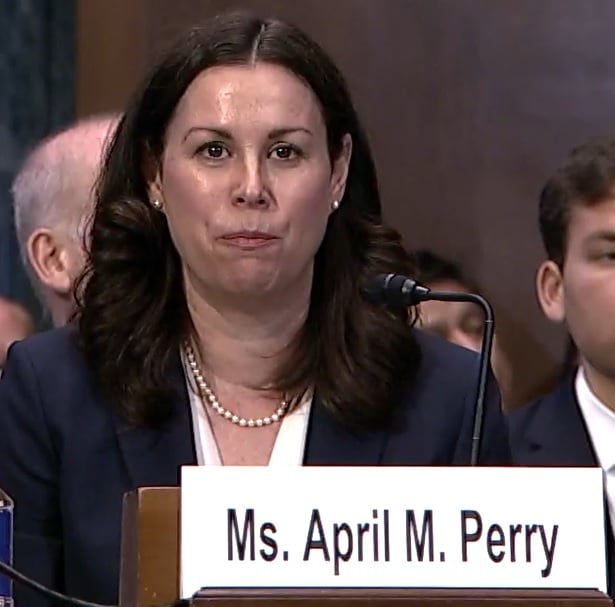
Let me propose a second-hand interpretation of last Thursday’s hearing in the Broadview 6 case. Judge April Perry did what prosecutors (like she used to be) do: flip a useful witness against others.
Not long after the Broadview 6 hearing began on Thursday, the exonerees and their lawyers became spectators. That happened via this part of Judge April Perry’s minute entry on the hearing.
Motions for attorneys’ fees and expenses [201] [210] are granted. The parties are to meet and confer and determine if a settlement of this matter can be reached, if they would like the court’s assistance in mediating the issue, or if they prefer a briefing schedule. A joint status report on the attorneys’ fees motions is to be filed by 11/2/2026. Motion to conduct discovery in connection with the requests for attorneys’ fees [206] is denied.
She granted them the attorneys fees DOJ already agreed to pay, Chris Parente said if discovery needed to happen, Judge Perry could do it, and they were told to report back in a month. From that point forward, they were done. With that, Perry dispensed with the argument DOJ was making that exonerees did not have standing to ask for more.
Much later in the hearing, she appointed law professor William Baude (whom she had already asked to serve) as Amicus, effectively replacing the exonerees with the law professor and in so doing dodging some of the problems that giving exonerees discovery would have caused. In recent months Baude has written about what to do when the Executive refuses to follow a judge’s orders which, among other things, advises to think ahead to how the Executive will respond to your orders before you give them.
Even before that, though, Perry approved Sheri Mecklenburg’s intervention, which is reflected in this part of the minute.
For the reasons stated on the record in open court, Petition to Intervene filed by Sheri Mecklenburg [261] is granted and Ms. Mecklenburg may intervene to challenge the possible appointment a special prosecutor and any potential consideration of sanctions.
That left two questions on the table: Would Judge Perry impose sanctions and/or would she appoint a special prosecutor.
Almost immediately after granting Mecklenburg’s motion to intervene, Perry asked which lawyers would be willing to testify. Mecklenburg’s attorney said he thought she would be willing. The AUSA speaking for Andrew Boutros, William Hogan, Matthew Skiba, and potentially others, Nate Whalen, hedged.
Perry asks if any of the AUSAs would “take five,” or cite their Fifth Amendment privileges.
Whalen: “I don’t know the answer to that.”
Perry asks Mecklenburg attorney Sergio Acosta whether Mecklenburg would be willing to testify.
Acosta: “I expect that she would, judge. We have not discussed that with her in any detail.”
Even before that, though, Whalen hedged on whether DOJ would turn over documents, effectively arguing that first Perry had to find misconduct before she could get evidence of it.
Perry: “Generally speaking, if I ask you to produce documents, you would produce them subject to claims of privilege?”
Assistant U.S. Attorney Nathaniel Whalen: “If the court determines there’s been willful misconduct.”
Perry calls that “kind of circular.”
Here’s where everything gets interesting. As reflected in Perry’s minute entry (and her own request to intervene) Mecklenburg was present only to weigh in on sanctions and a Special Prosecutor. But Perry said she’s looking only at lack of candor and other misconduct before her — effectively not the grand jury misconduct itself, but the cover-up of what happened and why.
Here’s how Jon Seidel captured it in his live blog, though Perry’s limitation — that she is focused on lack-of-candor — showed up in the detailed coverage:
U.S. District Judge questions the feds about outside communications about the case.
Assistant U.S. Attorney Nathaniel Whalen quibbles on whether there are relevant communications, which prompts many smiles on the defense side of the courtroom. Defendants had pressed for communications with the White House and Justice Department headquarters.
Whalen indicates there were communications outside the U.S. attorney’s office after a charging decision was made.
Perry tries to pin down when that was. Whalen tells her the feds tried to clarify that in a brief, and Perry’s eyes go wide. She also tells Whalen that a footnote he’s been pointing to “is a mess.”
As Perry presses, Whalen tells her he understood today’s proceedings to be an oral argument. “I’m not here to supplement the record with additional facts,” he says.
Perry: “My sole focus at this point is on lack of candor, concealment of material facts, or other misconduct that occurred before me.”
What this means is that Mecklenburg’s misconduct will have been punished by her retirement from DOJ, DOJ’s refusal to pay her legal fees, and the very public airing of her misconduct. But her legal exposure will be closed.
As such, Mecklenburg in an equivalent position to a cooperating witness. She has already acknowledged improprieties in the grand jury in her motion to intervene that got published; though some of her explanations ring hollow. Her further legal exposure would arise, based on what Judge Perry is reported to have said, from lack of candor going forward.
Procedurally, Perry seems to be treating the next phase of proceedings as further information-gathering before she decides whether to hold DOJ in contempt. Since that is why Perry granted Mecklenburg’s motion to intervene (and since Mecklenburg said she had information to share), I assume the now-retired prosecutor will be asked to answer some of the same questions Perry is preparing that DOJ will — questions like, who got the rush grand jury transcript Mecklenburg ordered, what Boutros told her to do after getting no-billed, what communications between Main DOJ and Chicago she knows of.
DOJ has said they may not answer these questions or share documents. Mecklenburg intervened for the express purpose of answering such questions.
If DOJ continues to stonewall, they will leave whatever Mecklenburg says unrebutted — though they couldn’t manage that on her claim that Andrew Boutros overrode her recommendation that DOJ charge misdemeanors, thereby potentially waiving privilege for everything else. And while Mecklenburg doesn’t have access to relevant documents anymore, if she can remember what they are, it provides Judge Perry with a sense of what DOJ is withholding. If DOJ lies about what happened a year ago, Mecklenburg can rebut it, which would give Perry cause to demand the documentation. If DOJ refuses to cooperate because (as Whalen argued) they don’t have to do so until Perry finds them in contempt, Mecklenburg can elucidate what they’re withholding. DOJ can try to come clean, but that may further chip away at their own privilege claims.
Meanwhile, consider the timing. DOJ has to submit their view on whether Judge Perry can appoint a prosecutor if she holds them in contempt by November 2. That same day, exonerees will report on whether DOJ is paying any of their legal bills if DOJ does not, it will suggest DOJ said they would pay exonerees’ legal bills solely to stonewall. But then Professor Baude will have a month to respond. The contempt question will not be made until close to the time a new Congress should be sworn in, at such time as there may be other alternatives to a special prosecutor.
In his rush to scapegoat Mecklenburg, Boutros mooted the grand jury problems by dismissing the case. And that effectively provided Mecklenburg to flip. And Judge Perry seems to have considered how DOJ was bound to respond to her orders and planned accordingly.