

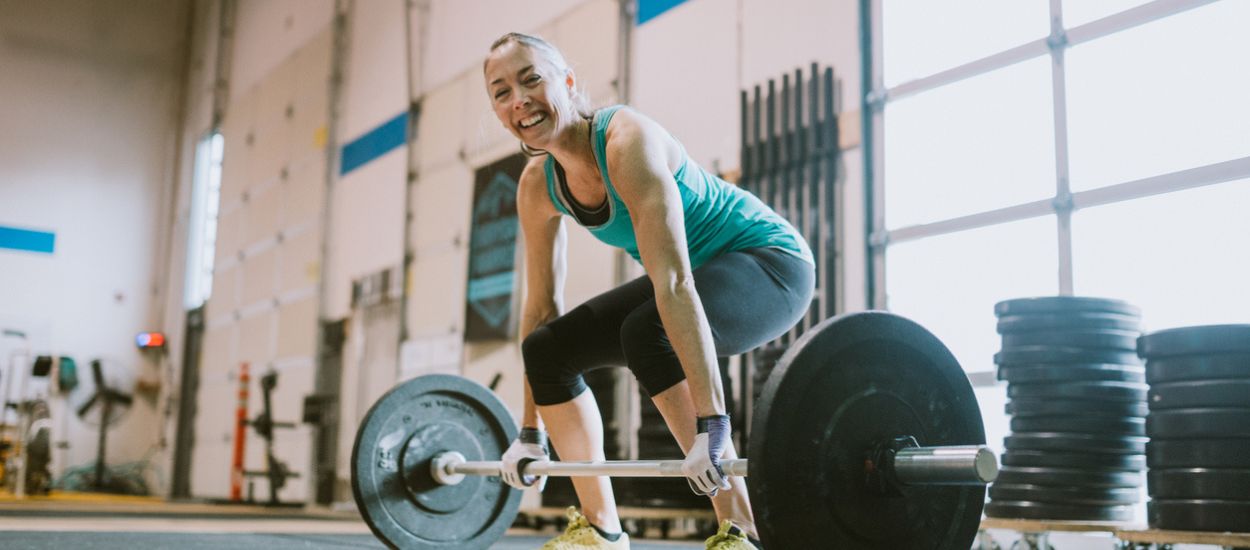
Deadlifts are a powerful addition to any runner’s strength routine, helping to build muscle, boost power and improve running performance. If you’re looking to become a stronger, more efficient runner, adding deadlifts to your weekly training is a smart move. Not only do they support your running goals, but they also build strength that benefits everyday movement and overall resilience.
Why are deadlifts good for runners?
The deadlift strengthens the posterior chain, or the muscles on the back of your body: your glutes, hamstrings, spine, and – further up – your trapezoids and deltoids. The deadlift also increases your core stability. The deadlift’s ‘hinge’ movement teaches you to fire your hamstrings and glutes to bring more power to your stride.
If you make the deadlift a staple in your strength training, you’ll also find good running form easier to maintain on distance events. This means less hunching when you’re tired, better arm swing, and, most importantly, faster times.
Even for non-runners, the deadlift is an essential everyday movement. Think about all the times during the day you pick up heavy items like shopping bags or even children. Deadlift training makes you stronger for everyday life.
What is a deadlift?
A deadlift is a weight training exercise that involves picking up a weight and bringing it to hip height. We often think of a deadlift involving a huge bar weight but they can also be done with a kettlebell or dumbbells. You don’t need to be in a gym to do a deadlift. They can be done as part of a home workout if you’ve got a suitable weight, though it’s a good idea to do them in front of a mirror to check your form.
How to do a deadlift
- Stand in front of the weight with your feet a little bit more than hip distance apart.
- Keep your back straight and bend your knees and hips to lower your body down until your can comfortably grab the weight.
- Keeping your arms and back straight, bring your body back up while holding the weight by pushing your hips forwards.
- Pause at the top then lower the weight back down.
Avoiding deadlift mistakes
The only downside to the deadlift is that it can cause injury if you execute it wrong. Novice lifters can attempt to pull a bar from the ground with their torso instead of engaging their core and pushing from the legs, causing what’s called an ‘angry cat back’. But you can avoid injury by starting with smaller weights and getting some guidance on your technique.
Start out with dumbbell variations, like Romanian deadlifts. Do bodyweight repetitions at first, placing your foot behind you in a staggered stance, then progress up to single leg versions, then add weight.
Deadlift variations
There are plenty of different ways to do deadlifts. You can use a bar weight, a kettlebell or dumbbells. You can also try single-leg deadlifts. As the name suggests, these are done on one leg and are a great unilateral exercise to help build strength and stability.
Inspired? Read Advanced strength training for runners – when squats aren’t enough.