

This column first featured in Club Huck’s culture newsletter. Sign up for free here to make sure it lands in your inbox every month.
2026 was the year of slop.
March 2026 saw the term “AI Slop” spike to its highest ever ranking in Google search results, an indicator that it’s a topic everyone has an opinion on. There have been debates raging over AI use across the arts – perhaps most virulently in music, where we’ve seen everything from a glut of ageing producers (Timbaland, Diplo, Dr Dre) coming out to insist that AI music is absolutely definitely the future, to Jorja Smith having to sue a songwriter for clearly prompting AI to rip off her vocals, to Tyga releasing an album he proudly declared was made with AI, only for Pitchfork to award it a remarkable (if generous) 0 out of 10. At times it’s seemed out of control, but in all the heat and noise there’s a reality that’s been missed.
There’s always been slop.
Case in point.
In July 1971 this got to #1 in the UK album charts.
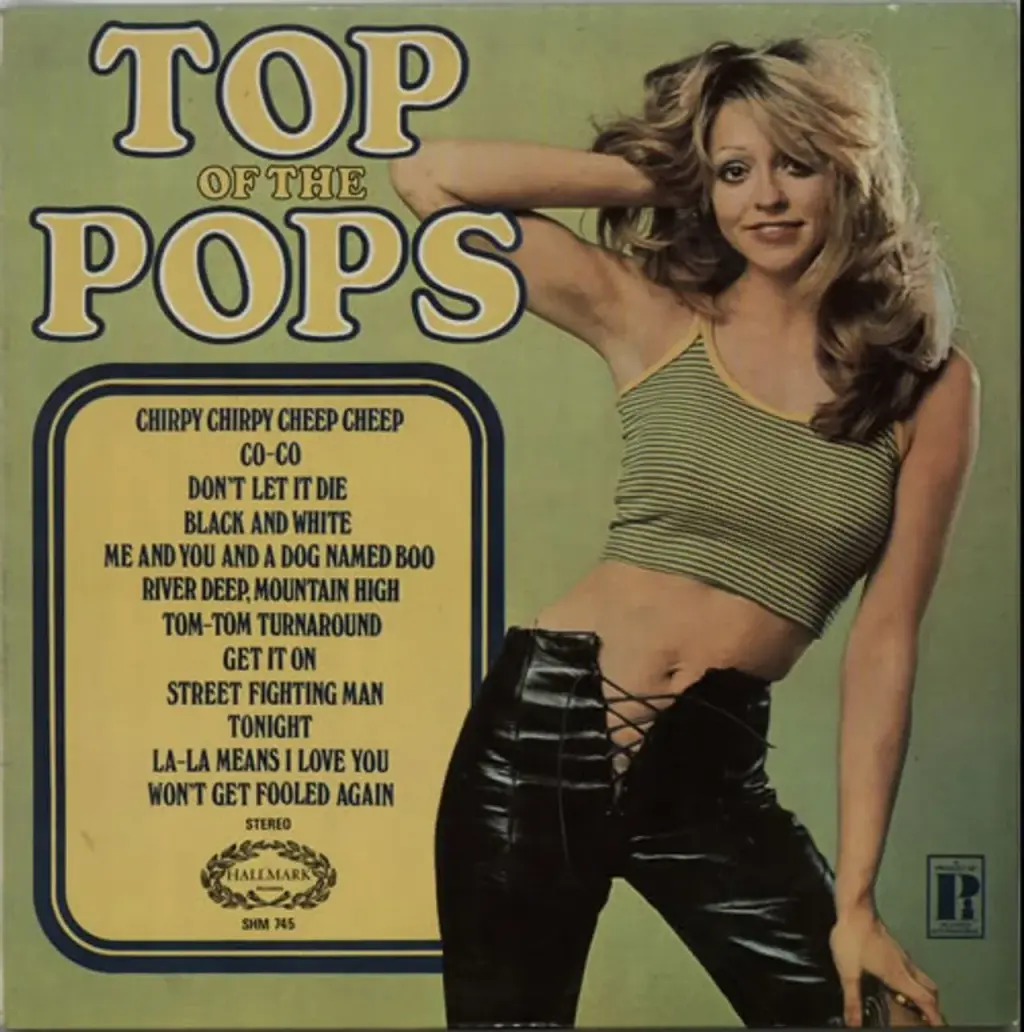
It was part of the incredibly successful Top of the Pops compilation series, a series that not only stole its name from the then wildly popular pop TV show, but stole all of its contents from the charts. The formula was simple; get a load of session musicians and lock them in a studio until they’d banged out cover versions of everything currently shifting units. Three songs in three hours? Not a bother. To anyone with any sense of discernment the songs sounded atrocious – disgraceful bowdlerisations of pop masterpieces, Marc Bolan’s fey snarl rendered as an arthritic wheeze. ‘Won’t Get Fooled Again’ sounding less like The Who and more like the why?
And yet, the British public did love it. They lapped it up. They bought Top of the Pops albums by the barrel load, enough to propel at least four of these albums into the Top 40, and enough for series owner Hallmark to bang out over 90 editions. No genre would prove too innovative, too sublime, for Hallmark not to slap it into the grinder. Not disco, with every one from Stevie Wonder to Boney M getting knocked off. Not electro – Kraftwerk got butchered on versions of ‘Autobahn’ and ‘The Model’. Not the punk-ska fusion of 2Tone, with a particularly egregious, borderline racist rendition of ‘Ghost Town’ making the grade. Even punk, that most anti-establishment of genres, was, in the end, pop music, so in it went. Hallmark delivered covers of The Sex Pistols, and later, possibly a nadir for the series, a version of Public Image’s ‘Death Disco’. A post punk lament written by John Lydon for his dying mother, ‘Death Disco’ contains the lines:
“Watch her slowly die / Saw it in her eyes / Choking on a bed / Flowers rotting dead”. There’s something truly bizarre listening to these lines whimpered out on the Top of the Pops album by a bored, jobbing musician trying to earn money to slap on the electric meter. Who would want this? But as has been proven time and again, and as we are learning at an accelerated pace in our final years on a burning planet, the public at large really, really love slop. Always have, always will.
The definition of slop is currently fairly amorphous, and is often used as a proxy for “something I don’t like”, but to get specific, I would argue that slop as we understand it in a musical context, is any work that blandly, emotionlessly regurgitates other work whilst stripping out elements that might be unexpected or transgressive, leaving the thinnest gruel, whatever tiny sliver of sound that can be used to extract profit. Does it really make that much difference if the slop was made by an algorithm? AI may have democratised slop farming, it didn’t start it. And the Top of the Pops albums didn’t start it. Slop has gone hand and hand with pop since records were pressed, and we have fallen for it every single time.
Back in 1955, when rock ‘n’ roll was first rattling bones, a record label called Dot Records got hold of a pre-release version of Fats Domino’s recording of ‘Ain’t That a Shame’, a song that would go on to become one of the recognised pillars of the genre. The A&R men at Dot recognised a hit, and hustled their new squeaky clean artist – the conservative caucasian Pat Boone into a studio to lay down a version. Pat himself wanted to alter the lyrics to “Isn’t That a Shame”, but his producers dissuaded him. They cut Boone’s version of ‘Ain’t That A Shame’, “hood” lingo and all, and released it in literally the same month as the Fats Domino original. Boone’s insipid version, that is almost entirely forgotten today, shot to #1 on the American Billboard charts. Fats himself – the songwriter the originator, the man behind the version that would stand the test of time – well, he could only reach #10. The slop won.