Whether a Writ Appellate Court Can Direct How an Arbitral Tribunal Must Decide a Dispute, Including Disputes the Contract Excludes from Arbitration – Dr. Ananya Pratap Singh

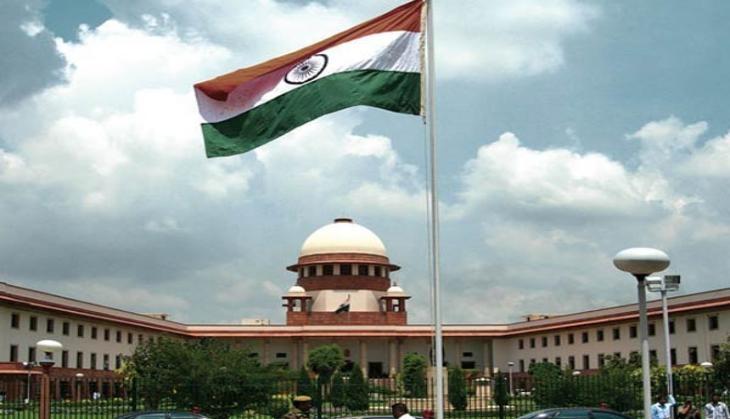

Supreme Court of India: Whether a Writ Appellate Court Can Direct How an Arbitral Tribunal Must Decide a Dispute, Including Disputes the Contract Excludes from Arbitration
In M/s. GVV Constructions Private Limited v The Union of India & Ors., 2026 INSC 976, the Supreme Court decided whether a direction of the High Court, in its writ appellate jurisdiction, that the Arbitral Tribunal decide the appellant’s claims “strictly in accordance with the terms of the contract agreed upon between the parties,” went beyond the High Court’s own jurisdiction and encroached upon the Arbitral Tribunal’s power under Section 16 of the Indian Arbitration and Conciliation Act, 1996.
Section 16 is the provision that lets an arbitral tribunal decide the scope of its own jurisdiction, including whether a valid arbitration agreement exists and whether a particular dispute falls within it. This is often called the kompetenz kompetenz principle, meaning the tribunal has the power to rule on its own competence.
Factual Matrix
The appellant is a private company engaged in construction and infrastructure works. On 21.02.2017, South Central Railway, respondent no. 2, invited tenders for doubling a railway track between the Guntur and Guntakal sections.
The appellant’s bid was accepted, and a Contract Agreement was executed on 30.11.2017, with a due date of completion of 23.10.2018.
On 10.06.2022, the contract was terminated under Clause 62 of the Indian Railways Standard General Conditions of Contract, and the appellant’s performance guarantee and security were forfeited, with the appellant held disentitled to compensation for any loss.
The appellant filed a writ petition seeking to quash the termination, arguing it contravened the procedure under the General Conditions of Contract, and sought a direction to the respondents to follow Clause 17 of those conditions instead.
The learned Single Judge dismissed the writ petition on 18.10.2022, holding that serious and complicated questions of fact were not fit for adjudication under Article 226 of the Constitution, the provision that lets High Courts issue writs.
The Single Judge noted that since the appellant had already invoked arbitration, it could raise all its defences before the Arbitral Tribunal, but also recorded a finding that there was no irregularity in the termination itself.
The appellant appealed. The Division Bench of the High Court, Telangana, by judgment dated 16.12.2025, held that the Single Judge’s finding on the validity of the termination, was recorded without giving any reason, and that upholding that finding would leave the Arbitral Tribunal, or any other forum, with no scope to decide in the appellant’s favour.
The Division Bench set aside that finding, granted the appellant liberty to raise all its claims before the Arbitral Tribunal, and directed that the Tribunal decide those claims strictly in accordance with the terms of the contract agreed upon by the parties, uninfluenced by either court’s observations.
Pursuant to this, a former Judge of the Supreme Court was appointed Sole Arbitrator, and arbitral proceedings commenced on 20.01.2026.
The Tribunal framed twelve issues, including the validity of the termination and whether certain claims were time barred, fell under “excepted matters,” or were otherwise not arbitrable.
Parties’ Contentions
Senior Counsel for the appellant submitted that the delay in completing the work was not attributable to the appellant, and that the termination was illegal.
He pointed out that the respondents had themselves admitted, in their counter affidavit before the writ court, that the writ petition was not maintainable since the appellant had an effective alternative remedy of arbitration, and could not now turn around and argue that the termination issue could not be decided by the Tribunal.
He submitted that the appellant’s grievance was confined to the Division Bench’s direction that the Tribunal decide claims strictly as per the contract terms, since the termination issue was intrinsically linked to the other issues already pending before the Tribunal. He relied on ABS Marine Services v Andaman and Nicobar Administration, 2026 SCC OnLine SC 460.
The Additional Solicitor General, for the respondents, submitted that referring the validity of the termination to arbitration would violate Clause 63 of the General Conditions of Contract, signed and accepted by both parties, and that excluding this issue from arbitration did not prevent the appellant from approaching a civil court, the designated forum for “excepted matters” under the contract.
He submitted that ABS Marine Services did not apply, since the clause considered there was worded differently from Clause 63 here, and that the Arbitral Tribunal had no jurisdiction over excepted matters.
He relied on General Manager, Northern Railway v Sarvesh Chopra, (2002) 4 SCC 45, and Harsha Constructions v Union of India, (2014) 9 SCC 24.
Relevant Contract Clauses
Clause 63 of the General Conditions of Contract provides that disputes must first be referred to the General Manager, who is to decide within 120 days, but carves out certain matters, listed by reference to specific clauses of the Conditions, as “excepted matters,” meaning matters not arbitrable, whose decision by the Railway authority is final and binding, and which stand excluded from the arbitration clause.
Clause 64(1) provides that once a dispute has gone through this process, and except for excepted matters, the contractor may demand arbitration within a specified window, and only the disputes so demanded, together with any counter claims, are referred to arbitration.
The Court read these two clauses together to mean that Clause 63 excludes excepted matters from arbitration but does not exclude the jurisdiction of a court of law to examine the validity of a decision taken on an excepted matter.
Issue
The Court framed the sole issue as whether the Division Bench’s observation, that the Arbitrator was “at liberty to decide the claim of the appellant strictly in accordance with the terms of the contract agreed upon between the parties,” went beyond the scope of a court’s jurisdiction under Article 226, and impinged on the Arbitral Tribunal’s own jurisdiction under Section 16 of the Act.
Findings of the Supreme Court
The Court traced how far a court may scrutinise an arbitration agreement at the stage of appointing an arbitrator, describing this as having passed through four phases.
First, in Konkan Railway Corpn. Ltd. v Mehul Construction Co., (2000) 7 SCC 201, later reaffirmed by a Constitution Bench in Konkan Railway Corpn. Ltd. v Rani Construction (P) Ltd., (2002) 2 SCC 388, the Court had held that appointing an arbitrator under Section 11(6) was a purely administrative act, leaving every contested question, including whether the agreement existed at all, to the Tribunal under Section 16.
Second, a seven Judge Bench in SBP & Co. v Patel Engineering Ltd., (2005) 8 SCC 618, overruled this and held the power to be judicial, requiring the court, at the referral stage, to itself decide the existence of a valid arbitration agreement.
This was refined in National Insurance Co. Ltd. v Boghara Polyfab (P) Ltd., (2009) 1 SCC 267, which classified issues at the Section 11 stage into three categories, with “Category III” issues, such as whether a claim falls within an excepted matters clause, left to the Arbitral Tribunal alone.
Third, the Arbitration and Conciliation (Amendment) Act, 2015 inserted Section 11(6A), confining a court’s examination at the appointment stage to the existence of the arbitration agreement, “notwithstanding any judgment, decree or order of any Court.”
In Duro Felguera, S.A. v Gangavaram Port Ltd., (2017) 9 SCC 729, the Court applied this literally, holding the referral court need only examine “if an arbitration agreement exists, nothing more, nothing less.” Mayavati Trading (P) Ltd. v Pradyuat Deb Burman, (2019) 8 SCC 714, held that Section 11(6A) had legislatively overruled the wider scrutiny under SBP & Co. and Boghara Polyfab.
Fourth, in Vidya Drolia and Others v Durga Trading Corporation, (2021) 2 SCC 1, the Court harmonised the standard of review under Sections 8 and 11, holding that a court should decline reference only where it is manifestly certain the agreement is non existent, invalid, or the dispute non arbitrable, otherwise the governing maxim is “when in doubt, do refer.”
This standard was applied in Uttarakhand Purv Sainik Kalyan Nigam Ltd. v Northern Coal Field Ltd., (2020) 2 SCC 455, holding limitation is ordinarily for the Tribunal, and in the seven Judge Bench decision In Re: Interplay Between Arbitration Agreements and the Indian Stamp Act, 1899, (2024) 6 SCC 1, holding insufficient stamping is a curable question for the Tribunal, overruling N.N. Global Mercantile (P) Ltd. v Indo Unique Flame Ltd., (2023) 7 SCC 1.
The Court also cited SBI General Insurance Company Ltd. v Krish Spinning, (2024) 12 SCC 1, which held that Section 11(6A) limits a court’s role at the appointment stage to a prima facie check on the existence of the arbitration agreement, not a contested inquiry, and that this prima facie view binds neither the Tribunal nor the court enforcing the eventual award. This was reiterated in Office for Alternative Architecture v Ircon Infrastructure and Services Ltd., 2025 SCC OnLine SC 1098.
From this survey, the Court held that whether a claim falls within an excepted matters clause is a question squarely for the Arbitral Tribunal under Section 16, not for a court exercising even the wider Section 11 jurisdiction, let alone a court exercising discretionary judicial review under Article 226, particularly where that court had itself declined to engage with the merits on the ground that the dispute involved complicated questions of fact.
Applying this, the Court held that if even a Section 11 court has no jurisdiction to pre-determine how the Tribunal must adjudicate a claim falling within an excepted matters clause, a writ appellate court, whose task was confined to testing the correctness of the Single Judge’s disposal of a writ petition against a termination notice, had, by the same reasoning, no such jurisdiction either.
The Division Bench’s direction, whatever its intention, had the effect of narrowing the width of the Arbitrator’s inquiry, including the Arbitrator’s own Section 16 authority to rule on the scope of jurisdiction over the termination dispute.
The Court held this question was for the Arbitrator to decide in the first instance, and that the Division Bench ought not to have made this observation, particularly since arbitrability of the termination was not even an issue before it.
On the precedents relied upon by the parties, the Court held ABS Marine Services did not apply, since the clause considered there ousted the jurisdiction of any court of law and barred arbitration altogether, whereas Clause 63 here does not bar court jurisdiction, only excludes excepted matters from arbitration.
It held General Manager, Northern Railway v Sarvesh Chopra did not assist the respondents either, since that case concerned Section 20 of the Arbitration Act, 1940, a statutory regime the 1996 Act has since decisively departed from.
Conclusion
The Court clarified that the Division Bench’s direction to the Arbitrator to decide claims strictly in accordance with the contract terms shall not be construed to impinge on the Arbitral Tribunal’s jurisdiction to adjudicate the termination dispute, and clarified it had expressed no opinion on the merits of the case. The appeal was disposed of, with no order as to costs.