

It was refreshing to hear people talk about what they are still figuring out
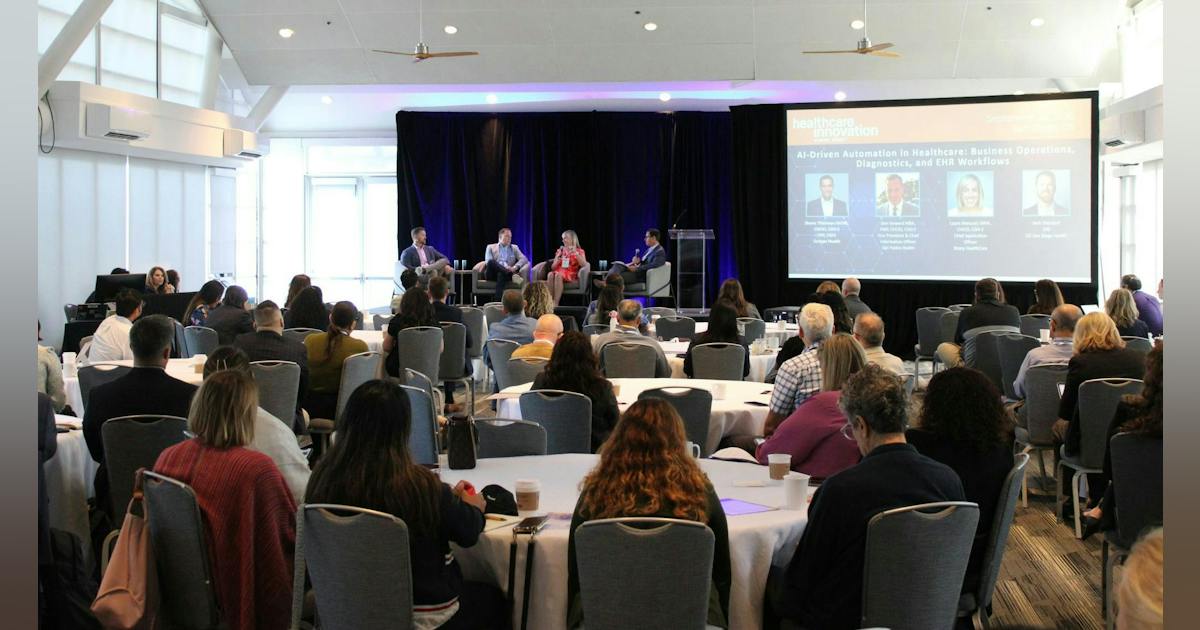
What I appreciated about the Summit was how willing the speakers were to talk about what they are still trying to understand.
Reddy shared that University of Utah Health had been working with ambient AI for several years and had tested multiple vendors before moving to an enterprise license this year.
At Northeast Valley Health Center, CIO Stephen Gutierrez described a more cautious approach, with the organization holding back on adoption until some of its questions around the technology and data were addressed.
And at Rady Children’s, Bialostozky described a particularly thoughtful approach to evaluating the technology. The organization tested two ambient AI products, with groups of providers using each solution before switching them so both groups could experience both products. Those experiences ultimately helped Rady determine which technology it wanted to use.
Across the discussion, the question of value kept coming back up, with the panelists talking about everything from clinician satisfaction and documentation time to patient volume, the use of scribes and the less easily measured benefit of giving clinicians more attention to their patients.
That kind of honesty is important because there is a tendency in healthcare technology conversations to present implementation as a straight line. You identify a technology, you launch it, the numbers improve and everybody moves on to the next project. But that isn’t always how it works.
Sometimes adoption is uneven. Sometimes clinicians use a technology differently than expected. Sometimes the metric you thought would matter doesn’t tell you very much. And sometimes the right decision is to slow down, change course or walk away from a project.
That last point came up in several conversations during the day. Organizations need predetermined checkpoints and criteria for evaluating whether a technology is actually delivering what it was supposed to deliver. Otherwise, it becomes very easy to keep investing simply because you have already invested so much. In a field moving as quickly as AI, knowing when to stop may be just as important as knowing when to start.
Then there is the human side of all of this
Trust was another theme that kept surfacing, sometimes explicitly and sometimes underneath the conversation.
We talked about clinicians who are being asked to adopt AI into their workflows. We talked about employees who understandably want to know how these technologies will affect their jobs. And we talked about cameras, microphones and sensors being introduced into clinical environments. Those questions aren’t going away simply because the technology works.
During the UC San Diego discussion, there was a thoughtful conversation about the importance of being very intentional about what the technology is there to do. If cameras and AI are being used to improve workflow, document processes or identify opportunities to make an OR more efficient, the people working in that environment need to understand that purpose. They need to know what is being collected, how it is being used and, just as importantly, what it is not being used for.
That is where governance becomes much more than a committee reviewing technology. It becomes part of implementation.
The same thing came through in the ambient AI discussion. The panelists talked about privacy, the way patients are responding to AI-generated information and the need to keep a human in the loop.
The technology doesn’t have to be perfect to be useful, but the organization does have to understand where the technology’s limitations are and where human judgment still needs to take over. That seems particularly important as AI begins moving from simply generating information to taking actions and making decisions.


