

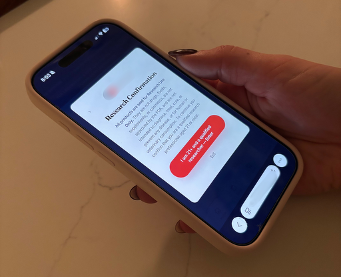
Sitting in a parked car, phone propped up on the dashboard, recording, he takes a bite of his Chipotle bowl between sentences about a metabolic drug meant to make him eat less. Almost three months into retatrutide, he’s not sure it’s worth it anymore. The drug is still locked in Phase III clinical trials, nowhere near FDA approval, meaning sellers have no legal standing to market it for human consumption (Eli Lilly and Company 2026). He tells his viewers that he briefly looked into the gray market.
Mainstream Infection
It’s certainly cheaper, and if you’re already self-administering an unapproved drug, skipping the markup for an official-sounding storefront feels like a technicality. He decided against it anyway, stating that the idea of buying from the gray market makes him uncomfortable and that he “isn’t sure he has the nerve for it”. Instead, he paid $2,000 for a 100-milligram vial through a more legitimate channel. He’s not a looksmaxxing influencer who is taking retatrutide alongside testosterone and tanning injections; he’s just a normal guy who, for a brief moment, stood close enough to the world of hyper-optimization to price its cheapest entry point and say no thanks–I’ll go elsewhere.
This symptom belongs to a viral phenomenon termed “looksmaxxing”: a male-dominated internet subculture built around the idea that physical appearance should be optimized like an economic asset. What started as desperate advice in fringe incel (involuntary celibate) forums evolved via TikTok into a rigid taxonomy of self-improvement (Roser, Chalker, and Squirrell 2023, 8). The goal is to reach an idealized standard of attractiveness, defined by features such as a chiseled jawline, forward-projecting cheekbones, and an upward outer-eye slant known as a “hunter” eye or positive canthal tilt (Farrell 2024). By framing radical chemical self-experimentation as a tool for aesthetic survival, looksmaxxing works as a behavioral Trojan horse for public health skepticism and anti-institutional instincts, normalizing them for a far wider mainstream audience.
From “Softmaxxing” to Chemical Interventions
Looksmaxxing culture operates on an aesthetic ladder. At the bottom sits “softmaxxing.” This tier covers habits that read as ordinary self-improvement such as skincare routines, posture correction, and jaw exercises. At the top is “hardmaxxing.” This is a far more extreme tier involving surgical procedures, facial bone-breaking, and various unapproved chemical interventions (Stokes 2026). From the outside, the distance between those two rungs looks enormous. From the inside, it’s a series of small steps that are each easily justified by the one before it.
Retatrutide sits near the top of that ladder, yet it is marketed by this subculture less like an experimental pharmaceutical and more like a high-tech wellness supplement akin to collagen packets or continuous glucose monitors. That framing works because it taps into a larger trend. The broader looksmaxxing market is flooded with unapproved chemical shortcuts designed to hack biological traits. To drastically alter skin tone, users turn to Melanotan-II, a synthetic peptide that forces melanin production despite risks of severe nausea and neurological side effects (Cairns 2025). To repair joints or force muscle recovery, they inject BPC-157 or TB-500, compounds studied in rodents but never greenlit for humans by the FDA (USADA 2026; STAT News 2026). Forums encourage combining these into “stacks” that layer metabolic agonists, hormones, and peptides like custom code.
In a hyper-visual, image-driven economy, the sociological framework of “bodily capital” treats physical appearance as an economic asset–something to invest in and optimize much like a stock portfolio (Bourdieu 1984; Wacquant 1995). Under this logic, spending $2,000 on an unapproved peptide isn’t reckless spending, it’s a rational investment. The user places a bet that looking a certain way will pay dividends in attention, opportunity, and social standing. Once the body is understood as capital, optimization mimics due diligence. A gym membership or a set of professional headshots would earn the same logic. The YouTuber in the parked car isn’t chasing an extreme aesthetic standard, but he applies the same underlying logic by treating his body as a system to be tuned, which is exactly how the ladder becomes so easy to climb unnoticed.
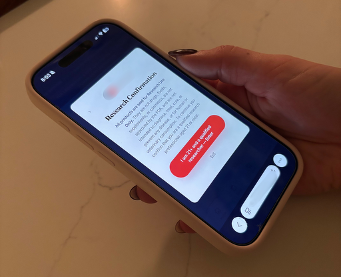
A “research use only” disclaimer on a website to purchase peptides.
The “Bro-Science” Epistemology
Looksmaxxing communities have little patience for institutional science, and a great deal of use for it. Peer review, professional consensus, and expert credentialing are treated as bureaucratic friction, while individual studies (cited out of that same institutional context) are treated as gospel. Authority instead gets built from Reddit threads, forum logs, and TikTok “gurus” who have self-administered enough compounds to speak with borrowed clinical confidence (Solea 2025). Prominent looksmaxxers like Clavicular cite PubMed papers as evidence, but the citation is doing rhetorical work, not evidentiary work. It signals that a study exists, not that its findings support the claim being made, or that it survived the scrutiny a claim like that would need to withstand. Lived experience becomes the real expertise, while scientific literature becomes a prop borrowed from a system whose actual verdict is otherwise ignored.
This shares a structural logic with the “Do Your Own Research” framework used by anti-vaccine communities, but it is a softer version of it. While anti-vaccine DYOR usually starts from an explicit distrust of public-health institutions, looksmaxxing rarely does. Instead of rejecting institutional authority outright, looksmaxxers learn to treat its warnings as obstacles to route around rather than reasons to stop, elevating aggregated personal anecdotes above clinical data without ever needing to declare that data wrong (Chinn, Hasell, and Shao 2026). The aforementioned YouTuber never explicitly challenges the FDA, but he has already absorbed this quieter version of the methodology without realizing it. He sees “for research use only” not as a warning demanding extreme caution, but as a technicality to be navigated on the way to what he actually wants, all without having to actively distrust public health institutions (Camino Strategy Group 2026).
Biopolitics and the Broken Healthcare System
Biopolitics, or the way institutions regulate, monitor, and lay claim to human bodies, describes exactly this kind of tension between state authority and individual autonomy (Foucault 2007). Vaccines serve as a textbook case. A public-health mandate asks individuals to accept state-vetted interventions for the sake of collective immunity, overriding any personal objection. To someone steeped in biohacking, a mandate registers as an intrusive overreach by claiming jurisdiction over a body that should belong to the individual alone. Conversely, a gray-market peptide, bought voluntarily and administered in private, feels like absolute health sovereignty. It allows the individual to reclaim a body that institutions were never allowed to touch in the first place.
That logic grows directly out of a real gap in the medical system, though not necessarily a failure in the way anti-institutional rhetoric wants it to be. Mainstream medicine generally operates on a deficit model by treating the patient once something is quantifiably and objectively wrong. This is less a failure than a blind spot: the system has infrastructure for illness, but none for optimization or aesthetic frustration (Clarke et al. 2003). A young, healthy man curious about what a next-generation metabolic drug might do for his appearance will be turned away by a primary care doctor. For most people, there’s no clinical pathway for wanting to look better, even though the desire is common and increasingly monetized online.
Because institutional medicine offers no real answer to aesthetic anxiety, the underground is able to fill the gap using rhetoric anti-vaccine influencers have already normalized. Peptide vendors and biohacking gurus borrow directly from that playbook: “Big pharma doesn’t want you to know,” “your doctor is behind the times,” and “take health into your own hands.” Anti-establishment framing isn’t an accident here; it’s baked into the pitch because the premise is that official channels already failed you.
The Cultural Logic of Purity and Toxicity
There’s a profound irony sitting underneath all of this. Anti-vaccine sentiment fixates on the supposed toxicity of vaccines, which are products manufactured under tightly regulated, closely monitored conditions and tested across years and multiple trial phases before reaching a single arm. Meanwhile, the gray-market peptide supply chain that looksmaxxing culture runs on is entirely unregulated. Vendors mislabel products, labs go unverified, and researchers who’ve tested what’s actually inside these vials have repeatedly found heavy metal contamination and unlisted ingredients (Hailu et al. 2026). If toxicity were about measurable, objective risk, user anxiety would be pointed in exactly the opposite direction.
Toxicity, though, has never really been about measurable risk. What counts as “contaminated” or “clean” has less to do with actual danger and more to do with how something is packaged, who’s offering it, and what story surrounds it. Anthropologist Mary Douglas’s famous formulation put it simply: dirt is just “matter out of place” (Douglas 1966). A state-sanctioned vaccine can feel polluting precisely because it represents institutional compliance as an outside authority reaching into the body. An underground peptide bought voluntarily and administered alone can feel pure by comparison. This isn’t because it’s actually safer, but because of what it represents: choice over mandate, privacy over publicity, and self-authorship instead of submission.
That’s the cultural logic that makes the ladder feel safe to climb. Every rung reinforces the idea that voluntary = clean and institutional = suspect, regardless of what’s actually in the vial. The purity isn’t in the chemical, but in the story being told about who is in control of the decision. Once that narrative replaces actual safety testing, the gap between a Phase III clinical trial drug and a Discord server selling mislabeled powder gets a lot harder to see than it should be.
Public Desensitization
The danger here was never really about one YouTuber’s resting heart rate. Plenty of people take unapproved substances and stop before anything serious happens. The true danger is what happens to everyone watching him do it, casually, unremarkably, over Chipotle in a parking lot, treating a research-use disclaimer as a formality rather than a warning. Every time this behavior gets normalized as lifestyle content rather than flagged as clinical risk, the audience’s threshold for what counts as fringe behavior shifts a little further. Nobody needs to be explicitly converted to anti-vaccine ideology. They just need to watch enough ordinary people treat research chemicals as routine until it stops registering as extraordinary at all.
The creator in the video is not a looksmaxxer, but the ladder he stood next to for one video is the exact same one influencers climb up to the top, using the same drugs, purchased through the same kind of “for research use only” storefronts, justified by the same bodily-capital logic. He looked at the riskiest rung and said no thanks; someone less cautious or more desperate might not. This is what desensitization looks like. It is not a sudden, dramatic ideological conversion, but a slow erosion of the instinct that used to say, this is not normal. Once casual viewers start treating themselves as their own clinical trial coordinators, and their friends as informal drug distributors, the foundational premise of public health quietly stops applying.
For further discussion, see “The Biopolitics of COVID-19,” Theoria 71, no. 180 (2024).
This post was curated by Contributing Editors Volney Friedrich and edited by Lilith Frakes.
References
Bourdieu, Pierre. 1984. Distinction: A Social Critique of the Judgement of Taste. Cambridge, MA: Harvard University Press.
Cairns, Rose. 2025. “No, You Don’t Need the ‘Barbie Drug’ to Tan, Whatever TikTok Says. Here’s Why Melanotan-II Is So Risky.” The Conversation, February 3, 2025.
Camino Strategy Group. 2026. “Retatrutide and Compounding: What the Regulations Say and the Enforcement Records Are Showing.” Camino Corporate Compliance Blog, July 2, 2026.
Chinn, Sedona, Ariel Hasell, and Anqi Shao. 2026. “What Does It Mean to ‘Do Your Own Research’? A Comparative Content Analysis of DYOR Messages in Instagram and Facebook Posts about Reproductive Health, Food, and Vaccines.” New Media & Society.
Clarke, Adele E., Janet K. Shim, Laura Mamo, Jennifer Ruth Fosket, and Jennifer R. Fishman. 2003. “Biomedicalization: Technoscientific Transformations of Health, Illness, and U.S. Biomedicine.” American Sociological Review 68: 161–194.
Douglas, Mary. 1966. Purity and Danger: An Analysis of Concepts of Pollution and Taboo. London: Routledge.
Eli Lilly and Company. 2026. “What to Know About Retatrutide.” Lilly News & Stories. Last modified July 2026.
Farrell, Riley. 2024. “Inside Looksmaxxing, the Extreme Cosmetic Social Media Trend.” BBC, March 27, 2024.
Foucault, Michel. 2007. Security, Territory, Population: Lectures at the Collège de France, 1977–78. Edited by Michel Senellart. London: Palgrave Macmillan.
Hailu, Kirubel T., Feven N. Abriha, Yordanos M. Duguma, Rita R. Haddad, T. Liyew, and A. Kasagga. 2026. “Unregulated Peptide Use in the Age of Biohacking: Digital Promotion, Gray-Market Access, and Emerging Public Health Risks.” Cureus 18 (6): e110657.
Roser, Meg, Charlotte Chalker, and Tim Squirrell. 2023. Spitting Out the Blackpill: Evaluating How Incels Present Themselves in Their Own Words on the Incel Wiki. London: Institute for Strategic Dialogue.
Solea, Anda. 2025. “Why Incel Social Media Accounts Are Encouraging Young People Towards Extreme Looksmaxxing Procedures.” University of Portsmouth, November 17, 2025.
Stokes, Victoria. 2026. “What Is Looksmaxxing? How the Viral Trend Promotes Toxic Beauty Standards for Young Men.” Healthline, March 5, 2026.
USADA. 2026. “BPC-157: Experimental Peptide Creates Risk for Athletes.” Accessed August 2026.
“BPC-157: The Peptide With Big Claims and Scant Evidence.” STAT News, February 2026.
Wacquant, Loïc. 1995. “Pugs at Work: Bodily Capital and Bodily Labour Among Professional Boxers.” Body & Society 1 (1): 65–93.