
Best Homemade Greek Salad Dressing Recipe


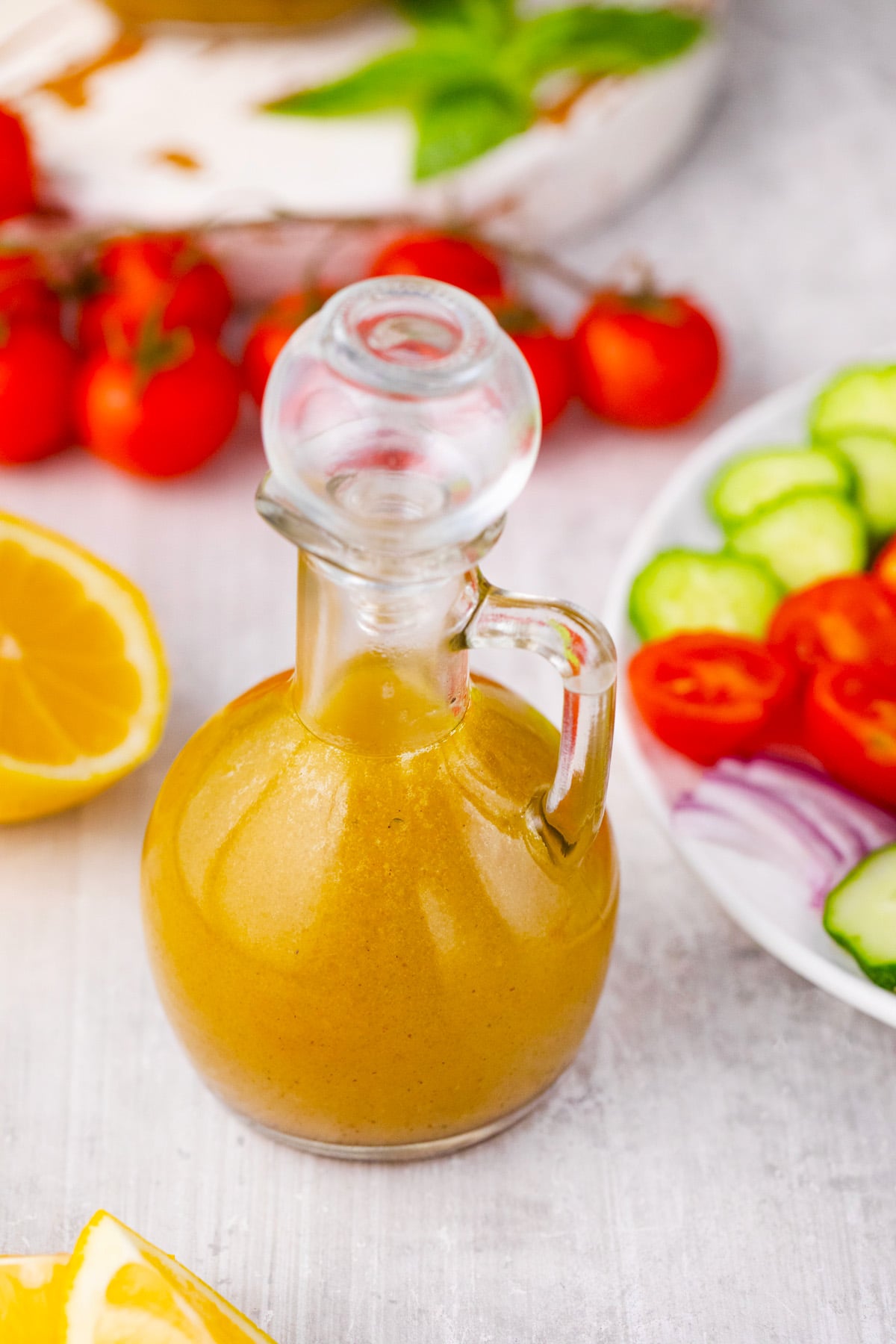
I love making Greek Salad Dressing at home since it is so much better than the store-bought version and it’s ready in just 5 minutes! Using the best, freshest ingredients, I get the most flavorful dressing for salads or as a marinade for meat and veggies.
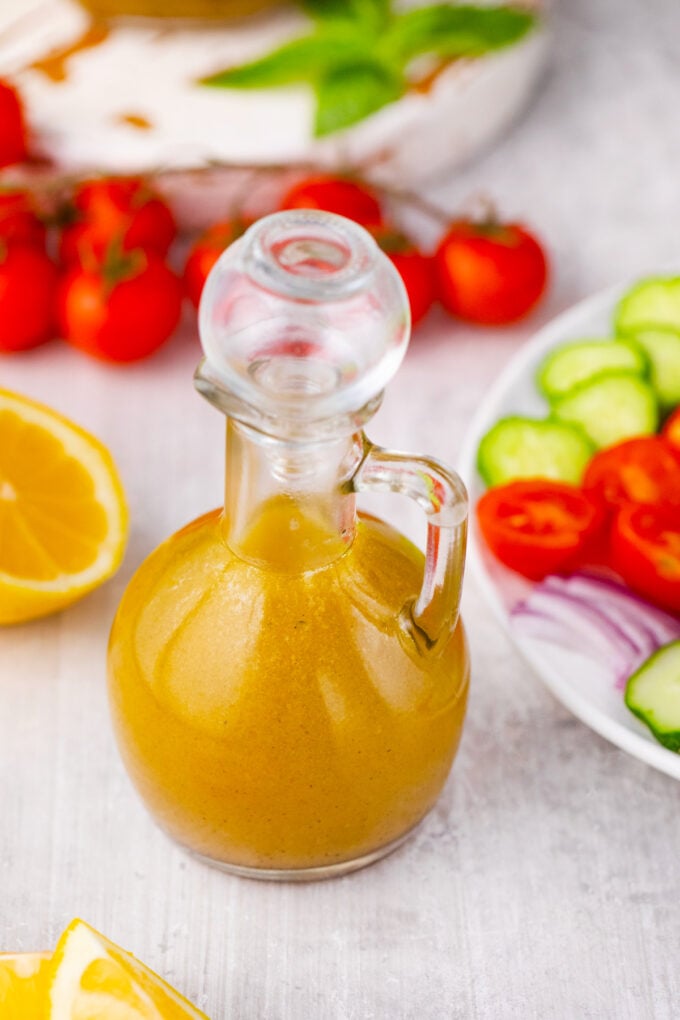
It takes me just minutes to blend the ingredients, then I store the dressing in the fridge for up to 2 weeks. I like to use it on this Greek salad, to marinate the meat for this chicken and potatoes air fryer meal, or to drizzle it over these loaded slow-cooker baked potatoes.
I like to make a larger batch and store it in the fridge. It is the perfect solution for adding flavor to regular weeknight meals. Since I like to meal prep, I chop veggies and add them to food containers with grilled chicken, shrimp, crumbled feta cheese, and rinsed chickpeas, then put them in separate containers so we can quickly make salads for lunch or dinner.
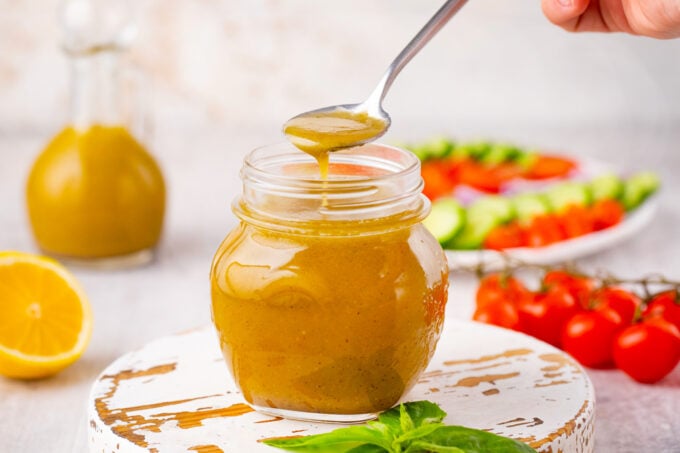
Why you will love this recipe
- It’s so quick and easy: I can make this dressing from scratch in just a few minutes with just a few ingredients. I put everything in a blender, blend it, and it stays fresh for days.
- It tastes so much fresher: Compare this with the bottled versions, and you’ll see the difference right away. The bright, tangy flavors stand out compared to muted, weighed-down, oily store-bought dressings.
- I control the ingredients: I like knowing what goes into this dressing, so there are no hidden preservatives, fillers, or extra sugars or salt. I use all-natural ingredients for my flavoring.
- Save money: With this recipe, I can make several bottles of dressing and marinade for a fraction of what I would pay for one at the grocery store. It lasts 2 weeks in the fridge or up to 3 months in the freezer.
What you will need
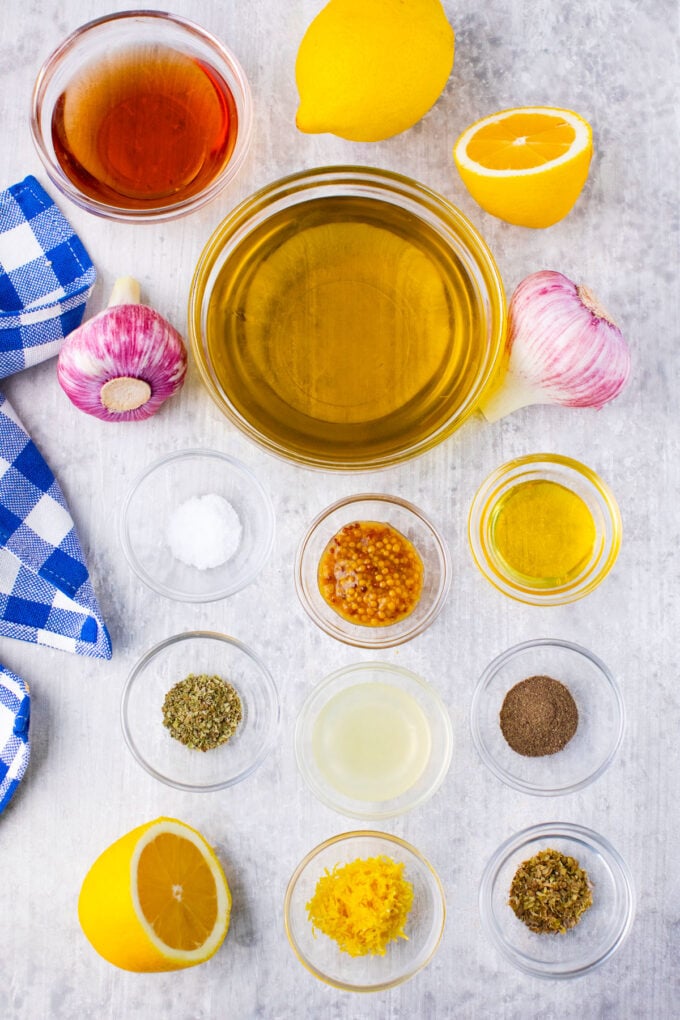
- Produce: I mince the garlic to release its natural oils for a savory, garlicky boost that balances the tangy vinegar. I also get a lemon for fresh lemon juice and zest.
- Wet ingredients: I use the finest quality extra virgin olive oil for this recipe because it is the main ingredient. High-quality olive oil has a slightly fruity note with peppery hints and is cold-pressed to blend better. Dijon mustard acts as an emulsifier, joining the oil and vinegar while adding tangy depth. Red wine vinegar adds a bright, fruity taste that pairs well with garlic, oregano, and basil while helping cut through the richness of the olive oil. Freshly squeezed lemon juice adds sweet acidity to cut through the oil.
- Seasonings: Besides salt and pepper, I also use granulated sugar to cut through the acid and soften the bite, dried basil for a peppery note, and oregano for a robust, earthy taste. A bit of lemon zest adds a burst of concentrated essential oils for an intense aroma and a citrus punch that balances the heavy, rich flavors.
How to prepare
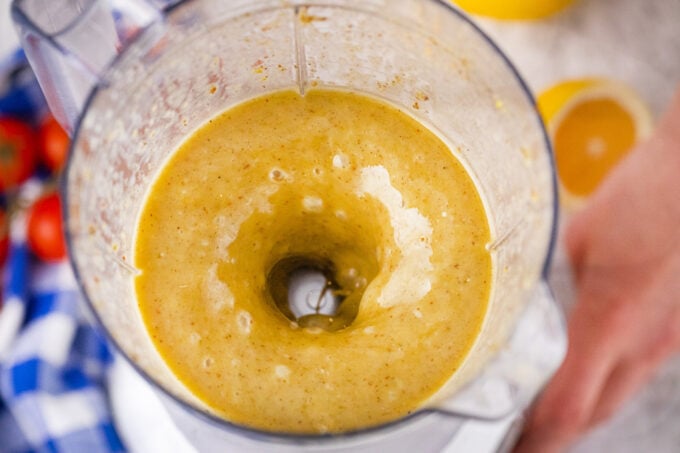
Mix the ingredients: First, I add all the ingredients except the olive oil to a blender and pulse several times until combined.

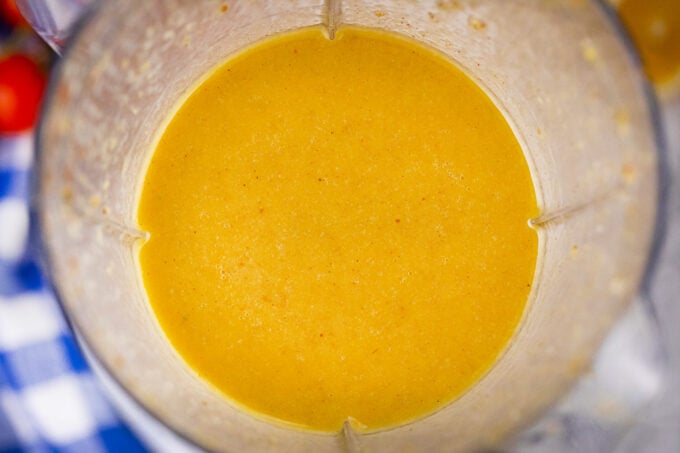
Add the oil: Then, with the blender on high, I slowly pour in the oil until it is creamy.
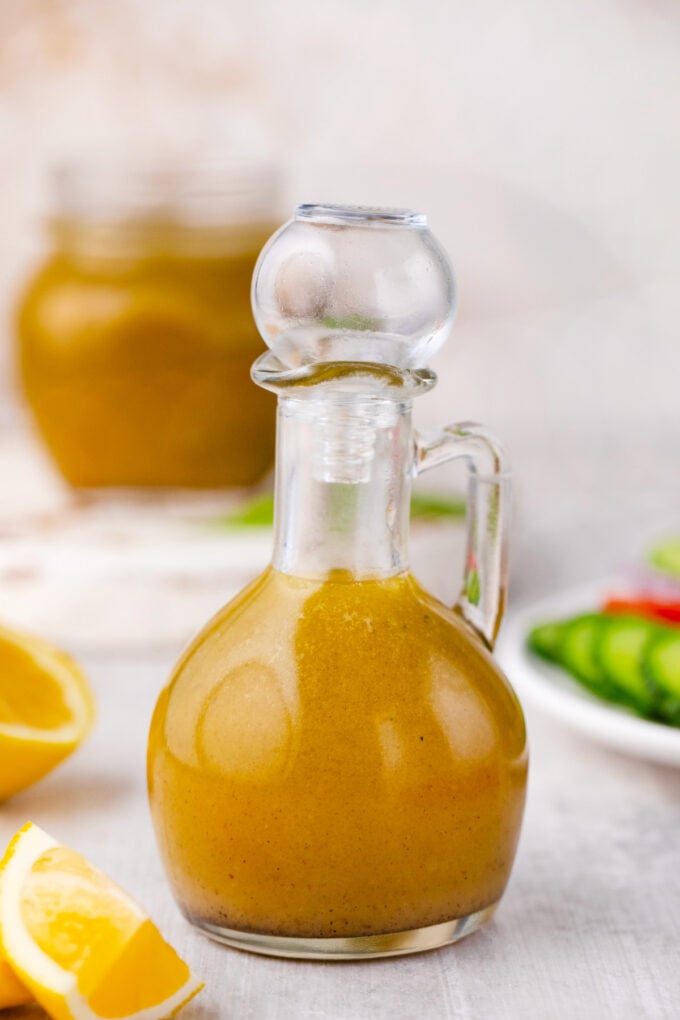
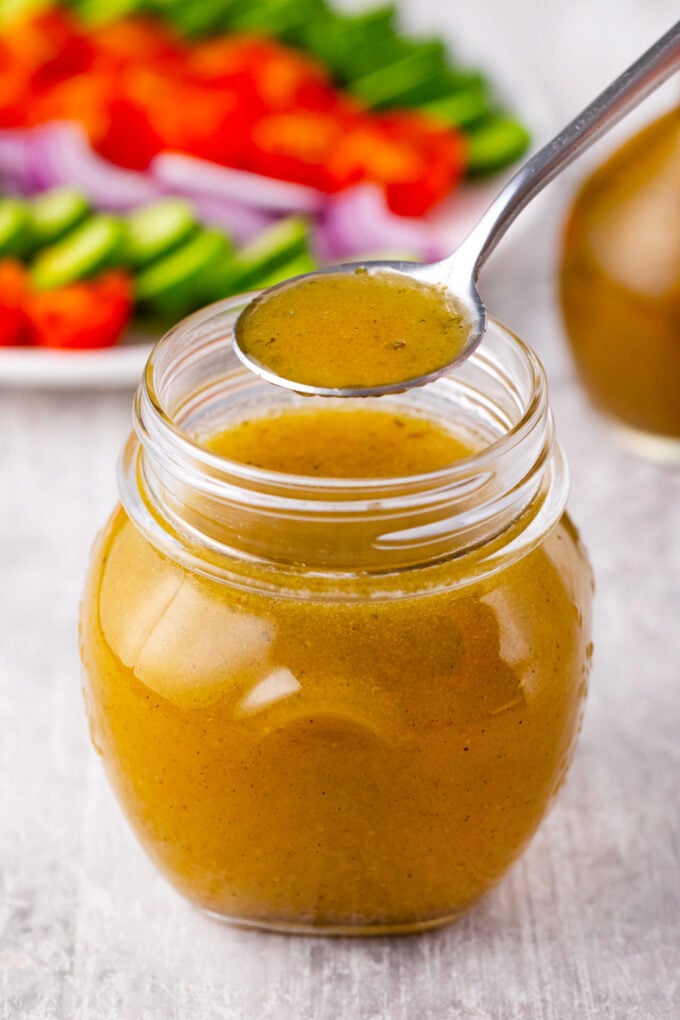
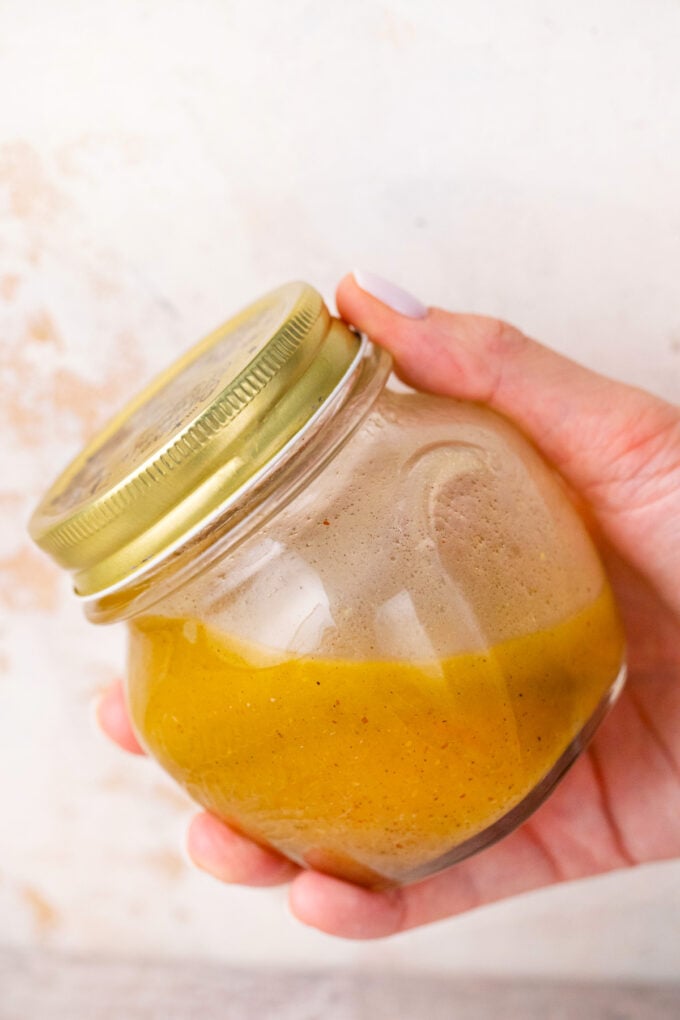
Pour and chill: Finally, pour into a mason jar, seal, and chill before serving. It will last for up to 2 weeks in the fridge.
Expert tip
Using the best olive oil
The secret to a fantastic homemade Greek salad dressing is in the olive oil. Actually, that is the secret to any dressing that contains oil. Any time you use olive oil as a main ingredient, choose the highest-quality extra-virgin olive oil you can afford. I prefer a peppery flavor, but others like a more buttery, floral one, so different brands have different qualities. Look for an acidity level below 0.5%, a bottle made of dark glass, and cold-pressed oil.
More tips to consider:
- Rub the oregano between your fingers before adding it to release the oils for more flavor and aroma.
- If you don’t like mustard, use a bit of honey, mayo, Greek yogurt, or garlic paste.
- Instead of using a blender, put the ingredients in a mason jar and shake them. This works just as well, if you ask me. And you don’t have to clean the blender.
- Make sure the garlic is minced very finely. I recommend using a garlic press and then dicing it; don’t mince it with a knife. Garlic powder is another option, but it is not as flavorful.
- Don’t get any lemon pith in the zest. It will make the dressing bitter.
Recipe variations and add-ins:
- Spicy dressing: I like to add some crushed red pepper flakes for my spicy-loving friends and family.
- Extra creamy: To make this dressing creamy, I whisk in some heavy cream. But remember, you’ll need to shake it well before every serving.
- Sugar-free: Instead of adding sugar, use honey, maple syrup, or a sugar substitute.
- Add crunch: For a crunchy salad, I like to add poppy seeds or sesame seeds.
- Different citrus: I often use lime instead of lemon for a different citrus punch.
Serving suggestions:
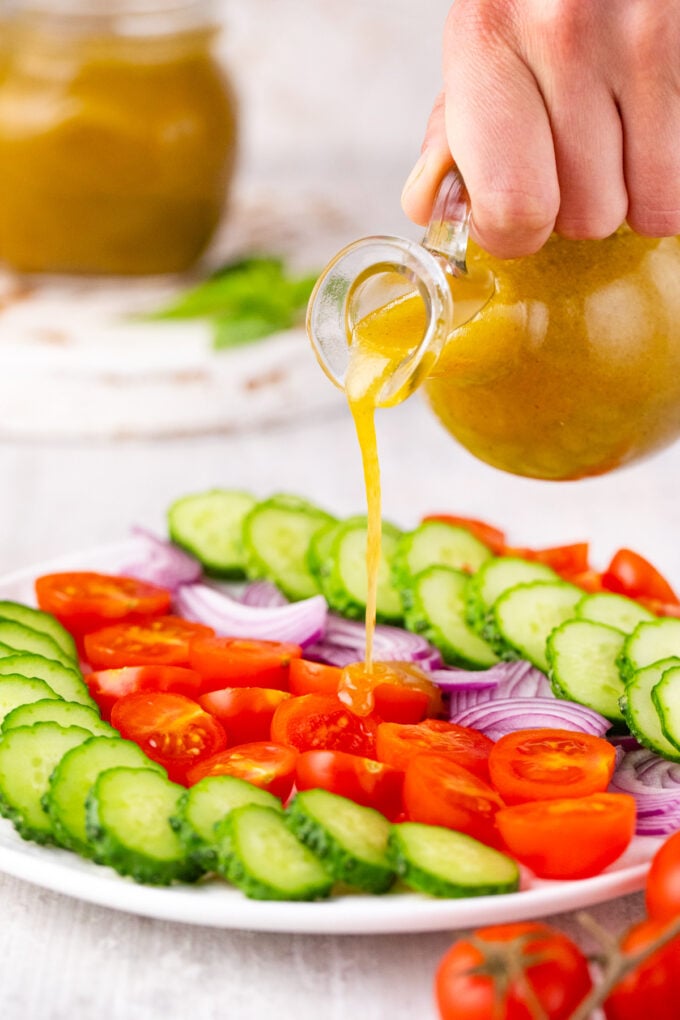
This salad dressing is perfect for my chopped Mediterranean salad. It is full of vegetables including romaine hearts, chopped radicchio, English cucumber, grape tomatoes, bell peppers, red onions, and Kalamata olives. The tangy-sweet dressing really brings out the veggies’ flavors and complements the chickpeas and crumbled feta. Another perfect salad to top with this dressing is this Mediterranean lentil salad with sweet pomegranate, crisp celery, fresh parsley, and chewy lentils.
To add extra rich flavor to these salmon foil packets, my Greek salad dressing is for more than just salads. Marinate the fillets for 15 to 30 minutes before cooking, then baste them once while cooking for a sweet, tangy taste. I’ve also used this salad dressing on chicken, pork, and shrimp. For dessert, I like this phyllo cake, aka crinkle cake. This became a viral sensation on TikTok, and I fell in love with it after trying the recipe. With crispy, light dough sheets, creamy custard, and fresh berries, this is impressive and easy.
How to store leftovers:
- Refrigerate: I store my Greek salad dressing in a mason jar in the fridge for up to 2 weeks.
- Freezing: I can also freeze it in freezer bags for up to 3 months.
- Defrost: I thaw frozen leftovers in the fridge overnight before serving.
Frequently asked questions
Although I haven’t tried other vinegar options, I have heard of others who have. White wine vinegar is one of the closest substitutes. It is milder and a bit brighter, with less tang, and it will not have the dark hue of red wine vinegar. It’s slightly tangy and has a delicate flavor. Greek balsamic vinegar is another good choice, made from local Greek grapes. It has a sweeter, more fruity depth with a caramelized hint. Apple cider vinegar is a good choice if you don’t mind a sharper taste.
If the olive oil is bitter, the dressing will be too unless you take steps to fix it. First, use the best olive oil you can afford. Use extra-virgin olive oil for the mildest taste. Also, buy one that was picked most recently so it is fresh. Also, choose a late-blooming variety so it’s well ripened. Also, blending the mix too much can overprocess the oils and cause them to oxidize, which can cause a bitter aftertaste. Add some sugar or lemon juice to counteract it.
If you’ve followed the recipe and used Dijon mustard, you shouldn’t have any emulsification problems. But even with all the precautions, the dressing will likely separate a little, even if it is just a small amount in one you’ve made. I use Dijon mustard and lemon juice, both of which are emulsifiers. Also, shake it thoroughly before serving.
Sometimes, the salt doesn’t dissolve properly in the oil right away. It needs more time to blend or whisk before serving. Either pour it back into the blender to mix again or whisk it by hand until the crystals dissolve. If that doesn’t help fast enough, let it sit; it doesn’t count before whisking again. It may just be too cold.
More dressings to try:
Loved this recipe? I’d love to hear from you! 💛 Leave a 5-star rating ⭐️ in the recipe card below and share your thoughts in the comments – I read and appreciate every single one!
Let’s stay connected! Follow me on Facebook, Instagram, Pinterest, and YouTube for more delicious, sweet and savory recipes. Have a question? Ask in the comments, and I’ll be happy to help! 😊 with love Catalina!
- 4 cloves garlic minced
- 1 cup extra virgin olive oil
- 2 teaspoons Dijon mustard
- 2 tablespoons fresh lemon juice
- 1 teaspoon lemon zest
- 1 teaspoon sugar or honey – optional
- 1/4 cup red wine vinegar
- 1/4 teaspoon dried basil
- 1/2 teaspoon dried oregano
- 1/8 teaspoon salt or to taste
- 1/4 teaspoon ground black pepper
-
Add all ingredients except the oil to a blender. Pulse several times to mix the ingredients.
-
With the blender running on high, gradually add the oil until the mixture is creamy.
-
Transfer to a mason jar, cover with the lid, and refrigerate for up to 2 weeks.

Using the best olive oil
The secret to a fantastic homemade Greek salad dressing is in the olive oil. Actually, that is the secret to any dressing that contains oil. Whenever you use olive oil as a main ingredient, choose the highest-quality extra-virgin olive oil you can afford. I prefer a peppery flavor, but others like a buttery, floral one, so different brands have different qualities. Look for an acidity level below 0.5%, a bottle made of dark glass, and cold-pressed oil.
More tips to consider:
- Rub the oregano between your fingers before adding it to release the oils for more flavor and aroma.
- If you don’t like mustard, use a bit of honey, mayo, Greek yogurt, or garlic paste. Xanthan gum will also work.
- Instead of using a blender, put the ingredients in a mason jar and shake them. This works just as well, if you ask me. And you don’t have to clean the blender.
- Make sure the garlic is minced very finely. I recommend using a garlic press and then dicing it; don’t mince it with a knife. Garlic powder is another option, but it is not as flavorful.
- Don’t get any lemon pith in the zest. It will make the dressing bitter.
Calories: 62kcal | Carbohydrates: 2g | Protein: 0g | Fat: 5g | Saturated Fat: 0g | Cholesterol: 0mg | Sodium: 30mg | Potassium: 12mg | Fiber: 0g | Sugar: 1g | Vitamin C: 4.5mg | Calcium: 5mg | Iron: 0.1mg