Howard the Duck #7 (December, 1976)

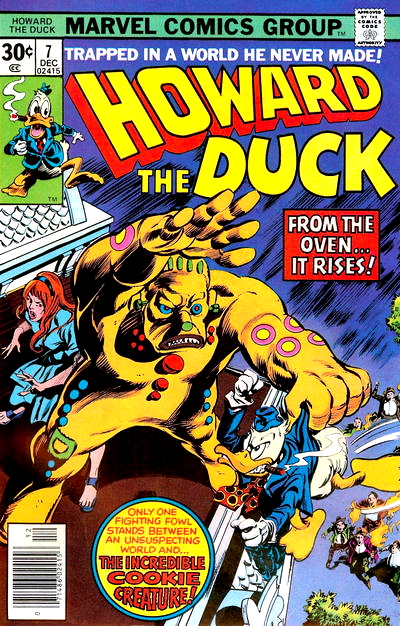
The fifty-year-old comic book we’re discussing today is something of a strange duck (sorry), in that while the bulk of it is devoted to the beginning of a new storyline concerning the titular character’s campaign for President of the United States, the first five of its seventeen pages — as well as the Gene Colan-Tom Palmer cover shown above — are given over to the wrap-up of a story mostly told, but not quite finished, in the previous issue. So we’re going to need to take a look at Howard the Duck #6 before we look at #7. And since the last issue we covered before this was #4, back in April… and since #5 sets up #6 pretty directly… we’re going to need to at least quickly summarize the events of the former issue’s “I Want Mo-o-oney!” before we even do that. All clear? Great! So let’s begin.

Art by Gene Colan, Steve Leialoha, and John Romita.
As the story’s title’s callback to Barrett Strong’s 1959 hit single indicates, HtD #5 is all about the quest for the lean green. Howard’s roommate Beverly Switzler’s occasional gig posing for a life-drawing class isn’t enough to make ends meet, so our feathered hero goes looking for work. Neither his first attempt (serving as the pie-in-the-face foil to to a clown on a children’s TV show) or second (acting as the bill collector/repossessor for an appliance store) pan out, but our hero thinks he’s hit paydirt when he sees an ad promising $10K to “any man who can last three rounds with wrestling champion Emile “the Goat” Klout”. Beverly is profoundly skeptical, but Howard is confident about his chances; what’s more, he figures that with that much cash, they can not only meet their current financial obligations, but can clear clean out of Cleveland, which he opines is “too small-time” for the two of them.
And as it turns out, Howard’s confidence is not misplaced — if only thanks to his mastery of “quak-fu“:


Art by Gene Colan and Tom Palmer.
The regular creative team of writer Steve Gerber and artists Gene Colan and Steve Leialoha pick up their narrative in Howard the Duck #6, the cover of which strongly suggests, in both its imagery and its copy, that we’re heading into Gothic fiction genre territory. That’s an impression that’s quickly reinforced by the story’s actual, official title (as presented on the opening splash page), “The Secret House of Forbidden Cookies!” — an obvious play on the names of a couple of Gothic romance titles DC Comics had experimented with earlier in the decade, i.e., The Dark Mansion Of Forbidden Love and The Sinister House of Secret Love… names which had of course themselves been inspired by those of myriad paperback novels of the early 1970s.
As the story begins, it’s a dark and stormy night in Pennsylvania mountain country, where a motorist, suddenly startled by the sight of a couple of unusual-looking hitchhikers standing on the side of the road, responds rather less than responsibly. (OK, so only one of the pair is actually unusual-looking, and that one is the…)


For anyone who might be too young to recall ’em, virtually every Gothic romance paperback of the early ’70s featured a cover scene depicting a lone young woman framed against a dark, brooding mansion, usually on a hill, with a single light gleaming from an upstairs window.

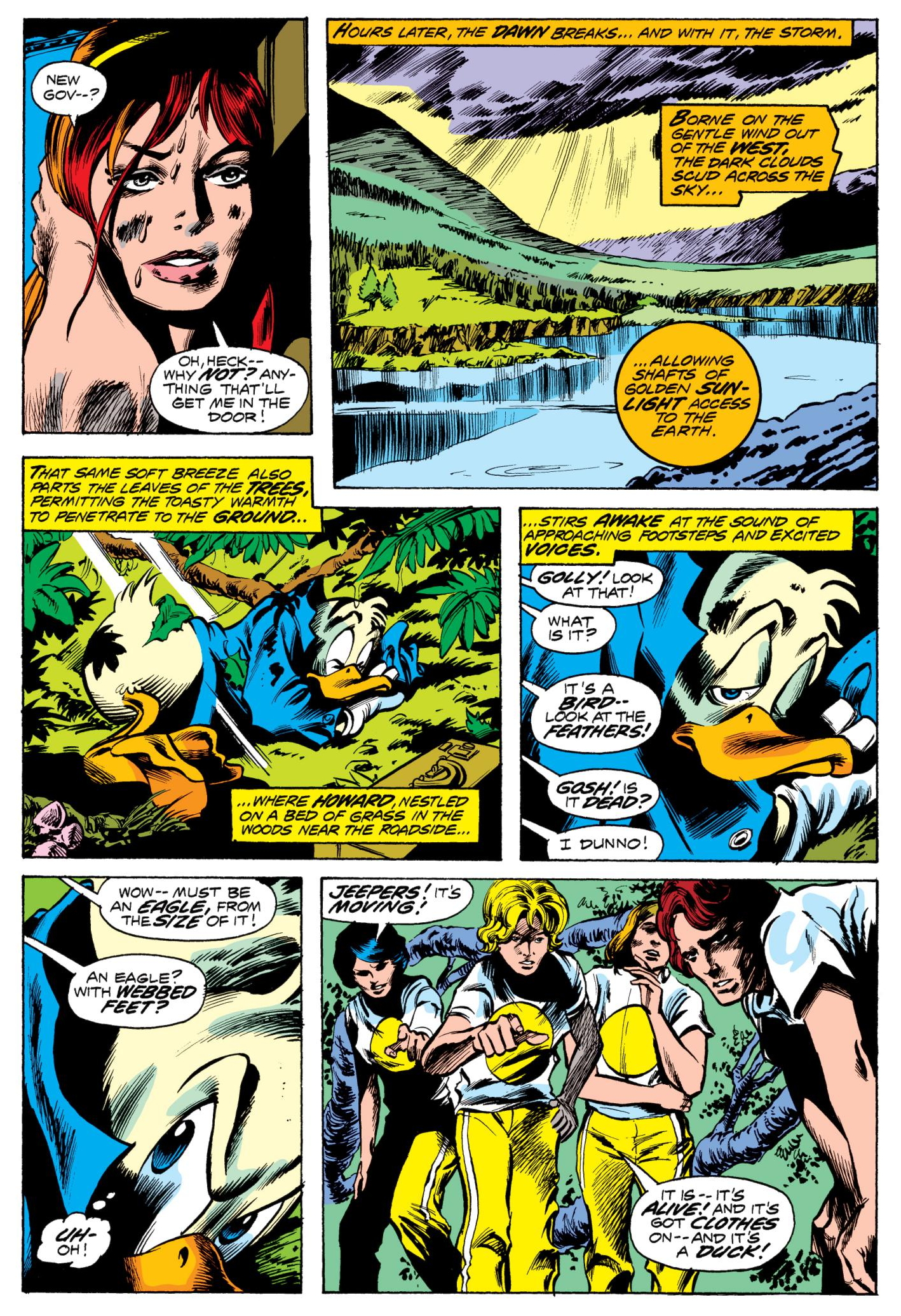

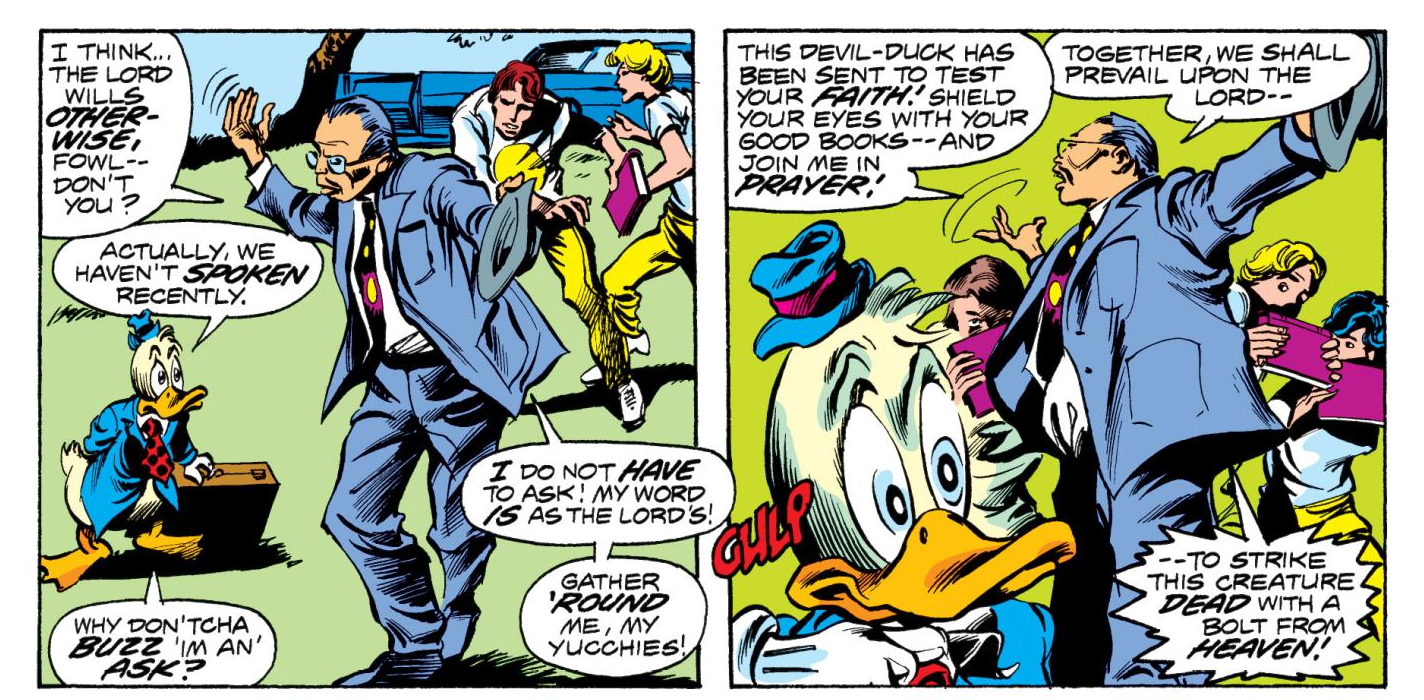
The Rev. Sun Myung Moon (1920-2012), as well as the Unification Church he founded (the members of which were popularly known as “Moonies”), became well-known in the U.S. in the early-to-mid-Seventies thanks to such factors as Moon’s fervent support for Pres. Richard M. Nixon in the midst of the Watergate scandal, and the mass wedding ceremonies in which multitudes of couples were simultaneously united in holy matrimony. Often described as a cult leader, Moon — and his movement — were unquestionably legitimate subjects for satire in 1976; that said, from the perspective of half a century later, it’s hard not to wish that Steve Gerber had resisted the urge to utilize the Reverend’s “foreign” name as the basis for comedy.


That last panel allows Gerber the opportunity to reference not one, or even two, but a whole three classic works of Gothic fiction on a single business card: Nathaniel Hawthorne’s The House of the Seven Gables (1851), Emily Brontë’s Wuthering Heights (1847) (whence comes the name “Heathcliff”) and Emily’s sister Charlotte’s Jane Eyre (1847) (ditto for “Rochester”).
However he’s come by his name, real estate broker/lifestyle consultant Heathcliff Rochester is eager to make a deal regarding the Dragonworth property — but time is of the essence, he tells Howard. “The townspeople are up in arms about having your… unconventional religious cult at such close proximity.”


Patsy assures Beverly that this is nothing unusual: “This happens once a week like clockwork.” Nor is there any cause for alarm: “Heathcliff will drive them away… with the hounds.”


“Love is strange,” says Howard, and who among us would disagree? Maybe these two crazy kids will make it work. (By the way, I’m pretty sure this is the most direct confirmation we’ve had yet that Howard and Bev are in fact more than “just good friends”, however strongly it’s been implied, both verbally and visually, up until now.)
Following Bev into the house, Howard makes the acquaintance of both Patsy and her mother, and then…


Up until this point, our storytellers have been riffing primarily on the tropes of Gothic romance, but we’ve now taken a decided turn towards the Gothic horror typified by Mary Shelley’s Frankenstein (1818) — although all of this electrical equipment actually hearkens more to the 1931 film version and its numerous successors than it does the original novel (as did the earlier attack by the townspeople, for that matter). Of course, this milieu was very familiar ground for artist Gene Colan, who’d been drawing Marvel’s Tomb of Dracula title since its inception five years before.


And now, finally, we’ve arrived at issue #7 — which, we should note, was the very first issue of Howard the Duck to arrive on stands just one month following its predecessor, as the ever-more-popular title got a bump up from its original bi-monthly publishing schedule:

Beverly and Howard attempt to depart the lab the same way they arrived — but, alas, the door is locked. (Yes, they’d already tried that at the end of issue #6, but Steve Gerber apparently forgot he’d written that line, so we will too.) Along with the others, they’re trapped inside with what may well be the world’s first carnivorous gingerbread man…


And that’s that — five pages into the continuation of last issue’s story, it’s over and done. While blowing up everything (and, with the exception of our two series regulars, everyone) certainly makes for a spectacular finale, I dare say that, considering how many characters and concepts Steve Gerber had endeavored to squeeze into the preceding chapter, this resolution feels pretty darn anticlimactic.
I suppose that Gerber may have simply tired of sending up Gothic genre tropes and wanted to wrap things up quickly; on the other hand, I think it’s possible that there was some confusion involved with HtD‘s changeover to a monthly publication schedule. Perhaps the author originally thought that the new frequency was starting with issue #6, rather than with #7, and that he’d thus have a whole second issue to complete the “Forbidden Cookies” storyline before proceeding to the “2nd big laff riot” referred to in #6’s “next” blurb as “The Manchurian Duck — Part One!” I don’t suppose we’ll ever know for sure, either way… though, just for the record, this sequence did indeed write finis to Patsy, her deranged mom, her cookie creature, and Mr. Rochester; at least, they haven’t shown up again in the last half-century. (Rev. Yuc and his Yucchies, on the other hand, would return.)
And now, back to our book:

To the best of my knowledge, the flamboyant Mr. Dreyfuss Gultch isn’t based on any real country music star (I could be wrong, though).

Say what you will about that last panel, but if nothing else, it was fairly daring territory for a Comics Code Authority-approved color comic book in 1976.


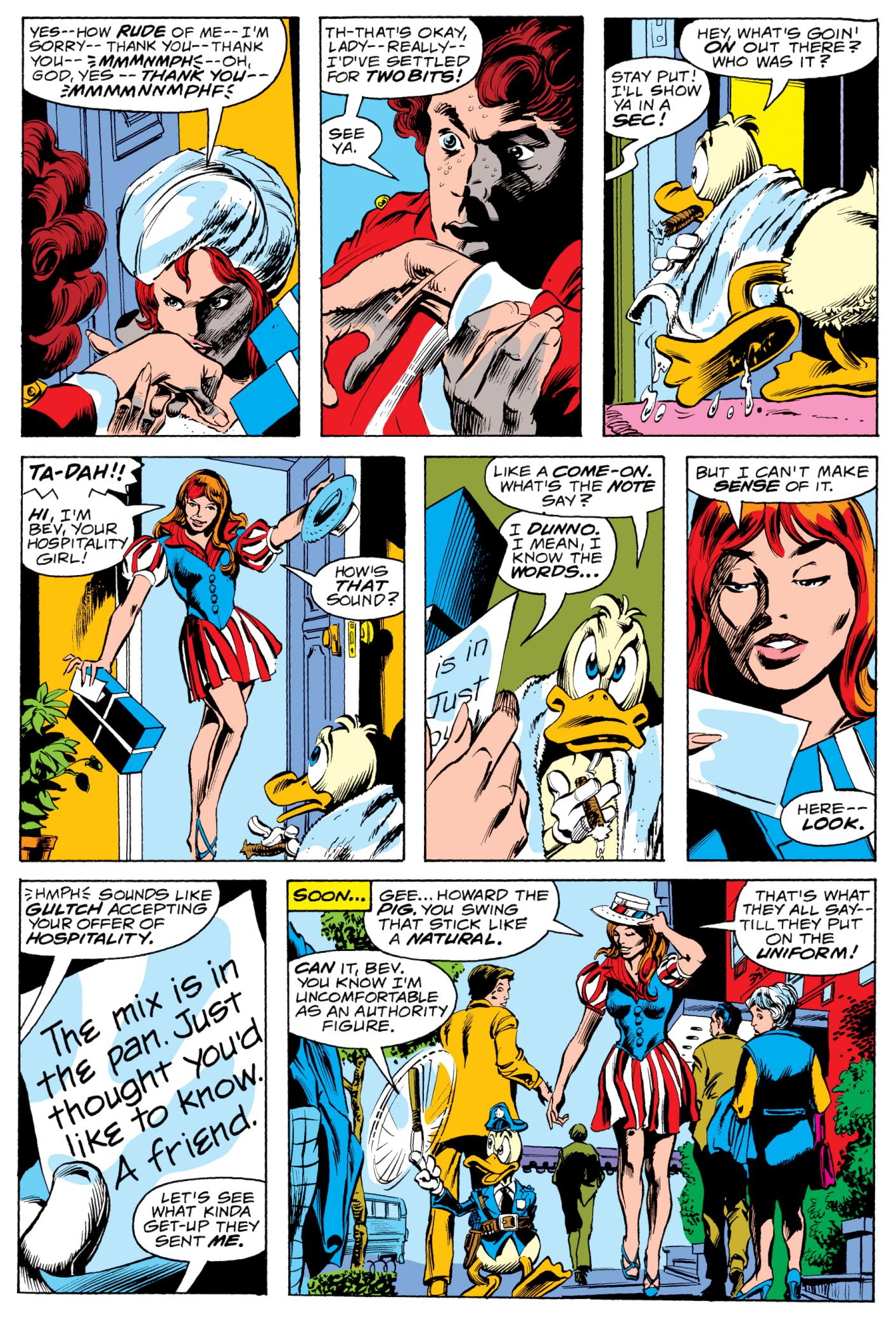
Once they arrive at the All-Night Party’s convention site, Madison Square Garden, Bev and Howard part ways so they can report in to their respective management offices: she to Hospitality, he to Security:

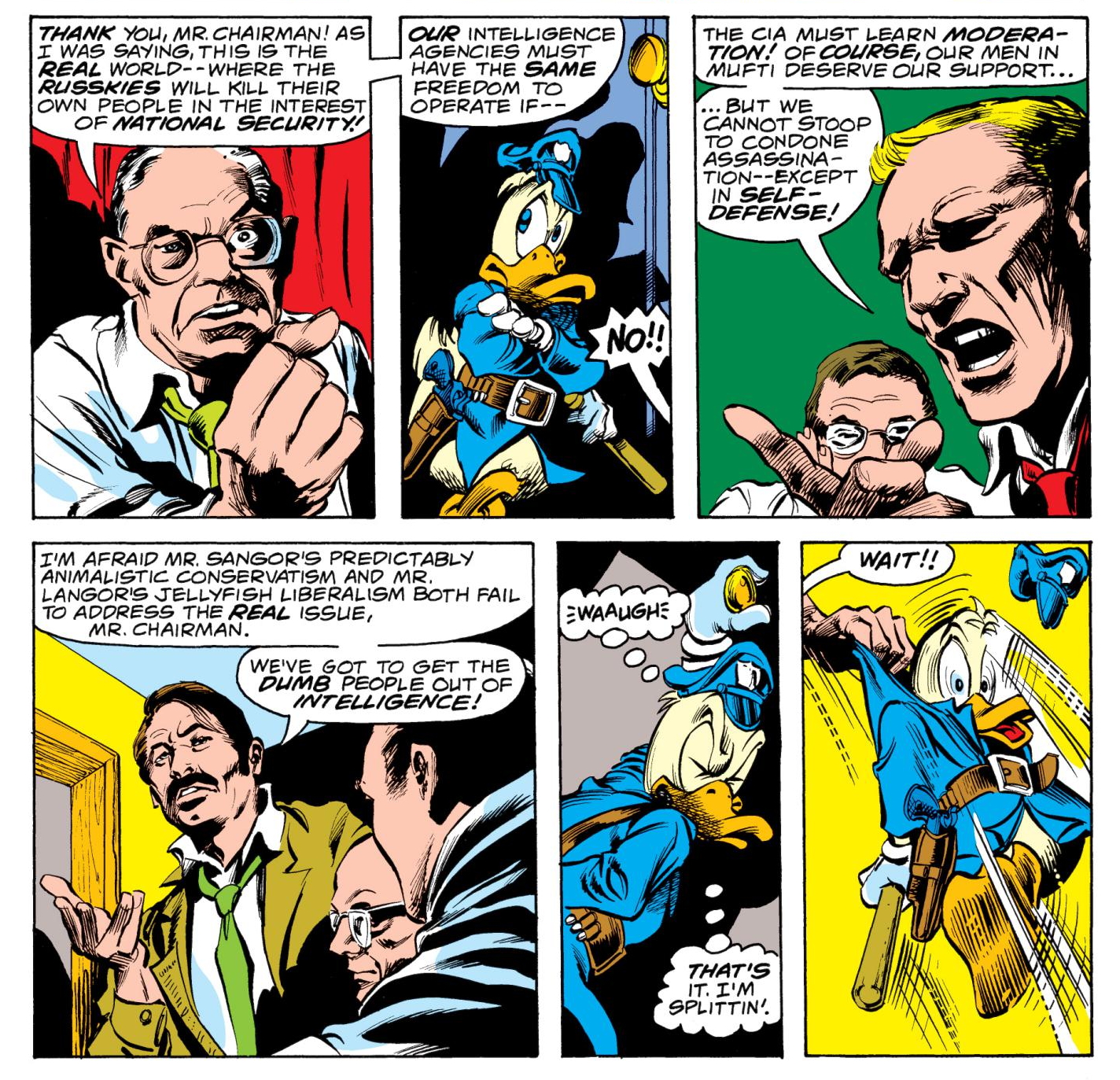
Doing as he’s been told, Howard begins to amble around aimlessly — but, almost immediately, he hears a scream coming from beyond a closed door. When he bursts in, he finds he’s interrupted nothing more serious than a particularly contentious committee meeting; still, despite order having already been restored, Howard decides to hang around for a minute or two…

Once their shifts are over, Howard and Beverly return to their hotel room, where they discover another note has been slipped under the door in their absence. “Oboy,” says Howard, “the Prairie Troubadour must’a have stopped by again.”


Having observed this last exchange, Dreyfuss Gulch approaches Howard to tell him he likes his style, and then invites him to join him and “some o’ the party bigwigs” for a night out on the town. Figuring he could use a little distraction, and not having any other plans for the evening, Howard accepts.


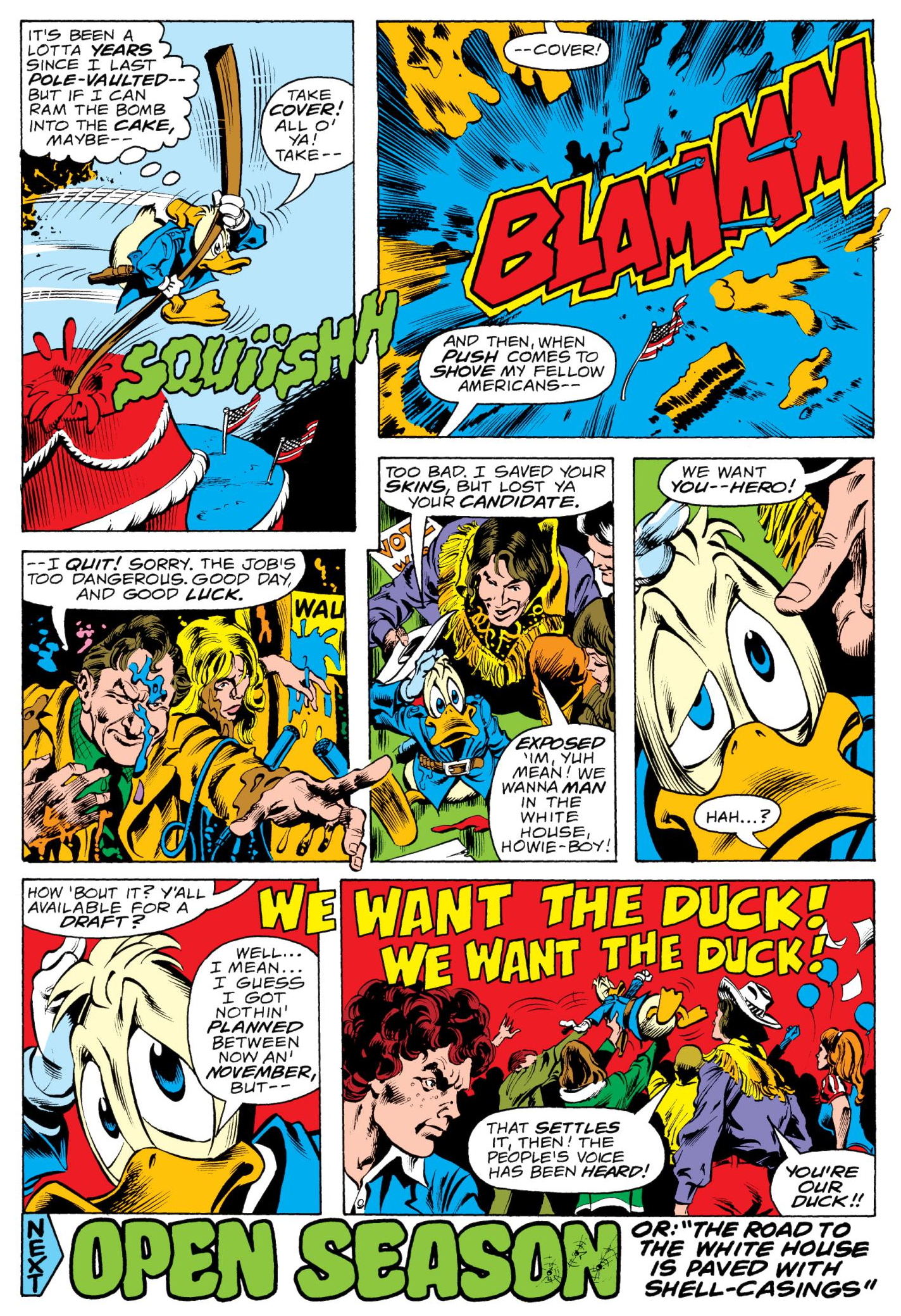
Recognize the curly-haired dude in the foreground of that last panel? Yeah, that’s the same hotel bellhop/nightclub waiter who was clearly responsible for delivering all of those cryptic notes to Howard and Beverly over the last ten pages or so. Anybody want to bet that we’ve seen the last of him? Nah, I didn’t think so.
Still, that’s a mystery to be taken up next month, in Howard the Duck #8. For now, it’ll have to be enough that the series’ storyline has finally caught up with the “reality” of Howard’s Presidential campaign — which, you may recall, has been a thing ever since it was launched in the letters column of issue #4, a whole five months ago. Ever since then, Steve Gerber has been providing monthly updates (and, yes, hawking campaign merchandise) in the HtD lettercols — all the way up to the present month of September, 1976, that is, when it’s spilled over into the letters pages of Marvel’s other books, with new updates appearing weekly.
Also showing up in or around September: FOOM #15 — an “Extra=Special Campaign Issue!” of Marvel’s in-house fanzine, featuring a classic wraparound cover by Gene Colan and Steve Leialoha that proves that, regardless of who else in the Marvel Universe might deign to vote for Howard the Duck, he’s already got the solid support of his fellow stogie-smoking characters:

(For the record, Wolverine’s fondness for cigars wouldn’t be established for another few years yet.)
 Anyway, that’s it for September’s duck-tivities. As already noted, our favorite talking fowl’s quixotic quest for the nation’s highest office will be kicking into high gear next month, in Howard the Duck #8 — and we will of course be here to bring you full coverage from the campaign trail. But before getting to that one, we — along with Howard and Beverly — will be taking a slight detour to a certain Sanctum Sanctorum in New York’s Greenwich Village. I hope you’ll join us for “The Duck and the Defenders”, coming your way just two weeks from now.