
This page contains affiliate links for eCommerce websites. How to Love Comics may recieve a small commission on purchases you make. Find out more in our affiliate disclaimer.
Editor’s note: This is a little embarrassing. A previous version of this stated that Amazing Spider-Man #1000 was published on 16th September. I didn’t catch that it was delayed by two weeks due to printer issues. Some dates and time calculations have been adjuested.
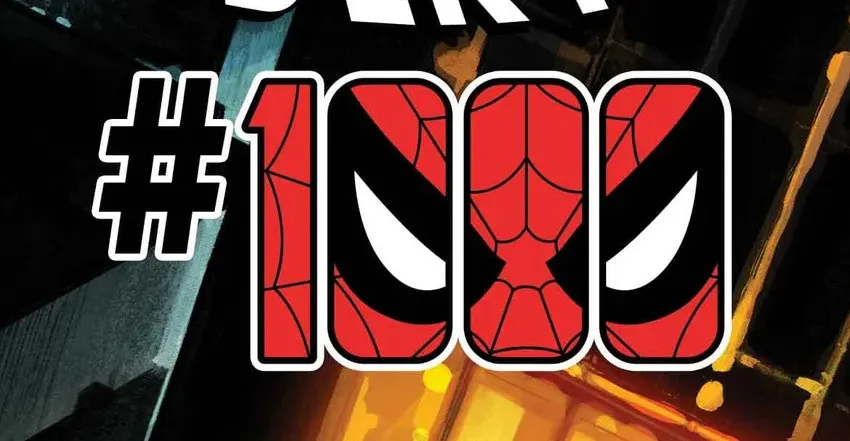
Marvel Comics will celebrate a massive milestone on the 30th of September. Amazing Spider-Man, the long-running Spider-Man flagship, will hit issue #1000. It’s the first Marvel comic to reach four digits (Marvel Comics #1000 doesn’t count!) and, in terms of mainstream American comics, it’s only the third, behind DC’s Action Comics and Detective Comics.
DC Comics‘ entries took roughly 80 years to enter the 1,000-issue club. But Amazing Spider-Man managed it in less than 64 years. How did the comic get there so fast when Action Comics and Detective Comics took much longer? Read on to find out.

A bit of housekeeping before diving into how Amazing Spider-Man managed to reach issue #1000 so quickly.
Firstly, while I mentioned Action Comics and Detective Comics, these aren’t the only comics to reach 1,000 issues. In the English-speaking world, British comics like 2000 AD, The Dandy, Commando, and Beano reached that number a long time ago. 2000 AD actually hits Prog 2500 today! In Australia, The Phantom has over 2,000 issues. And in Japan, we have the likes of KochiKame: Tokyo Beat Cops, One Piece, Detective Conan, and many others that have surpassed the milestone. However, many of these examples are weekly comics and have ~50 instalments each year. As a result, reaching issue #1000 is achievable as long as you have longevity. It’s a bigger deal in American mainstream comics, where instalments are mostly published monthly.
The other thing to address is when exactly Amazing Spider-Man began. This depends on the source. Amazing Spider-Man #1 was released on 10th December, 1962, with a cover date of March 1963 according to some sources. Marvel Comics lists it on their website as 1st March, 1963. In this instance, Marvel has defaulted to the March 1963 cover date – a month listed on the cover that told newsstand operators when to take the issue off the shelves – as when the comic began. This is likely because Marvel didn’t have the records from those days to pin down a date, and newsstand distribution back then meant it was available at different times throughout the country. So while the publisher may be more precious about the date Spider-Man debuted in Amazing Fantasy #14, they’re less so about Amazing Spider-Man #1. This is also why the original run is referred to as “Amazing Spider-Man (1963 series)” instead of “Amazing Spider-Man (1962 series)“. It also means any time calculations will need to be readjusted depending on which date you use.
Okay, let’s dive into this. For this exercise, I’ve pulled up the legacy number (the collective issues across relaunches and renumbering of a series) calculations that I did for the Making Sense Of Marvel’s Legacy Numbering guide back in 2023. Additional detail has been added for this exercise.
Legacy numbering #1-441 – Amazing Spider-Man (1963 series) #1-441
Amazing Spider-Man’s issue numbering runs uninterrupted through issue #441. This is the comic’s publication history between December 1962/March 1963 (take your pick) and 9th September, 1998. Depending on your starting date, that’s 35 years and 9 months or 35 years and 6 months. Boiling it down to months, that’s 441 issues in 429/426 months. So how did Amazing Spider-Man outpace the standard monthly release cycle?
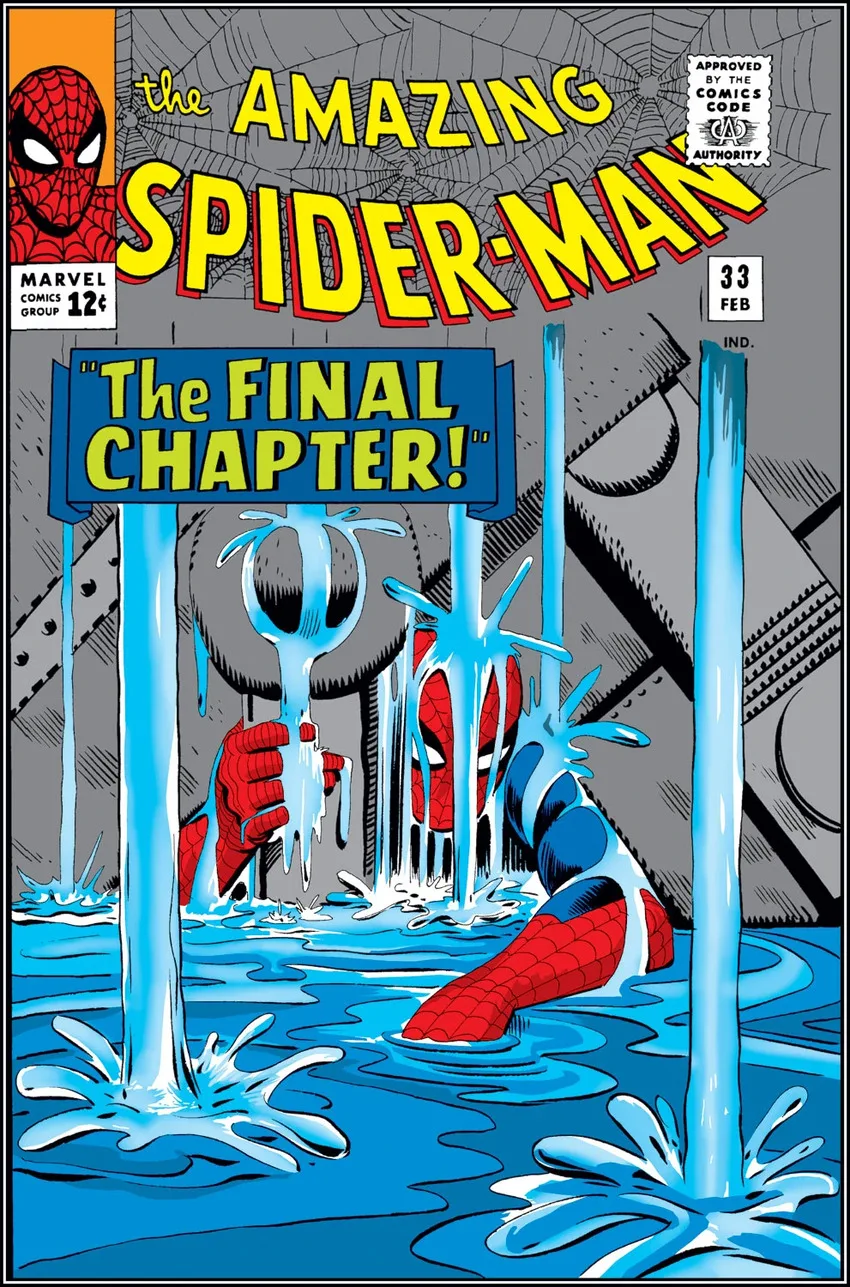
Interestingly, Amazing Spider-Man was a bi-monthly (every two months) comic for the first four issues. But from issue #5, it settled into a monthly cadence. However, between 1988 and 1992, Marvel intentionally released Amazing Spider-Man more than the standard twelve issues per year. During this time, the comic was released between 15 and 17 times a year. These publication decisions pushed the comic’s overall publication cadence to under a month and ahead of your standard monthly comic.
Legacy numbering #442-499 – Amazing Spider-Man (1999 series) #1-58
In late 1998, Marvel Comics relaunched Amazing Spider-Man, hoping to entice new and lapsed readers with a new issue #1. Between Amazing Spider-Man #441 and Amazing Spider-Man (1999 series) #1, a 1-month and 30-day gap, no new issues were published. This eats away essentially two months of the comic’s overall outpaced monthly schedule, but the comic is still pacing ahead at this time.
The first 34 issues of Amazing Spider-Man (1999 series) were released monthly. However, the cadence temporarily slowed down with Amazing Spider-Man (1999 series) #35, published 7 weeks after issue #34. The reason? The September 11th terror attacks. Marvel delayed the issue, which was likely to be released that week. Additionally, issue #36 quickly pivoted to become a tribute issue, released on 14th November. The pivot seemingly derailed the production schedule temporarily, resulting in no Amazing Spider-Man issue released in December 2001. The comic would resume business as usual in January 2002.
Legacy numbering #500-545 – Amazing Spider-Man #500-545
We’re at the halfway point!
Marvel reverted to legacy numbering for the 500th overall Amazing Spider-Man issue in October 2003. The comic is published mostly monthly throughout this time. There were a few exceptions, such as no Amazing Spider-Man issues in August 2006 and December 2006. This was due to the comic tie-in to the delayed Civil War comic book event. There was also a large gap between issues #544 and #545 as part of the controversial One More Day storyline.

By the time Amazing Spider-Man #545 was published on 28th December, 2007, the comic had existed for 45 years, 9 months, and 18 days or 44 years, 9 months, and 27 days – depending on which start date you observe. That translated to approximately 541/538 months. The comic was still pacing slightly ahead of the average of 12 issues a year a monthly comic would produce – despite the various delays in the 2000s.
However, you’ll soon see that it won’t really matter that the comic was pacing slightly ahead. It was about to make leaps and bounds towards every milestone.
Legacy numbering #546-647 – Amazing Spider-Man #546-647
After Marvel Comics serialised the controversial One More Day storyline, the publisher overhauled their Spider-Man comics. For decades, other Spider-Man comics ran alongside Amazing Spider-Man. At one point, there were three or four others, allowing at least one new Spider-Man comic to hit the shelves every week. However, Marvel Comics shifted this mentality and went all in on Amazing Spider-Man.
This era is known as Brand New Day, with Amazing Spider-Man published three times a month. (Although there were occasional months when only one or two issues were published.) With rotating creative teams, the comic was churning out lots of stories during this era.
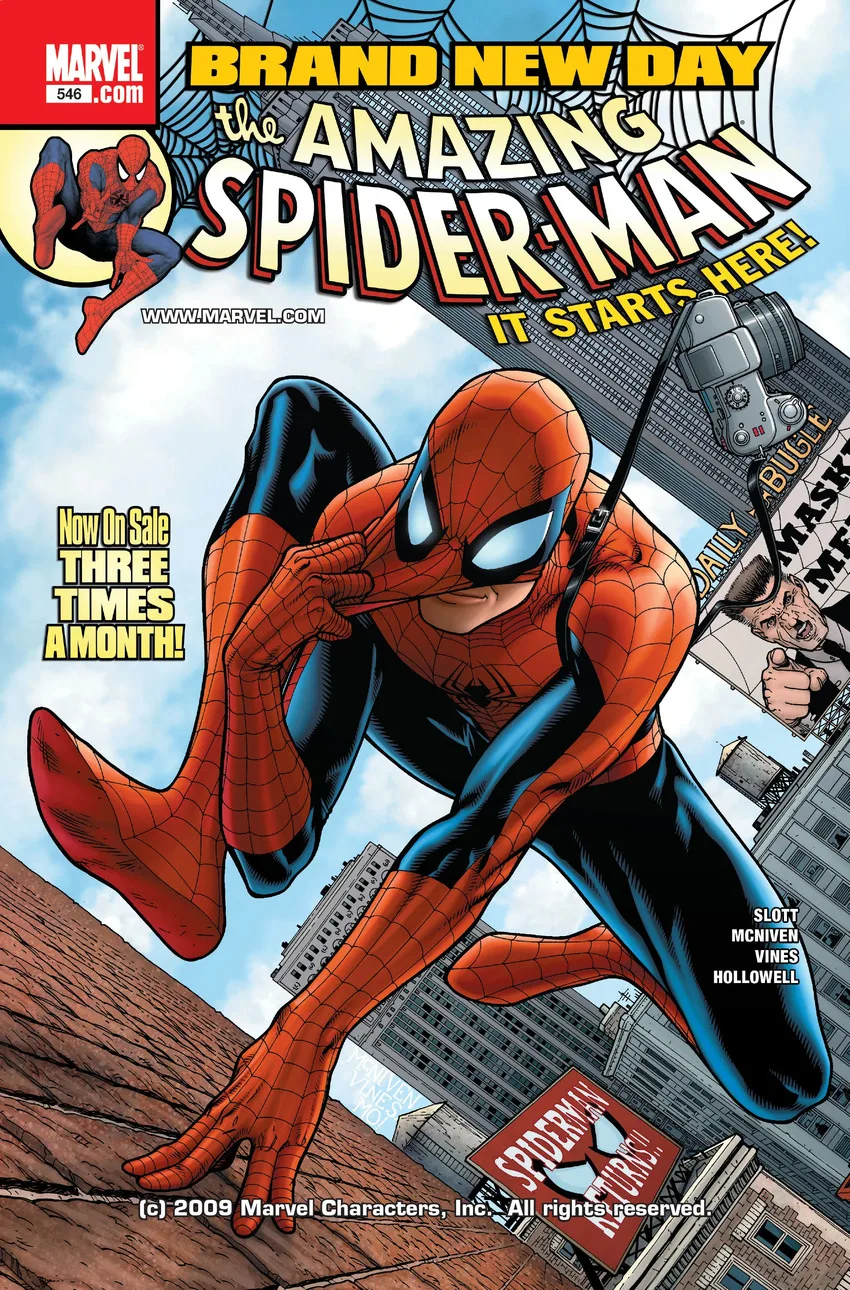
This era starts with Amazing Spider-Man #546 (published on 9th January, 2008) and ended with Amazing Spider-Man #647 (published on 3rd November, 2010). During this time, Marvel Comics published 102 issues of Amazing Spider-Man in 2 years, 9 months, and 26 days. To put that in perspective, a standard monthly comic (12 issues per year) would’ve been published 33 to 34 issues in that timeframe.
This is one of the reasons why Amazing Spider-Man has been able to reach issue #1000 in 2026. However, it won’t be the only reason.
Legacy numbering #648-751 – Amazing Spider-Man #648-700, Superior Spider-Man (2013 series) #1-33, and Amazing Spider-Man (2014 series) #1-18
Coordinating and publishing three issues a month is a mammoth task, and it was inevitable that production would slow down. That became the reality when Dan Slott became the sole writer for Amazing Spider-Man. The series went down to two issues per month, with the occasional third on special occasions. Slott is a notoriously slow writer, so producing two issues of Amazing Spider-Man a month was probably the most that could be done without jeopardising the release calendar. However, I’m sure Spider-Man editorial office preferred this cadence too.

The comic was relaunched a few times in this period – most famously when it became Superior Spider-Man for a time.
This two-issue-per-month release schedule has been the standard operating model for Amazing Spider-Man since November 2010.
Legacy numbering #752-756 – Amazing Spider-Man: Renew Your Vows #1-5
In the latter half of 2015, Marvel Comics paused almost all of their regular comics for the Secret Wars (2015) event. That included Amazing Spider-Man, which was replaced with the five-issue Amazing Spider-Man: Renew Your Vows miniseries. Marvel considers this series as part of their legacy numbering, so treat it as issues of Amazing Spider-Man.

Interestingly, this is one of the only times in the last 15 years when the comic reduced to almost a monthly publishing cycle – with five issues published in four months.
Legacy numbering #757-875 – Amazing Spider-Man (2015 series) #1-32, Amazing Spider-Man #789-801, Amazing Spider-Man (2018 series) #1-74
Amazing Spider-Man returned to business as usual after Secret Wars (2015), publishing two issues per month as a pretty standard operating model. Occasionally, there was a month when an additional issue was published, but this was not the norm.
However, the comic was paused for a few months due to the COVID-19 pandemic. There was a two-month period when Diamond Comics Distributors, the company that made sure Marvel Comics made it into comic book stores, paused operations. As a result, there was a two-month gap between Amazing Spider-Man (2018 series) #42 and #43. However, Amazing Spider-Man reverted to its usual operating rhythm when Diamond Comics Distributors resumed distributing comics.
While the shutdown period may have slowed Amazing Spider-Man’s race to issue #1000, it didn’t damage it in any significant way. The comic was so far ahead of standard projections because of years of accelerated publishing.
Legacy numbering #876-894 – Amazing Spider-Man (2018 series) #75-93
This period is referred to as Spider-Man Beyond. It was not uncommon for the comic to be published three times a month during this period. Between 6th October, 2021 and 30th March, 2022, there were 19 regular issues (not including tie-ins) in just shy of six months.
Legacy numbering #894-1000 – Amazing Spider-Man (2022 series) #1-70, Amazing Spider-Man (2025 series) #1-35, and Amazing Spider-Man #1000
The last few years have seen Amazing Spider-Man return to a two-issues-a-month cadence as it marches towards issue #1000.

Now that you know how Amazing Spider-Man has managed is about to reach issue #1000, how long did it take for Marvel to achieve it? If you use the 10 December, 1962 starting point, then it will take 63 years, 9 months, and 20 days to reach issue #1000 on the 30th of September. Otherwise, 63 years, 6 months, and 29 days if you use the March 1963 starting point.
To put that in perspective, if Marvel Comics had published Amazing Spider-Man as a monthly comic (12 issues per year) the entire time, with no delays, the comic would only be at issue #765/#762, depending on your preferred starting date.
As you can see, publishing at twice- and three-times-a-month cadences really sped up the comic’s ability to reach issue #1000. So, despite the occasional delay or pause, the prolonged multi-issue-per-month strategy made up for it.
I was curious: how long would it take Amazing Spider-Man to reach issue #1000 if it were always a monthly comic? 1,000 months is 83 years and 4 months. Based on that, Amazing Spider-Man would arrive in April or July 2046 – depending on where you think publication begins. Essentially, Marvel has been able to slice off nearly 20 years to reach issue #1000.

Also, for reference, it took Action Comics 80 years and Detective Comics just over 83 years to reach issue #1000.
Speaking of those two comics, Amazing Spider-Man’s issue number will likely surpass theirs in 2035. Although that all depends on the publishing frequencies of all the comics involved staying the same as they are now. A lot could change in that time, so we will have to wait and see if it happens.
Reaching issue #1000 is an enormous feat, even if the publisher speed-ran the progress by upping the publishing frequency. It’s still a massive achievement. The effort required – both creatively and editorially – to publish that many comics of a single series in that timeframe is immense and only possible with strong coordination and Marvel believing that it’s worth the time and effort doing so.
Let’s see how long it takes to reach issue #2000!
Buy Amazing Spider-Man #1000 and the previous 999 issues at your local comic book shop, online retailers, eBay, and Amazon/Kindle.