

OAG released its Megahubs 2026 report today, an index that ranks airports not by passenger volume but by connectivity: the ratio of possible same-day international connections to the number of destinations served, calculated on the single busiest day of the year within a six-hour connection window. The pool is drawn from the world’s 100 largest airports by capacity and the largest 100 international airports, using data for the twelve months to August 2026.
Istanbul (IST) takes the top spot globally, moving up from second place, with Turkish Airlines operating 80% of its flights and connections reaching 337 destinations. London Heathrow (LHR), the Megahub topping the list for three straight years before this, slips to second after its potential connections fell 6% on the busiest day, a drop OAG attributes largely to a 25% cut in Heathrow’s Middle East capacity this August compared with last year. Amsterdam Schiphol (AMS) holds third, Kuala Lumpur (KUL) fourth as Asia’s top-ranked hub, and Chicago O’Hare (ORD) rounds out the top five as the leading Megahub in the Americas. The wider disruption to Middle East schedules, with regional capacity down 5.7% year-on-year, shows up across the rankings, pulling down Dubai and Doha and rippling into other airports that lean on Gulf connectivity.
Delhi’s five-year swing
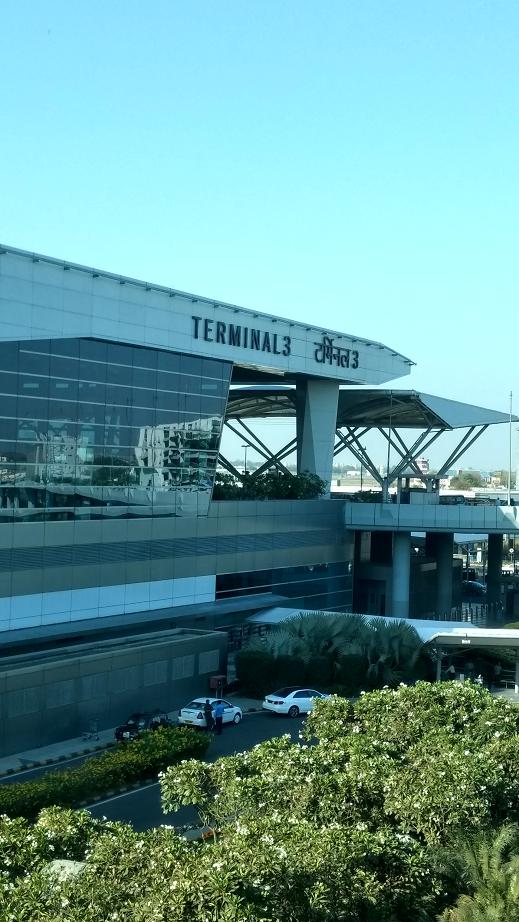
Delhi’s Indira Gandhi International Airport (DEL) has had a genuinely volatile run on this particular index, and it’s worth tracing the full arc rather than just the latest number. In Megahubs 2023, Delhi ranked 25th globally. It improved to 24th in Megahubs 2024, with 21,781 possible connections across its network and IndiGo operating 39% of flights as the dominant carrier. Then came a sharp fall: Megahubs 2025 placed Delhi at 39th, a drop of 15 places, with connections down to 16,178 across 157 destinations, a fall of roughly 26% in raw connection count even as the airport continued growing passenger traffic.
Megahubs 2026 shows a partial recovery. Delhi is back up to 28th globally, gaining 11 places, with IndiGo’s share ticking up slightly to 40%. It hasn’t returned to its 2024 peak, but the direction has reversed. The same pattern holds in the Low-Cost Carrier Megahubs index, where Delhi ranked 5th in 2024, fell to 11th in 2025, and has now recovered to 9th in 2026, still with IndiGo as the dominant LCC carrier and now accounting for 57% of the airport’s low-cost capacity.
Regionally, Delhi sits 9th among the Top 10 Asia Pacific Megahubs for 2026, behind Kuala Lumpur, Seoul Incheon, Tokyo Haneda, Singapore Changi, Bangkok, Shanghai Pudong, Guangzhou Baiyun and Hong Kong, and just ahead of Jakarta. It’s the only South Asian airport in that regional top 10.
A connectivity metric, not a size metric
The swings are worth explaining rather than just reporting, because the index measures something narrower than most people assume. OAG isn’t ranking the biggest airports or even the busiest international gateways; it’s ranking how efficiently an airport converts its network into same-day connecting opportunities within a tight window. That’s why Delhi, easily India’s largest airport by passengers, sits outside the global top 25, while a smaller airport like Kuala Lumpur or Istanbul, built around dense short-haul banks that feed long-haul departures, tops the list. A year-on-year change in schedule timing, bank structure, or which flights fall on the single busiest day can move a rank by fifteen places without the underlying airport shrinking at all.
That context matters for reading Delhi’s 2025 dip correctly. The fall from 24th to 39th tracked a real drop in scheduled connections rather than a change in methodology, but it says more about how Delhi’s flight banks were timed on the sample day that year than about the airport losing relevance. The 2026 recovery suggests better bank alignment returned, helped by capacity growth and IndiGo’s continued dominance as both the general and low-cost carrier of choice at the airport.
The bigger structural point is that Delhi is now the only Indian representative doing this job. Mumbai (BOM), which ranked 44th in Megahubs 2024, has fallen out of the global top 50 entirely in this year’s report, while retaining an 11th-place finish on the LCC-specific list. India’s connectivity story on this index, in other words, has consolidated around a single gateway rather than splitting between two, even as both cities keep adding domestic and international capacity in absolute terms.
Network Thoughts
The number that matters here isn’t 28th, it’s the shape of the five-year line: 25, 24, 39, 28. That’s not a hub steadily building international relevance; it’s a hub whose rank is unusually sensitive to how its banks fall on one specific day each year, which is exactly what you’d expect from an airport whose international network is still built mostly around point-to-point demand and IndiGo’s short-haul strength, rather than genuine wide-body transfer banks designed for connecting traffic. This could change drastically when Air India starts expanding.
Being 9th of 10 in Asia Pacific, below every major Northeast and Southeast Asian gateway, is the more honest read of where Delhi stands as a connecting hub today. India’s own ambitions for Delhi as a global transfer point will need more than domestic-carrier dominance and rising destination counts; it needs the kind of deliberately banked wide-body schedule that Istanbul, Doha, or Kuala Lumpur run, where an arriving wave of flights is timed to feed a departing wave within a couple of hours, not spread across the day. Until that scheduling discipline shows up, Delhi’s Megahub rank will likely keep swinging with the calendar rather than climbing with the passenger numbers.
Found this article informative? Think of supporting Network Thoughts with Power of 10

Running this website incurs some cost, along with the data sourced for analytics. If you have liked this article, consider paying INR 10 via UPI. The site will continue to be free. This will help with the maintenance, upkeep and funding the research. You can also pay via Debit or Credit card by clicking on this link.
You can support Network Thoughts by ordering Network Thoughts baggage tags and lapel pins !
Follow NetworkThoughts on X (Formerly Twitter), Bsky, Facebook and YouTube
Related