

Living in Germany often feels like you’re stuck in the 1930s or the 1990s, but never quite in the 2020s with the rest of the world. I’ve been trying to understand this for a while now and I’ve
decided to explore how Germany’s past continues to shape its future, and why its obsession with stability may be its biggest weakness.
I’d argue that the early 1990s were Germany’s best years. The wall had just been peacefully dismantled and after all those years of looking for freedom, the East Germans had finally found it. The
country was whole again, the economy was booming, and, after the tumultuous decades of the early 20th Century, feeling comfortable and safe made sense. It still makes sense, but the goalposts
have moved since 1990. Unfortunately, producing BMWs and Bosch fridges is no longer the path to safety.
But as the Germans love to say “Es war immer so” (it was always like that). Which is interesting, because for Deutschland, it actually wasn’t immer so. I’m writing this in 2026, so let’s go back
just 100 years. In 1926, Germany joined the League of Nations, allowing them to be reintegrated back into the international community following the disaster that was World War I. Then, just three
years later, America was hit by the Great Depression. This absolutely devastated Germany’s economy, and sparked the beginning of the most politically unstable period in the country’s
history.
Four years after that, a new Chancellor was appointed. We all know who that was, but just in case there are any thicky dumb dumbs reading this, it’s Hitler. You know, the guy with the most
infamous moustache in fashion history. The Austrian fellow who wanted to be a painter but couldn’t get into art school due to his lack of any discernible artistic talent. The guy who went on to
become one of history’s greatest mass murderers. Ring any bells yet? Look him up. I’m sure he has a Wikipedia page.
By 1936, Germany had started to rearm and everyone around them grew quite nervous, because the last time these guys had access to guns and tanks, it didn’t exactly end in peace. Then, out of the
blue, Hitler annexed Austria (as punishment for not letting him into art school, I assume). A year later, he invaded Poland. I’m not sure what Poland had done to him. Maybe they were also not
fans of terrible landscape paintings.
And so part two of Germany starting wars they couldn’t win began. This time it lasted 6 years, and 70-85 million people lost their lives globally. The Nazis eventually surrendered, but four years
after that, the country was split in two. West Germany became an economic powerhouse, known for its great cars and long-lasting kitchen appliances, while East Germany fell into the hand of the
Soviets and set up the most effective spying system the world had ever known. Then, the Soviets built a wall around the western part of Berlin to stop people running away from the Stasi. It was a
well-built, proper German wall that stood firm until 1989, when mass protests, a bungled press conference and Nightrider drove in, bringing freedom to the East. These events would be considered a
lot for anyone to handle, but it wasn’t over yet. More upheaval was yet to befall the Deutsche Volk.

Between 1990 and 2015, Germany had quite a nice time. It won the much coveted title of Europe’s Biggest Economy every year, introduced some lovely social reforms and kept pace with the other
industrial nations. The Mittelstand (small and medium-sized companies) were thriving like they’d never thrived before. The GDP was growing nicely and everything was bobbing along perfectly.
Affluence at home had finally given the people the feeling that “we are somebody again”. The country had stability and safety. German cars, white goods and weapons replaced German troops and
reconciled the country with its neighbours once more. They even elected a woman chancellor showing the world how progressive and woke they were. Then came the global financial crisis of 2008 and
the global refugee crisis of 2015 and the cracks in Germany’s sense of safety began to show.
Angela Merkel was crowned queen of “es war immer so” due to her undeniable talent of keeping everything the same and not moving forward into the future with the rest of the world. In 2009,
following the Financial Crash of 2008, Frau Merkel, or Mutti, as she was affectionately referred to by her subjects, introduced the Schuldenbremse (debt brake). This was written into the
constitution, and limited the federal government’s deficit to 0.35% of GDP, meaning that borrowing money was now almost impossible. This led to chronic underinvestment in essentials, such as
digital infrastructure, bridges, trains, housing, schools, hospitals, green energy, pensions, wages – you know, all the things we rely on to survive.
For over 10 years Germany remained stable. The bridges hadn’t started to collapse and Russian gas was still flowing through the pipes. Then the civil war in Syria erupted creating one of the
largest displacement crises in modern history. Approximately 6.7 million people fled Syria and around 750,000 sought refuge in Germany. In 2017, 2 years after the refugee crisis began, the AfD
(Alternative for Germany) entered the German parliament as the third biggest party. That’s when German stability began it’s visible descent off the cliff.
The complete lack of investment, and the over-reliance of the Merkel government on ordinary people to take care of the refugees, pushed the German people to the brink. Extreme anti-muslim
rhetoric entered the political mainstream, and Muslim people, whether they were born in German or not, became the scapegoats for everything wrong with the country.
Then that pesky little virus called Covid-19 entered the chat, and any semblance of reason left the chat. Conspiracy theories took over, creating irreparable rifts in the social fabric. Rifts
that have still haven’t healed.
Merkel left office in 2021, and in her wake she left behind a country with:
- Crumbling bridges
- Schools that heat up like ovens in the increasingly hot summers
- Trains that barely run
- Houses that are only affordable if 12 people share 2 rooms
- Pensioners who have to scour the streets looking for empty bottles to take to the supermarket and claim the 25 cent deposit because their pensions are too low
- Wages that barely cover a frozen ready-meal
- 20% of children living in poverty
- Kids leaving school with a reading age far below what it should be for the world’s THIRD BIGGEST ECONOMY
- An extremely strong and extremely extreme far-right movement that is violent, anti-democratic, anti-LGBTQIA+ and obviously, racist

And then, as if all that wasn’t bad enough, Merkel’s old pal Vlad Putin invaded Ukraine. This finally smashed any remaining feelings the German’s had of safety into tiny shards of glass. And
because this happened at the exact time that German society had been split in two by Covid, now half the country supported the Russian war of aggression and the other half wanted to rearm as fast
as possible. Especially when it was revealed that the lack of investment in the armed forces meant that Germany had about 2 tanks and three machine guns left – probably not enough to be able to
keep those naughty Ruskies at bay.
Of course, with the coalition collapsing in 2024 and Friedrich Merz taking over as Chancellor in 2025, the best idea was to cut all social programs – because nothing brings people in a divided
society together more than punishing those at the bottom and rewarding those at the top. Historically, citizens really love those sorts of policies and they have never done any harm (that’s
sarcasm, by the way).
On Sunday 6th September 2026, the state of Saxon-Anhalt overwhelming voted for Ulrich Siegmund – a member of the AfD. Sections of this political party have been designated as a “confirmed
right-wing extremist endeavour” by the Federal Office for the Protection of the Constitution (BfV) in May 2025. This
classification was the result of a four-year review into the party’s “ethnic-ancestry-based understanding of the nation”, which the BfV decided was incompatible with Germany’s free democracy.
Despite this ruling, over 40% of voters in Saxon-Anhalt chose the AfD.
It’s interesting, that when a teenager was asked about the election result, she said,
“…I wish we could go back to the days of Angela Merkel,
when things were OK in Germany.”
It seems, however, that Germany is in real danger of going back to the days of that moustachioed fellow I mentioned at the beginning of this post instead. The AfD are considered so extreme that
even France’s Reine de l’extrême droite, Marine Le Pen, has distanced herself from them.
This is a party that likes to dabble in Nazi imagery and who would like to divide the population up into “biological” and “passport” Germans. A party who wrote in their recent manifesto for the
election in Saxon-Anhalt, that disabled children should be excluded from going to school with “normal” children.
It looks like Nazi ideology, it sounds like Nazi ideology – I think it might be Nazi ideology. However, what this unprecedented turnout and huge number of votes for a confirmed extreme-right
party really amplifies is how deeply dissatisfied and disgruntled the population is with the current government and the status quo. Is everyone who voted for the AfD racist? Probably not. Is
everyone who voted for the AfD fed up with the mainstream parties not taking them seriously? Absolutely yes.
Progressive politicians in other European countries have pointed out that the stubborn insistence of the old neo-liberal parties to push austerity has pushed these voters to the right. The
historic exclusion of the AfD by the mainstream parties may be what helped strengthen them. Exclude the party and the voters feel excluded by proxy. Many citizens of Saxon-Anhalt and other states
such as Brandenburg, Saxony, Thürigen and Mecklenberg-Vorpommern have felt excluded from greater Germany since reunification.

Some may have viewed the AfD as the only genuine alternative to the political establishment. As protest votes go, this one is a dangerous gamble that could have really horrifying consequences for
the people of Saxon-Anhalt, especially those deemed not “German enough.”
Friedrich Merz’s expression of “deep shock” at the results shows just how out-of-touch he is with the country he governs. He’s spent the last eighteen months sounding like a Diet Coke version of
the AfD, with his comments about the “Stadtbild” (cityscape) and his party’s very unsupportive policies towards LGBTQIA+ groups, especially after the attack on the CSD parade. At the same time
he’s sticking to delivering the very austerity measures that almost force people to look elsewhere for a place to put their cross on the ballot paper.
Now, obviously, these voters have been duped and brainwashed and are extraordinarily delusional if they think the AfD will solve all of their economic woes. But they are clear enough in their
minds to know that Merz and the CDU/CSU see them as less worthy and they, in turn, see him and his band of suited, rich, white men as other. Merz may not be the most hate-filled politician in
Germany, but he might be the most dismissive, and he may have thought that gone unnoticed, but it hasn’t. And now his party (and democracy) is in grave danger.
Merz and others of his ilk may not spout the ethnonationalism nonsense in the same way as the AfD does, but these self-appointed defenders of centrist values are more ethnonationalist than they
have led you to believe. They may not be posting TikTok videos about the Great Replacement Theory, but they will mention, whenever they get the chance, every time a black or brown person gets the
top editor job at a newspaper. They have very passionate opinions about women who wear headscarves. And they really like to ban gender-neutral language in schools and government offices. Merz’s
mistake was to think that if he echoed the concerns of the AfD voters, they’d tick his party’s box at the election. But the voters probably see him as pandering and condescending and simply voted
for “the real deal” instead.
This election result – the significance of which is yet to be seen – should be a wake up call to all politicians on the left and in the centre.
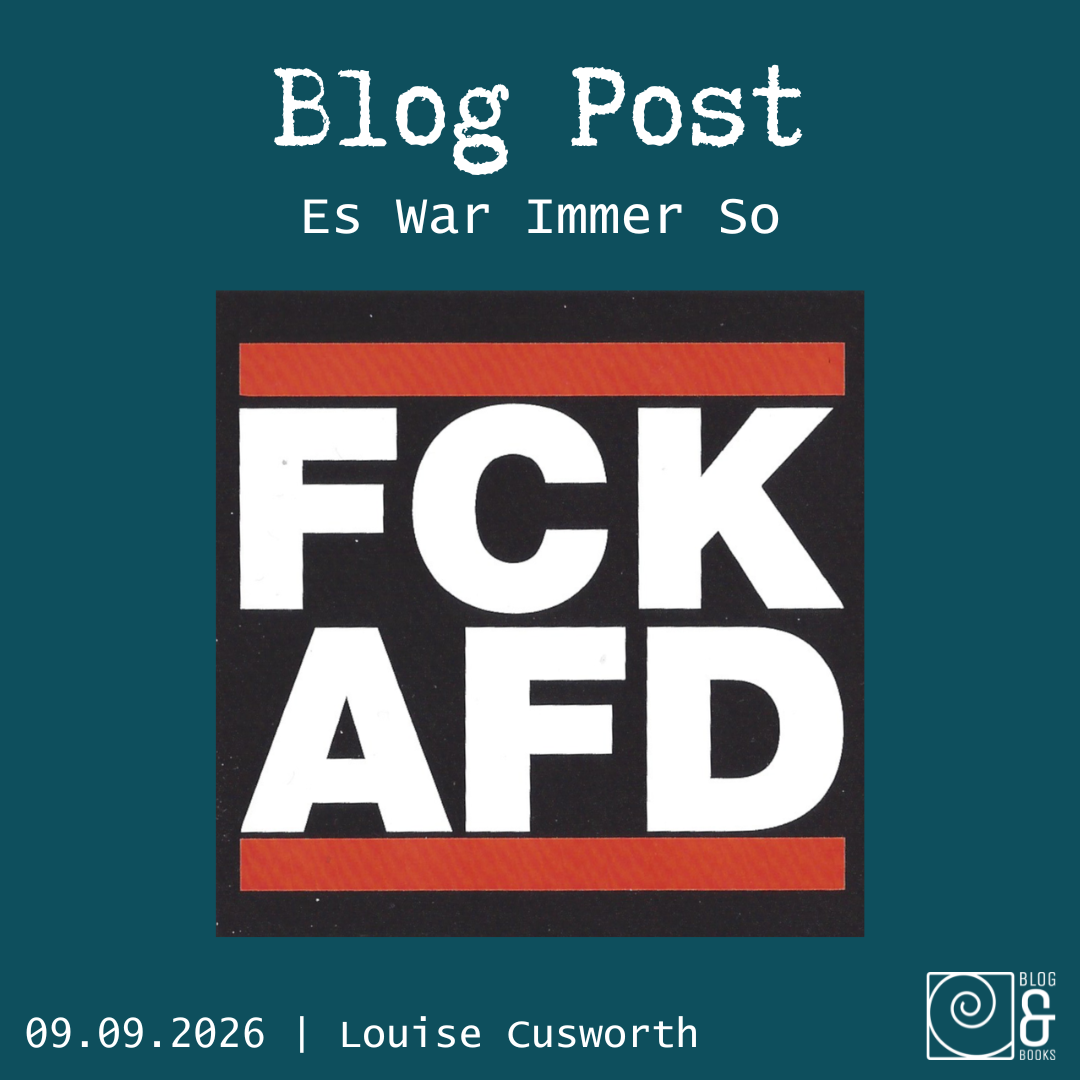
Stop copying the AfD and parties like them. In fact, ban them! They’re against the constitution and pose a danger to society and the democracy we fought so hard for. So ban them now: https://afd-verbot.jetzt/de
Stop telling us that the market will regulate itself and the wealth will start to trickle down. We’ve been alive long enough to know that they only thing that trickles down is is a slew of
misinformation and right-wing propaganda.
Stop cutting social services and benefits to the people who need them.
Stop blaming black and brown people – whether they hold passports or not – for the problems you and the politicians of the past have caused.
Stop trying to convince people that a cabal of left-leaning, vegan, feminist, trans people is trying to take away their heimat. There’s enough heimat to go around. And enough money too.
If the old parties want to stay, then the mantra of “es war immer so” has got to go. It doesn’t have to be immer so that a crisis makes people turn to the right. It doesn’t have to be immer so
that the hardest workers foot the bill while the ones at the top pay the least.
So if Germany wants to avoid repeating the mistakes of its past, it’s time to let go of “es war immer so”, because the world has moved on and so must Germany. This lack of forward movement is
what’s driving us backwards.