
Air India explores merging Air India Express into the main airline as incoming CEO looks to cut costs

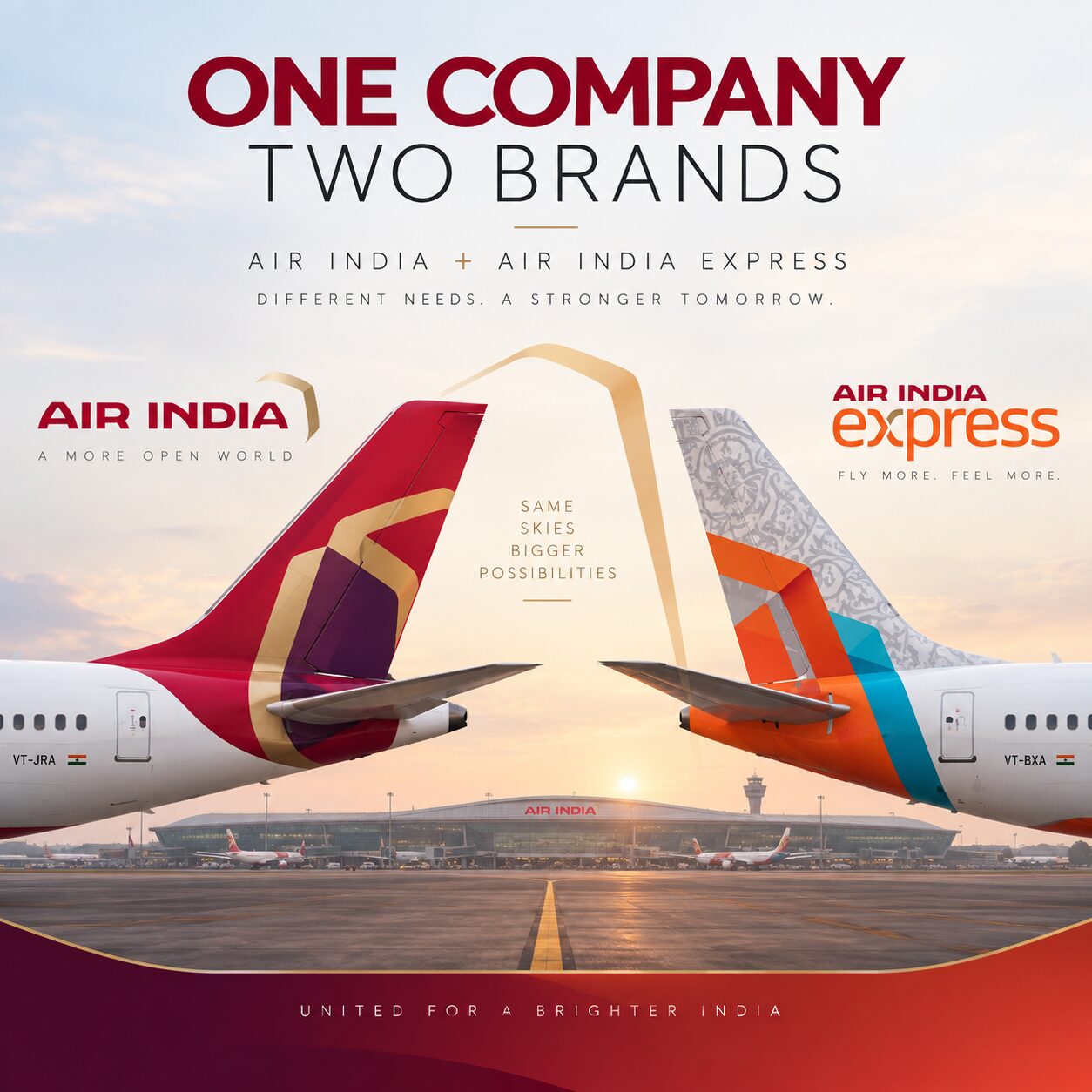
Air India’s incoming chief executive, Tewolde Gebremariam, is considering a potentially significant structural change at the Tata Group-owned airline: bringing Air India Express under the same operating structure as Air India.
According to a Bloomberg news report, Gebremariam has been questioning managers across the organisation about the need to operate two separate airlines, each with its own operating permit, management structure and supporting functions. The idea is still in its early stages, and no decision has been made to merge the two airlines. Any such move would also require approval from Air India’s supervisory board. Importantly, Bloomberg reports that Air India Express would retain its brand even if the two airlines were combined operationally.
The thinking behind the proposal is relatively straightforward. Operating a single airline rather than two separate entities could reduce regulatory requirements and eliminate duplication across areas such as management, engineering and administrative functions. That would fit with the broader mandate given to Gebremariam as he takes over at Air India. The former Ethiopian Airlines chief has been brought in at a time when the Tata Group’s airline business is under considerable pressure to improve its financial and operational performance.
Air India reported a loss of around INR 22,000 crore (USD 2.3 billion) for the financial year ended March, according to Bloomberg. The airline is therefore looking for ways to reduce costs, improve operational reliability, and extract more value from its existing assets.
Another restructuring of the Air India Group?
Combining Air India and Air India Express could represent another significant change to the structure of the Tata Group’s aviation business. When Tata Group took Air India back from the Government of India in 2022, the group had four airline brands: Air India, Vistara, Air India Express and AirAsia India. Tata subsequently consolidated those businesses into two airlines, with Air India becoming the full-service carrier and Air India Express positioned as the group’s value carrier.
The Vistara merger was completed in 2024, with Singapore Airlines becoming a shareholder in Air India as part of the transaction. AirAsia India was folded into Air India Express. The result is the current two-airline structure: Air India for full-service operations and Air India Express for the low-cost/value segment. The current business strategy has been to divert all the routes which don’t have appetite for a three cabin model.
Gebremariam appears to be questioning whether maintaining that distinction at the corporate and regulatory level still makes sense. There is already some precedent for greater integration. Air India and Air India Express have previously combined certain functions, including their sales teams, which were brought under a unified global sales structure in 2025. A wider integration, however, would be considerably more significant.
Tewolde starts with cost and operational efficiency
The Air India Express question is only one part of the incoming CEO’s agenda. Gebremariam has also raised questions around Air India’s relatively low cargo utilisation, an area that was an important contributor to Ethiopian Airlines’ business during his tenure there. He has also asked employees to develop plans to reduce maintenance-related issues.
That focus is consistent with Air India’s stated rationale for appointing Gebremariam. The airline said when announcing his appointment that his experience included managing complex airline operations, building MRO infrastructure and driving operational reliability and profitability at Ethiopian Airlines. The airline also faces plenty of external challenges. Indian airlines continue to face the operational consequences of restricted Pakistani airspace, while disruptions in the Middle East have affected routing and fuel costs. Air India is also dealing with regulatory scrutiny following a recent flight incident.
For Gebremariam, Air India Express is less about the airline’s branding and more about whether the group can simplify its operating model without compromising the different markets the two brands serve.
Air India Express brand likely to remain
The potential combination would not necessarily mean Air India Express would disappear as a consumer brand. Instead, the brand could continue to operate as the group’s value carrier while the corporate, regulatory and back-end structures are consolidated. Unfortunately, this model has not worked for Jet Airways x Jet Konnect/JetLite, Kingfisher x Kingfisher Red.
For passengers, therefore, there may be little immediate change even if the idea eventually moves forward. The bigger changes could initially happen behind the scenes, across management, engineering, administration and regulatory functions. Air India Express is already operating without a CEO and a CMO. At this point, though, this remains a proposal rather than an announced restructuring. Air India has not publicly confirmed plans to combine the two airlines.
The bigger question is whether Gebremariam believes the benefits of running one airline with two brands outweigh the operational and regulatory complications involved in changing the structure yet again. And given that the current Air India Group structure itself is only a couple of years old, another round of consolidation would underline just how much work remains to get the Tata Group’s airline business to the level of efficiency it is targeting.
Bottomline
Air India may be heading for another structural change. Bloomberg reports that CEO Tewolde Gebremariam is considering folding Air India Express into Air India’s broader operating structure as part of a cost-cutting drive.
Nothing has been decided yet, and the proposal would require board approval. But the fact that the new CEO is already questioning the need for two separately licensed airlines suggests that further consolidation could be on the agenda at the Air India Group.
What do you think of this consideration by the incoming CEO of Air India?
Liked our articles and our efforts? Please pay an amount you are comfortable with; an amount you believe is the fair price for the content you have consumed. Please enter an amount in the box below and click on the button to pay; you can use Netbanking, Debit/Credit Cards, UPI, QR codes, or any Wallet to pay. Every contribution helps cover the cost of the content generated for your benefit.
(Important: to receive confirmation and details of your transaction, please enter a valid email address in the pop-up form that will appear after you click the ‘Pay Now’ button. For international transactions, use Paypal to process the transaction.)
We are not putting our articles behind any paywall where you are asked to pay before you read an article. We are asking you to pay after you have read the article if you are satisfied with the quality and our efforts.
More from Live from a Lounge