Crypto This Week: Bitcoin Cools From $81K as Fed Chair Warsh Turns Hawkish (Aug 31–Sep 4)


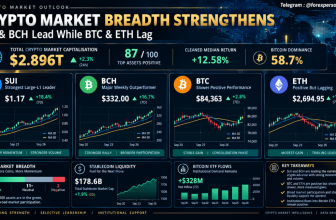
Bitcoin is consolidating between roughly $76,500 and $81,000 after its best August in years, as traders weigh a Treasury-driven liquidity rally against a surprisingly hawkish message from Federal Reserve Chairman Kevin Warsh. Ethereum is outperforming Bitcoin this month on broadening ETF demand. The week’s biggest catalyst is Friday’s U.S. jobs report, which could decide whether September rate-cut hopes survive or fade. Whales are still accumulating Bitcoin even as ETF inflows paused on Friday, and a crypto market-structure bill (the CLARITY Act) is expected back in the Senate once Congress returns from recess.
Why It Matters
If you feel like crypto markets have whiplash right now, you’re not imagining it. Three weeks ago, Bitcoin was struggling to hold $67,000. Then it ripped higher, touching $81,500 on August 26 — its highest level in three months — before sliding back to the high-$70,000s by the following week. Understanding why this happened, and what could happen next, comes down to two forces pulling in opposite directions.
What the Treasury Buyback Actually Did
The rally wasn’t sparked by the Federal Reserve. It was sparked by the U.S. Treasury Department, which announced it would expand its long-dated bond buyback program to at least $4 billion per operation. In plain English, a Treasury buyback means the government repurchases some of its older, less frequently traded bonds. That may sound like a technical bit of debt management, but traders read it as a signal that financial conditions were about to loosen — injecting a bit more liquidity into the system, even without the Fed cutting interest rates.
That was enough to trigger a short squeeze. A large number of traders had bet Bitcoin would stay capped below $67,000; when it didn’t, they were forced to buy back their positions at higher prices, adding fuel to the rally. Bitcoin gained roughly 22% for the month of August — its strongest showing since April — while Ethereum did even better, up around 30%.
Fed Chair Warsh’s Jackson Hole Warning
Then came the other side of the story. On August 28, Federal Reserve Chairman Kevin Warsh delivered the keynote address at the Fed’s annual Jackson Hole conference — and it wasn’t the dovish message markets were hoping for. Warsh warned that inflation remains above the Fed’s 2% target and said interest rates “may need to be raised” rather than cut.
That’s a meaningfully more hawkish stance than markets had priced in, and it landed just under three weeks before the Fed’s next policy meeting on September 15–16. The same day, spot Bitcoin ETFs recorded $201.9 million in net outflows — snapping a nine-day streak that had pulled in more than $3 billion over the month. It was a clear signal that at least some institutional money is pausing to see how the inflation fight plays out.
At the same time, roughly $488 million in leveraged crypto positions were force-closed within 24 hours, and long positions made up nearly 69% of that total. That tells you positioning had become one-sided bullish — a lot of traders were leaning the same way, which made the market vulnerable to exactly the kind of pullback that followed.
Bitcoin This Week: Key Levels and What Could Move Them
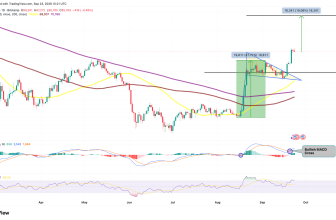
Bitcoin enters the week trading in the high-$70,000s, still up sharply from its August 1 low near $62,000 but well off its recent high.
| Level Type | Price | What It Means |
|---|---|---|
| Resistance | $80,000–$81,400 | The recent August high; a close above here would suggest the rally is resuming |
| Resistance | $79,000–$79,200 | Minor overhead supply |
| Support | $77,200–$77,400 | Near-term demand zone |
| Support | $76,000–$77,000 | Broader support shelf |
| Support | $72,800 | A key technical retracement level if selling accelerates |
Why Whales Are Still Buying
Here’s the part of the story that gets less attention: even as the ETF pause and the leverage flush made headlines, large Bitcoin holders — often called “whales” — added an estimated 39,000 to 40,000 BTC (worth roughly $2.6–3 billion) to their wallets in the week ending August 28. Bitcoin sitting on exchanges, where it’s available to be sold, kept trending lower over the same period.
That divergence matters. It suggests that while short-term traders and even some ETF investors were taking profits or pausing, the market’s largest, typically longer-term holders treated the pullback as a buying opportunity rather than a reason to sell. It’s not a guarantee that prices won’t fall further, but it is a meaningfully different signal than a plain “everyone is selling” headline would suggest.
Track Bitcoin’s Key Levels Into Friday’s Jobs Report
BTC is consolidating between $76,500 support and $80,000 resistance as a Treasury-fueled rally collides with Fed Chair Warsh’s hawkish Jackson Hole warning — follow the levels, ETF flows, and on-chain data live with free charts, watchlists, and price alerts.
Ethereum’s Breakout: Why It’s Outperforming Bitcoin
Ethereum has quietly had the better month. It’s trading in the $2,470–$2,530 range, above its 20-day, 50-day, and 200-day moving averages — a textbook sign of an uptrend — though its Relative Strength Index (a momentum gauge) sits in the mid-70s, suggesting the move is stretched and could pause for breath.
The ETF Flow Story
The more interesting development is what’s happening in ETF flows. Spot Ethereum ETFs matched Bitcoin’s nine-day inflow streak in late August and crossed $1 billion in cumulative inflows for the period. Just as notably, Solana-, XRP-, and Hyperliquid-linked products also posted positive flows in the same window. That’s a sign that institutional demand for crypto is starting to broaden out beyond just Bitcoin and Ethereum — a genuinely new dynamic worth watching in the months ahead.
Key Levels for ETH
- Resistance: $2,530, then $2,600, then $2,730
- Support: $2,470, then $2,400, then the $2,060–$2,250 range (its 50- and 200-day moving averages)
A pullback toward $2,400–$2,470 would be a normal, healthy consolidation within the existing uptrend. A break below the $2,060–$2,250 zone would be a more serious warning sign that the broader rally is losing steam.
Top 10 Cryptocurrencies to Watch This Week
| Rank | Coin | Sector | Trend | Primary Catalyst |
|---|---|---|---|---|
| 1 | Bitcoin (BTC) | Store of Value | Bullish | Friday’s jobs report and its impact on rate-cut odds |
| 2 | Ethereum (ETH) | Smart Contracts | Bullish | Broadening ETF inflows, DeFi/L2 strength |
| 3 | XRP | Payments | Neutral-Bullish | Front-runner among 92 pending SEC ETF applications |
| 4 | Solana (SOL) | Layer 1 | Bullish | Leading candidate for next altcoin ETF approval |
| 5 | Ethena (ENA) | DeFi | Bullish | Outsized August gains tied to risk-on move |
| 6 | Aave (AAVE) | DeFi Lending | Bullish | Rising collateral values boosting lending activity |
| 7 | Stacks (STX) | BTC Ecosystem | High-volatility | Speculative capital rotating into BTC-linked tokens |
| 8 | Hyperliquid (HYPE) | Derivatives | Bullish | Institutional interest in on-chain derivatives |
| 9 | Chainlink (LINK) | Oracle | Neutral | Continued RWA/tokenization narrative |
| 10 | Sui (SUI) | Layer 1 | Neutral-Bullish | Scheduled September token unlock |
A quick note on that last one: a “token unlock” is when a crypto project releases previously locked tokens — often held by early investors or the founding team — into circulation on a preset schedule. More coins entering circulation can put downward pressure on price if buyer demand doesn’t keep pace, which is why traders watch unlock calendars closely.
Build a Watchlist for This Week’s Top 10 Coins
From Ethereum’s ETF-driven breakout to Solana and XRP’s spot in the SEC’s ETF queue to Sui’s September unlock — track every coin on this week’s list in one place, free.
The Week’s Economic Calendar
| Date | Event | Why It Matters for Crypto |
|---|---|---|
| Mon, Aug 31 | Chicago PMI | Early read on manufacturing health |
| Tue, Sep 1 | ISM Manufacturing PMI | A weak reading raises the odds of a September rate cut |
| Wed, Sep 2 | JOLTS, ADP Payrolls | Preview data ahead of Friday’s main event |
| Thu, Sep 3 | ISM Services PMI, Claims | Services strength or weakness shapes rate-cut expectations |
| Fri, Sep 4 | U.S. Nonfarm Payrolls | The week’s single most important event for crypto and broader markets |
A weak jobs report would likely be read as bullish for crypto, since it would make Fed rate cuts more likely and pressure the U.S. dollar lower. A hot report would tend to support Chairman Warsh’s hawkish stance, strengthen the dollar, and add pressure on risk assets — including crypto.
Regulation Watch: CLARITY Act, Stablecoin Rules, and Pending ETFs
Congress remains on its August recess for most of this week, with lawmakers expected back around September 7. But the crypto industry’s most closely watched piece of legislation, the Digital Asset Market CLARITY Act, is expected to return to the Senate floor once members reconvene, after being delayed twice over the summer.
In plain terms, the CLARITY Act would spell out more clearly which federal agency — the SEC or the CFTC — regulates which types of crypto assets. Right now, that division of authority is genuinely murky, and it’s one reason some companies have been hesitant to launch new products in the U.S. CFTC Chair Michael Selig has said the agency is prepared to move forward with crypto oversight on its own if Congress doesn’t act, and President Trump has publicly called for a “fair version” of the bill to pass.
Separately, the SEC currently has 92 crypto ETF applications awaiting review, with Solana and XRP widely viewed as the most likely next approvals. And the stablecoin side of the regulatory picture is moving too: the Treasury and the Office of the Comptroller of the Currency are working through rules required under the GENIUS Act (the federal stablecoin law), with final rules targeted for November ahead of a January 2027 deadline.
None of this is likely to be resolved this specific week. But headlines and lobbying activity around these issues can move sentiment well before any vote actually happens, which is why it’s worth watching even during a quiet legislative week.
Risks to Watch This Week
- A hot jobs report. If Friday’s data comes in strong, it would validate Chairman Warsh’s hawkish message and could trigger another round of leveraged long liquidations, similar to what happened on August 28.
- A second week of ETF outflows. One outflow day could be noise; a second consecutive week would be a more meaningful shift in institutional sentiment.
- A stalled CLARITY Act. After two delays already, a third disappointment when Congress returns could weigh on the longer-term regulatory optimism that’s been building.
- September seasonality. Historically, September has been Bitcoin’s weakest calendar month. That pattern doesn’t always hold, especially in a cycle driven more by liquidity policy than by the calendar, but it’s a reasonable reason for some caution.
- Token unlock supply pressure. Coins with scheduled unlocks this week, including Sui, face a mechanical source of selling pressure independent of broader market sentiment.
Key Takeaways
- Bitcoin’s August rally was driven by a Treasury bond buyback announcement, not a Fed rate cut — a distinction worth understanding.
- Fed Chair Kevin Warsh’s hawkish Jackson Hole speech directly challenges the market’s rate-cut hopes ahead of the September 15–16 FOMC meeting.
- Whales kept buying Bitcoin through the ETF outflow and leverage-driven pullback, a sign of continued longer-term conviction.
- Ethereum is outperforming Bitcoin this month, and institutional demand is broadening into Solana, XRP, and other altcoins.
- Friday’s U.S. jobs report is this week’s single most important event for crypto prices.
- The CLARITY Act, GENIUS Act stablecoin rules, and 92 pending crypto ETF applications are all moving forward, even without a resolution this specific week.
Frequently Asked Questions
Why did Bitcoin drop after hitting $81,000?
Bitcoin pulled back after Federal Reserve Chairman Kevin Warsh struck a hawkish tone at his August 28 Jackson Hole speech, warning that interest rates may need to rise rather than fall. That, combined with a one-sided buildup of leveraged long positions, triggered profit-taking and roughly $488 million in liquidations.
What is a Treasury bond buyback, and why does it affect Bitcoin?
A Treasury buyback is when the U.S. government repurchases some of its own outstanding bonds, often older or less liquid ones. It’s a technical debt-management tool, but markets can interpret it as easing financial conditions, which sometimes spills over into risk assets like crypto — even without the Fed cutting interest rates.
Is the Federal Reserve going to cut interest rates in September 2026?
As of this week, that’s genuinely uncertain. Fed Chair Warsh’s Jackson Hole comments leaned hawkish, but Friday’s jobs report and other incoming data before the September 15–16 FOMC meeting could shift the odds meaningfully in either direction.
What is the CLARITY Act?
The CLARITY Act is proposed U.S. legislation that would clarify which regulator — the SEC or the CFTC — oversees different types of crypto assets. It has been delayed twice over the summer and is expected to return to the Senate once Congress reconvenes in September.
Why is Ethereum outperforming Bitcoin right now?
Ethereum has benefited from strong spot ETF inflows that matched Bitcoin’s pace in late August, along with continued strength in DeFi and Layer 2 network activity. Broader institutional demand also appears to be diversifying into Ethereum and select altcoins, not just Bitcoin.
What is a token unlock?
A token unlock is a scheduled release of previously locked cryptocurrency, often held by early investors or project teams, into circulating supply. Large unlocks can create selling pressure if demand doesn’t absorb the new supply.
Should I buy Bitcoin or Ethereum this week?
This article is for informational and educational purposes only and isn’t personalized investment advice. Both assets show constructive longer-term signals (institutional accumulation, broadening ETF demand) alongside real near-term risks (a hawkish Fed, stretched leverage, and September seasonality). Consider your own risk tolerance, time horizon, and financial situation, and consult a licensed financial advisor if you need personalized guidance.
Related Reading
Conclusion
This week doesn’t have a single scheduled crypto-specific event that rivals the size of last month’s Treasury-driven rally. Instead, it’s a week defined by digestion: digesting a hawkish Fed message, digesting a leverage flush, and waiting for Friday’s jobs report to help settle the argument between the market’s two competing narratives. Bitcoin’s $76,500–$77,000 support shelf and $80,000–$81,000 resistance band are the levels to watch, and whatever happens Friday, the broader story — institutional demand slowly broadening beyond Bitcoin and Ethereum, and a regulatory picture that continues to inch toward clarity — remains firmly in place heading into a more consequential September.
Disclosure: The content on this page was produced with AI writing assistance under the editorial direction of a licensed Electrical Engineering practitioner and certified investor in different markets with over a decade of experience. All articles are reviewed and approved by the author before publication.

Post Views: 151