
What does an iguana look like compared to a gecko?
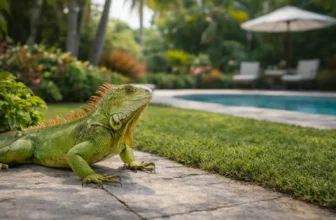
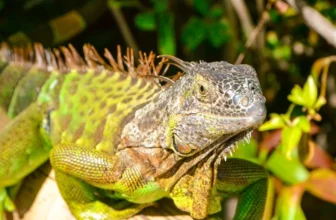
Iguanas are dramatically larger than geckos, with adults commonly reaching 4 to 5 feet. Geckos rarely exceed 8 inches. Iguanas have dorsal spines, a dewlap, and sharp claws, while geckos have smooth skin, adhesive toe pads, and no spines. The two animals look nothing alike at adult sizes.
Can iguanas change color like chameleons?
Iguanas do shift color, but not rapidly or for camouflage like chameleons. Their color changes are gradual and driven by temperature, stress, health, and breeding condition. A cold iguana darkens to absorb heat, and a breeding male may turn orange. These shifts happen over hours, not seconds.
What does a baby iguana look like in Florida?
Baby iguanas are 6 to 9 inches long and bright neon green with clearly defined dark bands on the tail. They are often spotted in shrubs, low hedges, and garden plants. Despite their small size, the dorsal spines and subtympanic shield are already visible, helping distinguish them from native lizards.
How can I tell the difference between a green iguana and a black spiny-tailed iguana?
Green iguanas have the large subtympanic shield below the ear, a prominent dewlap, and relatively smooth tail scales. Black spiny-tailed iguanas lack the large cheek scale, have a less pronounced dewlap, and feature rings of sharp, keeled scales along the tail. Black spiny-tailed iguanas are also generally darker and stockier.
Are there any native Florida lizards that look like iguanas?
No native Florida lizard closely resembles an iguana. The largest native species, the Eastern fence lizard and various skinks, top out under 12 inches. If the lizard you are looking at is over two feet long with dorsal spines and a dewlap, it is an iguana or another non-native invasive species.
What should I do if I see an iguana on my property?
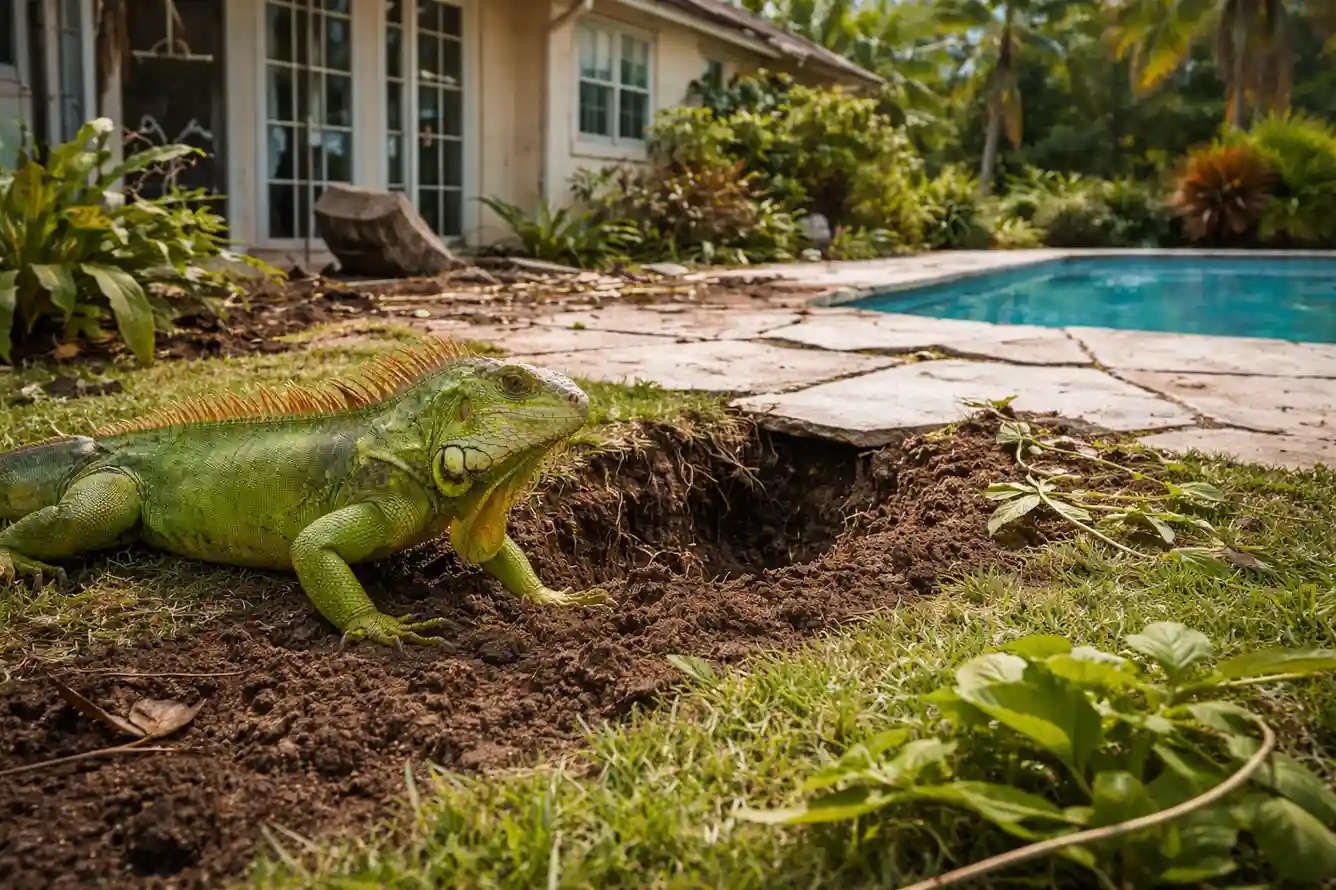
Document the sighting with photos if possible, note the location and approximate size, and inspect your property for burrows, droppings, and plant damage. If you confirm ongoing iguana activity, contact a professional removal service to assess the situation before the population grows.