
How Does Tenancy in Common Work in Real Estate?

There are plenty of ways to become a homeowner. However, with today’s prices and the competitive nature of the market, it’s become increasingly more challenging to own real estate. As such, buyers today need to find more affordable ways to acquire real estate. Luckily, there’s a solution that could make homeownership more attainable for some. Tenancy in common agreements can help buyers acquire real estate that may have otherwise been unaffordable. To learn more about tenancy in common and how it works, just keep reading.

Main Takeaways
- Tenancy in common allows two or more people to own the same property while holding equal or unequal ownership shares.
- Each tenant in common generally has the right to use the entire property and can transfer their individual ownership interest.
- Unlike ownership with a right of survivorship, a tenant in common’s share generally passes through their estate when they die rather than automatically transferring to the other co-owners.
What is Tenancy in Common?
There are several ways to achieve real estate ownership, whether you buy it on your own or with others. One unique way to own real estate is with a tenancy in common (TIC) agreement. Investors, homebuyers, and property management companies in Northern Virginia can benefit from learning about this unique ownership method. That said, tenancy in common is a legal agreement in which two or more parties share ownership rights to a real estate property or parcel of land.
Each tenant in common owns an undivided interest in the property. Ownership shares may be equal or unequal, but each co-owner generally has the right to use and possess the entire property. In turn, the owners are referred to as tenants in common. A tenancy in common is typically established through the property’s deed or another legally recognized instrument. Because requirements can vary by state and situation, co-owners may want to work with a real estate attorney when establishing their ownership arrangement.
Example of Tenants in Common
 Suppose three buyers purchase a $300,000 property together as tenants in common. Their ownership interests do not have to be equal. For example, one buyer could own 50% while the other two own 25% each. Those percentages represent each person’s ownership interest in the property.
This arrangement can make it possible for multiple buyers to purchase a property together when buying it individually may be out of reach. Under a tenancy in common agreement, the co-owners can establish how they will handle shared expenses and other responsibilities related to the property.
How Does Tenancy in Common Work?
You can create a Tenancy in Common agreement for residential or commercial properties anytime. Additionally, owners can join as an interest after other members have entered a contract. That said, owners that are tenants in common share privileges in all areas of the property.
Each owner holds an undivided interest in the property, meaning ownership percentages generally do not correspond to specific rooms or physical portions of the property. As such, no one owner can claim certain parts of the property, regardless of their equitable or investment interests.
Co-owners also need to decide how they will handle shared property expenses, such as mortgage payments, property taxes, insurance, utilities, repairs, and maintenance. How these costs are divided may depend on each owner’s share and any agreement between the co-owners. Creating a written co-ownership agreement can help clarify each person’s financial responsibilities.
If you’re unfamiliar with tenancy in common, it’s easy to confuse it with joint tenants. So next, we’ll go over the similarities and differences between the two agreements.
Joint Tenants vs. Tenancy in Common
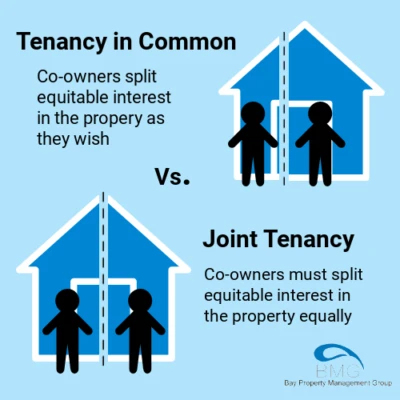 If you’re just looking at the names, joint tenants and tenancy in common appear to be similar terms. However, there are several ways for two or more parties to own real estate–these are just two different types. Both strategies allow more than one person to take ownership of a single property. However, there are a few key differences between the two agreement types.
Like tenancy in common, joint tenancy allows two or more people to share ownership of the same property. However, the ownership rights and what happens to an owner’s share after death can differ depending on how the property is titled and state law.
Joint tenancy and tenancy in common can also differ in how ownership interests are structured and transferred. The specific rights of each joint tenant depend on state law and how the property is titled. Tenants in common, on the other hand, can generally hold equal or unequal ownership interests.
Another important difference involves what happens to an owner’s share. Joint tenancy may include a right of survivorship, meaning a deceased owner’s interest passes to the surviving owner or owners. With tenancy in common, an owner’s share generally passes through their estate instead.
Both ownership structures can also change if an owner transfers their interest or if the co-owners seek to divide or sell the property. The exact process depends on state law, the property’s title, and any agreements between the owners.
Before joining a tenancy in common agreement, it’s helpful to know the pros and cons. So read along as we review some of this property ownership method’s benefits and disadvantages.
Benefits and Disadvantages of Tenancy in Common
Property ownership is a dream for most people, especially as it’s becoming increasingly more difficult. However, if you’re thinking about owning a property with other people through a tenancy in common agreement, check out some of these benefits and disadvantages beforehand. 
Pros of Tenancy in Common
- It Makes Property Ownership More Attainable– A tenancy in common agreement is suitable for those that want to attain ownership but cannot do so alone.
- Co-Owners Can Share Property Expenses- Co-owners can divide expenses like property taxes, insurance, maintenance, and other costs based on their ownership arrangement. This can make certain property expenses more manageable than handling them alone.
- Each Tenant Benefits from Property Appreciation– Just as you split costs and expenses, each tenant benefits from property appreciation. If you own a larger percentage of the property, you get even more appreciation benefits.
- Ownership Can Be Flexible- Tenancy in common allows co-owners to hold different ownership percentages and generally provides flexibility when transferring individual ownership interests.
Cons of Tenancy in Common
- Each Owner May Be Responsible for Property Costs- Co-owners need to determine how they’ll handle expenses like taxes, insurance, maintenance, and mortgage payments. How those costs are divided may depend on their ownership interests, financing arrangements, and co-ownership agreement.
- Agreements Offer Less Protection than LLCs or LLPs- While LLCs and LLPs protect against personal liability, tenancy in common agreements offers less liability protection.
- A Co-Owner May Transfer Their Share- A tenant in common may generally sell or transfer their individual ownership interest without transferring the other owners’ shares. This can create uncertainty if a new co-owner enters the arrangement.
FAQs About Tenancy in Common
 Before entering a tenancy in common agreement, it’s important to understand how shared ownership can affect your rights, responsibilities, and future plans for the property. Here are answers to some common questions about tenancy in common and how these arrangements work.
Can tenants in common have different ownership percentages?
Yes. Tenants in common can hold equal or unequal interests in a property. For example, two people could each own 50%, or one person could own 60% while another owns 40%. The ownership interests should be properly documented in the property’s title and related legal documents.
What happens when a tenant in common dies?
A tenancy in common generally does not include a right of survivorship. This means the deceased owner’s interest does not automatically transfer to the other tenants in common. Instead, their share typically passes according to their estate plan or applicable inheritance laws.
Can a tenant in common sell their share?
Generally, yes. A tenant in common can sell or transfer their individual ownership interest without selling the entire property. The person who acquires that interest may then become a co-owner with the remaining tenants in common.
Can one tenant in common force the sale of a property?
In some circumstances, a co-owner can seek a partition when the owners cannot agree on what to do with the property. Depending on state law and the property involved, a court may divide the property or order its sale and distribute the proceeds among the owners.
Can tenants in common rent out their property?
Yes, property owned as tenants in common can generally be used as a rental. However, co-owners should agree on important issues such as leasing, management, maintenance, expenses, and how rental income will be handled. Local laws and any existing co-ownership agreement may also affect what the owners can do.
Turn Your Shared Property Into a Rental
You may consider a tenancy in common agreement if you want to own real estate but don’t know how to afford it. Depending on your and your co-owners goals, you can turn your shared property into an income-producing rental home. That said, co-owners should establish how decisions about management, maintenance, leasing, expenses, and the property’s future will be handled.
So, if you’re looking for a top-notch management company that everyone can agree on, look no further than Bay Property Management Group. Our team of professional property managers will ensure your rentals are taken care of 24/7. To learn more about our comprehensive rental management services, contact BMG today.


