The ASPCA Poison Control Center, What is Toxic, and Maggie. Oh Maggie. – McConnell Publishing Inc.

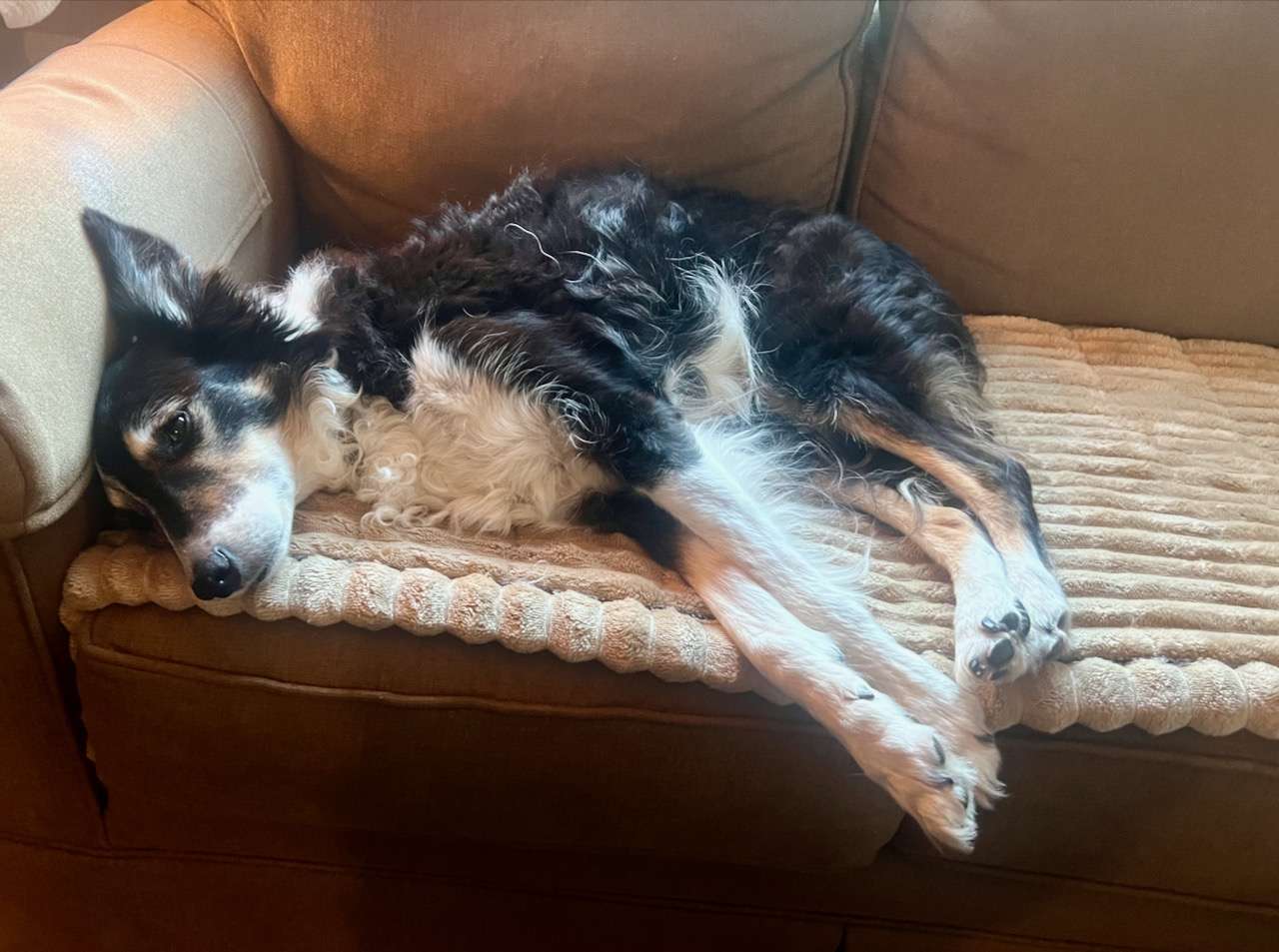
Some of you might have read my September 29th post about Maggie and her unfortunate adventure with a ZZ plant. To briefly recap: I brought a new plant home, called a ZZ plant, or Zamioculcas zamiifolia. While we were out, Maggie ate prodigious quantities of it, threw up mountains of vomit all over our just-professionally cleaned oriental carpet, and then spent the afternoon and evening in absolute misery.

I was miserable myself struggling with how best to handle the situation. I called an emergency vet clinic–who explained this wasn’t life threatening, because although the plant is known to cause discomfort from the large amount of oxylates crystals in it, it only causes temporary “irritation and pain,” which should resolve soon. It didn’t. Not being an herbivore, apparently Maggie didn’t get the memo, and the more of the plant she ate, the more her mouth and stomach bothered her. Maggie suffers on rare occasion from acid stomach, and I always know when it bothers her, because she’ll delicately nibble on a house plant–just a nibble, never more. Until the attack of the ZZ plant. Maggie’s vet and I speculate that she got stuck into a dangerous loop–the more her mouth, esophagus and stomach burned, the more she felt compelled to eat more of the plant. Like dogs tend to chomp on grass if their stomach bothers them.
By eight o’clock, Maggie appeared to be in increasing pain, known in the field of veterinary medicine as “breaking an owner’s heart” pain. Feeling a need for more help I called ASPCA Poison Control. (The number is 888 426-4435.)
I’ve had great luck with them years ago, when Maggie (always Maggie!) ate a partially-chewed gummy dropped by a friend.
Here’s a screen shot from their home page: (Click on the link, not the image!)

And so, even though I knew there was a charge, ($115 now) I was grateful to talk to a specialist. I also expected to wait on hold for awhile. I sat on the couch, stroking Maggie’s head, trying to watch a movie. I kept checking my phone for an update, but it felt like forever until I looked at my phone for the hundredth time, and it said “Call failed.” Argh! By that time, Maggie appeared to be in abject agony, so I called a second emergency clinic, and we decided that I could give her Tramadol, which I had in the doggie-drug drawer, instead of bringing her in. I did, and she went to sleep in 20 minutes. Phew.
I week or so later, to my surprise, I found an email in my inbox from Nicole Martin, the Senior Director of Business Development for the ASPCA’s Poison Control Center. Full of compassion, Nicole was concerned that I wasn’t able to reach them successfully. What number did you call? What number did you call from? She wanted to ensure that something like this didn’t happen again. I emailed back, and we ended up having an almost hour-long phone conversation, joined by Dr. Catherine Dzienisiewski, a boarded toxicologist.
First, I learned that Nicole had looked up my call. It had lasted 29 minutes (Time being relative, I would have sworn it was more like 45 minutes. Sigh.) and came up on their end as “Call Abandoned.” Whoops. Nope, I didn’t give up, I just looked at my phone and saw “Call failed.” But then, Nicole reached out, (and is working on why each side got a different message), and several good things came out of my attempt to contact the Hotline. I hope what I learned is of value to dog lovers everywhere.
First, let’s talk about potential problematic plants and pets by looking at how we interpret two words, “toxic” and “irritation.” When I bought the ZZ plant, I was told at the nursery that it wasn’t toxic, but could cause mild irritation. Meaning, to me, that it couldn’t harm the dogs in any significant way. Toxic is defined by Mirriam-Webster as “containing or being poisonous material especially when capable of causing death or serious debilitation.” (my italics) And, it is true that ZZ plant is not one of the plants known to kill our dogs, unlike, for example, a plant like Sago Palm, in which even one seed can kill a dog. But, as Dr. D reminded me, everything can be toxic, even water, depending on the dose. The lesson here is that the word “toxic” can be used in different ways–we need to look more closely at the details.
The other word I thought a lot about is “irritation.” If you are irritated you are, what, mildly annoyed? But biological irritation is another thing altogether–Maggie’s mouth, esophagus, and stomach were not mildly annoyed–given the quantity of leaves that she ate, it must have felt like her entire insides were on fire. [Note: It is suggested by many to give dogs who eat oxylates dairy products. I gave her vanilla ice cream, which was the only thing she would eat, but she immediately threw it up.]
As you probably know, there are a lot of house plants that contain oxylates, and the ASPCA has a list of the most common house plants to watch out for. Thanks to Maggie, ZZ plants are now on the list, when they weren’t before. Nicole and Dr. D. explained that that’s part of the challenge at Poison Control–the popularity of house plants waxes and wanes, and right now there are 415 plants listed as toxic to dogs.
Because of our conversation, the ASPCA Poison Control folks posted a new blog about “Insoluble Oxaltes.” In it they list the most common calls they get about oxylate-bearing plants–check it out. Here’s that number again, just in case: And just in case, here’s that number again: (888 426-4435.)
I also learned a lot about the ASPCA Poison Control itself. It was established in 1978, helps over 400,000 animals every year, and has what must be the country’s most impressive group of board-certified veterinary toxicologists who not only help callers, but are involved in extensive research in vet toxicology, including housing data on more than 5 million cases which have helped to identify new potential toxins and to research effective treatment. Their research has led to an understanding of dangers related to lilies in cats, as well as the dangers of macademia nuts, xylitol, grapes/raisins, and tartaric acid to dogs. So, if you know that you shouldn’t give your dogs grapes, now you know who to thank.
There is a mountain of information on their website. For example, check out this extensive list of toxic versus non-toxic plants for dogs, cats, and horses: You might be interested in their poster of the “top ten toxins” that led to calls to the Hotline:

One of my favorite posters, admittedly in part because it’s so damn pretty, is this one:

I would love to hear your experiences with canine or feline digestive crisis–tell us what happened, who or what worked, what you learned. I learned that Maggie–the dog who ate the cork from a wine bottle and needed emergency abdominal surgery–can not be trusted to eat anything. Apparently she has Labrador rising. (Apologies . . . but you all know what I mean, right?)
MEANWHILE, back on the farm: First snow! Granted, just a dusting, but still fun. I love how there is still a little color (a dusting?) this late in the year.

Jim and I took a walk on Sunday morning. All dog lovers know what he is pointing at in the photo below! (I had the bags.)

Driving home from town last week. Wow.

The photo below is of Jim and I getting ready to walk the dogs. Oh, wait! We were at the black tie wedding of Jonah and Haley in Philadelpia; Jonah is the son of our dear friends Meg and Randy. I wish I gotten a photo of the back of my dress–it has a low back and a slit down the skirt part with fancy-ass rhinestones. Perfect for walking dogs, or wait, sheepdog trials?

Introducing in the next photo, alongside of Maggie and Skip, Jenny and Venus. Jenny assisted our usual (and fabulous) sitter, Susan G, who house sat in spite of having recently broken her collar bone. Jenny helped out with most of the chores, and Venus was in predatory heaven, hunting mice and voles and squirrels and rabbits and . . .

Update re Maggie: A few weeks after abusing the ZZ plant, long after appearing to recover, Maggie’s liver values went blooey. Her ALP, ALT and TBL were worrisomely high, although her kidney values were fine. We spent 10 days sick with worry that our almost 13 year old dog was, well, you know. The C word. Our hope was that was a reaction to the ZZ ingestion, and that her liver would regulate back to normal. Ten days later, it did. Glory glory!!! What a relief.
Here’s to all of us learning about ASPCA Poison Control. And never having to need them. I’m hoping you get to enjoy a fancy-ass something (anything!) in your life this week. See you once I get the dog hair off the keyboard.