

Open to all Readers
By Scott Hamilton
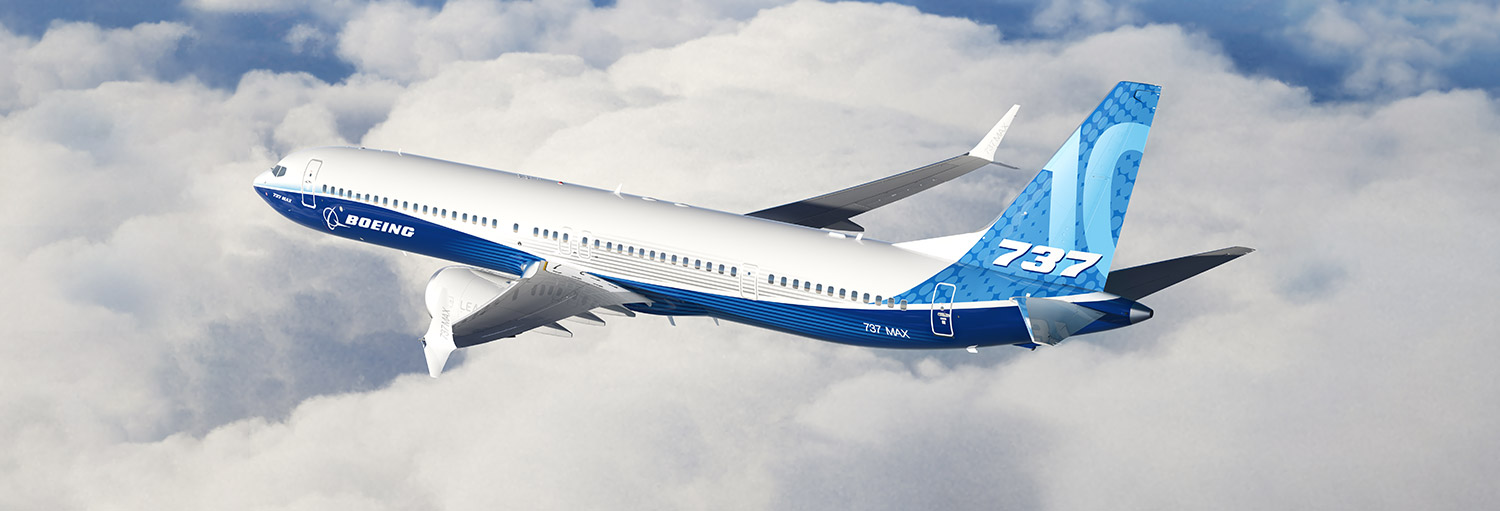
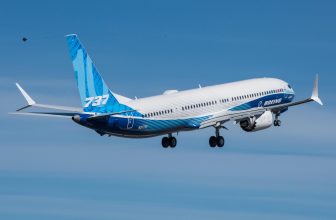
Boeing 737-10 MAX. Credit: Boeing.
June 9, 2025, © Leeham News: Boeing announced the addition of a fourth 737 production line in 2023 as the last 747 rolled out of the Everett (WA) widebody factory where the Queen of the Skies was born.
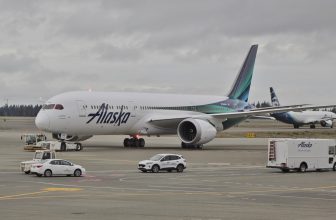
To meet burgeoning demand, Boeing said it would assemble the 737 in Everett. Plans were put on hold a year later when the Alaska Airlines flight 1262 experienced a full cabin depressurization on a new 737-9 MAX minutes after take off from Portland (OR). A failure by Boeing during the assembly to resecure a door plug led to a 60-lb piece blowing out of the fuselage.
The Federal Aviation Administration (FAA) froze Boeing’s plans for the Everett 737 production on what’s called the North Line.
Boeing’s CEO Kelly Ortberg reaffirmed plans to establish the North Line. Doing so requires FAA approval. The North Line will be exclusively for the 737-10 MAX, which has yet to be certified by the FAA.
Boeing has quietly been laying the groundwork for the new line in the intervening year. Tooling, floor plans and other elements necessary to establish the line continued at a low pace. The company recently leased about 250,000 of space in a nearby industrial park to serve as a staging area for 737 kits.
The North Line will supplement the main 737 factor in Renton (WA), which is slowly returning to higher rates from a complete production suspension in 2019 following the grounding of the 737 after two fatal accidents of the MAX five months apart. The root cause of both accidents was a design flaw in the flight control system.
Boeing quietly returned to a 737 production rate of 38 a month on May 30, keeping a low profile in deference to the FAA, reported The Air Current on June 2.
Capping Renton at 47
Hitting rate 38 is a significant milestone. Boeing’s been struggling for years to return to this rate. The last time the rate was this low was in 2012. Boeing hopes to achieve rate 42 by the end of this year. The last time Boeing was at this rate was in 2014. Ortberg hopes to achieve rate 47 next year. The last time the steady rate was at this level was in 2018.
According to sources, Boeing’s Renton plant may be capped by the FAA at rate 47. The production rate was 52/mo on March 13, 2019, when the MAX was grounded. Boeing planned to boost the rate to 57/mo by the end of 2019 and was studying further increasing it to 63/mo after that. This is the maximum throughput possible at Renton under Boeing’s previous processes.
The lower production rate of 47/mo is designed to maintain improved safety and quality control protocols at Renton that have been implemented as a result of the original MAX crisis and another one prompted by the Alaska accident.
The North Line was intended to be reserved for the special requirements of the MAX 10 and the high-density MAX 8200. The former model may be configured with lie flat business class seats and other upscale layouts not included in the MAX 7/8 and -9. The high-density MAX 8200 has an extra emergency exit and is wall-to-wall seating with minimal galley and lavatory space.
The 8200 currently is being produced in Renton, leaving the yet-to-be-certified MAX 10 for the North Line.
Preparing the North Line
Boeing hasn’t said what the capacity of the North Line will be. If Boeing produces 47 737s a month in Renton on three lines, the rate there would be an average of 15.6 per line. If the North Line has this same capacity, this would equal the 63/mo Boeing was considering for Renton before the grounding. On a public tour of the Everett factory, one guide told one of the tourists–a former Boeing employee–that this time next year, there may be as many as 15 airplanes in the building. The other tour guide said that right now, all they’re waiting for is the formal go-ahead and staffing. He added that seems to be hanging up with the FAA.
Two 737-8 fuselages that had pre-delivery damage to Boeing are in the Everett line being used for testing, the tourist observed. “I saw a fuselage dock with a fuselage in it. I saw no wings. All of the tooling that would normally push up to the side of the airplane laid out going down what the assembly line positioning would be,” he told LNA. “It’s all there and it looks like one line is complete to go almost as soon as you got the approval by the feds to use it. The office space has been built into the building above the cafeteria and runs almost the length of the building.”
Credit: Seattle Times.
Airbus plans to take its A320neo family production to 75/mo in 2027, a figure some considering challenging. Assuming Boeing and Airbus hit these targets, this leaves Airbus with a 54.4% production share to Boeing’s 45.6% share.
If Boeing wants production parity with Airbus, a fifth line—a second one at Everett—would be needed.
Boeing hasn’t said what is needed to install the North Line or when it will be operational. However, LNA is told that the new single line in Everett is planned for some time in 2Q2026. Certification of the 737-10 is anticipated in late 2025. An airline fleet planner and customer for the MAX 10 last week told LNA he doesn’t see certification of the plane until the first quarter of next year.
Boeing is working the readiness for required offices, barges, cranes, and floor layouts. Tooling is being ordered, which includes all the specialized production tooling.
There are more than 150 policies and processes that require reviews and possible amendments. Most of these will need FAA approvals.
Safety, training and FAA approval
The Quality Management System (QMS) is being revised, which also requires FAA approvals.
Boeing is still studying how the wings will be shipped from the Renton factory, where they are made today. If Boeing uses rail lines, this is going to require new tooling and processes. Coordination with Spirit AeroSystems, which builds the 737 fuselage in Wichita (KS), is required to get to rates. Spirit has had its own QC and safety protocol issues, and is being acquired by Boeing this year. Spirit ships the fuselages to Renton. Getting the MAX 10 fuselages from Renton to Everett is a challenge. The Everett rail line spur is on a 5.7% grade, a challenge to overcome, but not impossible.
Boeing is exploring reactivating a rail spur near Fredrickson, a suburb south of Seattle, to ship wing spar and milled skins to Everett, instead by the long trucks used today. Boeing
will still ship via truck to Renton.
The Composite Wing Center (CWC) Boeing built for the 777X program has loads of excess space. But producing a metal wing in the same factory as composite wings is problematic, LNA is told. Metal wings produce metal particles and oily air and can’t be allowed to mix with the sterile environment composite production requires.
Production Rates
The North Line production rate will start very slow, probably about 1-2/mo until the FAA is satisfied. Only then will the FAA grant approval for the final certification for PC700 737 Everett.
Personnel already are located in Everett who will be used for starting up production. Training and certification required for the 737 is described as enormous and time consuming. Trained managers and Material Review Board engineers are another separate hurdle.
Management expects it will take at least a year for to have all the bugs and quality issues resolved and be satisfactory functional.
Everything hinges on FAA approval.
Boeing must sustain rate 38 for an unspecified period to satisfy the FAA that it can produce at this rate without compromising quality control and safety protocols. Ortberg previously expressed a plan to boost production in increments of five (though the first would be in four) every six months.
Thus, increasing the production rate would look like this if all goes well and the FAA approves of each rate increase. There are three production lines in Renton.
| Rate | Inferred production per line | Estimated Rate Break Timeframe |
| 38 | 12.6 | May 30 |
| 42 | 14 | Nov 2025 |
| 47 | 15.6 | May 2026 |
| 52 | 17.3 | Nov 2026 |
| 57 | 19 | May 2027 |
Parity with Airbus
Airbus has eight A320 production lines (four in Hamburg, two in Toulouse, one in Tianjin, and one in Mobile (AL)). A second US FAL and a second China FAL will make it 10 in 2026. All will contribute to the rate 75 objective in 2027. Airbus declined comment on the current production rate. But it delivered 602 A320 family members last year. This averaged a production rate of 6.27 airplane per line across the eight lines based on a full 12 month year, or 6.54/mo on an 11.5 month year allowing for a standard two week holiday shut down. A rate of 75/mo across 10 lines is an average rate of 7.5/mo per line.
Either Boeing will be pushing it at the inferred rates outlined above or Airbus isn’t as efficient as conventional wisdom assumes.
Parenthetically, Airbus continues to have traveled work and quality control issues on these lower-rate production lines, according to customers LNA has talked to.
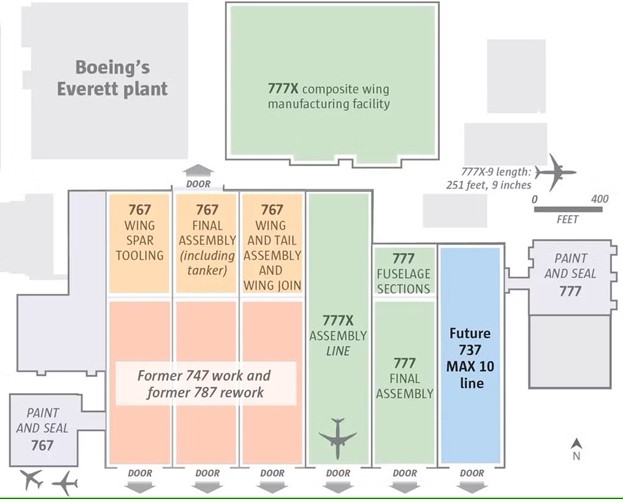
The North Line will be located in the former 787 assembly floor area. There is enough space here for a second North Line.
Unfilled MAX 10 orders
There are 1,196 MAX 10 orders in Boeing’s backlog through April, the most recent data available on Boeing’s website. All 737 positions are sold out through the end of this decade.
Although Boeing hasn’t received FAA authorization to expand to the North Line, work and planning has been underway.
777X work
Boeing has about 30 777-9s in inventory at Paine Field. Some of these have been stored since 2019. Rework, formally called Change Incorporation, is required for all the changes that must be made as a result of six years of FAA oversight and reviewing production work done during the delay in certification of the 777X.
The 777-9 was supposed to be delivered to its first customer in January 2020. Initially, delays in flight testing occurred when the giant GE9X engines developed technical issues. Engines on the four flight test airplanes were removed and shipped back to GE for fixes. By the time these were redelivered, the 777X program was caught as collateral damage in the MAX-FAA certification crisis.
Boeing now hopes the 777X will be certified later this year and first deliveries in 2026. But all the Xs that have been built and stored must go through Change Incorporation to whatever new standards the FAA requires for certification; and upgrades that happen in the normal course of elapsed time. The airplanes also must be pulled out of long-term storage, all systems tested, and if necessary repaired or replaced.
LNA is told covering the 30 aircraft will take between 12 and 18 months. Boeing’s Evertt plant has space previously occupied by the 747 and rework on the 787s available for the 777X rework.
Overhead cost allocation
On a more esoteric level, establishing the first and a possible second 737 line at the Everett factory will contribute to covering the overhead cost allocation of the giant building. With the last 747 completed in 2023 and the original 787 production line terminated and consolidated in Charleston (SC), where the second 787 assembly line was established, the cost of the giant building, which covers 98 acres and is large enough for 75 American football fields.
The low-rate production of the 777 freighter and 777X, the 767-300ER/KC-46A and 787 rework (now completed) have had to absorb the operating cost of the huge facility. Boeing said in various filings with the Securities and Exchange Commission that as the 787 moved to Charleston and the 747 production ended, the remaining programs would be pushed into a loss position.
Related