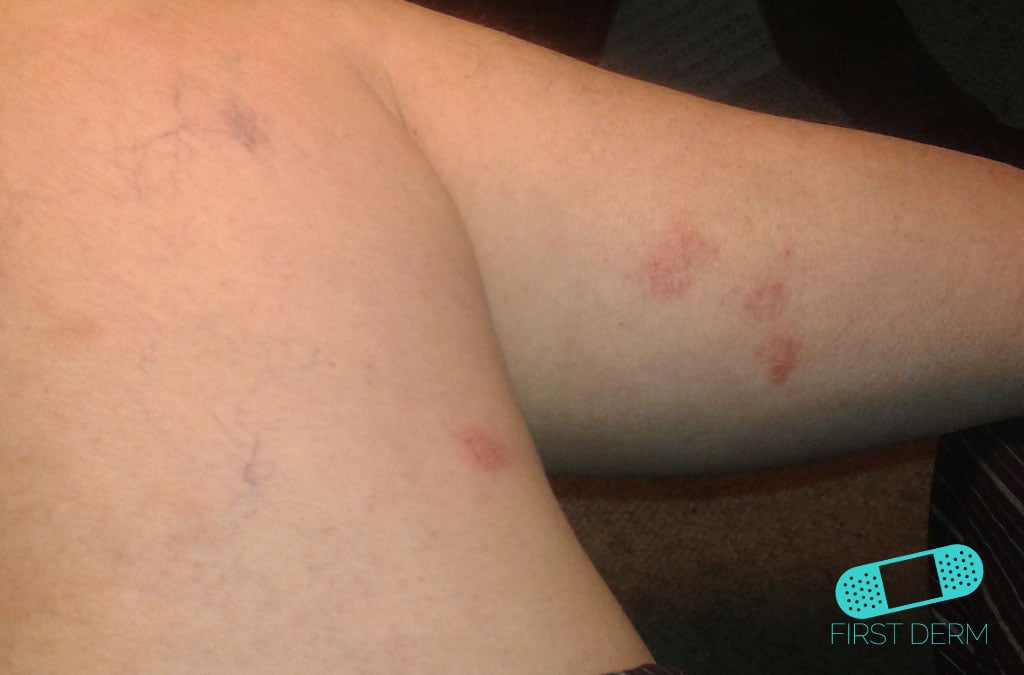
Nummular eczema, also known as discoid eczema, is a type of inflammatory skin condition marked by well-defined round or oval patches of irritated skin. These patches often appear after minor skin injuries such as burns, insect bites, or abrasions from friction.
The condition is usually chronic, with unknown exact cause, though it is more common in people with a personal or family history of eczema (atopic dermatitis), asthma, or hay fever (allergic rhinitis).
In the UK, discoid eczema tends to affect middle-aged and older men more frequently, often beginning between 50 and 70 years of age. When women are affected, it is usually at a younger age, often in their teens or early adulthood.
Symptoms of Nummular Eczema
Discoid eczema typically begins as small clusters of red spots, tiny fluid-filled blisters, or bumps that gradually merge into coin-shaped patches. These patches vary in size — from less than 2.5 cm to over 10 cm — and are usually red, pink, or brown, depending on the skin tone.
While the surrounding skin often appears unaffected, it may feel dry or irritated. Discoid eczema patches are most commonly found on the legs, but can also develop on the arms, hands, torso, and feet.
The patches are usually very itchy and may feel burning or sore, particularly at night. As the blisters break, the patches may weep before becoming crusted, dry, or scaly.
What can I do?
A skin injury can worsen your skin condition, so you should protect your skin from getting scraped, cut or injured in any other way. To hydrate your skin, you can:
- Take a 20-minute lukewarm bath or shower once a day
- Apply non-scented moisturizer at least once a day after bathing
- Use a mild, gentle cleanser instead of soap
- Avoid activities that dries, heats or irritates your skin (e.g. sitting next to a fire or heater)
- Use a humidifier to add moisture to the air, especially when you heat or air-condition your home
- Wear loose clothing and soft fabrics, but do not use fabric softener and dryer sheets
- Avoid stress
- Avoid exposure to environmental irritants, such as household cleaners and chemicals
You can also take antihistamines to relieve itching and discomfort and use moist bandages to cover and protect the affected areas.
Should I seek medical care?
You should see your GP or a dermatologist if:
-
The patches become crusted, yellowish, or weepy, which may be a sign of Staphylococcus aureus infection that needs antibiotic treatment.
-
The eczema does not improve with over-the-counter treatments.
-
You’re experiencing severe discomfort, widespread lesions, or sleep disturbance due to itching.
-
You are unsure whether the rash is discoid eczema or something else, such as a fungal infection or psoriasis.
Early medical advice can help manage symptoms effectively and prevent complications.
Treatment
Treatment usually involves potent or very potent topical corticosteroids to reduce inflammation and itching. Coal tar creams or ointments may be helpful in maintaining remission. If infection is suspected (such as oozing, yellow crusting, or increased soreness), your doctor may take a swab and prescribe a topical or oral antibiotic.
If the eczema is severe or not responding to treatment, your dermatologist may recommend:
-
Patch testing, to identify any underlying allergic contact dermatitis.
-
Phototherapy (light therapy), particularly narrowband UVB, under specialist supervision.
-
Immunosuppressive medications like methotrexate, azathioprine, or ciclosporin in persistent or widespread cases.
-
Emollients (moisturisers), applied frequently, are essential for soothing dry skin and supporting the skin barrier.
Healing may take several weeks, particularly on the lower limbs, and may leave behind temporary pigmentation changes, especially in darker skin.