Oral herpes, also known as labial herpes, is usually caused by the herpes simplex virus (HSV), mainly HSV type 1 (HSV-1). HSV-1 is found in saliva and is transmitted mainly through mouth-to-mouth contact. Transmission of the virus can also occur through direct contact with the sores or secretions and sharing utensils or lip products. Through oral sex, HSV-1 can be transmitted to genital areas and cause genital herpes, but it is rare that HSV-2 infects the mouth.
Herpes is a common skin disease that can be categorized into two categories: HSV-1 and HSV-2. Both types of herpes may present with symptoms of blisters or sores in the affected region. Some individuals, for instance, are unaware that they have the disease because their symptoms are so minor. Others, however, may have many outbreaks per year. HSV-1 and HSV-2 are most commonly associated with outbreaks around mouth and genital area, respectively – although either type may be found in either location. Herpes simplex can also infect fingers and the eyes.
Once infected with oral herpes, you have some immunity against genital herpes, even though the different virus types prevent them from having complete immunity against each other.

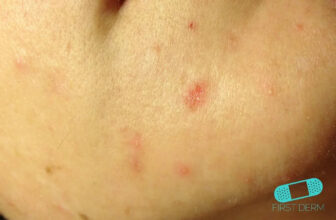
Herpes Simplex Manifestation on the Forehead: Grouped small blisters on red, inflamed skin, demonstrating the virus’s ability to affect areas beyond the typical oral region
Symptoms
Herpes blisters (also known as fever blisters or cold sores) appear as one or more blisters in a group around the affected region. The sores are typically inflamed and painful, and over the course of the outbreak, they may leak clear fluid and leave a scab. There is a lot of variability in terms of the duration, appearance, and repeating herpes outbreaks. The most typical additional symptom during the initial outbreak may include fever or fatigue.

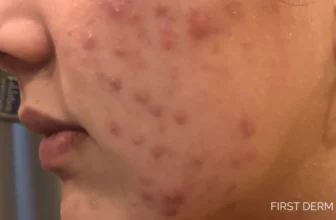
Herpes Simplex Virus (HSV) outbreak on the right nostril, featuring small blisters surrounded by red, inflamed skin.
Oral herpes is most commonly seen as cold sores on the lips or the skin around the mouth, with clusters of small fluid-filled blisters that often hurts. You can also get the same sores inside the mouth on the tongue, gums or palate. The skin around the blisters and the mucous membranes inside the mouth tend to blush or get swollen with HSV-1 infection. It often hurts and is already swollen one or two days before the blisters are formed. Oral herpes usually does not give any scars.
When you get the disease for the first time, it is called ‘primary infection’. Primary infection is often symptomless, or give rise to an infection in the pharynx, which is the uppermost part both the respiratory and alimentary tracts share. So, it is not easy to differentiate this from an upper airway infection. However, the primary infection is most of the time preceded by other systemic symptoms like headache, fever, a general feeling of discomfort, nausea or vomiting. Ulcers or vesicles appear in the mouth one to two days after that, which is called ‘acute marginal gingivitis’. So, these can be used to identify oral herpes from other ulcerative diseases of the mouth. Young children who get herpes for the first time can get strep throat-like symptoms, sometimes without blisters on the lips.
However, the herpes virus does not disappear from the body after an outbreak. From the skin the virus moves to nerve cells next to the spinal cord where it lies dormant. It can be activated again and give cold sores again, especially when you are sick with the flu or pneumonia, expose your skin to strong sunlight, stressed or menstruating. When oral herpes recurs, the first symptom is often an uncomfortable tingling or throbbing sensation in the skin around the mouth.
Most common herpes virus type that recurs is recurrent herpes labialis (RHL). The symptoms typically appear on the border of the lips where the mucus membrane and the skin meet, which is known as vermillion boarder. This recurrence is more common in patients receiving cancer chemotherapy, immunosuppressive drugs or AIDS patients. In such immunosuppressed people, oral herpes lesions can lead to disseminated generalized infection, where the herpes sores appear on the face and other parts of the skin that are normally not affected. Several studies have shown the successful treatment of recurrent herpes infection with topical treatments, but to suppress the virus chronically, systemic treatment is required.5
How does it spread?
Out of all infections of the mouth, herpes virus is the most common.[3] Oral herpes is spread through saliva. If you come to direct or indirect contact with an infected person’s saliva, you are at a risk of getting the disease. Also, you can get oral herpes during oral sex with a person infected with genital herpes. More alarming fact is, the disease spreads not only during ‘herpes outbreaks’ when there are visible symptoms, but also in the periods where no symptoms are preset.
Your dermatologist would be able to diagnose oral herpes by assessing the blisters. The diagnosis can be confirmed by the presence of the virus in the discharge released by the blisters, or by the presence of specific antibodies produced in the body against the herpes virus. In order to do that, a small sample is collected and tests are performed, such as viral culture, viral DNA test, direct fluorescent assays and polymerase chain reaction (PCR) techniques.
From birth up to 6 months, baby gets some amount of protection through the antibodies that were produced by the mother and delivered to the fetus before birth. After 6 months, protection wears off and the risk reaches a peak at around 2-3 years.4 Regardless of that, adolescents and rarely even people over 60 years of age can also get infected with oral herpes.
Hepatic whitlow
Cold sores can spread from your mouth to fingers, causing an infection in the finger. It usually affects the tip of the finger, and give rise to painful blisters, sores, swelling and redness. This is called hepatic whitlow. The blisters can be filled with pus or clear fluid, itchy and extremely contagious.
What can I do?
If you have herpes breaking out with blisters, do not kiss others. You should also wash your hands often to avoid passing on the virus through hand contact with others. You should not share lip product, utensils or food with others. Because the herpes virus can cause a painful eye infection, you should try to avoid touching your eyes with your fingers when you have a herpes outbreak.
In order to prevent recurrent episodes of herpes outbreaks, you should protect your skin from factors that trigger it. You can apply sunblock or lip balms when going out to prevent the assault from the sun. Moisturizers will help prevent your skin from drying out.
Should I seek medical care?
Cold sores usually heal on their own within 7 to 10 days. However, if the affected area becomes very red, swollen, or painful, or develops yellow crusting, it may be infected with bacteria. In these cases, your GP may prescribe antibiotics.
People with eczema, especially children, may be more susceptible to cold sore complications. Herpes simplex can spread over large areas of eczema-affected skin, a condition called eczema herpeticum, which needs urgent medical treatment.
In rare cases, herpes simplex can lead to serious complications such as encephalitis (inflammation of the brain) or meningitis, particularly in immunocompromised individuals. Seek urgent medical attention if you become very unwell.
If you are pregnant and develop a cold sore for the first time or during the final weeks of pregnancy, you should contact your midwife or GP. There is a small risk of neonatal herpes, which can be serious. Treatment and monitoring may be needed.
Treatment
There is currently no cure for herpes simplex virus infections, but treatments are available to help manage symptoms. Cold sores usually clear up within 7 to 10 days without treatment, but using antiviral medications can help speed up healing and reduce discomfort.
There are serval antiviral creams, which will give your immune system an extra boost to fight the virus. They work best if applied before the sores develop, at the stage where warning signs of the herpes outbreak is present. Antiviral creams containing acyclovir (e.g. Zovirax) may relieve superficial symptoms. However, these creams are expensive and only reduce healing time by a few days, so you can opt for simpler methods to seek relief form pain as mentioned below.
- Apply ice or a warm washcloth on the affected are to relieve the pain.
- Rinse your mouth with cold water or salt water.
- Avoid hot drinks, spicy or citrus food, as these will cause more pain.
- Wash the blisters gently with antiseptic soap, and use a separate towel to dry the affected area to prevent further spread.
In some cases, when symptoms are severe, treatment with prescription antiviral medicine in tablet form may be required. It is not curative, but suppresses the symptoms. In these cases, treatment should start as early as possible after the first signs of disease.
Supportive care such as keeping well hydrated and using pain relief like paracetamol or ibuprofen can help manage symptoms. In severe oral herpes cases, especially involving the mouth, a GP may prescribe topical anaesthetics.
New antiviral medicines such as valaciclovir and famciclovir are now available on prescription in the UK. These are alternatives to aciclovir and can be more convenient due to less frequent dosing. Research continues into treatments that could target the latent herpes virus in nerve cells, but none are yet curative.