Carriers are looking more closely at roof age, shingle type and construction quality as hail and SCS losses bite
Say a client tells their broker the roof was replaced eight years ago. The contractor’s invoice shows the work covered only one section of the roof.
What seems like a minor detail could impact a policy renewal in hail country, where underwriters assessing the exposure may want to know when each section was installed and what materials were used.
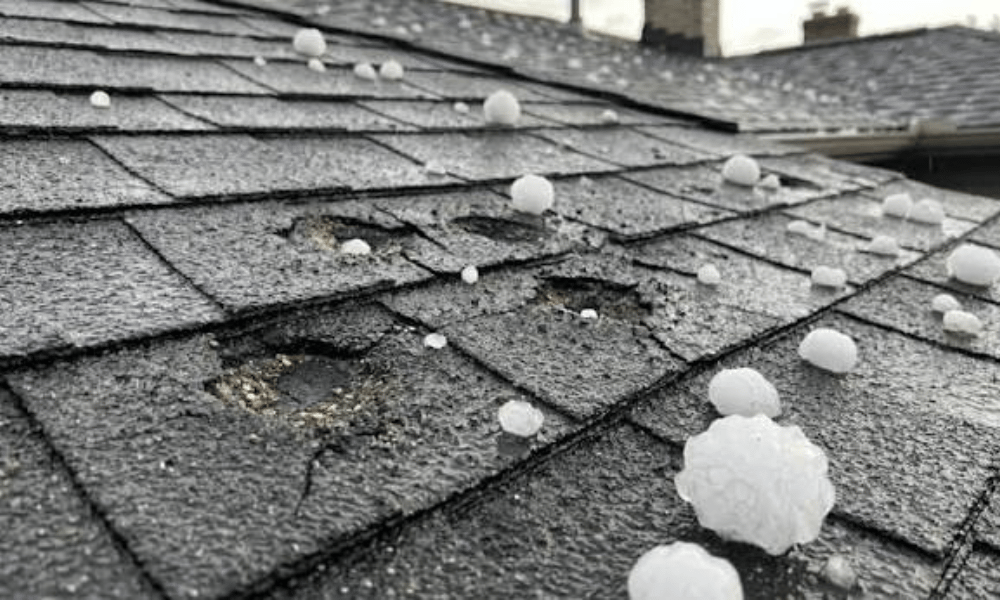
Repeated severe convective storm and hail losses are driving insurers to scrutinize roof construction in properties where they already take on significant catastrophe exposure, according to Kimberly Roberts, head of North America peril advisory at Marsh Re.
“If it’s severe convective storm (risk), carriers are looking at data quality elements like roof age and shingle type, for example, and overall construction quality of the property,” Roberts told Insurance Business. “They might have someone actually go out to the site and evaluate it rather than relying on self-reporting.”
Storm losses, higher retentions sharpen scrutiny
State Farm paid more than $5.6 billion in US hail-related claims in 2025, including $1.4 billion in Texas. Those payments span homes, vehicles and other property. Moody’s counted 3,706 US hail reports in the first half of 2026, down from 7,290 in the same period a year earlier.
Read more: Hail drives E&S homeowners surge into inland states
Even with the quieter start, Gallagher Re ranked the first half of 2026 seventh on record for US insured severe convective storm losses, a category that also includes tornadoes and straight-line winds.
The pressure on carriers comes from losses that recur throughout a season. A hailstorm can damage several properties on an insurer’s books in one area, and a succession of storms can leave the carrier paying a substantial total. Roberts said higher reinsurance retentions have left insurers absorbing more of those losses themselves.
“We know retentions have been raised for the last three to four years. Even meaningful losses are now falling below the retention,” she noted.
This would explain why an insurer with a concentration of business in a hail-prone area might ask for more detail before adding another property. Roberts said appetite will differ by carrier. A roof invoice can answer a question about one building while the underwriter weighs how much exposure the insurer already has nearby.
What agents should verify before renewal
A dated contractor invoice showing the address and scope of work gives the broker a starting point. If a client bought the property after the work was done, permit records, where available, may help establish when it took place.
On a commercial property with several buildings or additions, matching each record to the roof section it covers can make the submission clearer. Where records are incomplete, the broker can flag the estimated dates and ask what evidence the underwriter will accept or whether a site inspection is needed.
Read more: ‘You can’t stop a storm’: Is your business prepared for the next CAT event?
The next question is what the policy would pay after a storm. Verisk put the average residential roof replacement cost at $17,631 in 2025, up 33% from its 2021-24 average. The Texas Department of Insurance says some homeowners insurers switch to actual cash value as a roof ages, which can leave the owner with a larger share of the replacement bill. The regulator also advises homeowners to check their wind and hail deductible, which can be higher than the deductible for other losses.
In Texas, the department has proposed clarifying an existing rule that bars homeowners insurers from declining or refusing to renew coverage based solely on roof age. Insurers can consider the roof’s physical condition. Installation records can help establish when work was done, while a site inspection can show how the roof is holding up.
When comparing quotes, brokers can check whether any change in roof settlement terms applies specifically to wind and hail, then show the client what the deductible would cost in dollars. If a carrier’s renewal still lists an old roof after a documented replacement, the broker can ask underwriting to correct the record and confirm which terms apply before binding.