
Wednesday’s “Unknown Advantage” considered what the wish for certainty can cost us. This essay turns to the wish for approval. Both ask how the effort to protect ourselves can limit the lives we get to live.
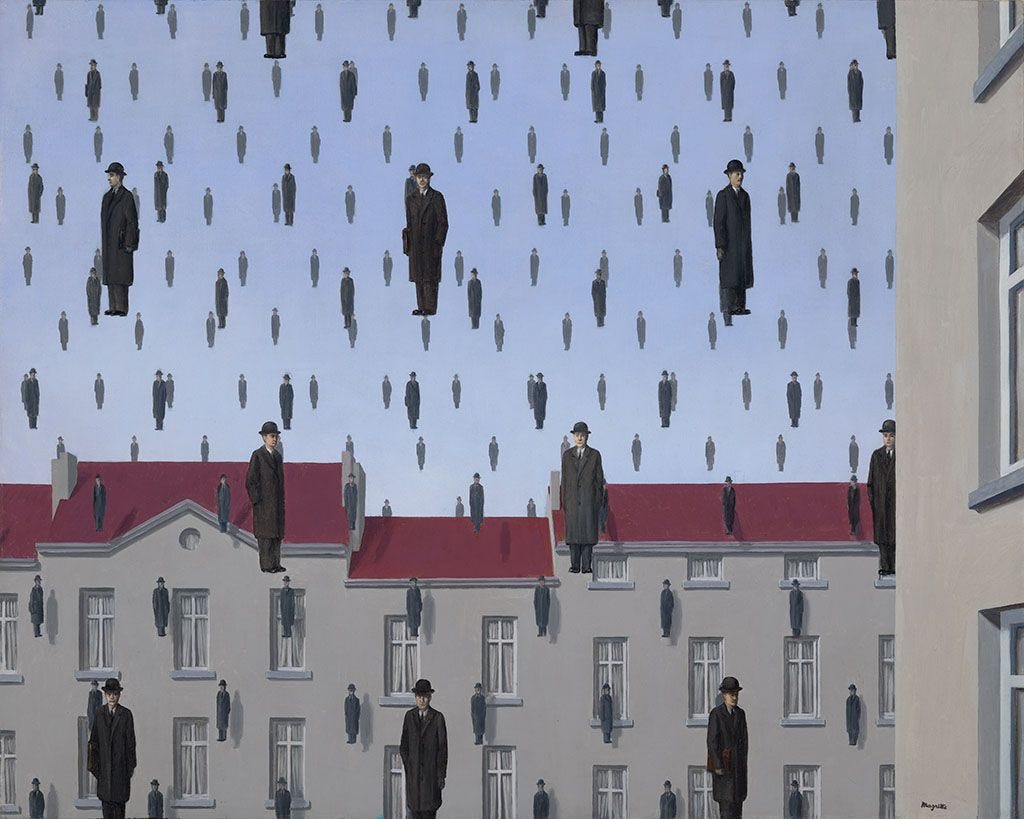
We’re often concerned about what other people think of us while trying to appear unconcerned. The indifference takes practice. In certain circles, belonging depends on looking as though you don’t need to belong.
I rewrite a comment five times before posting it to make it sound spontaneous. Later, I leave a text unanswered for an hour so I won’t look too eager, checking my phone throughout for another message. Being this unconcerned takes most of my attention.
Even the wish to appear indifferent takes its cues from other people. In Wanting: The Power of Mimetic Desire in Everyday Life, Luke Burgis draws on René Girard’s theory of mimetic desire to explain how others teach us what to want. Something becomes desirable because someone else wants it. Their approval can become part of what we’re pursuing, even when we insist we’re following our own tastes.
We can spend years pursuing a goal before asking whose desire made it ours.
A Daoist tale brings the question down to earth. Zhuangzi is fishing when two officials arrive and offer him a chance to serve the king of Chu. Without turning around, he asks about a sacred tortoise whose remains the king preserves in his ancestral temple. Would it rather be dead and honored or alive, dragging its tail in the mud? Alive, the officials agree.
Zhuangzi sends them away. He will keep his tail in the mud. The officials have offered him a life others would envy. He considers whether he would want to live it.
Promises of freedom deserve the same scrutiny. A corrupt president promises to restore our freedom, then makes loyalty to him the condition of enjoying it. Soon, supporters watch one another for signs of doubt, learning what to say and when to laugh.
I recognize something of that bargain each time I revise an opinion to keep my place in a room, or wonder whether something I’ve written, even here, will get me flagged. Approval can feel like freedom when I fear exclusion. I get to stay as long as I keep checking what I’m allowed to think.
The all-American mantra “Be yourself” founders when we end up being different in the same way. I claim to be myself, then wait to see how it goes over.
Rebelling against approval can become a bid for a more exclusive kind. In circles where sincerity is embarrassing, I learn to turn what I mean into a joke. Soon I can say almost anything, as long as no one can tell whether I mean it.
Burgis’s account of Girard leaves me with an awkward possibility. The person I defy can determine what I want as surely as the person I admire. I can spend my life refusing the king and still let his offer set its terms. Zhuangzi has something else to do. He was fishing before the officials arrived and can return to it when they leave. He does not need them to admire his refusal.
I admire his refusal. I have not asked who could afford mine.
Someone who cannot afford to lose a job knows how much obedience a paycheck can purchase. Telling that person they are free to quit does little to loosen the employer’s hold. I can mistake my ability to walk away for strength of character when someone else is paying for the exit.
A friend who will put me up for a month can make leaving possible. Someone who listens without demanding agreement gives me room to discover what I think. Dependence has made me freer. That complicates the story I tell about standing on my own.
It also gives me a less flattering question to ask. When someone depends on me, how much agreement do I expect in return? I know what it costs to keep my place in a room. I am less eager to notice when I make someone else pay.
Such relationships change the price of dissent according to what they demand. If losing my place in one room means having nowhere else to go, I will keep rehearsing what that room wants to hear. A friend who opens a door without asking me to change my mind makes the freedom to leave more than a phrase. I can speak in my own voice because someone is willing to hear something they didn’t put there.
I am in good company when I don’t have to audition for it.
Notes and reading
Luke Burgis—Wanting: The Power of Mimetic Desire in Everyday Life (2021). An introduction to René Girard’s account of how people learn what to want from others, often mistaking borrowed desires for independent choices.
Zhuangzi—Chapter 17, “Autumn Floods,” retold. The fishing philosopher declines royal service through the story of a tortoise better off alive in the mud than honored after death.
Further reading
Cynthia L. Haven—Evolution of Desire: A Life of René Girard (2018). A biography tracing the development of Girard’s thought, including the passage from imitated desire to rivalry and scapegoating.
A. Natasha Joukovsky—The Portrait of a Mirror (2021). A comedy of manners about two affluent couples drawn to the versions of themselves they find reflected in one another. Joukovsky’s wit captures the gap between recognizing vanity and letting it go. Even candor and rebellion can become ways of managing an impression, leaving the reader to share the discomfort of seeing through a performance without escaping it.
Editorial note: I sometimes use AI-assisted tools for proofreading, clarification, and revision. The ideas, judgments, and final wording remain my own.