
What it looks like
Ringworm typically appears as one or more ring-shaped, red, scaly patches on the skin that may be itchy.[2] The rash often has a raised, active growing edge that gradually spreads outwards, while the center becomes clearer, creating a characteristic ring-like appearance. It most commonly appears on the face, arms, neck, or trunk,[3] usually 4 to 14 days after exposure.[4] The rash typically looks red on lighter skin and gray or brown on darker skin.[4]
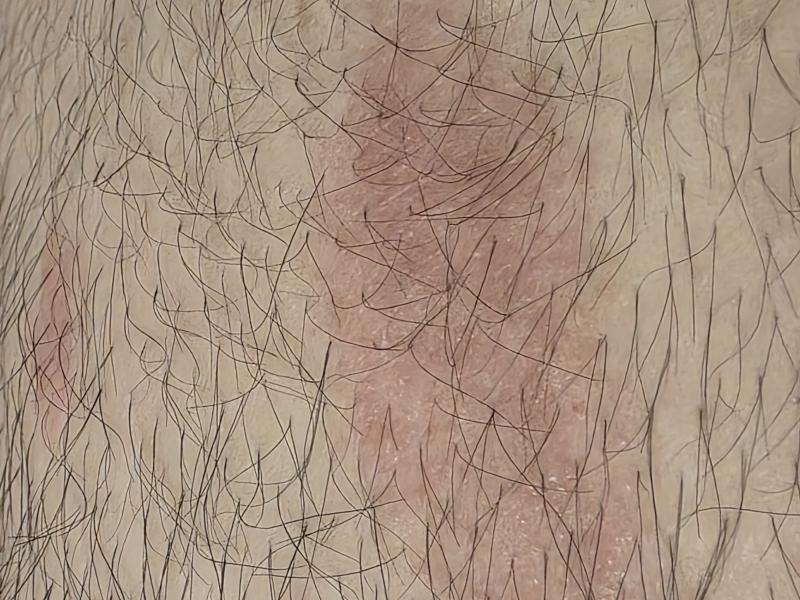
Ringworm often appears as red, scaly patches on the skin and may be itchy.
How cats pass it on
Cats or kittens from shelters and multi-cat households are a common source of fungi that give rise to ringworm infection. A veterinary review found that an infected cat may show no visible signs at all, or may have patchy hair loss, redness, and crusty, scaly patches.[1]
You can get ringworm by touching an infected cat or coming into contact with items and surfaces it has touched, such as its bedding, brushes, furniture, and carpets.[1] Therefore, it is possible to get a reinfection unless you clean these surfaces well along with treating the animal.
How serious it is
For a healthy adult, ringworm infection would only bring mild inconvenience. However, children and people with weakened immune systems can face more serious consequences. So, if you belong to the latter group, please see your healthcare provider as soon as possible for treatment advice.
Although steroid creams may seem like a quick fix for an itchy rash, they can make ringworm worse.[5] Avoid using them on a rash that has not been diagnosed or that could be ringworm.
Treatment
Preferred choice of treatment depends on the severity and the body part involved. Ringworm on the body is typically treated using over-the-counter topical antifungal creams, lotions, or powders such as clotrimazole, miconazole, or terbinafine, applied for 2 to 4 weeks.[5] However, ringworm on the scalp is less likely to be cured with local application of antifungals as they cannot reach the fungi inside the hair follicles. It usually needs a prescription antifungal taken by mouth for 1 to 3 months.[5]
About the affected cat
If your ringworm appeared after petting a new cat, that cat is a likely source of infection. Therefore, it is important to get the pet checked by a veterinarian and treat it if found to have ringworm. Remember that your cat may look perfectly healthy while having the infection, which makes the vet visit more important. Timely treatment helps prevent reinfection of your family members by the same pet.
When to get your rash checked
If the rash stays the same or spreads further with the treatment options you have tried, seek medical advice without further delay. Also, if you have a weak immune system, or if the rash appears on your child, you should pay a visit to your dermatologist without self-treating.
It can be risky to treat a rash without confirming what it is. Ringworm can be hard to tell apart from eczema or psoriasis, and CDC recommends testing before antifungal treatment is prescribed.[4] You can upload photos of the rash for a photo-based assessment and receive a written professional opinion from a dermatologist before you start over-the-counter treatment.
Conclusion
Cats are a well-known source of ringworm in many countries. By recognizing the signs early, seeking appropriate treatment, and keeping your pet and surroundings clean, you can help prevent the infection from spreading. With the right care and a little caution, you can keep the cuddles coming without the itchy surprises.