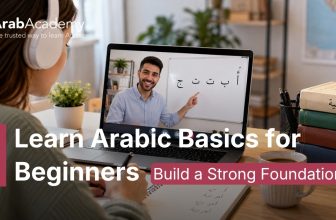
Teaching Arabic for Non-Native Speakers: Beginner Tips


Starting Your Journey in Arabic Language Education
Embarking on the journey of teaching Arabic for non-native speakers can be incredibly rewarding. It involves guiding learners through a rich linguistic and cultural landscape, whether they are focused on Modern Standard Arabic or Egyptian Colloquial Arabic. This guide offers beginner tips and practical strategies to make the learning process engaging and effective, especially when teaching Arabic to English speakers, ensuring a strong foundation for those new to teaching Arabic as a second language.
Laying the Foundation: Essential Strategies
Why a Structured Approach Matters for Beginners
When you’re teaching Arabic for beginners, establishing a clear, structured learning path is paramount. Learners thrive on predictability and measurable progress. Think about starting with the Arabic alphabet and basic phonetics. Many students find the sounds of Arabic unfamiliar at first, so consistent, gentle practice is key. Using visual aids, like flashcards with transliteration and pronunciation guides, can significantly help. Remember, repetition builds confidence, which is vital for new language learners.
Consider a student like Sarah, an English speaker from the U.S. who started learning Arabic with us. Initially, she struggled with distinguishing between similar-sounding letters. Her tutor, understanding this common challenge, incorporated short, daily audio exercises focusing solely on these tricky sounds. Within weeks, Sarah’s pronunciation dramatically improved, boosting her confidence to tackle more complex vocabulary. This small, consistent effort within a structured curriculum made a huge difference.
Navigating Arabic Dialects and Modern Standard Arabic
Choosing Your Path When Teaching Arabic to English Speakers
When teaching Arabic to English speakers, a frequent discussion point arises: Modern Standard Arabic (MSA) versus the various dialects. MSA serves as the formal language across the Arab world, appearing in media, literature, and official communications. Egyptian Colloquial Arabic (ECA), on the other hand, is widely recognized and used in daily life, especially given the reach of Egyptian cinema and music. Arab Academy understands these distinct uses, which is why we offer separate, dedicated courses for both MSA and ECA.
Guiding learners through this choice means understanding their aspirations. If a student dreams of reading classic Arab texts, engaging in academic research, or working in diplomacy, MSA is undoubtedly the ideal foundation. Conversely, for those planning extensive travel in Egypt, eager to connect with Egyptian friends, or simply wanting to immerse themselves in Egyptian culture, ECA often proves a more direct route to conversational fluency.
Engaging Learning Environments
The Power of Interactive Teaching Arabic as a Second Language
Creating an engaging environment is crucial when teaching Arabic as a second language. This goes beyond just textbooks. Live online classes, for instance, offer real-time interaction that mimics in-person classroom dynamics. These sessions allow for immediate feedback on pronunciation, grammar, and conversational flow, which is invaluable. Imagine a student, David, from the UK, who joined an Arab Academy live online class. He found the direct interaction with his instructor and classmates, even from different continents, made the language feel alive and accessible.
The global online language learning market is experiencing significant growth, projected to reach $27.45 billion in 2026. This trend highlights the increasing demand for flexible and effective digital learning solutions. Personalized feedback from a tutor, as opposed to passive listening or app-based drills, creates far more consistent practice loops, leading to faster improvement. Arab Academy understands the need for structured guidance when learning Arabic, ensuring our programs offer both comprehensive curriculum and interactive engagement.
Flexible Learning Options
Tailored Programs for Every Learner
We offer a variety of flexible learning options to fit your schedule and budget, including self-paced courses and live one-on-one online classes. These options cater to diverse learning styles and availability, ensuring that everyone can find a path that works for them. For our younger learners, Arab Academy offers kids’ courses focusing exclusively on Modern Standard Arabic, providing a solid linguistic foundation from an early age. Our Arabic Language Proficiency Test (ALPT) is also designed specifically for MSA, helping learners accurately gauge their progress in this crucial dialect.