Ever asked for a burger without the bun, swapped your chips for salad or requested something to be left off a meal, only for your food to arrive exactly as it appears on the menu?
Once you have placed a restaurant order, the important bit happens behind the scenes. Your request needs to make its way from the person taking the order to the correct part of the kitchen, clearly enough that nothing gets lost along the way.
Modern restaurant POS systems can help with this by sending orders and any changes entered by the server directly through to the kitchen. It sounds like a tiny part of eating out, but when you have made a specific request, it can make a rather big difference to what eventually lands in front of you.
What Happens After You Place a Restaurant Order?
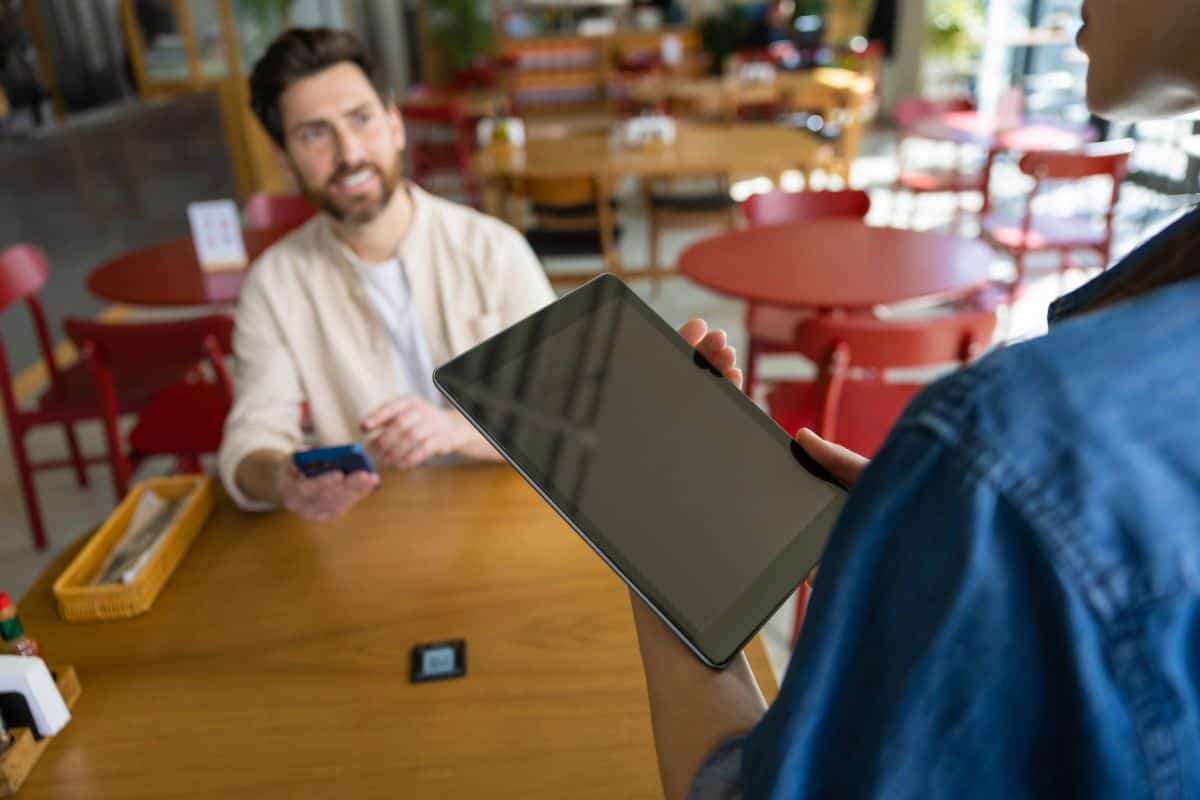
Depending on the restaurant, your server might take your order on a handheld device, enter it into a till afterwards or still use the traditional notepad and pen.
With a digital point-of-sale system, commonly shortened to POS, the order can be entered along with any changes you have requested.
Those details can then be sent through to the kitchen, where different parts of the order may be directed to the people preparing them.
This is where a restaurant POS system with a kitchen display can make the journey from table to kitchen much easier to follow. Rather than relying entirely on a handwritten note or someone remembering that table seven wanted no onions, the modification can appear alongside the order on the kitchen screen.
Not something most of us give much thought to while waiting for lunch, admittedly. We just want the food to turn up as ordered!
Why Restaurant Order Changes Can Be Easy to Miss
I know all about adapting restaurant meals.
When I was following keto more strictly, eating out often involved asking restaurants to change something. A burger without the bun, salad instead of fries or sauces served separately could turn something unsuitable into a perfectly good meal.
I shared quite a few of my tried-and-tested keto meal options when eating out, and one thing I learned very quickly was that there is absolutely nothing wrong with politely asking whether a meal can be adapted.
The potential problem comes when that change has to pass through several people.
Imagine a busy Saturday lunchtime. Your server hears “burger, no bun, salad instead of chips”, but the kitchen receives “burger and chips”. Somewhere along the line, part of the request has disappeared.
A digital system cannot guarantee that mistakes will never happen, but keeping the original order and its modifications together gives staff much clearer information to work from.
How Kitchen Display Systems Help
Some restaurants still use printed kitchen tickets, while others have screens displaying incoming orders.
A kitchen display system, often called a KDS, can show orders as they arrive and help direct individual items to different preparation areas.
So one table order might involve drinks going to the bar while starters, grills and desserts appear at their relevant kitchen stations.
Changes such as “no sauce”, “dressing on the side” or “swap fries for salad” can stay attached to the individual dish rather than relying on someone shouting the information across a busy kitchen.
For diners, you should barely notice any of this happening.
Ideally, you order your food, enjoy the conversation and your meal appears exactly as expected. The clever bit happens quietly in the background.
Dietary Preferences and Food Allergies Are Not the Same Thing
There is an important distinction here.
Asking for no bun because you are reducing carbohydrates is very different from telling a restaurant you have a food allergy.
Technology can help restaurant staff communicate information, but you should never assume that entering a note into an ordering system removes the need to discuss an allergy properly.
If you have a food allergy or intolerance, make it clear when ordering and ask staff about ingredients and how the food is prepared. If you have contacted the restaurant before visiting, mention it again when you arrive.
A preference such as leaving the gherkins off a burger is one thing. An allergen needs treating as exactly that.
Why This Can Matter Even More When Travelling
Eating out often becomes a much bigger part of life when we are away from home.
A coffee turns into brunch, lunch somehow becomes an afternoon cake stop and then, naturally, you still need dinner. Holidays are hard work.
Trying local dishes can be one of the best parts of a trip, and there are plenty of good reasons to try new foods while travelling. However, being somewhere unfamiliar also means restaurant staff do not know your usual preferences.
You cannot rely on the local café knowing you always want dressing on the side or that your child would consider a visible mushroom a personal attack.
Clear ordering matters.
It is the same on a day out closer to home. Food tends to become part of the experience, whether it is grabbing brunch, finding somewhere for dinner or stopping for cake halfway through the afternoon. Our recent day in Manchester city centre involved rather a lot of eating alongside all the walking!
How to Make Special Requests Clear When Eating Out
There are a few simple things diners can do to reduce the chance of crossed wires:
- Explain any change clearly when ordering and check the server has understood it.
- If the request is important, do not be embarrassed about confirming it again.
- For food allergies or intolerances, tell staff explicitly rather than relying on a menu note or app alone.
- Check your meal when it arrives, particularly if something has been specially adapted.
- If something is wrong, flag it politely before you start eating so the restaurant has the opportunity to put it right.
Most meal changes are not complicated. The challenge is simply making sure the information reaches the right person.
Getting Your Restaurant Order Right First Time
Restaurant technology is probably the last thing you want to think about when you are deciding between a burger and a steak.
But behind the scenes, good communication between the person taking your order and the people cooking it can make the whole experience run more smoothly.
For diners, that means fewer missing side dishes, fewer forgotten meal changes and hopefully fewer moments staring sadly at the brioche bun you specifically asked them to leave in the kitchen.
And yes, if I’ve ordered the salad instead of the chips, I really did mean it. Even if I immediately regret the decision when everyone else’s chips arrive.