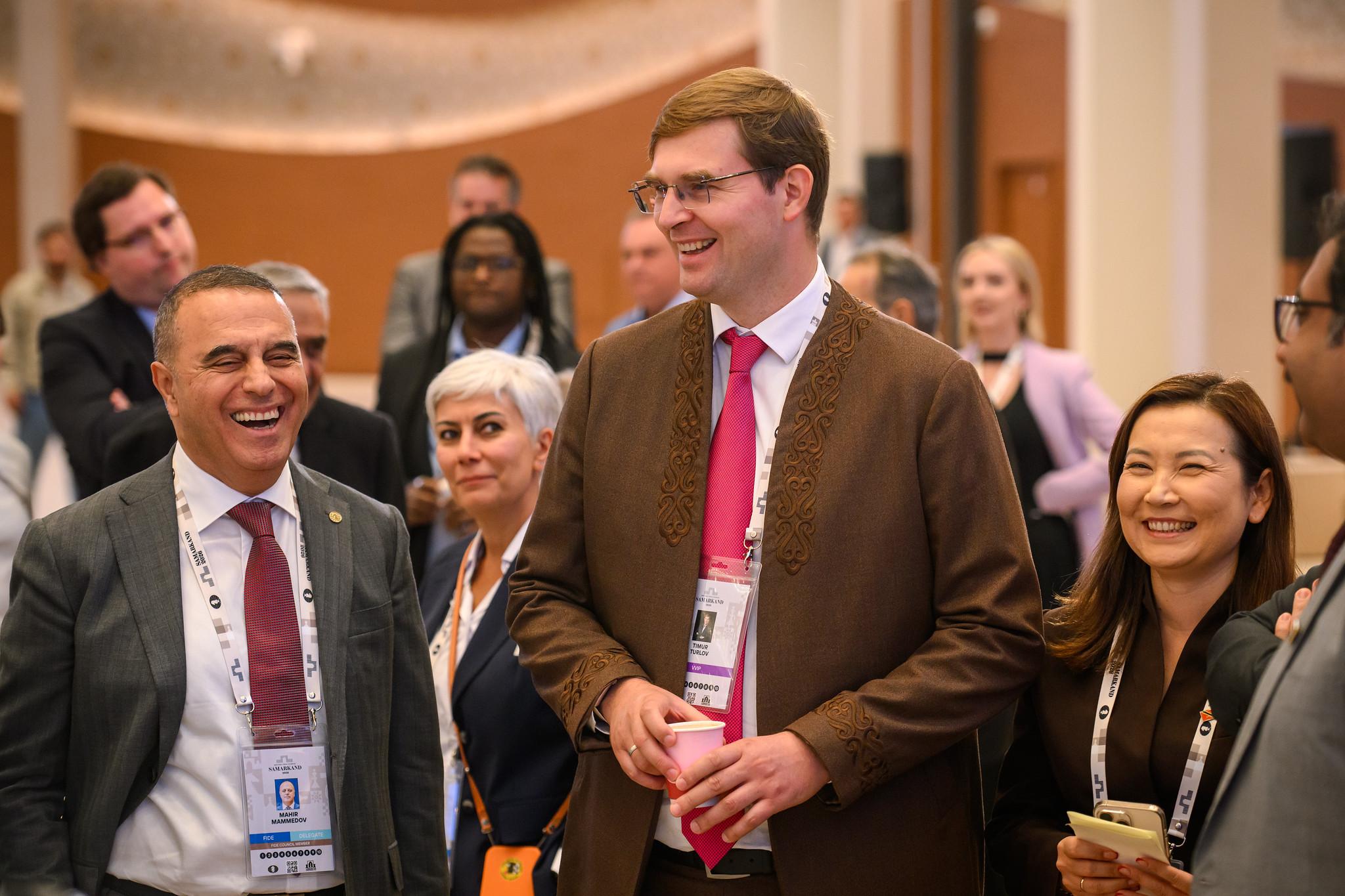
Timur Turlov was elected president of the International Chess Federation (FIDE) on Saturday, defeating German entrepreneur Wadim Rosenstein 110-85 in a second, deciding ballot at the FIDE General Assembly in Samarkand, Uzbekistan. The third candidate, German Freestyle Chess co-founder Jan Henric Buettner, was eliminated in the first round.
The 38-year-old Russian-born Kazakh billionaire, who has an estimated net worth of $7.4 billion, will lead world chess for the next four years, with five-time World Champion GM Viswanathan Anand elected alongside him as Deputy President.
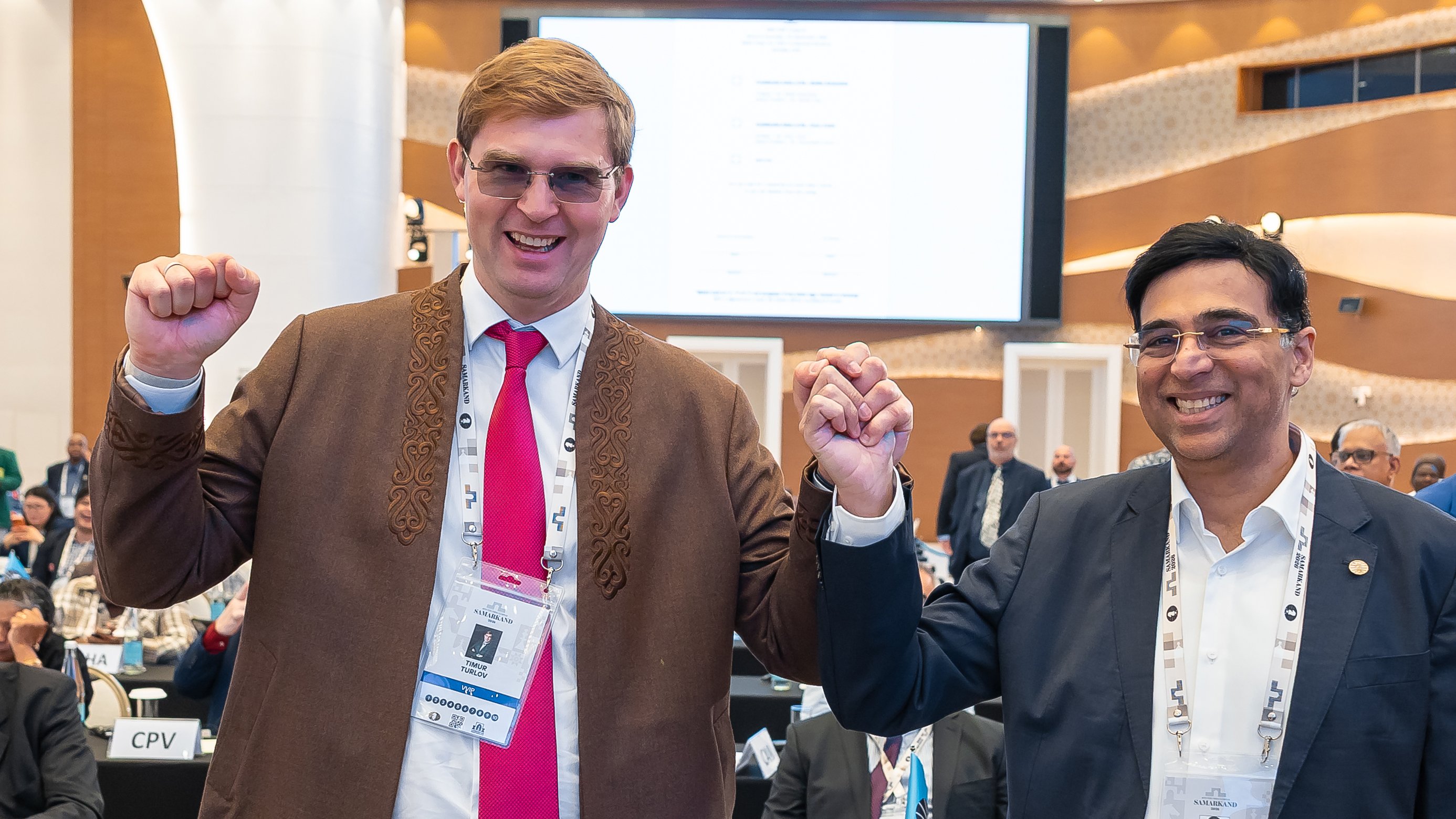
Turlov finished first in the opening ballot but fell narrowly short of the required majority. He received 96 votes, compared to 76 for Rosenstein and 20 for Buettner.
Of the 196 ballots cast, four were declared invalid, leaving 192 valid votes. Under FIDE’s electoral rules, a ticket needed more than half of the valid votes—97 in this case—to win in the first round.
Turlov was therefore one vote short, sending him and Rosenstein into a runoff while Buettner and his running mate, IM Malcolm Pein, were eliminated.
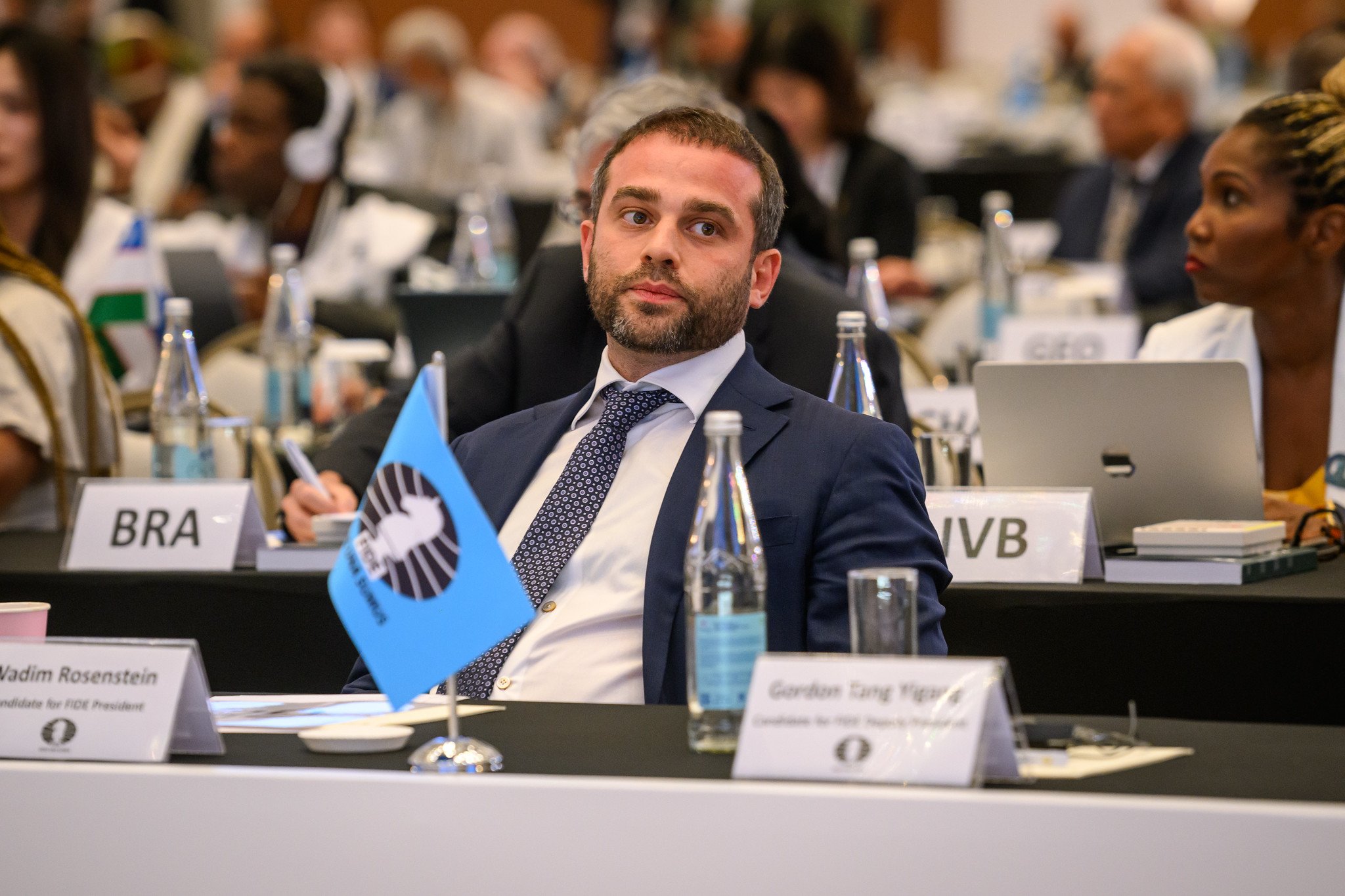
Buettner and Pein then endorsed Turlov, helping increase his total to 110 votes in the second round, while Rosenstein, who ran alongside Chinese businessman Gordon Tang, received 85.
Buettner & Pein endorses to Timur Turlov for 2nd round #chess #FIDECongress pic.twitter.com/m3c7fEcJLV
— Keti Tsatsalashvili (@keti_chess) September 26, 2026
Pein later said the endorsement followed an agreement with Turlov that included commitments to oppose the readmission of suspended teams, implement CAS decisions, and ensure that no single nationality accounts for more than 25 percent of FIDE’s management positions.
Agreement between Malcolm Pein and Timur Turlov
Suspended teams not to be readmitted to FIDE competitions. TT to speak and vote against this.
CAS decisions to be respected and actioned in all cases.
A maximum of 25% of people from one nationality in management positions within…— Malcolm Pein (@TelegraphChess) September 26, 2026
In a brief acceptance speech, Turlov thanked his voters, supporters, and campaign team, promising that all federations would receive equal treatment under his leadership.
“You will always be able to count on me,” he said. “Every member federation, every person… will be treated equally well.”
Every member federation, every person… will be treated equally well.
—Timur Turlov
“I promise to do everything I can to bring [the] chess community to better growth and prosperity,” Turlov added. “That’s my big honor, to be a part of you.”
He concluded on a lighter note: “Now I have so many new friends. Thank you for that,” he said before sharing the following statement on his X account:
Today is a victory for chess – for every player, every federation and everyone who believes in the potential of our game!
We are all one family and we will continue working as one. This is a great responsibility and a vote for a better future of our sport.
Now is the time to… pic.twitter.com/ieF9HmGQf5
— Timur Turlov (@TurlovforChess) September 26, 2026
Rosenstein was brief in his response:
the results have been acknowledged
— Wadim Rosenstein (@WadimRosenstein) September 26, 2026
Buettner shared a longer statement:
“The member federations of FIDE have made their decision. That decision deserves our full respect,” he said. “I wish the new leadership every success, because when FIDE succeeds, chess succeeds.”
Buettner also thanked Pein, the federations that engaged with their campaign, and those who supported another ticket. He said their discussions about funding, transparency, and how FIDE should serve its members remained valuable despite the defeat.
“An election has winners and losers. So does a game of chess,” Buettner said. “But FIDE—and chess itself—does not have to.”
An election has winners and losers. So does a game of chess. But FIDE—and chess itself—does not have to.
—Jan Henric Buettner
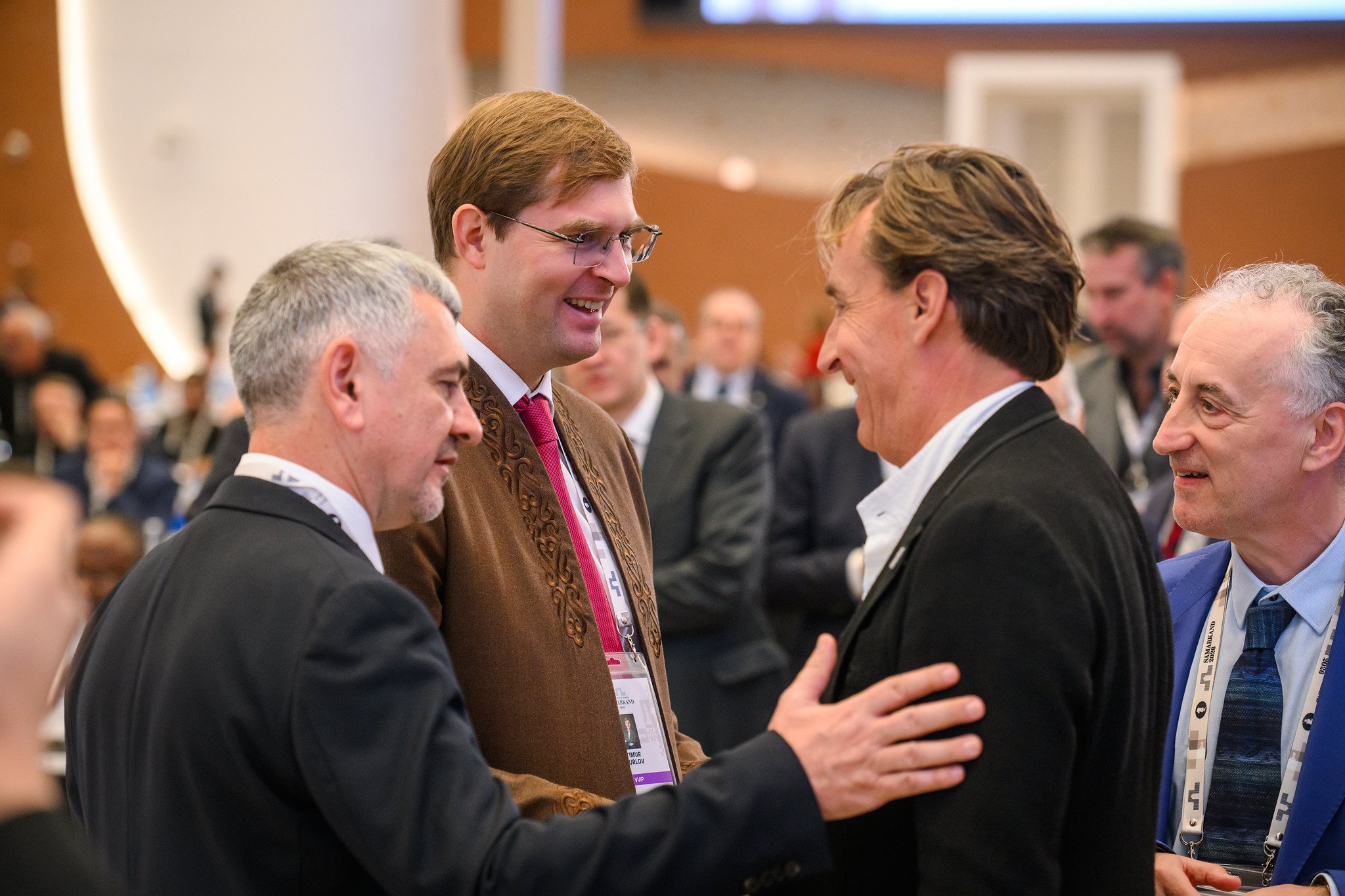
Rosenstein’s 85 Votes Indicate Competitive Election Race
Although Rosenstein lost the runoff by 25 votes, his 85 votes represented almost 44 percent of those cast for the two remaining tickets and made the election a highly competitive contest.
He also increased his support from 76 votes in the first round, despite Buettner and Pein endorsing Turlov after their elimination. The result demonstrated that Rosenstein had built substantial support among FIDE’s member federations, even though parts of his campaign had been less visible publicly.
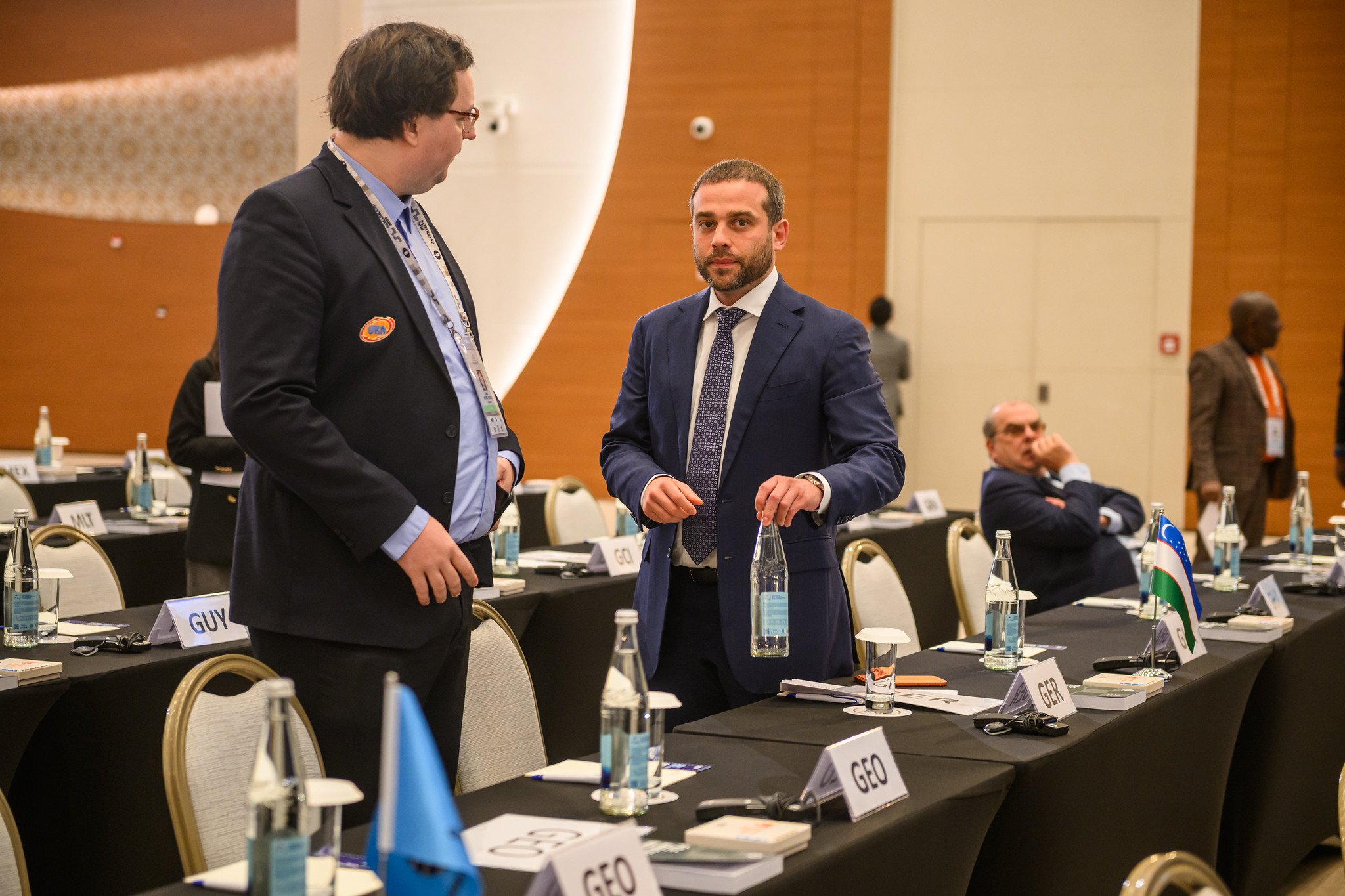
Rosenstein, the founder of WR Chess and chairman of WR Group Holding, campaigned on professionalizing FIDE, attracting more commercial partners, modernizing its digital infrastructure, and introducing stricter conflict-of-interest rules. He also said he wanted to bring leading players, including GMs Magnus Carlsen and Hikaru Nakamura, back into the classical world championship cycle.
Questions about Rosenstein’s own connections to Russia also followed his campaign. WR Group previously conducted logistics, certification, and other projects in Russia, including work in the oil and gas sector. Rosenstein said those projects were ended after sanctions were imposed following Russia’s full-scale invasion of Ukraine.
He was also pictured playing GM Sergey Karjakin in Moscow in May 2022, during Karjakin’s six-month FIDE ban for publicly supporting the invasion. Rosenstein described the meeting as “a game against a very strong chess player, nothing more, nothing less,” adding that Karjakin’s political views did not concern him. The explanations did not prevent his Russian connections from remaining a subject of scrutiny during the campaign.
In the weeks leading up to the election, he received surprising backing from European Chess Union President GM Zurab Azmaiparashvili. The ECU subsequently clarified that it had not endorsed any candidate and remained institutionally neutral.
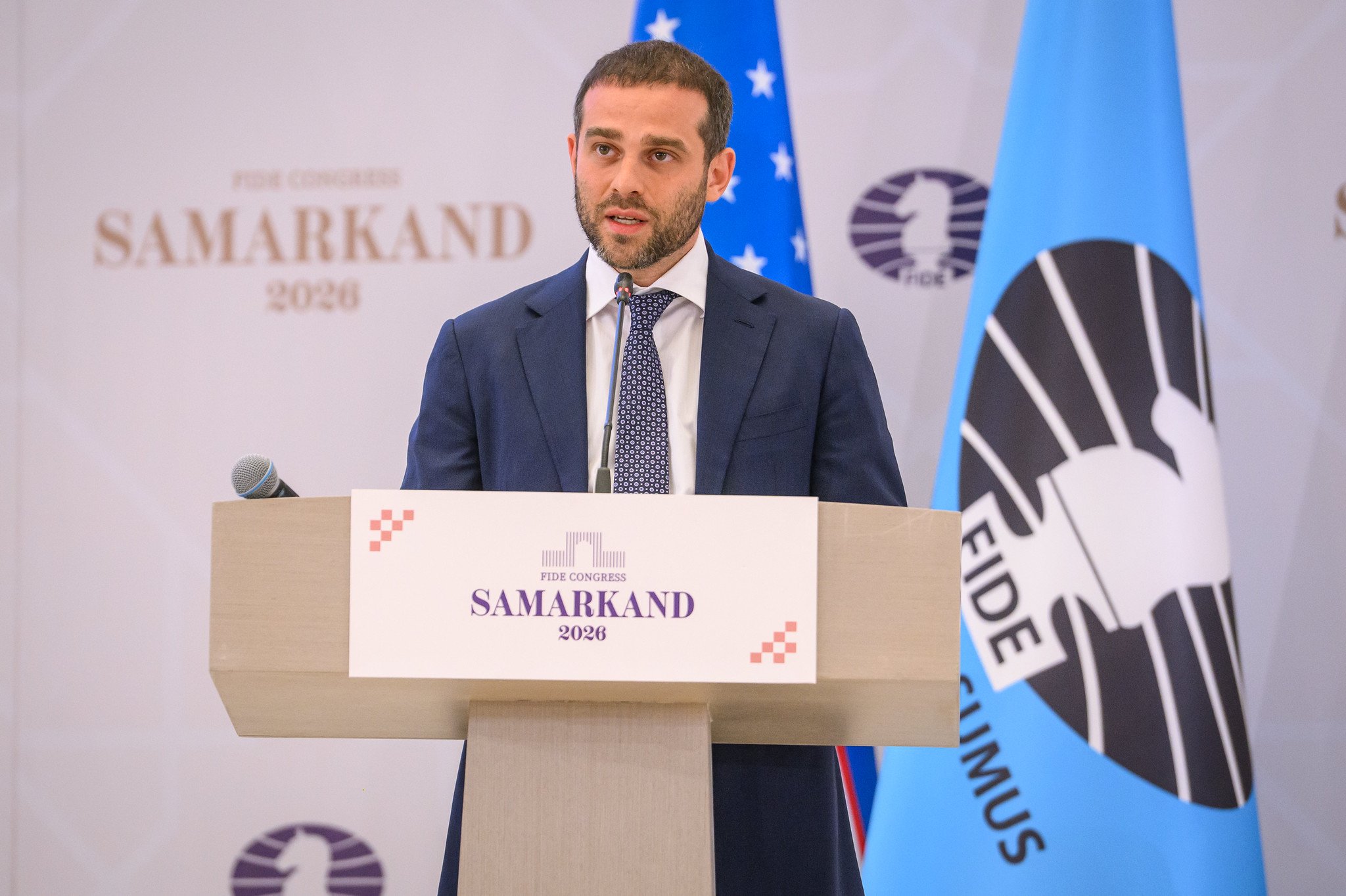
However, Rosenstein’s limited participation in public forums attracted criticism. During the Chess.com-hosted presidential debate on September 9, he disconnected immediately after his opening statement and did not return. Chess.com attempted to contact him, but he did not respond or provide an explanation.
He was also absent from a joint presidential panel in Samarkand on September 24, where Turlov and Buettner answered questions from the media. No explanation for his absence was given.
The election is unlikely to be the last word from Rosenstein. Just days ago, his team announced that he had filed an appeal with the Court of Arbitration for Sport (CAS) challenging the FIDE Electoral Commission’s September 5 decision on Turlov’s eligibility.
PRESS STATEMENT
Wadim Rosenstein Files Appeal with the Court of Arbitration for Sport Over the Application of FIDE’s Sanctions Rules
Düsseldorf / Lausanne, 23 September 2026
FIDE presidential candidate Wadim Rosenstein has filed an appeal with the Court of Arbitration for… pic.twitter.com/zhDUknoXaZ
— WR Chess (@wr_chess) September 23, 2026
The appeal argued that the commission had failed to address a March 2022 FIDE Council decision stating that sanctioned individuals would be denied the right to hold honorary or official positions within FIDE. Rosenstein asked CAS to annul the commission’s decision and determine how that rule should apply to Turlov and former FIDE President Arkady Dvorkovich.
“This is not a case against Timur Turlov or Arkady Dvorkovich as individuals,” Rosenstein said. “The question is much simpler: do FIDE’s rules apply to everyone, or are they applied selectively?”
CAS had not ruled on the appeal by the time delegates voted, and no timetable for a decision had been announced. The arguments in the appeal remain Rosenstein’s position and have not been determined by the court.
End Of A 30-Year Russian Era
Turlov is the first non-Russian citizen to be elected FIDE president in more than 30 years, formally ending a sequence of Russian leadership stretching back to 1995, when Kirsan Ilyumzhinov took over from the Filipino Florencio Campomanes.
Ilyumzhinov remained president until 2018, when he was succeeded by Arkady Dvorkovich, a former Russian Deputy Prime Minister. Dvorkovich was reelected in 2022.
Turlov’s election, however, represents strong continuity with the previous administration as he was originally announced as Dvorkovich’s candidate for Deputy President. His campaign was also supported by the now-suspended Chess Federation of Russia.
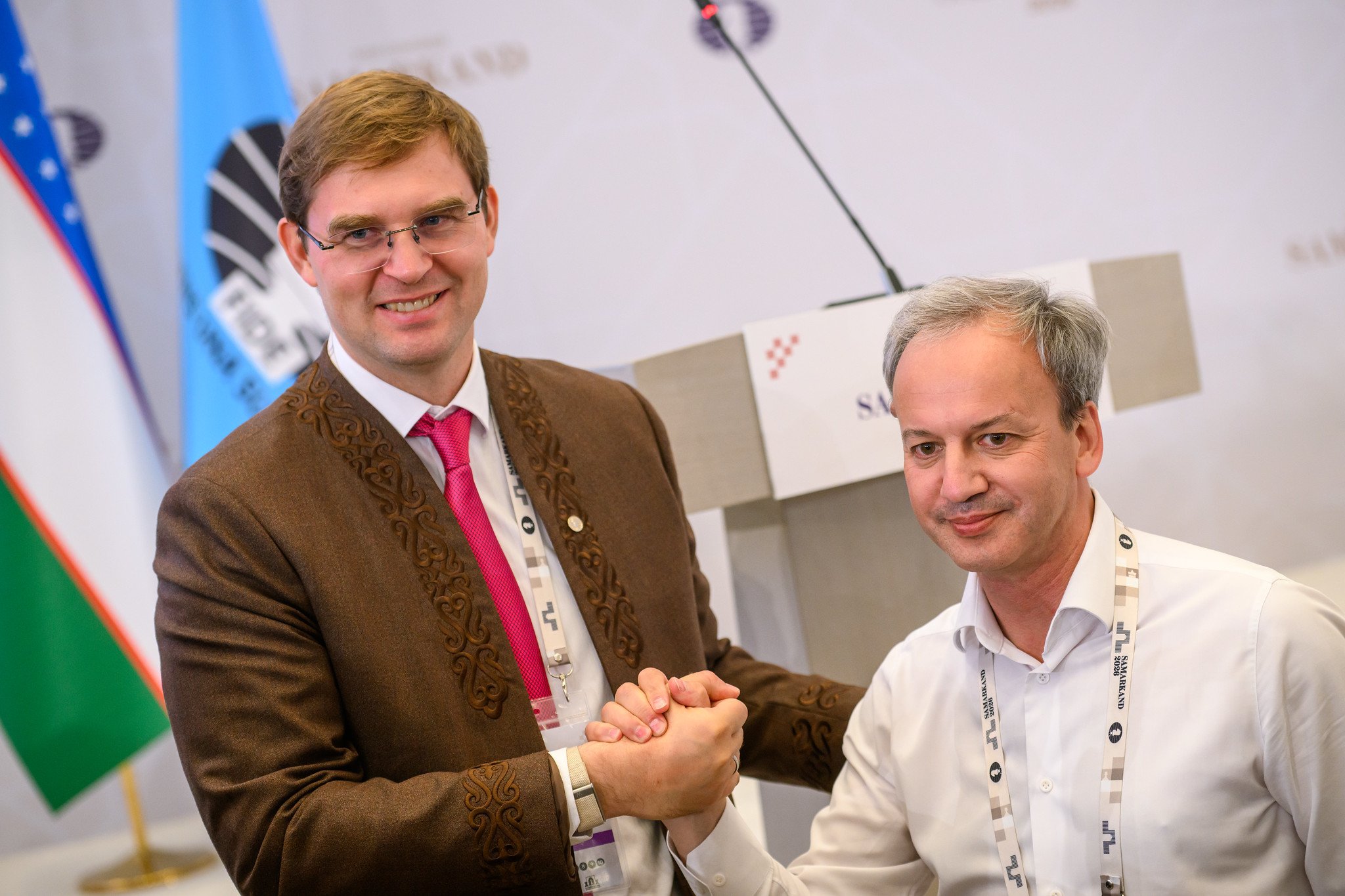
Dvorkovich campaigned in 2018 on a pledge to limit FIDE presidents to two terms, and FIDE said after his 2022 reelection that his second term would be his last. Delegates nevertheless voted in 2023 to abolish the restriction, clearing the way for him to seek a third term in 2026.
The race changed dramatically after Dvorkovich was added to the European Union’s sanctions list in July. He voluntarily suspended the exercise of his powers as FIDE president, with Anand taking over his duties on an interim basis, and did not proceed with his reelection bid. Shortly after, Turlov announced his own candidacy with Anand as his deputy.
Who Is Turlov?
Turlov was born in Moscow and remained a Russian citizen until September 2022. He has lived in Kazakhstan since 2011 and said he renounced his Russian and St. Kitts and Nevis citizenships after Russia’s full-scale invasion of Ukraine.
Turlov has also been on Ukraine’s sanctions list since October 2022. Rosenstein cited those sanctions, along with questions over Turlov’s citizenship and a Wells Notice from the U.S. Securities and Exchange Commission, in a challenge to his eligibility.
He rejected the allegations, and the FIDE Electoral Commission ruled that the issues raised did not make him ineligible to stand.
Turlov is the founder and CEO of Freedom Holding Corp., a Nasdaq-listed financial and technology company that has become a significant investor in international chess.
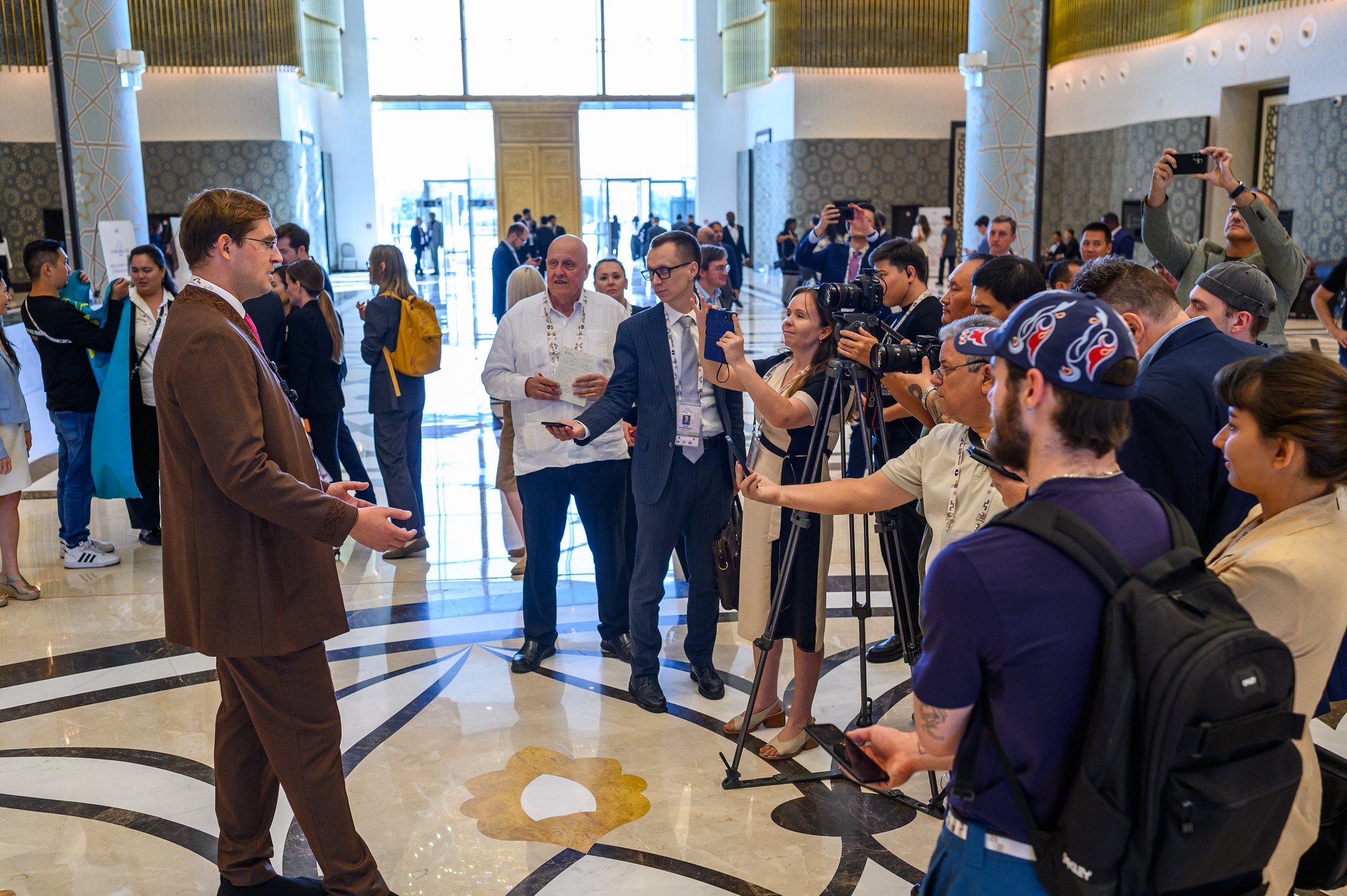
His company has become FIDE’s main commercial partner, financing some of its biggest events such as the 2024 World Rapid and Blitz Championships in New York and the 2026 Candidates Tournament in Cyprus. Turlov has claimed to have invested more than $75 million in chess, although that figure was questioned by Rosenstein’s campaign.
Earlier this year, Freedom Holding also acquired German chess software company ChessBase, with plans to invest €5 million in modernizing its products and integrating artificial intelligence.
That financial element became a key issue of the election campaign. During the Chess.com-hosted presidential debate, Buettner argued that FIDE should become commercially self-sufficient and less dependent on wealthy presidents or individual benefactors.
Turlov described himself as FIDE’s “main financial backstop” over the previous three years. He agreed that the organization should not remain dependent on him in the long term but argued that new commercial income could not be guaranteed immediately.
“Great governance is necessary, but not enough to make a federation successful,” he said. “Sometimes someone needs to help push things forward. That’s why I’m offering a backstop.”
During the debate, he proposed increasing FIDE’s development fund to more than $6 million to support tournaments, arbiter and coach training, player travel, federation staff, and marketing and communications programs.
‘Unprecedented Number Of Complaints’
The election campaign became unusually contentious. “This year we have received an unprecedented number of complaints,” Electoral Commission chairman Roberto Rivello told delegates before the vote on Saturday.
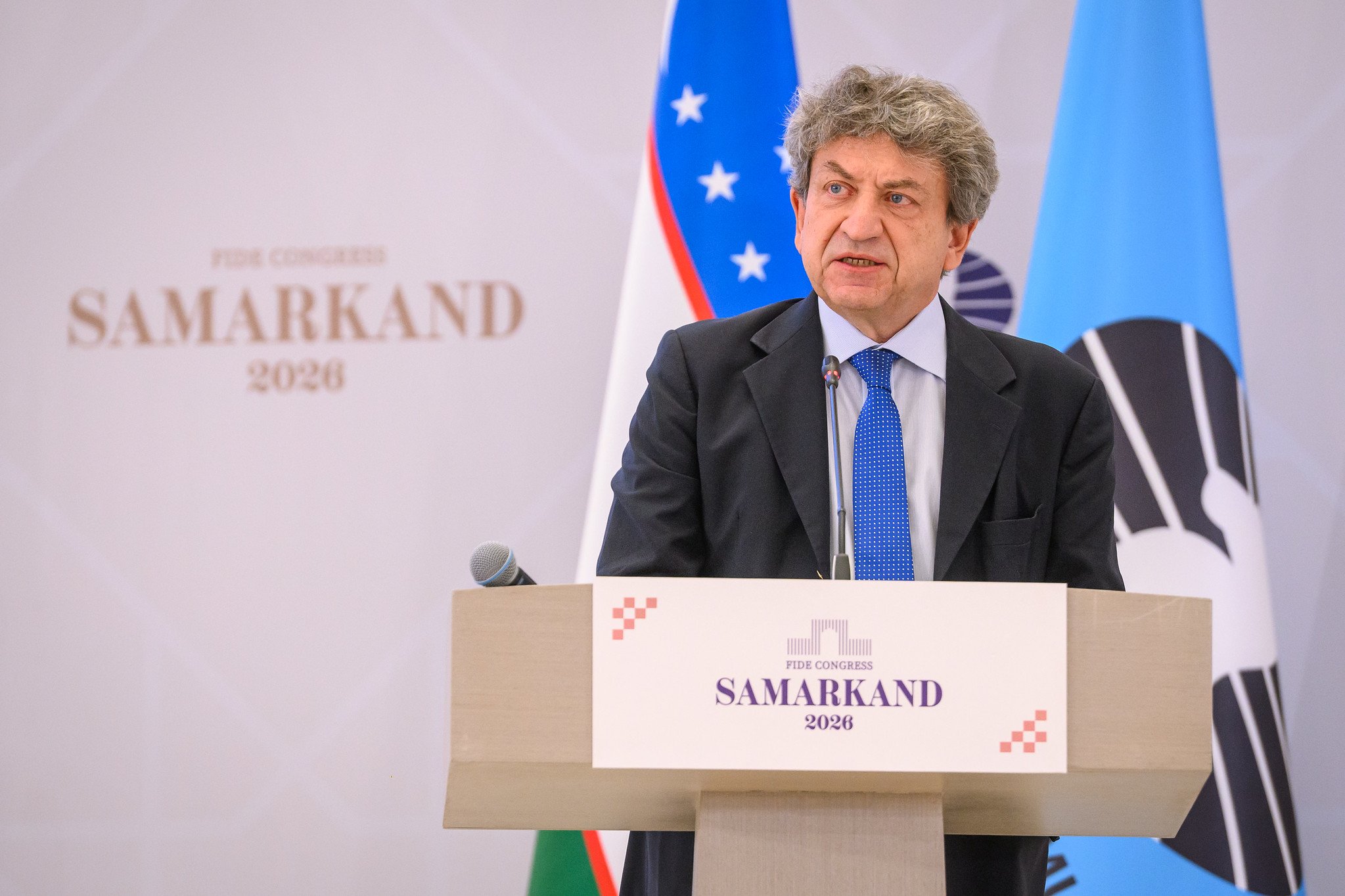
During the campaign, all three presidential tickets filed formal complaints. Buettner accused FIDE employees and resources of being used to benefit Turlov, while both Buettner and Rosenstein challenged aspects of Turlov’s eligibility.
Turlov’s campaign, meanwhile, asked for Rosenstein to be removed from the ballot over a sponsorship agreement between his company and the German Chess Federation announced during the electoral period. Rosenstein was also Germany’s FIDE delegate and had been nominated for president by the federation.
The Ethics & Disciplinary Commission found that the allegations against Rosenstein and the German Chess Federation had not been established and dismissed Turlov’s complaint. The Electoral Commission had separately rejected the challenges to the presidential candidates’ eligibility, while referring some alleged ethical violations to the EDC.
Days before the election, Turlov also launched a lawsuit against David Llada, the Spanish chess photographer and candidate for FIDE Vice President, over allegations that Turlov still holds a Russian passport.
I am being sued by @TurlovforChess. https://t.co/9drxX9SSu7
— David Llada ♞ (@davidllada) September 20, 2026
There have also been concerns about commercial conflict of interest. Turlov will now oversee an organization for which his own company has been the main commercial partner, while Freedom Holding’s investment in ChessBase gives it a major position in the chess software and media market.
He also said after the election that his administration would continue to abide by Court of Arbitration for Sport decisions preventing Russian teams from competing in FIDE events, although he hoped the Russian federation would eventually meet the conditions required to return.
“The road ahead will be long, but we have a strong program, a capable team, and the energy and resources to deliver,” Turlov said.
Former Russian Sports Minister Elected Vice President
The first day of FIDE’s two-day General Assembly concluded with the election of four Vice Presidents.
Three candidates were elected in the first round. Former Women’s World Champion GM Xu Yuhua of China led with 100 votes, followed by Michael Khodarkovsky of the U.S. with 93 and former Russian Sports Minister Pavel Kolobkov with 78.
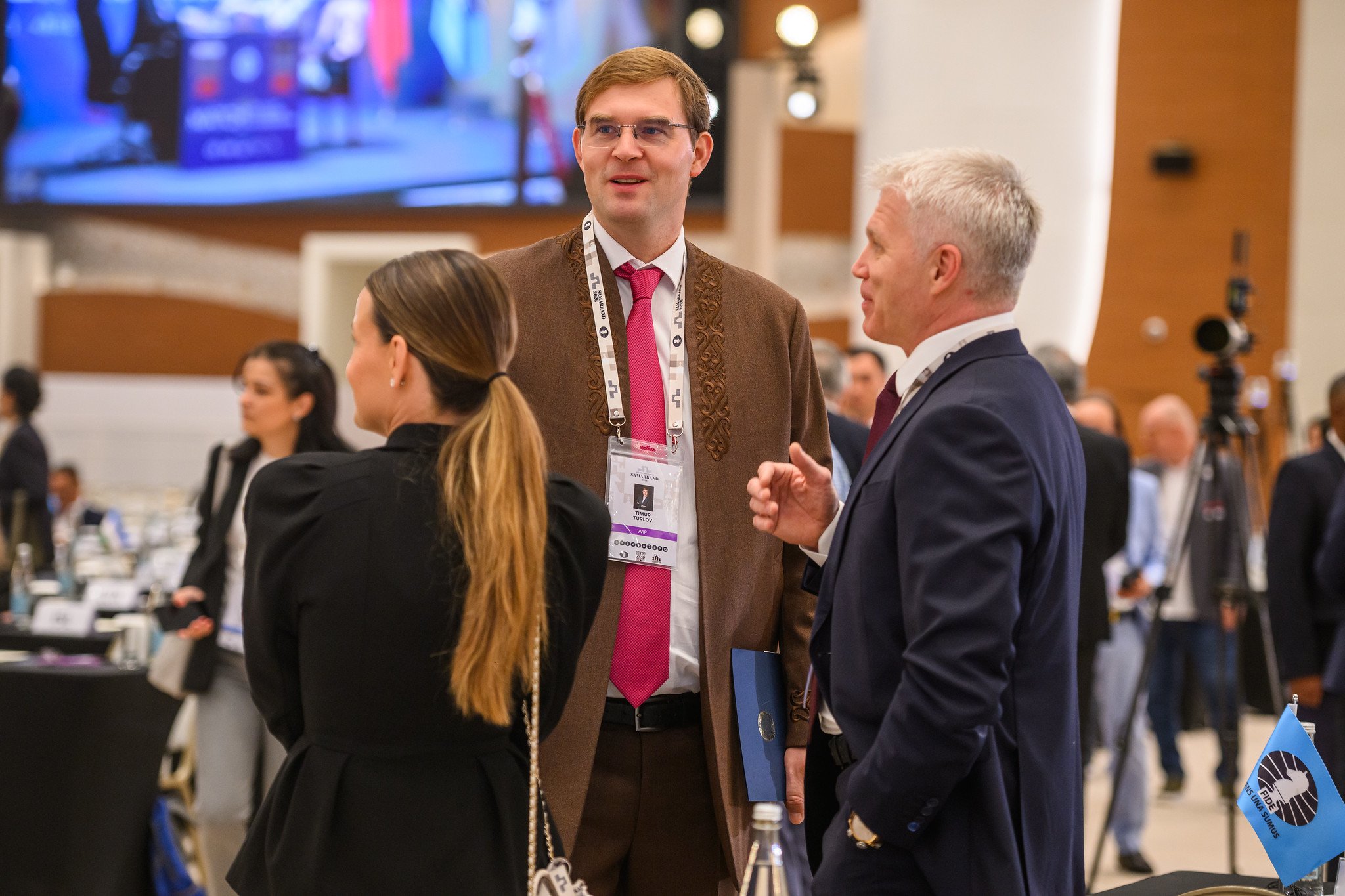
Kolobkov, an Olympic fencing champion, had faced a challenge to his eligibility because of the suspension of the Russian Chess Federation. The Electoral Commission rejected the challenge, ruling that he had not been nominated by or represented the Russian federation and that Russian citizenship alone did not make him ineligible.
The fourth seat required further voting. Djibouti Chess Federation President Yassin Souleiman Hassan led the second round with 72 votes, ahead of Malawi’s Susan Namangale with 58, Liechtenstein’s Willy Iclicki with 43, and Pein with 39.
Pein then withdrew from the contest in protest at Kolobkov’s election, just hours after he and Buettner had endorsed Turlov in the presidential runoff.
“I have withdrawn from the FIDE election for Vice Presidents as Pavel Kolobkov, a former Minister of Sport in the Russian government, was elected,” Pein wrote. “I will not sit on the FIDE Council if he is there. I will assist in any legal action against FIDE in CAS.”
We agree on this, but I fear he will be elected, Arkady Dvorkovich campaigning on his behalf. He is unacceptable, legal action against FIDE must be taken if it can be funded. Whatever the outcome of the elections I will back this legal action with my time and ££. His candidacy… https://t.co/D2cK0CI4bn
— Malcolm Pein (@TelegraphChess) September 26, 2026
Hassan eventually secured the fourth and final elected Vice Presidential seat with 67 votes in the deciding ballot.
The four elected positions are separate from the three additional Vice Presidents whom Turlov is entitled to nominate. Those appointments, along with the positions of Treasurer and Secretary of the FIDE Council, are scheduled to be addressed when the General Assembly concludes on Sunday.