We’re reader-supported. When you buy through links on our site, we may earn an affiliate commission.
This golf ball selector matches you to the right ball in about 30 seconds. Enter your driver swing speed (or your average carry if you don’t know it), pick what matters most to you, and it ranks 64 current balls from Titleist, Callaway, TaylorMade, Bridgestone, Srixon, Vice, Wilson, Mizuno, Cut and more, then shows your top three.
I’ve played golf for 30 years, I carry a 5 handicap and I play a Titleist Pro V1. The most common mistake is buying the ball a tour player uses instead of the ball that suits your own swing. A free golf ball quiz won’t replace a launch monitor fitting, but it will get you into the right family of balls, and that’s where most of the benefit is.
(Looking for golf ball finder glasses to spot lost balls? That’s a different product. This page is about picking which ball to play.)
Most online golf ball fitting tools come from ball brands, so they only ever recommend their own balls. This one scores every current model on our golf ball compression chart the same way, no matter who makes it.
Each ball gets points in four areas:
- Swing speed fit (up to 40 points). Every ball has a driver speed range it’s built for. Inside that range it scores full points, and it loses 2 points for every mph you sit outside it.
- What matters most to you (up to 25 points). Choose distance and it favors low-spin balls. Choose greenside spin and it favors urethane covers. “A bit of everything” balances the two.
- Feel (up to 20 points). Soft, medium or firm, if you have a preference.
- Budget (up to 15 points). Under $30, $30 to $45, or over $45 a dozen.
Two optional boxes adjust the result. Ticking “I play a lot in cold weather” drops your effective swing speed by 5 mph, because a ball gets firmer in the cold and a slightly softer ball compresses better. Ticking “I fight a slice” favors lower-spin balls, which curve less off the tee.
Don’t know your swing speed? Tick the box and enter your average driver carry instead. The tool converts it using the same distance and swing speed numbers as our golf swing speed distance calculator: about 205 yards of carry at 80 mph, 230 at 90, 260 at 100 and 290 at 110.
The compression numbers come from measured data wherever it exists (MyGolfSpy’s Ball Lab measures every ball on the same tester), then the manufacturer’s own figure, then independent spec sheets. Retired models and non-conforming balls are left out.
What Golf Ball Should I Use?
For most golfers, the answer starts with driver swing speed. If you’re asking “what golf ball should I use,” work through these three questions in order:
- How fast do you swing your driver? This sets the compression range. Slower swings (under about 85 mph) get more from a soft, low-compression ball. Faster swings (105 mph and up) need a firmer ball so they don’t lose ball speed.
- Do you want more spin around the greens, or more distance off the tee? Urethane-covered balls stop faster on chips and pitches. Two-piece ionomer balls spin less, which helps distance and keeps a slice or hook from curving as much.
- How many balls do you lose a round? If it’s more than two or three, a $55 dozen is an expensive habit. A $25 to $40 ball that fits your speed will serve you better than a premium ball that doesn’t.
If you’d rather not think about it, run the golf ball selector above. It asks those exact questions.
Golf Ball Fitting Chart by Swing Speed
This golf ball fitting chart is the short version. Use it as a starting point, then check the full specs of any ball on our golf ball compression chart.
| Driver Swing Speed | Typical Compression Range | Good Balls to Try |
|---|---|---|
| Under 80 mph | Under 70 | Callaway Supersoft, TaylorMade SpeedSoft, Vice Pro Air |
| 80 to 90 mph | 60 to 80 | Srixon Soft Feel, Vice Pro Soft, Callaway Chrome Soft |
| 90 to 100 mph | 75 to 90 | Titleist AVX, Srixon Q-Star Tour, TaylorMade Tour Response, Bridgestone Tour B RX |
| 100 to 110 mph | 85 to 95 | Titleist Pro V1, Callaway Chrome Tour, TaylorMade TP5, Srixon Z-Star |
| Over 110 mph | 95 and up | Titleist Pro V1x, Bridgestone Tour B X, Callaway Chrome Tour X, Srixon Z-Star XV |
Brands don’t always follow this neatly. Bridgestone’s Tour B XS sits around 87 compression but is built for 105 mph and up, and Titleist’s Tour Soft measures about 88 despite the name. That’s why the selector uses each ball’s recommended speed range, not just its compression number.
Best Golf Ball by Swing Speed
These are my picks for the best golf ball by swing speed, drawn from the same data the golf ball selector uses. Each band has a top pick, a value pick and one more worth trying.
Best Golf Ball for 70 and 75 MPH Swing Speed
At 70 to 75 mph, you need the softest ball you can find so you actually compress it. The Vice Pro Air is my top pick: a 75-compression, three-piece ball with a urethane cover, built for swing speeds under 95 mph. That combination is rare. Most low-compression balls are two-piece ionomer, which means soft and long but not much spin around the green.
For value, the Callaway Supersoft (about 44 compression, under $30) is one of the most popular soft balls around, and it’s easy to compress at this speed. The TaylorMade SpeedSoft (50 compression) is the other one to try.
Best Golf Ball for 80 MPH Swing Speed
The best golf ball for an 80 mph swing speed is still low compression, but you can start adding a little short-game spin. The Vice Pro Soft (about 70 compression, urethane cover) is built for players under 95 mph and gives you real spin on chips.
The Srixon Soft Feel (60 compression) is the value pick, and the Bridgestone e12 HiLaunch is worth a look if you struggle to get the ball in the air.
Best Golf Ball for 85 MPH Swing Speed
At 85 mph you’re right where the premium soft balls start to work. The Callaway Chrome Soft (75 compression, urethane cover) is my top pick. It’s Callaway’s softest premium ball and it’s built for roughly 85 to 105 mph.
The Cut Grey is a three-piece urethane ball at around 80 compression for well under $30 a dozen, and the Srixon Q-Star Tour (70 compression) sits in between on price.
Best Golf Ball for 90 MPH Swing Speed
The best golf ball for a 90 mph swing speed is one of the most common questions in golf, and it’s where the choice opens up. My top pick is the Titleist AVX. It’s a three-piece urethane ball around 80 compression with a lower flight and a very soft feel, based on Titleist’s own ratings. That lower flight suits a golfer who already hits the ball high or plays in the wind a lot.
The Callaway Superfast is the value pick if distance is what you want. The TaylorMade Tour Response (about 74 compression, urethane cover, around $43) gets you most of a tour ball’s greenside spin for less.
Best Golf Ball for 95 MPH Swing Speed
At 95 mph, a mid-compression tour ball fits well. The Bridgestone Tour B RX is my pick. Bridgestone’s own fitting data puts golfers under 105 mph in the RX, and it’s around 85 compression with a urethane cover.
The Cut Blue is a four-piece urethane ball around 90 compression for under $25. At that price you get a spinning urethane cover without worrying much about the two or three you lose each round. The Vice Pro (90 compression) is a direct-to-consumer tour ball worth trying.
Best Golf Ball for 100 MPH Swing Speed
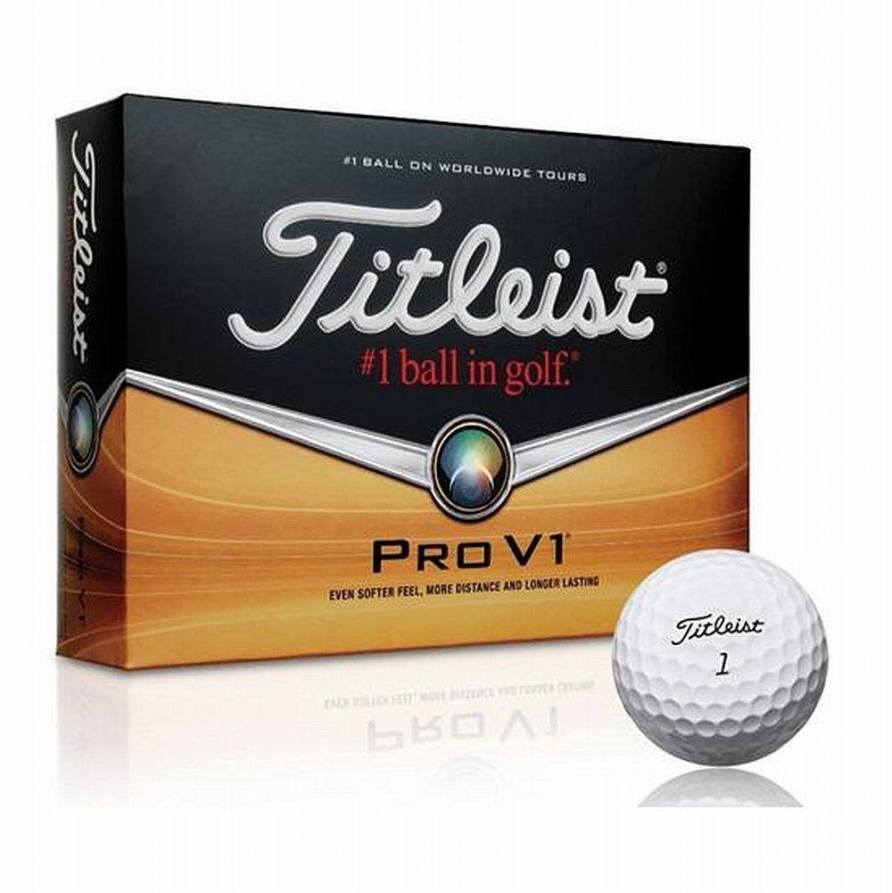
The best golf ball for a 100 mph swing speed is the one I play: the Titleist Pro V1. MyGolfSpy’s Ball Lab measured the current model at about 92 compression, and Titleist rates it for mid flight, soft feel and very high short-game spin. At 100 mph you can compress it properly, so you get the distance and the spin.
For value, the Kirkland Signature 3-Piece from Costco (about 92 compression, urethane cover) is hard to beat on price. The Mizuno Pro S is the other one to try.
Best Golf Ball for 105 MPH Swing Speed
At 105 mph you can play almost any tour ball. The Callaway Chrome Tour (about 91 compression, four-piece urethane) is my pick. It’s low spin off the driver with high greenside spin, which suits a player with this much speed.
The Cut DC is the value pick: a four-piece urethane ball around 100 compression for under $30. The Srixon Z-Star Diamond (about 93 compression) is also worth a look.
Best Golf Ball for 110 MPH Swing Speed and Up
At 110 mph and above, you need a firm ball or you’ll lose ball speed. My top pick is the Titleist Pro V1x (about 101 compression, four-piece urethane). Titleist rates it for a higher flight and a firm feel, so if your fast swing produces a flat, low drive, the Pro V1x helps it carry longer.
The Cut DC is again the value pick at this speed. The Bridgestone Tour B X (about 98 compression) is the other premium option, and Bridgestone fits it to players over 105 mph.
Best Golf Ball by Handicap
Handicap is a rougher guide than swing speed, but it tells you something about how many balls you lose and how much you use the short game. Here’s the best golf ball by handicap as a starting point. For more depth, see our guides to the best golf balls for mid handicappers and the best golf balls for beginners.
Best Golf Ball for a 10 Handicap
At a 10 handicap, you hit enough greens and chips that a urethane tour ball pays off. Match it to your speed: the Titleist Pro V1 or Srixon Z-Star around 100 mph, the Pro V1x or Tour B X above 105. If you’d rather save money, the Kirkland Signature 3-Piece gives you a urethane cover for a fraction of the price.
Best Golf Ball for a 15 Handicap
The best golf ball for a 15 handicap is usually a mid-priced urethane ball like the Srixon Q-Star Tour or TaylorMade Tour Response. You get most of the greenside spin of a tour ball, and losing one or two a round doesn’t hurt as much. If your swing is quick, the Callaway Chrome Soft is a good step up.
Best Golf Ball for a 20 Handicap
At a 20 handicap, distance and straightness usually matter more than short-game spin. A soft two-piece ball like the Callaway Supersoft, Srixon Soft Feel or Bridgestone e12 Straight keeps costs down and spins less off the tee. Titleist’s Tour Soft is a good choice if you want a softer-feeling ball that’s still a two-piece.
How to Choose a Golf Ball
If you want to know how to choose a golf ball on your own, work from the green back to the tee. That’s how Titleist runs its in-person fittings, because most of your shots happen inside 150 yards.
- Chip and pitch with two or three balls. Try a urethane ball and an ionomer ball. Watch how quickly each one stops.
- Hit some 7-irons. Look for the ball that flies at the height you like and holds the green.
- Finish with the driver. Only now does distance come into it. If two balls fly about the same, pick the one that did better on the first two steps.
- Check the price per dozen. If you lose a lot of balls, the cheaper ball that passed steps 1 and 2 wins.
How to Fit Yourself for a Golf Ball
You can fit yourself for a golf ball with a sleeve of each candidate and one practice session. Use a launch monitor if you can get on one (many simulator bays and golf stores have them). Compare spin on wedges and 7-irons first, then ball speed and carry with the driver. Keep your notes, and give each ball at least nine holes on the course before you decide.
Best Golf Ball for Greenside Spin vs Low Driver Spin
Every ball is a trade-off between these two. The best golf ball for greenside spin has a thin urethane cover. It grips the grooves on short shots, so chips and pitches check up instead of rolling out. The Titleist Pro V1 and Pro V1x, TaylorMade TP5, Srixon Z-Star and Bridgestone Tour B XS are all rated very high for short-game spin.
The best golf ball for low driver spin usually has an ionomer cover and a large, fast core. Less spin off the tee means a more boring flight and more roll, and a slice or hook curves less. The Titleist Velocity, Bridgestone e12 Speed and Callaway Warbird are built this way.
Tour balls try to do both, with low spin off the driver and high spin on wedges. If you have the swing speed for them, that’s why they cost more. If you don’t, a mid-priced urethane ball like the Srixon Q-Star Tour is the better compromise.
Brand Golf Ball Selectors Compared
Every major brand has its own golf ball selector. They’re quick and useful, but each one only recommends that brand’s balls. Below is how each one works, plus where to go next on our site if you already know which brand you like.
Titleist Golf Ball Selector
Titleist’s Golf Ball Selector gives a starting recommendation from its lineup (Pro V1, Pro V1x, Pro V1x Left Dash, AVX, Tour Soft, Velocity and TruFeel). Titleist also runs in-person ball fittings that work from the green back to the tee. See our best Titleist golf balls guide.
Callaway Golf Ball Selector
Callaway’s online Ball Selector is a short, free fitter that returns one Callaway ball. It’s good for choosing between the Chrome Soft, Chrome Tour and Chrome Tour X. See our best Callaway golf balls guide.
Bridgestone Golf Ball Selector and Fitting Chart
Bridgestone’s Ball Selector Tool is built on its database of live launch monitor fittings, and its fitting chart is simple. Over 105 mph you play the Tour B X (or XS for more spin). Under 105 mph you play the Tour B RX (or RXS). See our best Bridgestone golf balls guide.
Srixon Golf Ball Selector
Srixon’s golf ball selector starts with your driver swing speed or distance (fast is over 100 mph, average is 85 to 100 mph, moderate is under 85 mph) and then asks whether you want maximum distance or distance with extra spin. See our best Srixon golf balls guide.
TaylorMade Golf Ball Fitting Chart
TaylorMade’s golf ball selector asks about your preferred trajectory, feel and greenside spin, then picks from the TP5, TP5x, Tour Response, SpeedSoft and Distance+. See our best TaylorMade golf balls guide.
Frequently Asked Questions
Do golf balls really make a difference?
Yes. MyGolfSpy’s large golf ball tests have found bigger performance differences between balls than most golfers expect, in ball speed, spin and how straight the ball flies. The biggest difference for most amateurs is around the green, where a urethane ball stops much faster than a two-piece distance ball.
What golf ball should a low handicapper use?
A low handicapper should use a urethane tour ball matched to their swing speed: the Titleist Pro V1 or Pro V1x, TaylorMade TP5 or TP5x, Callaway Chrome Tour or Chrome Tour X, Srixon Z-Star or Bridgestone Tour B. The short-game spin is worth the price at that level.
What golf ball should kids and juniors use?
Kids and juniors should use a soft, low-compression ball, because their swing speeds are slow. The Callaway Supersoft, Wilson Duo Soft and Srixon Soft Feel are all good choices and cheap enough that losing a few doesn’t matter.
Does golf ball color matter?
Color on its own doesn’t change how a ball performs, and yellow and other colored balls are legal. There is one catch: MyGolfSpy’s 2026 test found Kirkland’s yellow and white balls performed differently because they come from different factories. Pick the color you can see best.
Is a golf ball fitting worth it, and where can I get one near me?
A golf ball fitting is worth it if you’re about to commit to a premium ball. Titleist, Bridgestone and other brands run fitting days, and golf stores such as PGA TOUR Superstore offer launch monitor fittings. Many are free or cheap, but check with the store first. If you can’t get to one, the golf ball selector above and a sleeve of each finalist will get you most of the way.
Find Your Ball and Test It
The right ball starts with your swing speed, then comes down to how much short-game spin you want and how much you’re willing to spend. Use the golf ball selector at the top of this page to get your top three, buy a sleeve of each, and play nine holes with each one before you commit to a dozen.
For every spec behind the recommendations, see our full golf ball compression chart. And if you want more depth on a particular golfer type, we also have guides to the best golf balls for slow swing speed, high swing speed, slicers, women and cold weather.

Last update on 2026-09-27 / Affiliate links / Images from Amazon Product Advertising API