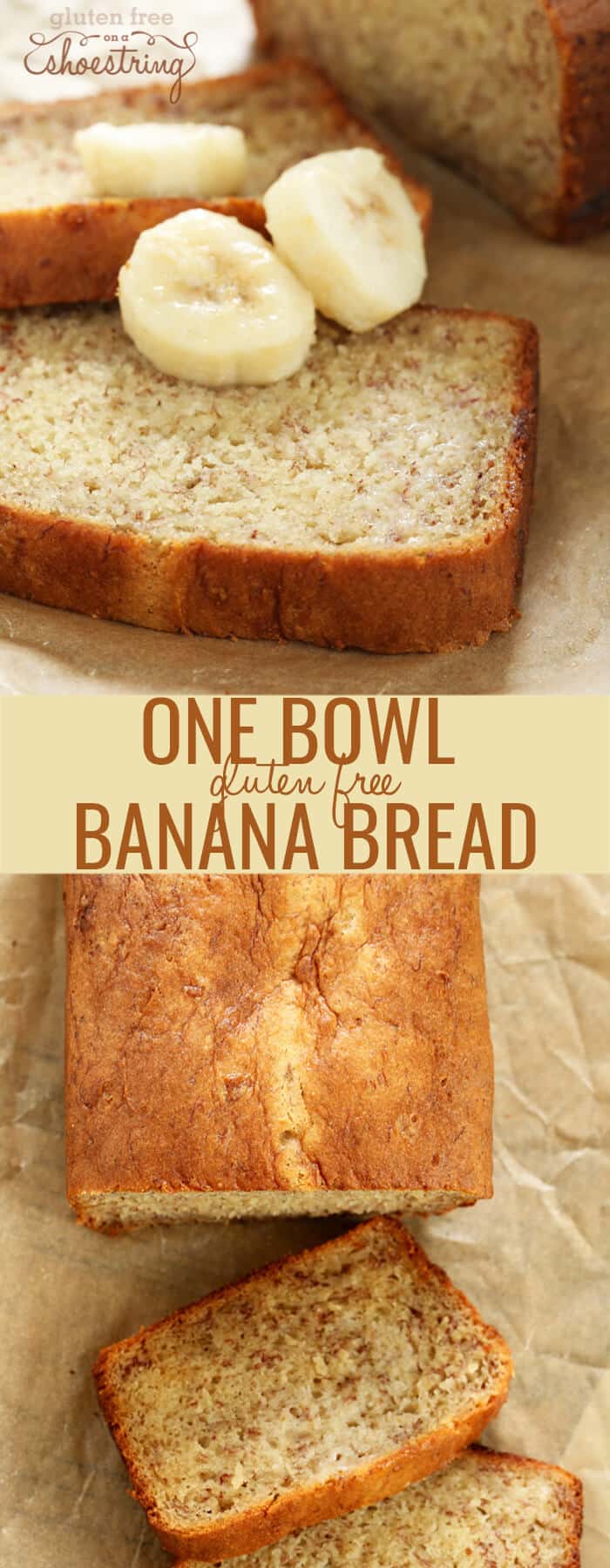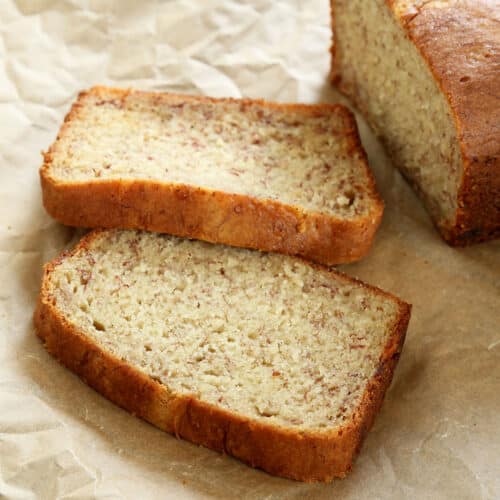
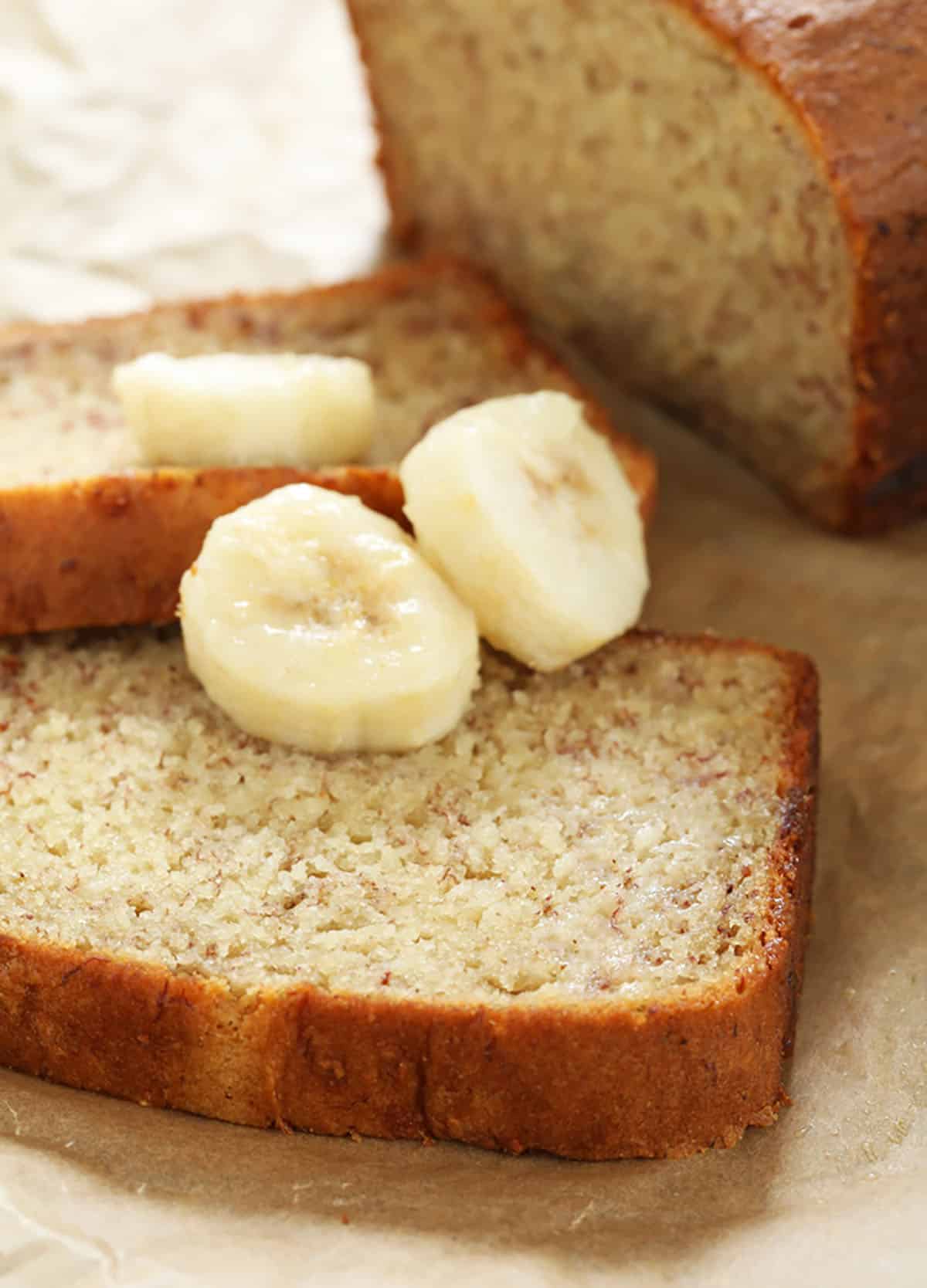
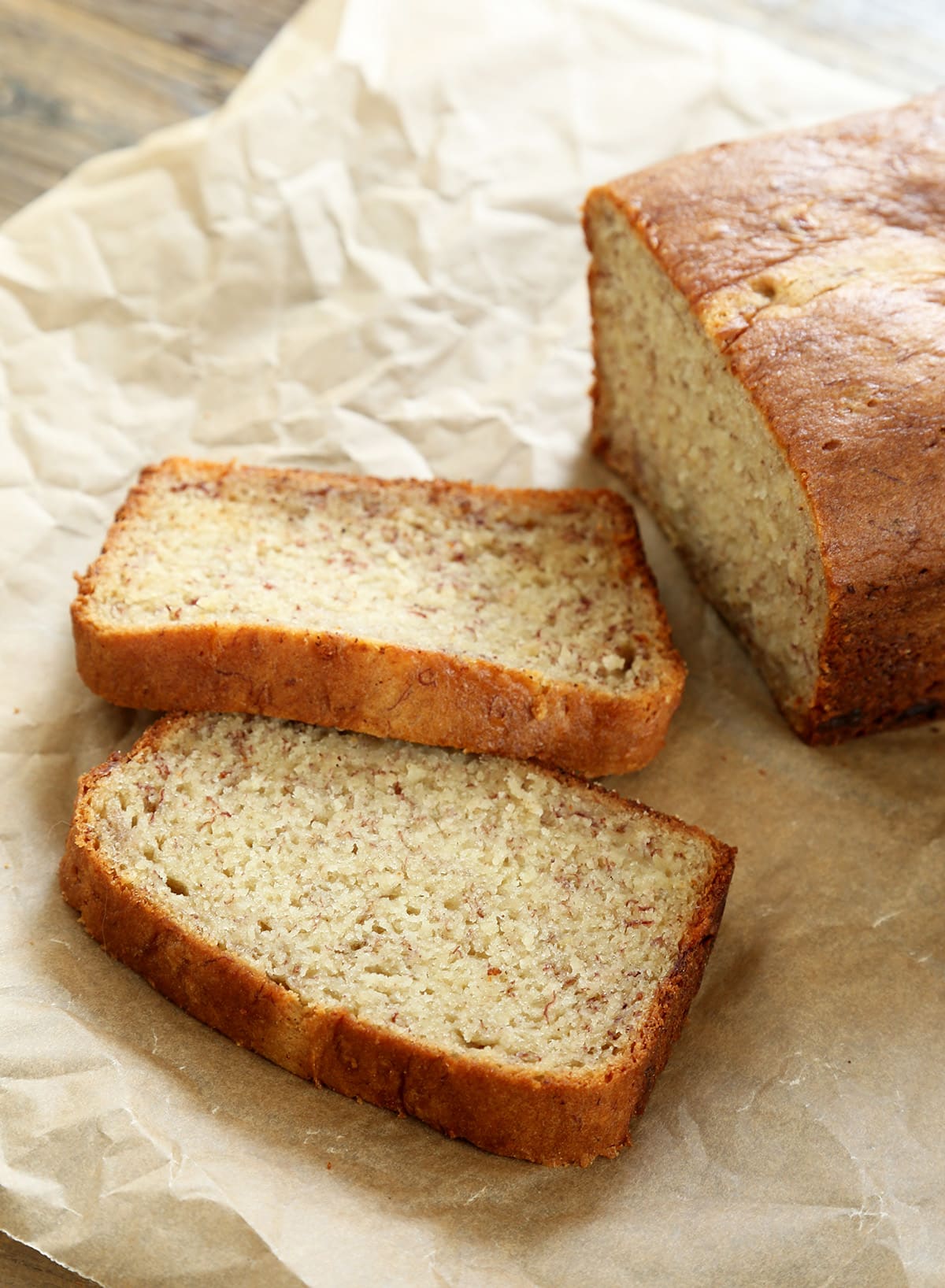
This gluten free banana bread is packed with banana flavor and delivers a soft, fork-tender crumb that stays light and moist. It’s quick to make in one bowl and flexible enough for whatever ripe bananas are on your counter.
Why this recipe works
Most gluten free banana breads fail because they have too much banana, too much liquid, or both. The result is a dense or gummy loaf that won’t bake through.
This recipe works with bananas at any stage of ripeness by preparing them differently. Mash very ripe bananas lightly so they don’t turn to liquid, and less ripe ones more fully into a textured paste that softens in the oven.
Sour cream adds richness and acidity for a tender, flavorful crumb. Melted butter, mixed in by hand rather than creamed with sugar, provides moisture and flavor without incorporating too much air, so it doesn’t rise too high or sink as it cools.
Recipe ingredients
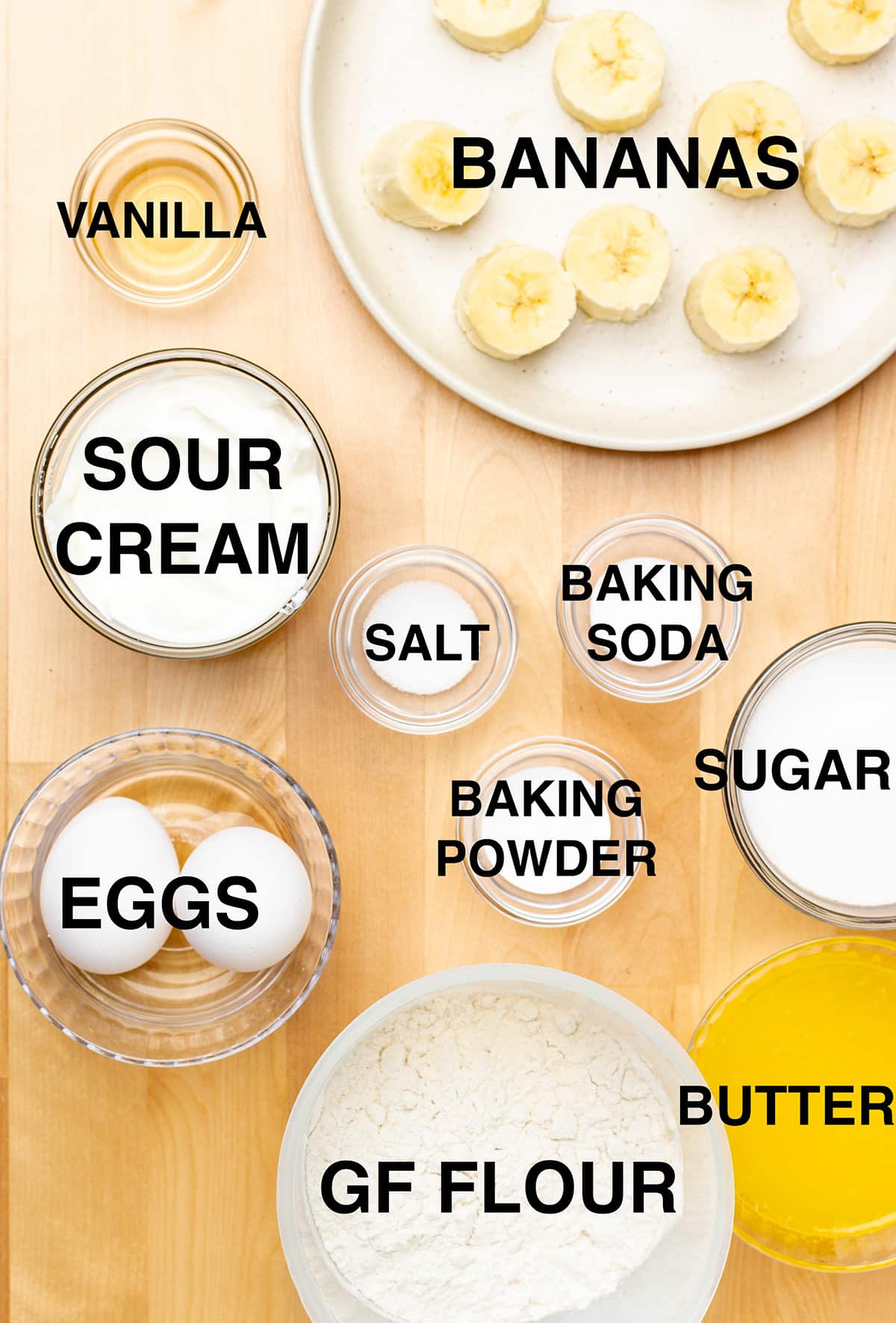
Here’s what you need to make this recipe, plus a few words about the role each ingredient plays in the perfect banana bread.
- Gluten free flour blend: Provides much of the structure of the bread. I recommend Better Batter’s original blend, Nicole’s Best multipurpose, or Bob’s Red Mill’s 1-to-1 gluten free baking flour adds structure to keep the bread together without the toughness that mixing a gluten-filled quickbread fully can create. If your flour is Nicole’s Best, add 1 teaspoon xanthan gum; Bob’s has some xanthan gum but needs 1/2 teaspoon more or the bread may be crumbly.
- Bananas: Very ripe bananas will have more natural sugars that deepen the banana flavor, but any that are ripe enough to smell like bananas will work. Measure 200 grams peeled bananas by weight for consistent results without adding too much moisture, leading to dense bread.
- Sour cream: Adds richness and the acidity also reacts with baking soda to help the bread rise. Avoid fat free for the best mouthfeel. You can also use plain Greek-style yogurt in an equal amount, by weight.
- Butter: Melted butter adds richness, moisture, and keeps the crumb tender by making it easy to mix the batter without incorporating too much air, which leads to a loaf that rises too high and falls as it cools.
- Eggs: Help bind the bread and provide structure to hold the rise as the bread cools, so there’s no sunken top.
- Granulated sugar: Enhances the sweetness of the bananas and helps keep the crumb tender. It also adds bulk, so even if your bananas are super sweet, don’t reduce the already modest amount of sugar in the batter. If your bananas are less ripe, you can add another 2 tablespoons (24 grams) granulated sugar.
- Baking powder, baking soda & salt: The essentials that round out flavor, provide rise, and help the bread brown in the oven. Fun fact: baking soda reacts with bananas to create those brown flecks in the bread.
- Vanilla extract: Add depth through a complex blend of flavors, unlike artificial vanilla which only has one-note vanillin.
How to gluten free banana bread (step by step photos)
This is a visual overview of how to make this recipe in your own kitchen, with the reasoning behind each step. For exact ingredient amounts, please see the recipe card below:
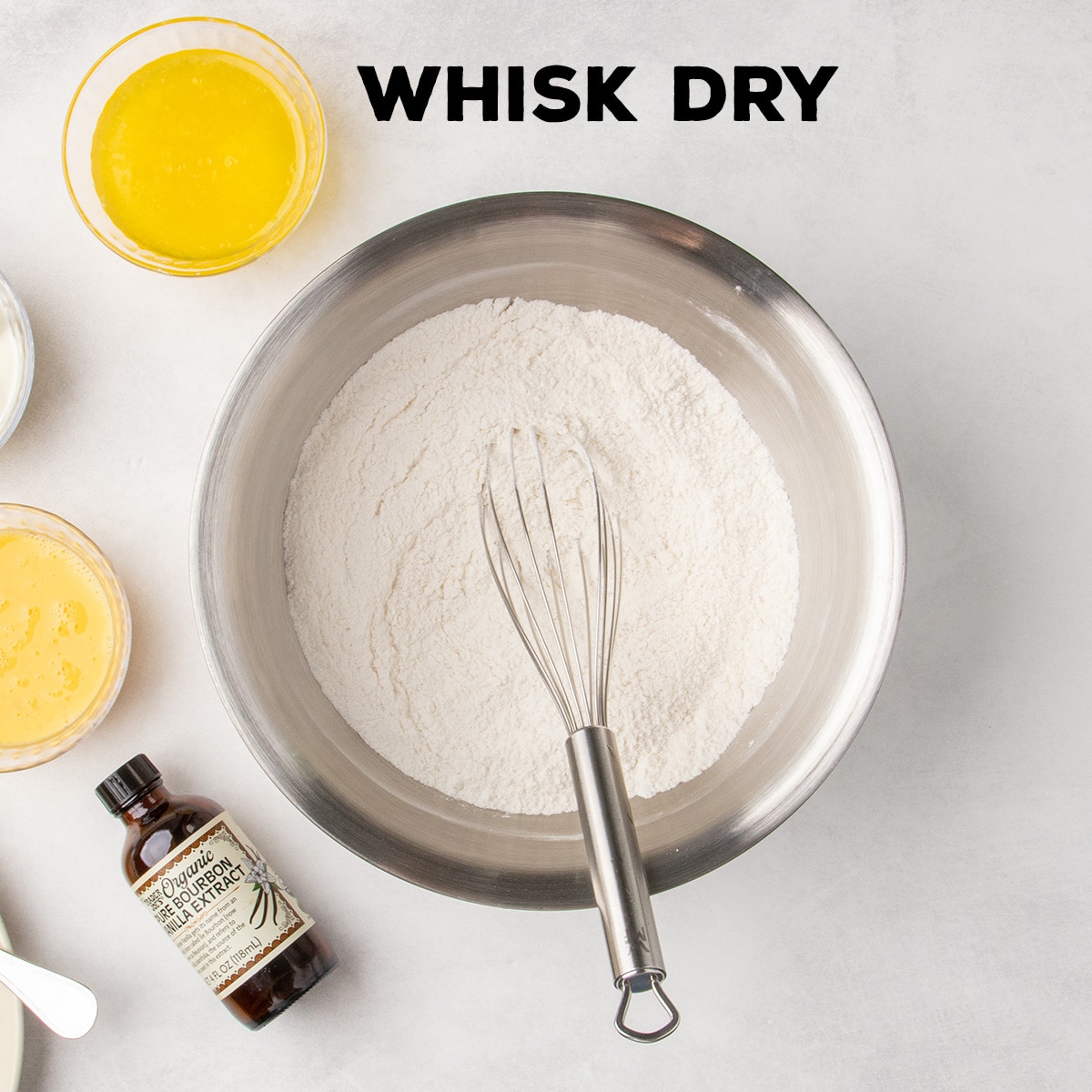
Step 1: Combine dry
Whisk together the gluten free flour with xanthan gum, baking powder, baking, salt, and sugar in a large mixing bowl. This keeps the leaveners from clumping which creates bitter pockets and leads to an uneven rise.
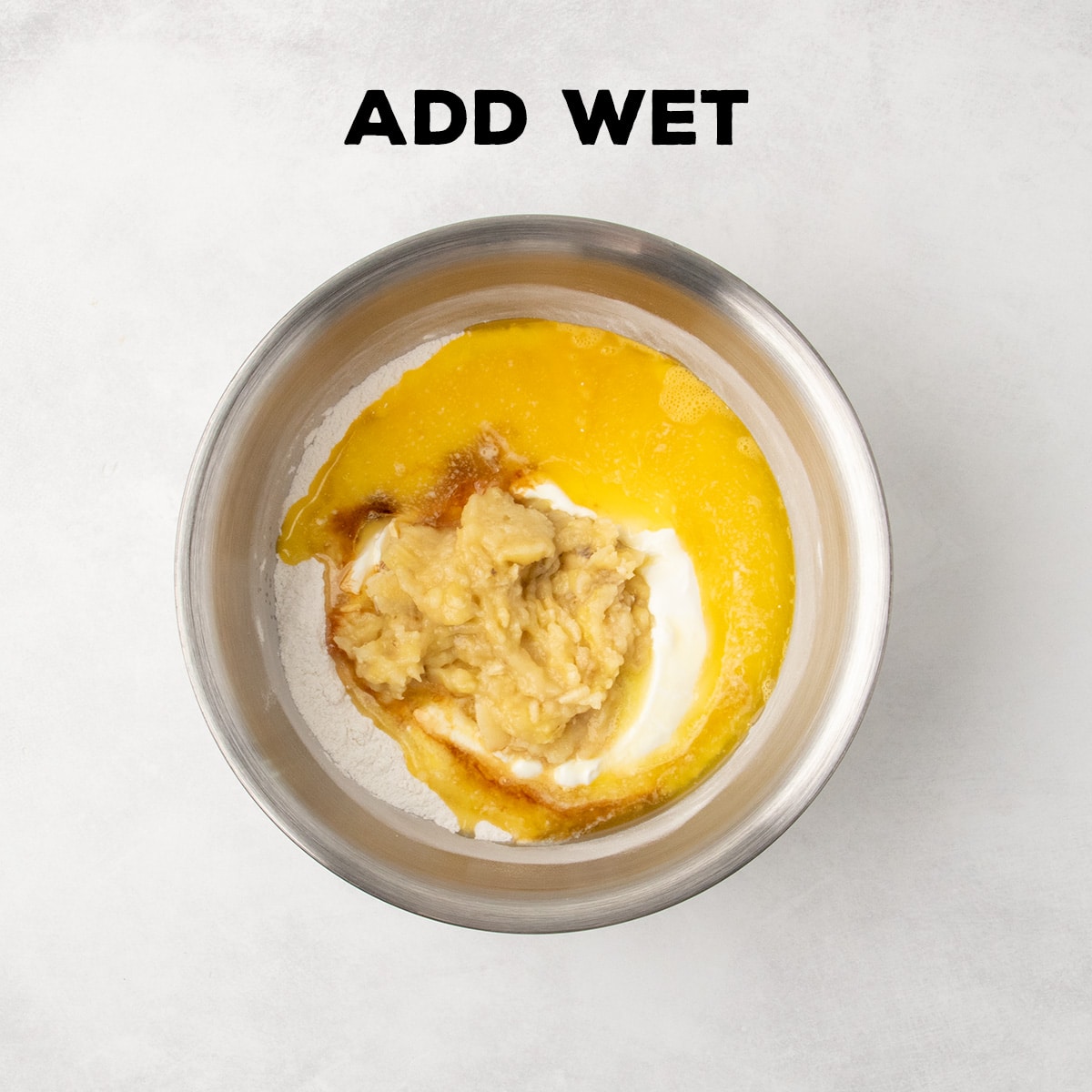
Step 2: Add wet
Create a well in the center of the dry ingredients and add the the melted butter, beaten eggs, vanilla, and sour cream, but don’t mix anything yet. Mash the peeled bananas, then add them on top of the sour cream.
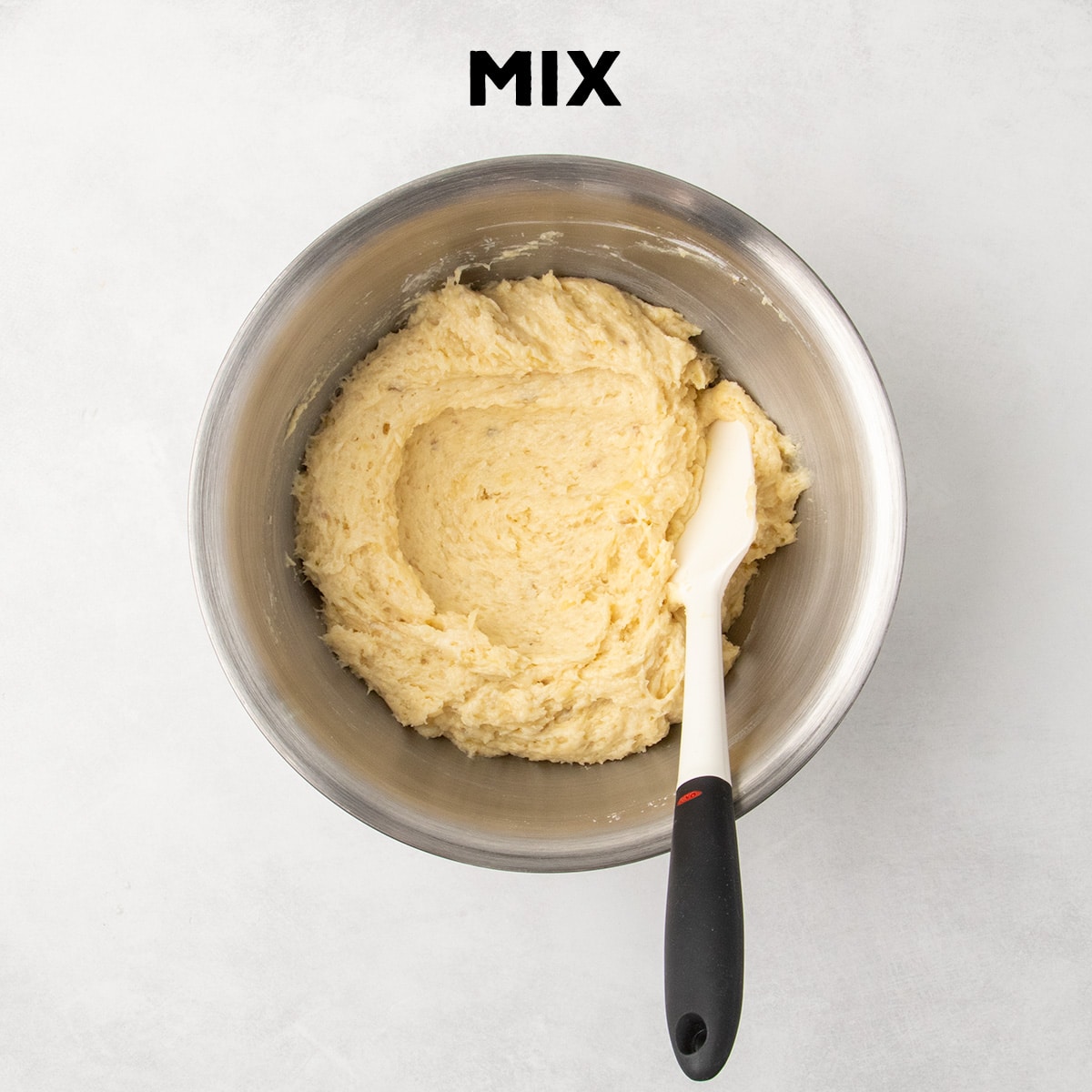
Step 3: Mix
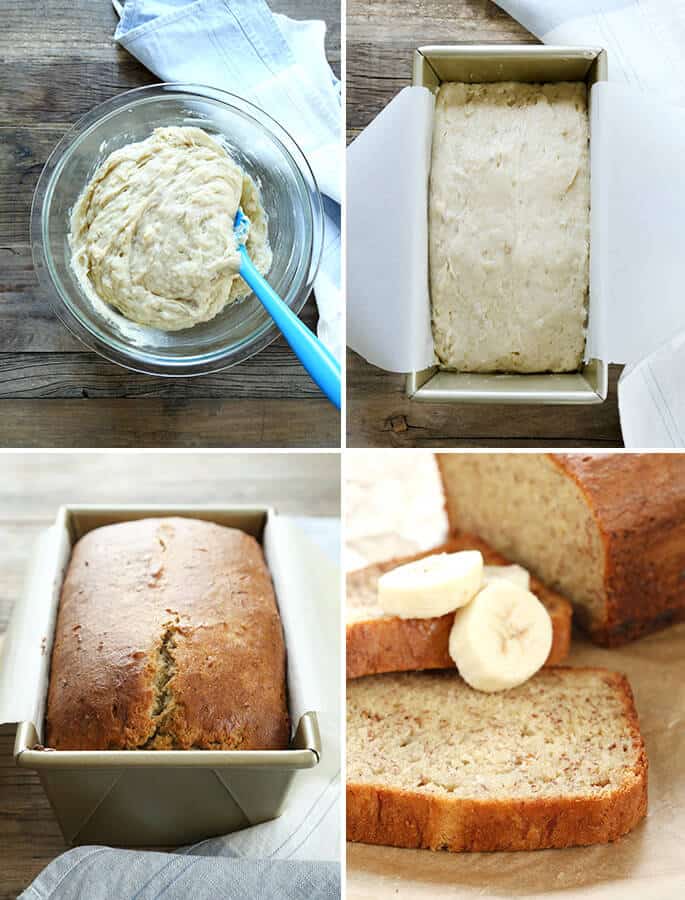
Mix until just combined, since overbeating the batter can lead to tunnels of air in the bread and a dense crumb. The batter should be thick but soft and easy to spread, not stiff.
Step 4: Transfer the batter
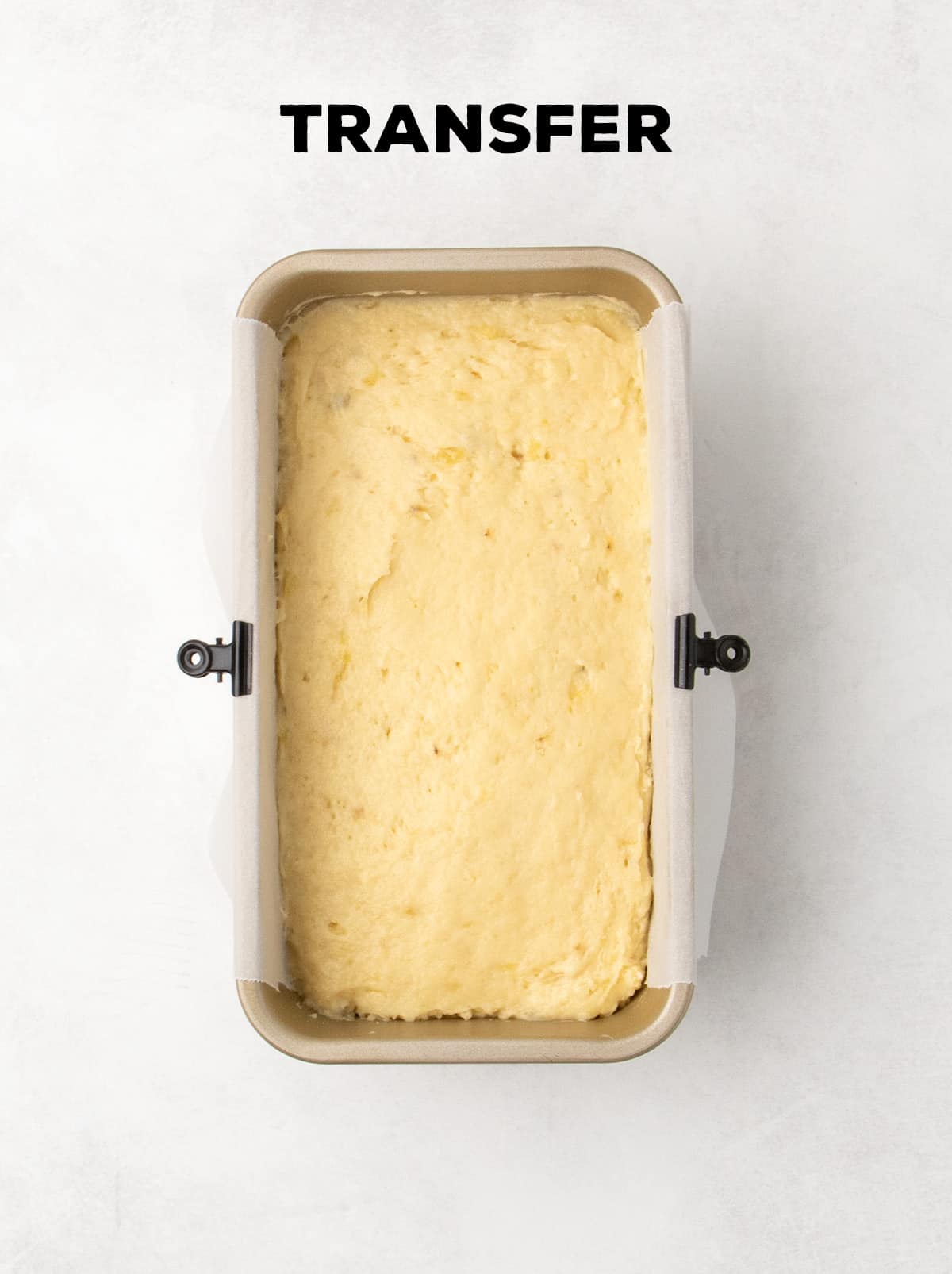
Scrape the prepared batter into a greased and lined 9-inch x 5-inch loaf pan. Lining with parchment helps the bread bake evenly without sliding around, and makes it easy to lift the prepared bread from the pan easily. Smooth the top with a spatula for even baking.
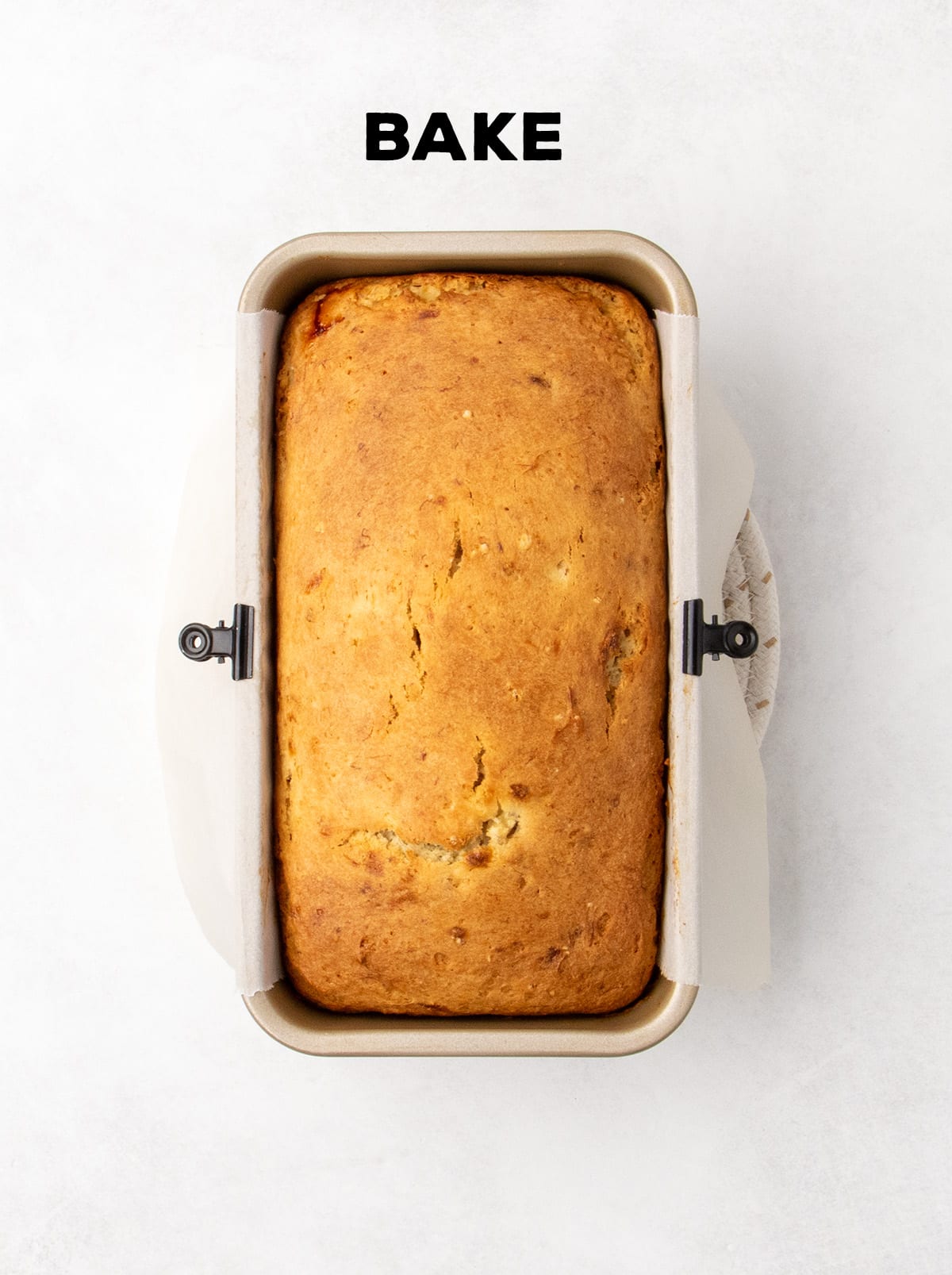
Step 5: Bake the bread
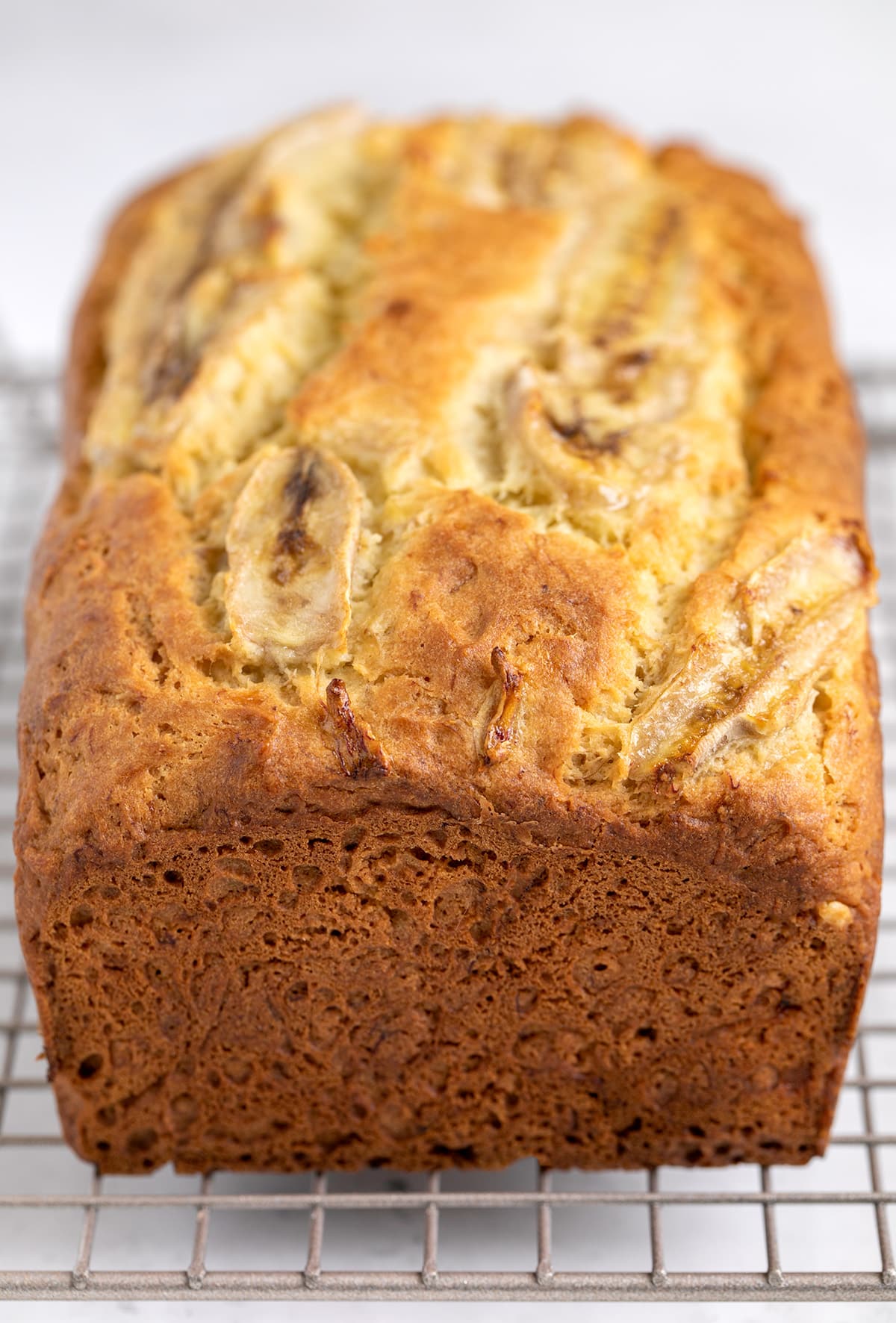
Bake at 350°F for 40 minutes, then check to see if the outside is browning very quickly. If so, lower the oven temperature to 325°F and continue to bake until a toothpick comes out with a few moist crumbs but no wet batter, about another 10 to 15 minutes.
Step 6: Cool
Let the bread cool in the pan for 10 minutes to finish baking and become stable enough to transfer with breaking. Then transfer to a wire rack to cool completely before slicing so the starches have time to become firmer and hold their moisture.
Expert tips
I’ve been making this banana bread for more than 10 years, and I’ve become an expert by trying it every different way you can imagine. Here’s what I’ve learned:
Mix only by hand
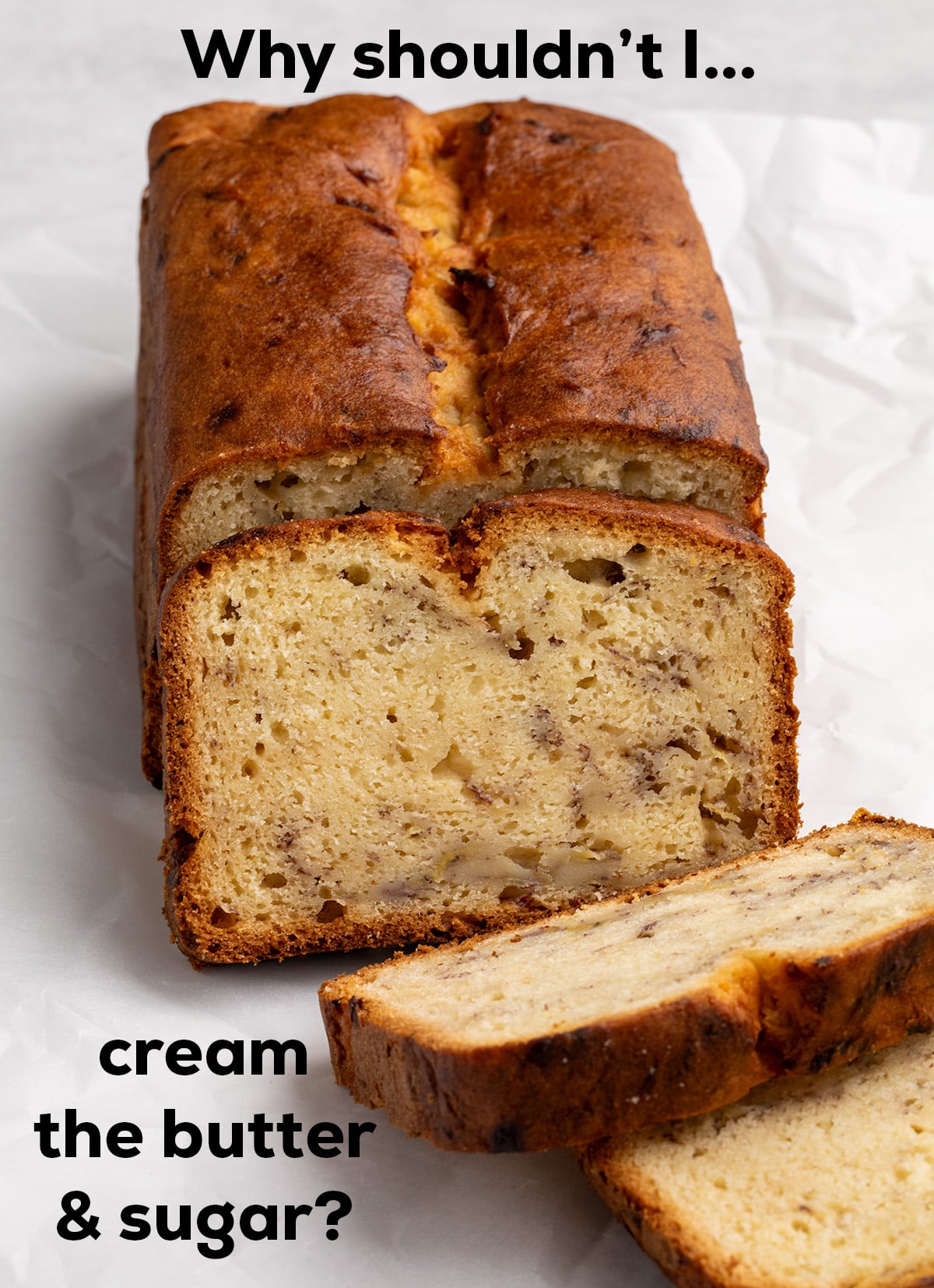
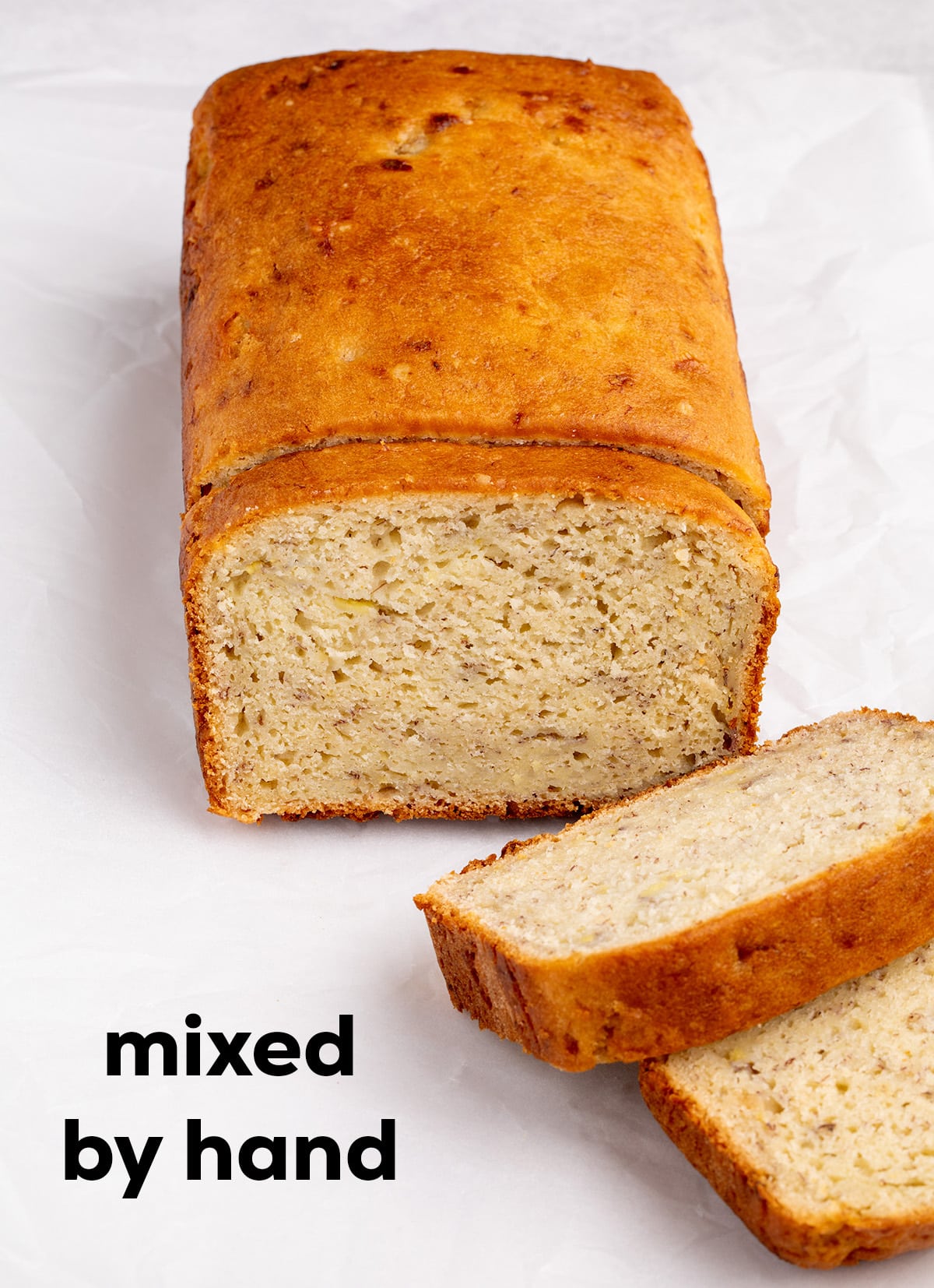
Readers often ask why we mix melted butter into the dry ingredients, rather than creaming room temperature butter and sugar first, like in our gluten free cake recipe. When you use room temperature butter and cream it with sugar, that incorporates extra air into the batter, leading to loaf that rises higher than the structure can support. The loaf falls and compresses into a dense crumb that also tends to have wet spots that require a longer baking time, and a darker crust.
Use any ripe bananas
Yes, the riper your bananas are, the sweeter and more flavorful your loaf will be. But as long as your bananas are ripe enough to be at all fragrant, use what you have. To help them ripen more quickly, place them in a brown paper bag with an apple overnight.
Mash ripe bananas less
If your bananas are super ripe, mash them with a large fork very lightly to maintain some texture. Very ripe bananas that are mashed too much release a lot of liquid which will weigh down the bread and make it harder to bake allt he way through. If they’re less ripe, mash them into more of a lumpy paste.
Avoid a too-hot oven
If you know that your oven sometimes spikes in temperature, watch it carefully and lower it to 325°F and just bake for a bit longer until done. A slow, steady rise creates a stable crumb, and there’s enough baking soda and sugar in the loaf that it will brown on top eventually.
Cool completely before slicing
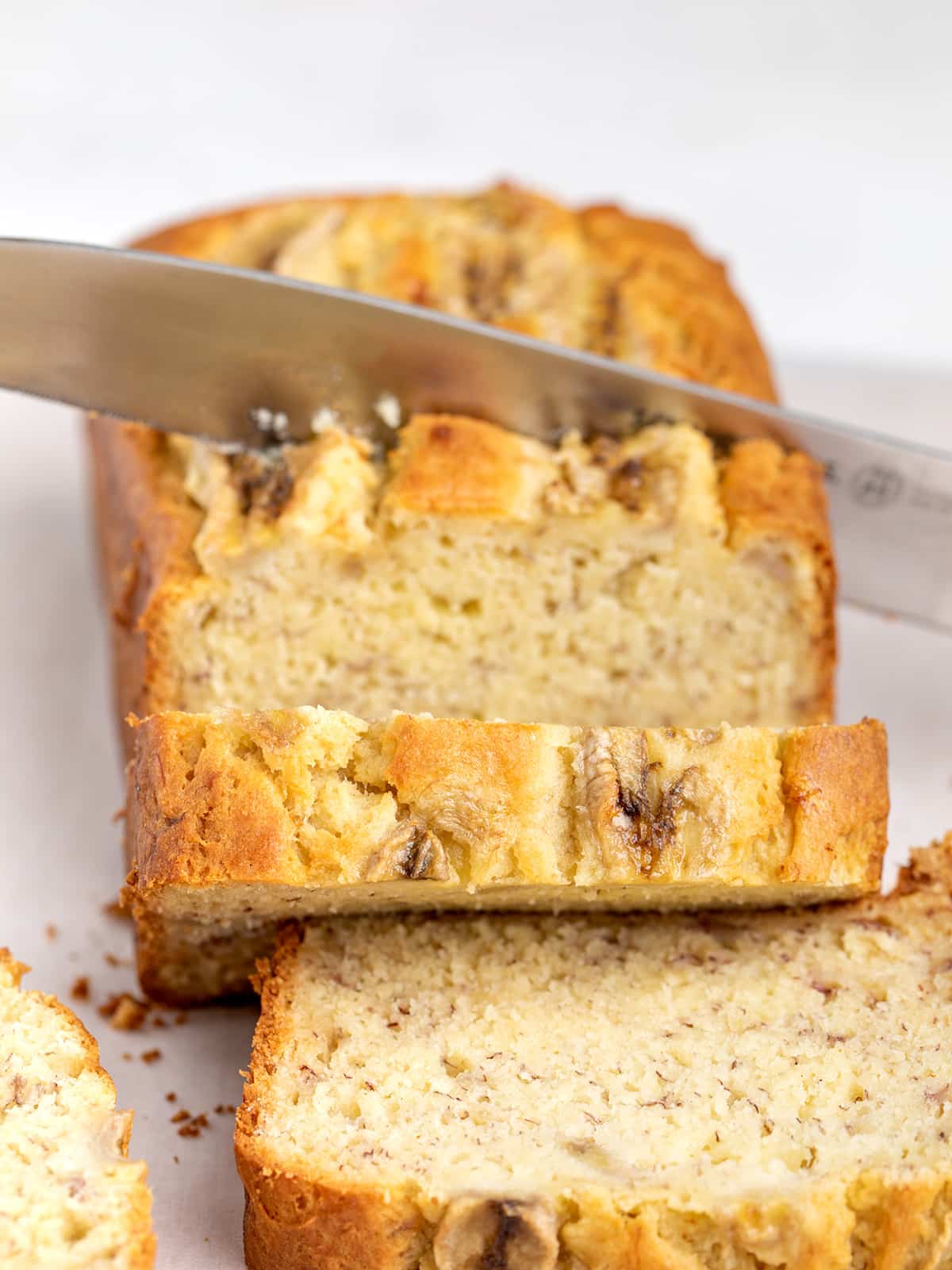
Warm banana bread is tempting, but slicing too soon can make it gummy or crumbly. Waiting until the bread is completely cool before slicing makes it more stable, keeping it from drying out by releasing moisture as steam.
Ingredient substitutions and add-ins
Here are my suggestions on how to replace additional allergens, or to add mix-ins:
Dairy free
Replace the butter with your favorite block-style vegan butter (like Miyoko’s or Melt). For sour cream, use any plain nondairy alternative, or strained plain nondairy yogurt until it resembles Greek-style.
Egg free
Try replacing each egg with a “chia egg” (1 tablespoon ground chia seeds + 2 tablespoons warm water, mixed and allowed to gel). You can also try Just Egg liquid egg replacer or Bob’s Red Mill egg replacer.
Mix-ins
Add up to 1 cup of extras like chopped walnuts, pecans, or chocolate chips. Fold them in once the batter is mixed and ready for the pan. Add up to 1 teaspoon ground cinnamon to the dry ingredients with or without other mix-ins, and try sprinkling about 2 tablespoons cinnamon-sugar on top of the raw bread right before baking for a warm, sweet crispy top.
Storage instructions
Let the banana bread cool completely, then wrap tightly and store at room temperature for up to 3 days.
For longer storage, slice the loaf, wrap each piece individually in plastic wrap or Press’n Seal, and freeze for up to 3 months.
Defrost individual slices at room temperature, microwave for 20 seconds, and/or toast gently to refresh.
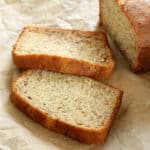
Gluten Free Banana Bread Recipe
#wprm-recipe-user-rating-0 .wprm-rating-star.wprm-rating-star-full svg * { fill: #343434; }#wprm-recipe-user-rating-0 .wprm-rating-star.wprm-rating-star-33 svg * { fill: url(#wprm-recipe-user-rating-0-33); }#wprm-recipe-user-rating-0 .wprm-rating-star.wprm-rating-star-50 svg * { fill: url(#wprm-recipe-user-rating-0-50); }#wprm-recipe-user-rating-0 .wprm-rating-star.wprm-rating-star-66 svg * { fill: url(#wprm-recipe-user-rating-0-66); }linearGradient#wprm-recipe-user-rating-0-33 stop { stop-color: #343434; }linearGradient#wprm-recipe-user-rating-0-50 stop { stop-color: #343434; }linearGradient#wprm-recipe-user-rating-0-66 stop { stop-color: #343434; }
Ingredients
- 2 cups all purpose gluten free flour blend (See Recipe Notes for Recommendations)
- 1 teaspoon xanthan gum omit if your blend already contains it
- ¾ teaspoon kosher salt
- ¾ teaspoon baking powder
- ½ teaspoon baking soda
- ⅔ cup granulated sugar
- 8 tablespoons unsalted butter melted and cooled
- 2 eggs at room temperature, beaten
- 1 teaspoon pure vanilla extract
- ⅔ cup sour cream at room temperature (avoid fat-free)
- 200 grams peeled ripe bananas the weight measurement is especially important here
- 1 small slightly less ripe banana sliced thinly lengthwise, for topping (optional)
Instructions
-
Preheat your oven to 350°F. Grease a standard 9-inch x 5-inch loaf pan (or slightly smaller), line it with parchment paper overhanging the two long sides, and set it aside.
-
In a large bowl, place the all purpose gluten free flour, xanthan gum, salt, baking powder, baking soda and sugar. Whisk to combine well.
-
Create a well in the center of the dry ingredients. Add the melted butter, eggs, and vanilla, then the sour cream. Do not mix yet.
-
If your bananas are very ripe and soft, mash them gently with a large fork, maintaining as much texture as possible. If your bananas are less ripe but still fragrant, mash with a fork more fully.
-
Add the mashed bananas on top of the other wet ingredients, and mix until just combined.
-
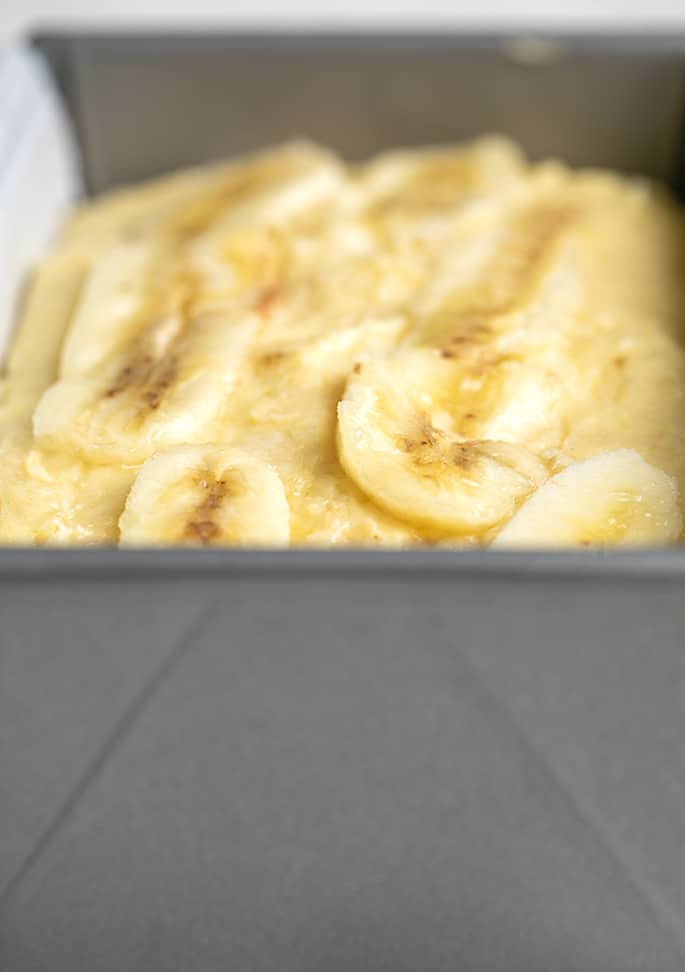
Scrape the batter into the prepared loaf pan, and smooth the top with a spatula dipped in water. If you're using the optional banana as a topping, place very thinly sliced bananas (cut lengthwise) on top of the smooth batter, sparingly.
-
Place the pan in the center of the preheated oven. Bake until the top is golden brown and a toothpick inserted in the center comes out with a few moist crumbs but no wet batter.
-
After 40 minutes, check to see if the top is browning too quickly. If so, reduce the oven temperature to 325°F for the rest of the baking time.
-
Total baking time will be about 50 minutes without the additional bananas on top, and about 1 hour with them.
-
Let the banana bread cool in the pan for 10 minutes, then transfer to a wire rack to cool completely before slicing.
Video
Notes
I suggest using Better Batter’s original blend gluten free flour without added xanthan gum, Nicole’s Best multipurpose blend with xanthan gum, or Bob’s Red Mill 1-to-1 Gluten Free Baking Flour with an additional ½ teaspoon xanthan gum to avoid crumbly bread.
For full details including how to make your own “mock” Better Batter or original Cup4Cup, see my gluten free flour blends guide.
Nutrition
FAQs
Usually, that means your oven is running hot. The outside sets too fast, before the center can bake through. Use an oven thermometer to confirm your temp.
No, this recipe needs a structured blend. Try my almond flour banana bread instead. If you’d like an alternative flour but need to be nut-free, try our oat flour banana bread.
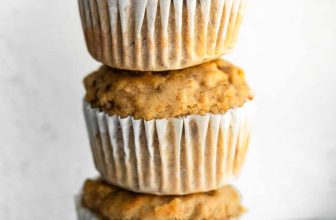
Yes! Try my gluten free banana muffins or divide the batter from this recipe into three 6×3-inch pans and bake for 25–30 minutes.