Bombs were loaded, warplanes were ready — but Trump was right to say ‘no’

To the casual observer of geopolitics, the security crisis in the Middle East looks like an exercise in passivity. Our wealthy Gulf “allies,” “neighbors,” and “friends” sit atop billions of dollars of advanced military hardware. Their hangars are filled with American F-15s, British Typhoons, and French Rafales. Yet, when confronted by a rapid offensive from the Houthis in Yemen, these regimes frequently appeal to Washington for military intervention. They choose to outsource their defense rather than unleashing their own immense firepower.
For many American taxpayers and policymakers, this triggers an immediate and frustrated question. Why should U.S. troops protect countries that refuse to protect themselves?
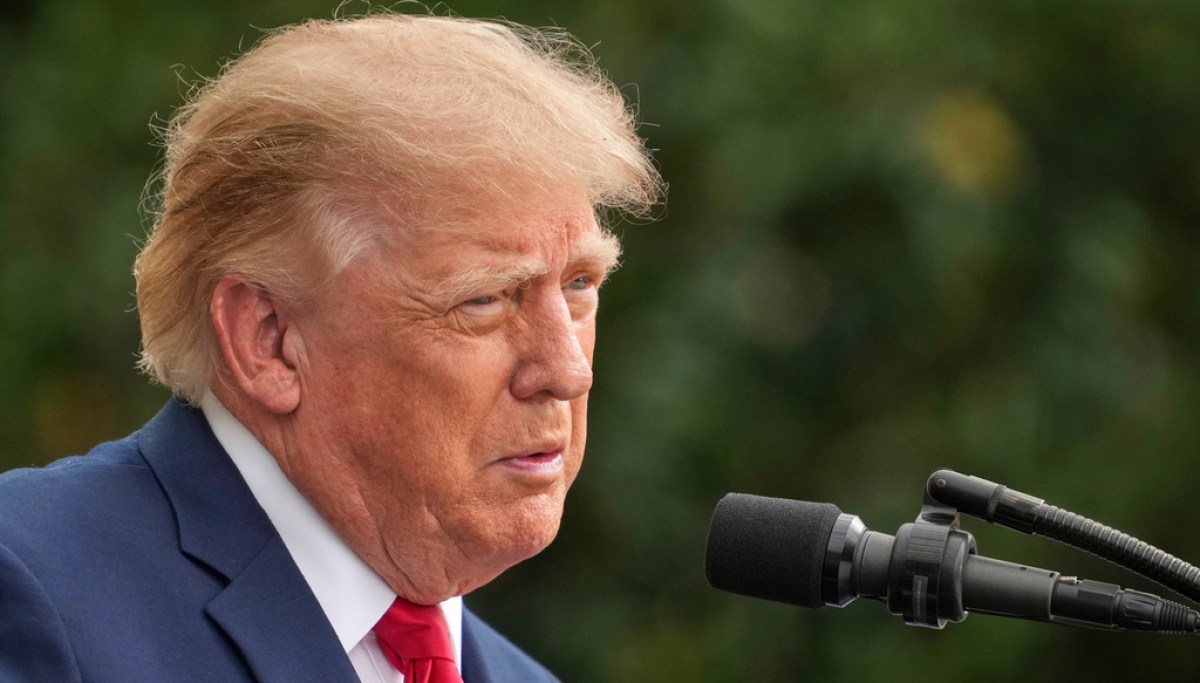
President Donald Trump was fundamentally right to abruptly call off planned U.S. airstrikes against the Houthis. He halted the operation even as American warplanes sat on the tarmac with target lists approved and bombs loaded. This last-minute reversal came despite intense, personal appeals from Saudi Crown Prince Mohammed bin Salman, according to reporting by The New York Times. Bowing to Riyadh’s pleas would only perpetuate a dangerous cycle of codependency. Answering this crisis requires looking past the immediate panic of the Saudi regime. We must examine a matrix of economic arguments, volatile regional optics, and shifting military realities.
Defenders of the Gulf states often point to the fragile nature of their economies. They argue that offensive campaigns invite catastrophic, asymmetric retaliation. This retaliation could destroy tourism, paralyze global supply chains, and scare off foreign investment. It is a fair observation, but it is also an excuse. In the modern global economy, a major offensive war is economically damaging for any nation. The United States faces these exact same fiscal risks. No economy is immune to the fiscal bleeding of sustained conflict.
Therefore, economic risk cannot become a blank check for regional allies. They cannot sit back, absorb hits, and outsource the bloody business of sovereign defense to Washington. If sovereignty is to mean anything, it requires accepting the financial and operational risks of protecting one’s own borders. Analysts at the Center for Strategic and International Studies have long maintained that an over-reliance on foreign shielding fundamentally erodes a nation’s long-term defense posture.
However, looking strictly at economics ignores a deeper layer of this paralysis. There is a powerful undercurrent of regional identity and religious optics.
Since the outbreak of these conflicts, a dominant thread of regional reality has been the treacherous political tightrope these regimes must walk. Historical analysis by the Council on Foreign Relations shows how local public opinion heavily restricts the choices of these governments. A high-profile, offensive military alignment with Western powers carries immense internal risk. For leadership in Riyadh or Abu Dhabi, launching an offensive alongside non-Muslim Western nations against fellow Muslims triggers severe domestic and regional vulnerability. This remains true even when fighting radicalized groups such as the Houthis or Iranian-backed militias. The fear of being branded by the Arab street as Western puppets acts as a powerful psychological brake on offensive operations.
This is precisely where Israel fits into the broader equation. Unlike the Gulf states, Israel has long established a doctrine of self-reliance. It fights its own battles and bears its own front-line costs without expecting foreign troops to shield its borders. In this complex theater, keeping Israel structurally separated from any broader Gulf military confrontation is a strategic necessity. By ensuring Israel remains a distinct, independent actor fighting its own localized battles, the region avoids a toxic narrative. It prevents adversaries from claiming a Western alliance is waging war on Arab soil.
This deliberate separation lowers the temperature of the religious optics. Crucially, it makes it vastly easier for Arab nations to eventually broker lasting, formalized peace agreements under transactional, America-first frameworks administered by the U.S. Department of State once the smoke clears. By keeping these agreements strictly diplomatic rather than relying on permanent U.S. military entanglements, Washington can facilitate localized stability while ensuring American blood and treasure are never used as bargaining chips to force regional integration.
Yet, these political optics and economic fears can no longer dictate a passive status quo that drains American resources. The U.S. cannot care more about the stability of the Red Sea or the Arabian Peninsula than the nations that actually border them.
The path forward requires a fundamental restructuring of the alliance. This new structure must respect regional sensitivities and honor Israel’s distinct role without letting either paralyze regional security. By halting the bombings, the White House has signaled that the era of the U.S. acting as a primary front-line shield must come to an end. Gulf states must take the operational initiative. They must take the lead in planning, executing, and accepting political accountability for their own defensive and offensive campaigns.
They amply possess the Western hardware to execute front-line strikes, the advanced Chinese surveillance infrastructure and commercial drone technology to monitor their immediate peripheries, and the localized regional intelligence networks necessary to identify and neutralize the precise threats targeting their borders. If these states choose to integrate Beijing’s commercial hardware into their security infrastructure, they must bear the tactical and operational burdens that come with it, rather than expecting American forces to secure networks compromised by their own procurement choices.
WHILE TRUMP AND BIBI BOMB IRAN, PUTIN WILL SUBJUGATE EUROPE
Taking the initiative does not mean these nations must act entirely alone. The U.S. can act as a robust backstop. Strategic briefs from the Brookings Institution outline how Washington can provide deep-reserve logistics and rapid ammunition resupply. The U.S. can also offer advanced electronic warfare capabilities and heavy naval deterrence. This ensures a regional campaign succeeds without putting American boots on the front lines.
By shifting the burden of the front-line initiative to our regional partners, the U.S. can force an end to the free-riding cycle. It is time for the owners of the world’s most expensive arsenals to take the driver’s seat. They can proceed secure in the knowledge that while America will back them up, it will no longer fight their battles for them.
Eric Wargotz, M.D., is a geopolitical analyst and policy commentator who has held leadership roles across government and medicine. A clinical professor Emeritus at The George Washington University and Maryland judge, he is a former U.S. Senate nominee and elected county commission president. Views are his own.