Matchmaker Weighs In on the Conversations Couples Skip Before Moving In Together

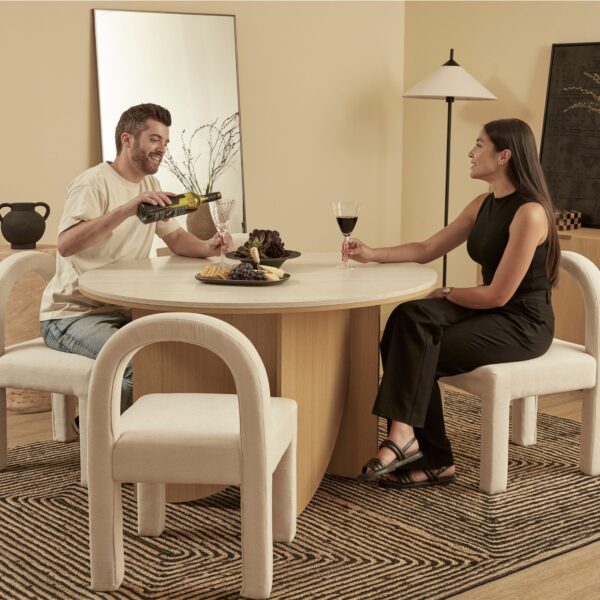
A leading matchmaker warns couples will spend weeks agonising over the perfect sofa and almost no time on the conversations that actually determine whether shared living strengthens the relationship, or slowly wears it down.
And that gap is exactly where the friction starts once the boxes are unpacked.
Recel Tayor, an accredited matchmaker, relationship expert and managing director of Vital Partners, has spent years working with thousands of singles and watching relationships evolve from first introduction through to marriage. Now she unpacks ‘the cohabitation test’: the idea that how a couple handles money, space and lifestyle differences before moving in reveals how well they’ll navigate living together.
“I don’t see cohabitation as a test of whether two people are compatible. It’s about discovering how well two people can live with and navigate their differences. It’s less about sharing a house and more about whether your values can comfortably live under the same roof,” says Recel.

You don’t need identical routines, personalities or preferences. “What matters is whether you can talk about your differences, understand what matters to each other and find a way forward without one person continually having to give up what’s important to them.”
“If someone struggles to communicate before living together, they’ll usually continue to avoid those conversations afterwards. Likewise, if a couple has built trust, respect, curiosity and emotional safety, those strengths become even more apparent once they’re living together.”


There’s no ‘perfect time’ to move in with your partner.
“I don’t believe there’s a perfect timeline. I’ve introduced couples who moved in together within six months and gone on to enjoy wonderful long-term relationships. I’ve also seen couples wait years and realise they wanted very different things,” says Recel.
“Relationship readiness isn’t measured in months. It’s measured in conversations,” she adds. The healthiest couples are usually having those conversations naturally, long before they start looking at properties or signing leases.
Recel encourages couples to pay attention to how those conversations feel: “Can you say, ‘I’m worried about this,’ or ‘I need something different from you,’ without the conversation immediately becoming defensive? That’s a much more meaningful measure of readiness than simply how long you’ve been together.”
The biggest conversation couples skip isn’t about money.
Conversations couples often avoid include parenting styles, household responsibilities, financial expectations, personal space, relationships with extended family, socialising, intimacy, and what each person needs to feel supported at home.
“It’s also important to talk about what happens when you disagree. Can you negotiate? Can you compromise? Can you apologise? Can you repair after an argument? Those are often more important than whether you agree in the first place,” Recel explains.
Personal space is making space for both ‘me’ and ‘we’.
“Personal space is incredibly important because people recharge differently,” Recel explains.
“Some people unwind through quiet time alone. Others feel most connected when they’re constantly together. Neither approach is wrong, the important thing is understanding what your partner needs without taking it personally.”
Sharing a home shouldn’t mean giving up your individuality. She adds, “You can be deeply committed to someone while still needing your own friendships, interests, routines or quiet time.”
Habits such as ‘keeping score’ can erode healthy cohabitation.
“Can they listen? Can they take responsibility, apologise or compromise? Can they move forward without bringing up every previous mistake? Those behaviours build trust,” says Recel.
She also warns against habits that can quietly erode it: “Keeping score, expecting your partner to read your mind, avoiding difficult conversations to avoid conflict, assuming that because something matters to you, it should automatically matter to your partner in the same way.”
Raising hard conversations without the interrogation feel.
Recel advises couples to stay curious. “Instead of asking, ‘How are we going to split the bills?’ or Who is going to do the cooking?’ try, ‘What was money like in your family growing up?’ or ‘What did sharing household responsibilities look like in your family?’
“These conversations can reveal expectations that people have never consciously discussed. Curiosity creates understanding; understanding creates better conversations,” she says.
Recel concludes: “Sharing a house is logistical; building a home is emotional. It requires two people to understand that their individual needs, histories, and expectations will now interact every day.”

Charlotte is the founder and editor-in-chief at Your Coffee Break magazine. She studied English Literature at Fairfield University in Connecticut whilst taking evening classes in journalism at MediaBistro in NYC. She then pursued a BA degree in Public Relations at Bournemouth University in the UK. With a background working in the PR industry in Los Angeles, Barcelona and London, Charlotte then moved on to launching Your Coffee Break from the YCB HQ in London’s Covent Garden and has been running the online magazine for the past 10 years. She is a mother, an avid reader, runner and puts a bit too much effort into perfecting her morning brew.