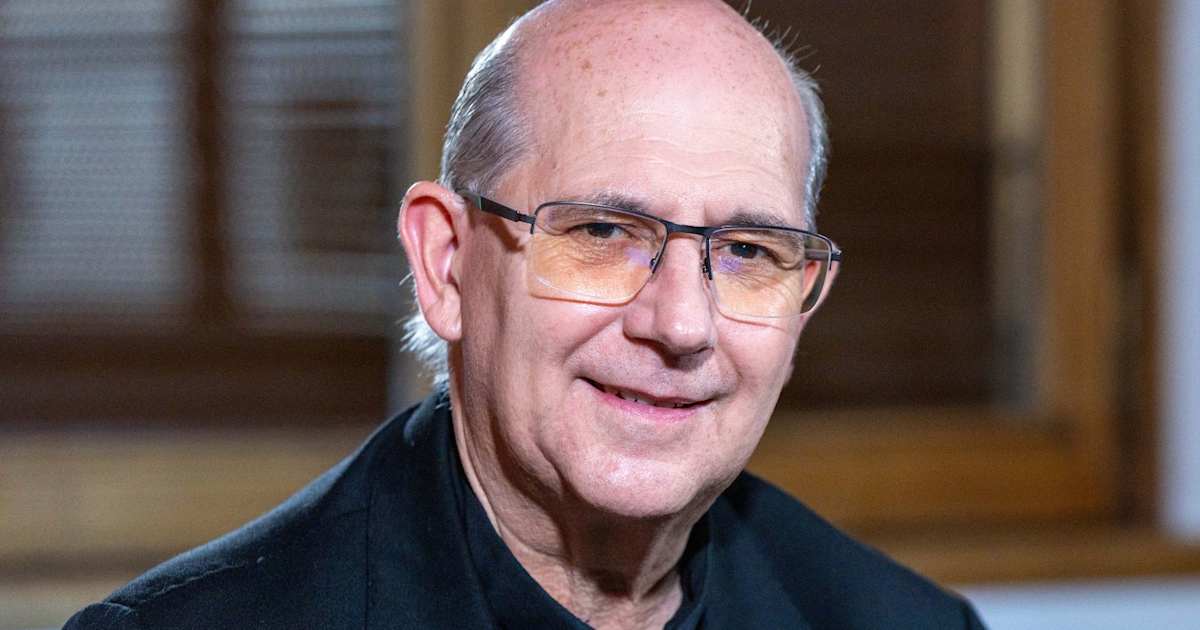
The president of the Uruguayan Bishops’ Conference, Bishop Milton Tróccoli, said the apostolic visit of Pope Leo XIV scheduled for Nov. 6–8 will awaken a “spiritual springtime” in the country. Located in the Southern Hemisphere, the season of spring is also just beginning in Uruguay.
“The pope’s visit will be a renewal of faith; many people may sometimes have a faith that is a bit dormant, or they are very practicing Catholics who will come and listen attentively to the message the pope will bring to us,” the bishop stated in an interview with “EWTN Noticias,” the Spanish-language broadcast edition of EWTN News, following his Sept. 18 meeting with the pontiff at the Vatican.
“I believe it will bring about a renewal, a kind of spiritual springtime, for all of Uruguay,” Tróccoli emphasized.
Uruguay’s bishops were in Rome last week for their ad limina visit to the Vatican, a trip that included various meetings at the dicasteries of the Roman Curia.
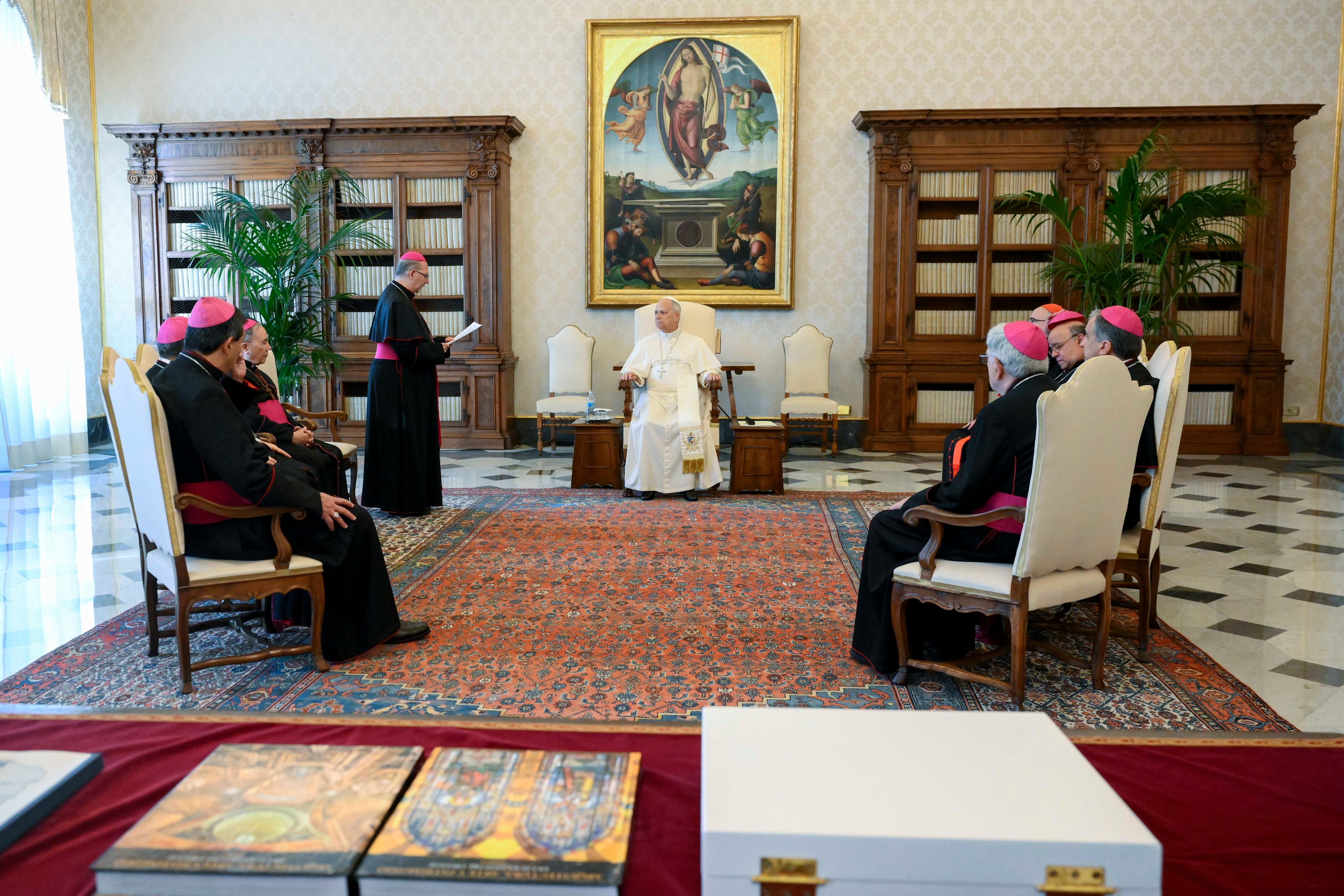
The bishops of Uruguay conclude their ad limina visit to the Vatican on Sept. 18, 2026, with a meeting with the pope. The visit included various meetings at the dicasteries of the Roman Curia. | Credit: Vatican Media
The pope received them for an hour and shared one of his primary concerns: how to transmit the Gospel.
“Today, we see a sort of breakdown in the transmission of the Gospel, especially within the family. We can no longer take for granted that families are the ones encouraging their children or teenagers to attend church or receive the sacraments; indeed, the number of child baptisms in Uruguay has dropped significantly,” the Uruguayan prelate noted.
However, he noted that much like in other secularized countries such as France, Uruguay is also experiencing an unprecedented phenomenon: a rise in young adults seeking Christian initiation.
“Baptisms for adults are on the rise, specifically young adults requesting the sacrament of baptism and the full process of Christian initiation: baptism, confirmation, and the Eucharist. For us, this is very encouraging,” he commented.
An increasingly secularized country
Uruguay is often described as one of the most secularized countries in Latin America. For instance, it is the only country in the region where Holy Week is not recognized by the government; instead, it was renamed “Tourism Week” by law in 1919.
According to data from the Uruguayan Bishops’ Conference, in a country of barely 3 million inhabitants, approximately 35% of the population identifies as Catholic. Within that group, according to Tróccoli, “we can say that approximately 10% attend Mass every Sunday or frequently receive the sacraments.”
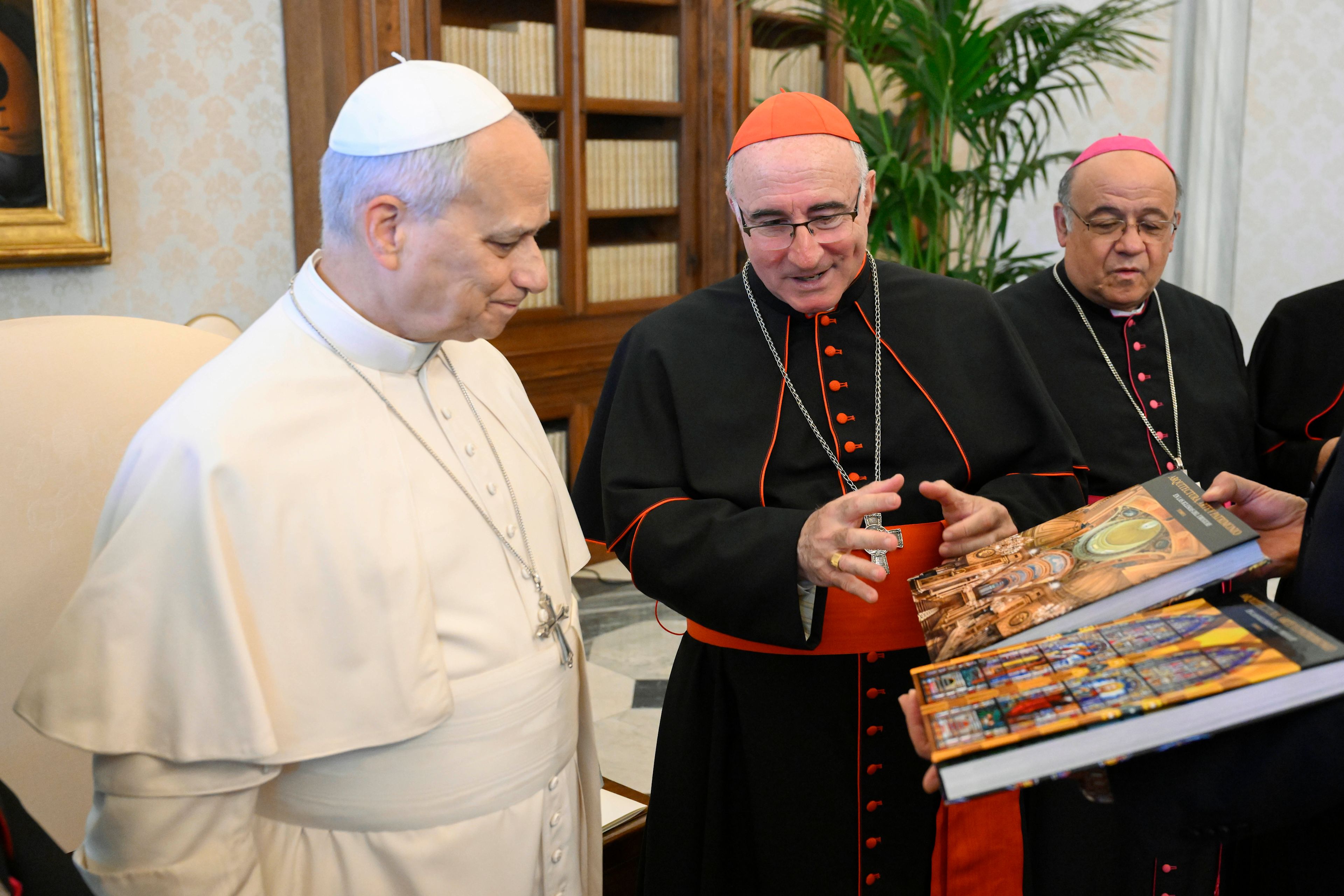
The Uruguayan bishops present the pope with a book featuring 80 Catholic churches across the country with images by Julio Testoni and stories compiled by Miguel Ángel Álvarez Montero, titled “Architecture, Art, and Heritage in the Churches of Uruguay,” during their visit to the Vatican on Sept. 18, 2026. | Credit: Vatican Media
There are also “many who call themselves believers without a religion, that is, without institutional affiliation, who believe in God but do not belong to any specific religion; this is a group that has been growing in recent years.”
He also noted that approximately “40% of the population currently falls into this category, while others declare themselves agnostic or nonbelievers.”
In this context, evangelization constitutes, according to the bishop, “a very great challenge.” The local Church considers Uruguay “a mission country where we must proclaim the Gospel extensively.”
“We must place strong emphasis on the initial proclamation of the Gospel, while the Church also works extensively through various social and human development initiatives, naturally bringing the Gospel and acting out of faith in Jesus Christ, and working for the common good, though these efforts often go unnoticed,” Tróccoli explained.
Drug trafficking, childhood poverty, and suicides
During his meeting with the Uruguayan bishops, Leo XIV showed interest in learning firsthand about the countryʼs social situation.
Tróccoli lamented the extent of “social fragmentation” and the fact that Uruguay is “a society tending toward polarization, just as our world is polarized.”
He also noted the issue of “rising violence stemming from drug trafficking, something we were not accustomed to experiencing. Well, perhaps the rate is very low compared to other countries, but for our society, it is something new and something that deeply affects families.”
The bishop also highlighted concerns regarding children living in poverty and the rise in youth suicides, issues he linked to “a lack of a more transcendent perspective.”
“The number of suicides, especially among young people, represents a high percentage, the highest in Latin America. This deeply questions and challenges us as a Church,” he stated.
For the Uruguayan Church, this reality presents the challenge of proclaiming a message of hope. “We must do a better job of proclaiming the Gospel so that it can offer hope, give meaning to life, and provide reasons, truth, for living, growing, and developing as a person.”
A visit marked by devotion to the Virgin of the 33
The visit of the Uruguayan bishops to the Vatican took place less than two months before the apostolic journey with which Pope Leo XIV will begin his Latin American tour.
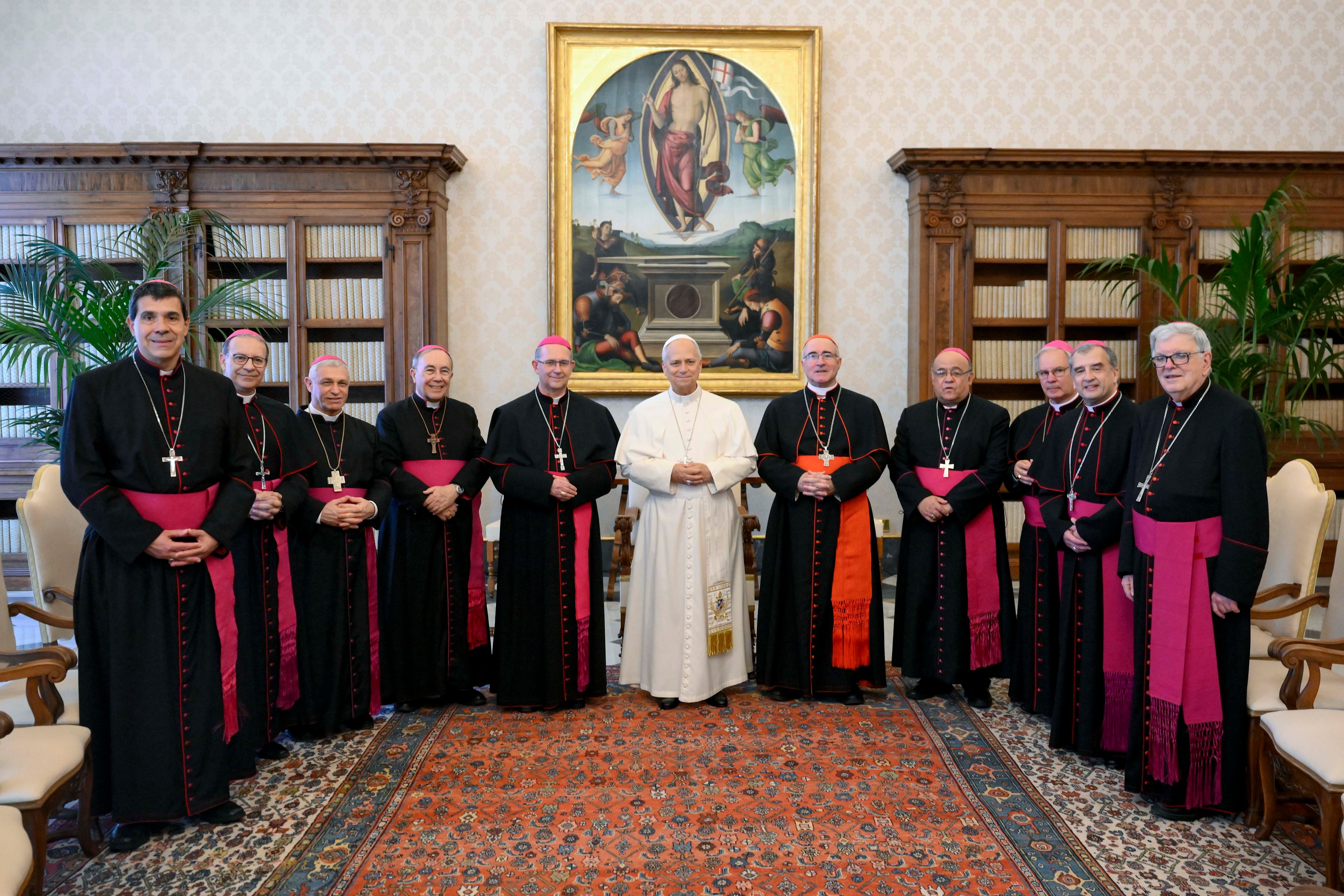
A meeting between Pope Leo XIV and Uruguayan bishops on Sept. 18, 2026, provided an opportunity to present the Holy Father with a document containing messages from citizens across Uruguay, sent in anticipation of his arrival in the country on Nov. 6, 2026. | Credit: Vatican Media
The pontiff will arrive in Latin America on Nov. 6, lead an event in Montevideo, and meet with President Yamandú Orsi. The following day, he will travel to Paysandú and subsequently return to Montevideo to visit various charitable works of the Church and celebrate a Mass at Centenario Stadium.
On Sunday, Nov. 8, before departing for Argentina, he will celebrate the Mass of the Virgin of the 33, Uruguay’s national patroness, in the city of Florida.
The National Shrine of the Virgin of the 33 is located there, situated about 60 miles from Montevideo. Indeed, the coincidence of dates with the countryʼs principal Marian celebration was one of the factors influencing Leo XIVʼs decision to begin his tour of Latin America there.
The feast of the Virgin of the 33 is celebrated every Nov. 8, although the national pilgrimage traditionally takes place on the second Sunday of the month. In 2026, the two dates coincide, and the pope did not want to miss the occasion.
“For us, it is truly a tremendous gift that the pope could come at this time, especially since it coincides with the feast of the Virgin of the 33, who is the patroness of Uruguay, and the national pilgrimage. The feast day of the Virgin falls on Nov. 8, which is a Sunday this year, and the pope himself will celebrate the Eucharist,” Tróccoli explained.
Memories of St. John Paul II
The Uruguayan bishops presented the pope with two books featuring images of various churches from across the country. They also gave him a collection of letters and drawings prepared by both the faithful and nonbelievers.
Leo XIV has never visited Uruguay. However, some Uruguayans knew him when he was still Father Robert Prevost. During his time as superior general of the Order of St. Augustine, he traveled to Argentina on several occasions, where he met Uruguayan Augustinians.
However, memories of St. John Paul II’s visits remain very much alive among Uruguayan Catholics. The Polish pontiff visited the country twice — in 1987 and 1988 — at a particularly significant time of democratic consolidation following the military dictatorship.
Tróccoli said he believes the visit of Leo XIV could have a similar impact. “It created a sense of unity not only within the country but also a resurgence of faith and personal devotion. We saw an immediate increase, for instance, in the number of people attending Mass or drawing closer to the faith,” the prelate noted.
In this regard, he said he believes Pope Leo XIV’s visit will awaken “the most genuine aspects of the search for faith and of religious sentiment, and from there, more people will want to draw closer.”
The president of the bishops’ conference also stated that the trip will mark a turning point for Uruguayan society: “It will be a visit filled with hope. The pope isn’t going to come just for some people; he comes for everyone, and everyone is also invited to feel part of this celebration of encountering him.”
This story was first published by ACI Prensa, the Spanish-language sister service of EWTN News. It has been translated and adapted by EWTN News English.