

AD | I have been (or could be if you click on a link in this post) compensated via a cash payment, gift or something else of value for writing this post. See the full disclosure policy and privacy policy for more details.
As the leaves start to turn and the nights draw in, many caravanners in the UK begin to think about putting their much-loved touring caravan away for the winter months. Just as there’s a comprehensive spring checklist to get your van ready for the new camping season, there’s an equally (if not more) important autumn routine to ensure your caravan survives the harsh winter weather and emerges in tip-top condition come spring.
Whilst some of you may be lucky enough to have indoor storage for your vans, a lot of us (my family included) store our caravans outdoors all year round. But —even if you do have the use of a barn or garage —proper winterisation isn’t just about tucking your caravan away in storage. It’s about protecting your investment and ensuring that when you’re ready to dust off your camping gear next year, everything will be in perfect working order.
Here’s your complete guide to winterising your touring caravan the right way.
Quick View of What You’ll Find on This Page
Draining Down Your Caravan
Draining down your caravan water system requires the most critical attention when winterising your caravan, as frozen pipes can cause expensive damage. Start by draining all water from the system completely. Empty the fresh water tank, flush the toilet holding tank, and run the taps until no water remains. Don’t forget the water heater – switch it off and drain it according to the manufacturer’s instructions.
Caravan Antifreeze: What to Use & How Much
A lot of caravanners swear by using caravan antifreeze in the system, but this is not something that we’ve ever done with Dolly.
Some owners I’ve spoken to pour non-toxic/ water-safe antifreeze into the waste traps under sinks and in the shower to prevent any remaining water from freezing and also choose to blow compressed air through the system to ensure every drop is removed, though this requires careful handling to avoid damage. Products like Elsan Anti-Freeze use food-grade, glycol-free ingredients safe for temporary winter storage in fresh water systems.46°C or lower.
If your caravan has an external water connection or aquaroll system, ensure all hoses and connectors are drained and stored in a dry place. Water pumps should also be drained and, if possible, removed and stored indoors to prevent any residual moisture from causing damage.

Gas System Winter Care
Your gas system needs attention before winter storage. Start by turning off all gas appliances and disconnecting the gas bottles. Even if you’re storing the caravan at home, it’s safer to remove gas bottles entirely. Check that all gas taps are in the closed position and consider having your gas system professionally serviced if it’s been some time since the last inspection.
Gas bottles should be stored upright in a well-ventilated area, away from any ignition sources. If you’re storing them in a garage or shed, ensure there’s adequate ventilation, as gas is heavier than air and can accumulate in low areas.
Electrical System Preparation
Remove the leisure battery from your caravan and store it indoors if possible. Batteries can be damaged by freezing temperatures and will naturally discharge over winter. Clean the battery terminals with a wire brush to remove any corrosion, if necessary, and apply a thin layer of petroleum jelly to prevent further oxidation.
If you must leave the battery in the caravan, ensure it’s fully charged and consider using a battery maintainer to keep it in good condition. However, this obviously requires access to mains electricity at your storage location.
Check that all interior lights are switched off and that no electrical items are left plugged in. Even small phantom loads can drain a battery over several months of storage.

Interior Protection and Climate Control
Before sealing up your caravan for winter, give the interior a thorough clean.
Remove all soft furnishings that you can – cushions, bedding, curtains – and store them indoors where possible. This prevents them from absorbing moisture and potentially developing mould or mildew.
Clean all surfaces thoroughly and ensure everything is completely dry before closing up. Pay particular attention to the fridge; give it a good clean, leave the door propped open, and consider placing a bowl of bicarbonate of soda inside to absorb any odours.
Ventilation is crucial during winter storage. If your van is undercover, leave some roof lights slightly open. If not, ensure ventilation grilles are unobstructed. This allows air circulation whilst preventing condensation build-up. Some caravanners place moisture absorbers or dehumidifiers inside their vans. Bowls of salt do the same job.
We also like to close all the blinds and curtains. It’s good to know that any winter sun we may have won’t be fading the fabric while the van is in hibernation!

Exterior Weather Protection

If you’ve got time (or if it’s not too cold) give your caravan’s exterior a thorough wash and, if needed, apply a protective wax coating. This will help protect the surface from harsh winter weather.
Check the roof for any damage or loose sealant around vents, aerials, or solar panels. Small repairs now can prevent major problems later.
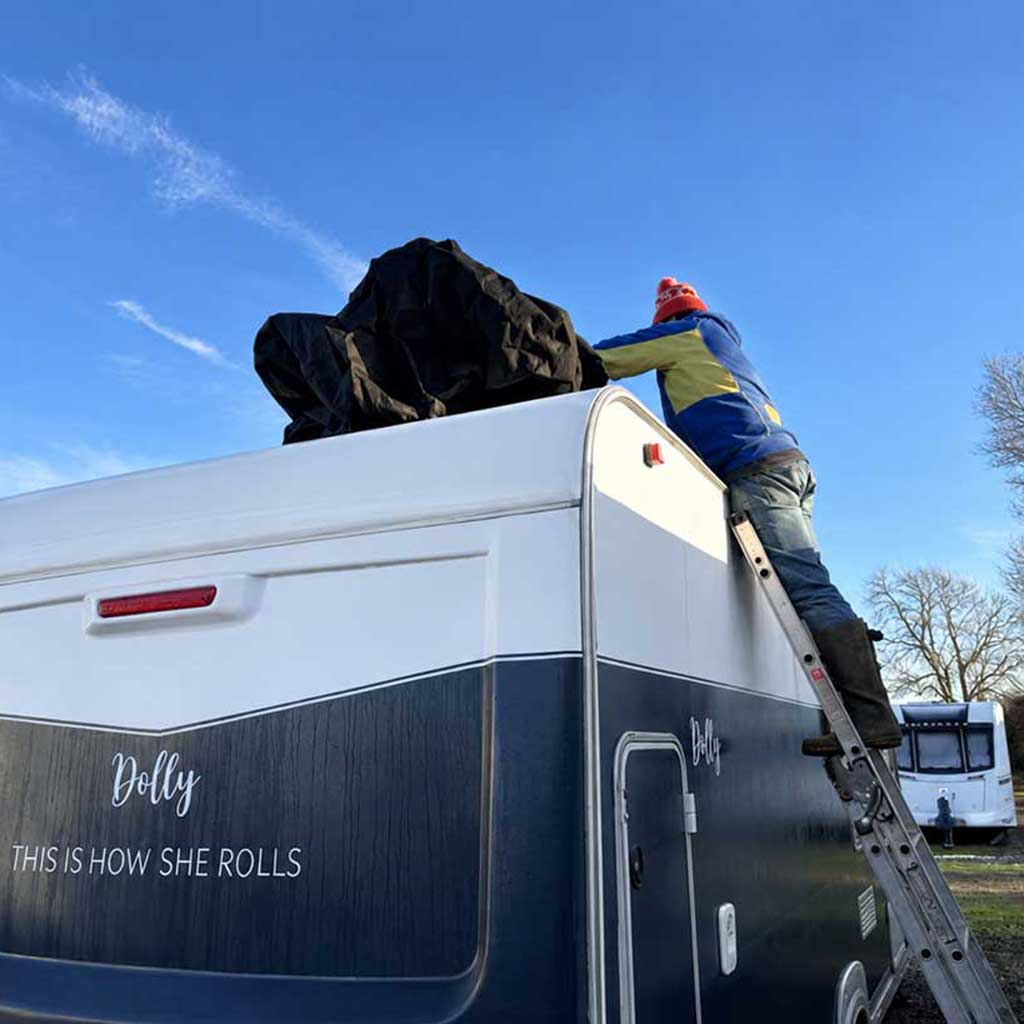
Inspect window seals and door seals, replacing any that show signs of wear. Consider investing in a breathable caravan cover*, particularly if you’re storing outdoors. Ours is from Olpro — the same company that made our inflatable caravan awning.


*Do always make sure your cover fits properly and won’t flap in strong winds, as this can cause more damage than protection.
If you’re storing the caravan outside, position it to minimise exposure to prevailing winds and, if possible, with the front facing away from the worst of the winter weather.
Tyre and Chassis Care
It’s worth checking the tyres (tread and tyre pressure) and inflate to the recommended levels, as under-inflated tyres can develop flat spots during long periods of stationary storage. I once knew someone who’d move his van slightly every few weeks to prevent flat spots from forming. We’ve never, ever, felt the need to do this, but it’s worth considering if your caravan will be stationary for several months.
Apply the handbrake gently – just enough to secure the caravan but not so tight that the brake components seize over winter. Some owners prefer to use wheel chocks instead of the handbrake to avoid this issue entirely.
Wind down jockey wheel to the stationary position and apply a light coating of grease to prevent corrosion. Ensure the stabiliser legs are fully down.
Final Security Checks
Before leaving your caravan for winter, double-check all security measures. Ensure all windows and doors are securely locked, and consider additional security devices such as hitch locks or wheel clamps if storing away from home.
Remove any valuable items and ensure insurance documents are up to date. Take photographs of your caravan’s condition before storage – this can be invaluable if you need to make an insurance claim later.
The Benefits of Proper Winterisation
Taking the time to properly winterise your touring caravan pays dividends when spring arrives. You’ll avoid costly repairs from frost damage, reduce the likelihood of damp problems, and ensure your first trip of the new season isn’t delayed by maintenance issues.
Remember that winterisation is the reverse of your spring preparation checklist. Everything you check and prepare when getting ready for the camping season needs consideration when putting your caravan away. This systematic approach ensures nothing is overlooked and your caravan remains a reliable companion for many seasons to come.
With these tasks completed, you can rest easy knowing your caravan is properly protected throughout the winter months, ready to provide many more happy camping memories when the warmer weather returns.

Winterising Caravan Checklist
Water System
- Drain the fresh water tank completely.
- Empty caravan toilet holding tank and flush thoroughly.
- Run all taps until no water remains.
- Drain water heater according to manufacturer’s instructions.
- Add caravan antifreeze to waste traps under sinks and shower.
- Drain and store external hoses and aquaroll system indoors.
- Drain water pump or remove and store indoors.
Gas System
- Turn off all gas appliances.
- Disconnect and remove gas bottles.
- Check all gas taps are in closed position.
- Store gas bottles upright in well-ventilated area away from ignition sources.
Electrical System
- Remove leisure battery and store indoors if possible.
- Clean battery terminals and apply petroleum jelly to prevent corrosion.
- Ensure battery is fully charged before storage.
- Switch off all interior lights.
- Unplug all electrical items.
Interior Preparation
- Give interior a thorough clean.
- Remove all soft furnishings (cushions, bedding, curtains) and store indoors.
- Clean fridge thoroughly and leave door propped open.
- Place bicarbonate of soda in fridge to absorb odours.
- Ensure everything is completely dry before closing up.
- Leave roof lights slightly open or ensure ventilation grilles are clear.
- Consider placing moisture absorbers inside.
- Close curtains and blinds.
Exterior Protection
- Wash caravan exterior thoroughly.
- Apply protective wax coating if needed.
- Check roof for damage or loose sealant around vents and aerials.
- Inspect and replace worn window and door seals.
- Fit breathable caravan cover if storing outdoors. We love our OLPRO caravan cover. It’s breathable, waterproof and 4ply, which means Dolly is protected over the winter months.
Tyres and Chassis
- Check and inflate tyres to recommended pressure.
- Apply handbrake gently or use wheel chocks instead.
- Wind down jockey wheel to the stationary position and apply light grease.
- Ensure stabiliser legs are fully down.
Final Security and Documentation
- Lock all windows and doors securely.
- Fit additional security devices (hitch locks, wheel clamps) if needed.
- Remove all valuable items.
- Check insurance documents are up to date.
- Take photographs of your caravan’s condition before storage.
Some More Caravan Posts You May Like
Looking for more caravan related content? Check out these posts below.

Caro Davies is a former art-director turned writer and content-creator, and editor behind UK lifestyle blog The Listed Home. She writes about home-related topics, from interiors and DIY to food and craft. The Listed Home has been featured in various publications, including Ideal Home, Grazia, and Homes & Antiques magazines.

