The Art of Custom Designed Engagement Rings
Choosing an engagement ring is a momentous decision, and for many, the journey leads to the realm of bespoke craftsmanship. Custom-designed engagement rings offer an unparalleled opportunity to create a piece that is not only beautiful but also deeply personal and symbolic. Unlike off-the-shelf options, a custom ring is meticulously crafted to your exact specifications, ensuring every detail, from the gemstone’s cut to the curve of the band, aligns with your vision. This process allows for personalized symbolism, transforming a piece of jewelry into a true heirloom quality treasure. Through tailored aesthetics and advanced techniques like CAD rendering and precise metal casting, custom design ensures your ring is as unique as your love story.
Why Choose Custom Designed Engagement Rings for Modern Couples
In an era where individuality is celebrated, modern couples are increasingly drawn to custom-designed engagement rings for their distinctive silhouettes and intentional design. The benefits extend beyond mere aesthetics:
- Personalized Expression: A custom ring tells your unique story. Whether it’s incorporating a birthstone, a specific motif, or a meaningful engraving, every element can be imbued with personal significance.
- Budget Optimization: While often perceived as more expensive, custom design can actually be highly efficient. You have complete control over the materials, stone size, and complexity, allowing you to allocate your budget precisely where it matters most to you. This means you can prioritize a larger center stone, a specific metal, or intricate detailing without paying for elements you don’t desire.
- Curated Stone Sourcing: Custom jewelers often have access to a wider network of gemstone suppliers, allowing them to source the perfect stone that meets your exact criteria for color, clarity, and ethical origin. This is particularly beneficial when seeking unique gems like specific shades of blue sapphire or responsibly sourced diamonds.
- Perfect Fit and Cohesion: When designing a bridal set, opting for custom ensures that your engagement ring and wedding band are made to fit together flawlessly. This eliminates common issues like gaps between rings and creates a unified, comfortable silhouette on the finger, a significant advantage over trying to match pre-made rings.
Navigating the Custom Designed Engagement Rings Design Phase
The journey of creating a custom ring is an exciting collaboration between you and your designer. It typically unfolds in several key stages:
- Concept Sketches: The process begins with your ideas. You might bring inspiration photos, discuss preferred styles, or describe your vision. The designer will translate these concepts into initial sketches, exploring different angles and proportions.
- 3D Digital Wax Models (CAD): Once a concept is refined, the design moves into Computer-Aided Design (CAD). This creates a precise 3D digital model of your ring, allowing you to see it from every angle, make adjustments, and visualize the final piece with remarkable accuracy.
- Physical Resin Prototypes (Optional): For complex designs or those who prefer a tangible preview, a physical resin prototype can be 3D printed. This allows you to try on a replica of the ring, check its feel, and ensure the dimensions are perfect before the actual metal casting.
- Accurate Sizing: Throughout the design phase, precise sizing is paramount. Your jeweler will ensure the ring is crafted to your exact finger measurements, accounting for the width of the band and any accompanying wedding band to guarantee a comfortable and secure fit.
Selecting Center Stones and Accent Gems
The heart of any engagement ring is its center stone, and for those drawn to the allure of blue sapphire wedding ring sets, this choice is particularly exciting. The world of gemstones offers a spectrum of options, each with unique characteristics that contribute to the ring’s overall beauty and durability.
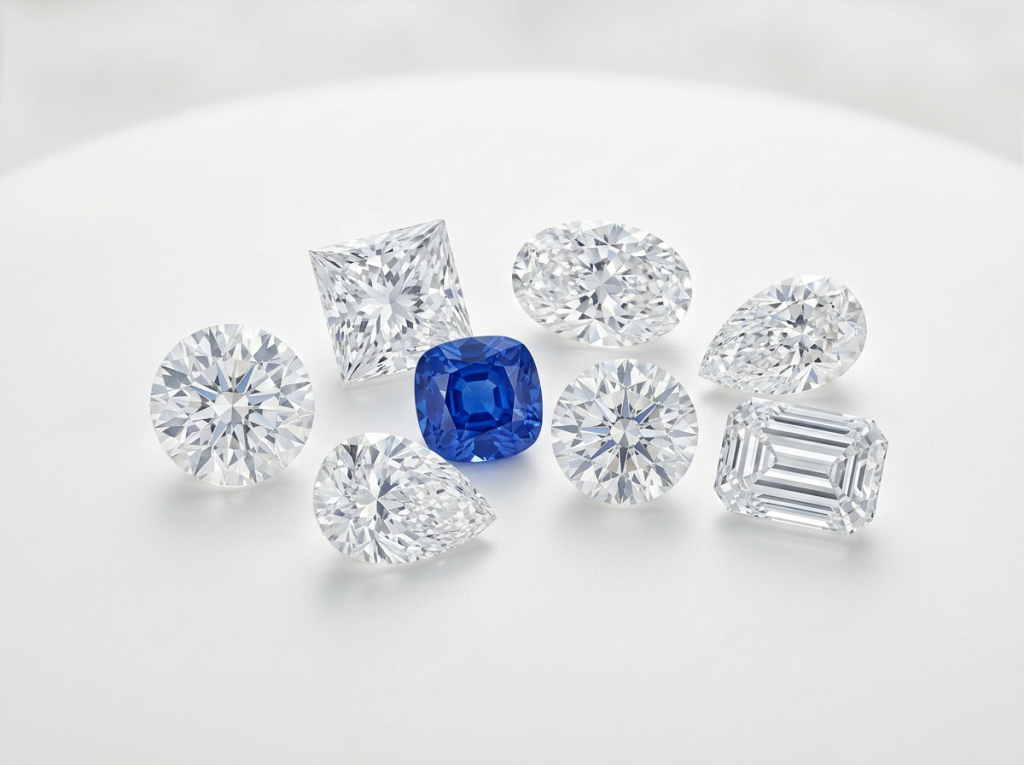
When selecting a gemstone, key factors include its hardness, measured on the Mohs scale, which indicates its resistance to scratching. Sapphires, for instance, boast an impressive Mohs hardness rating of 9, making them second only to diamonds (10) for daily wear durability. Other considerations include color saturation, which refers to the intensity of the gem’s hue, and light performance, or how well the stone reflects and refracts light to create brilliance and sparkle. The stone’s geometry, or cut, also plays a crucial role in its visual appeal.
Diamond Shapes and Proportions
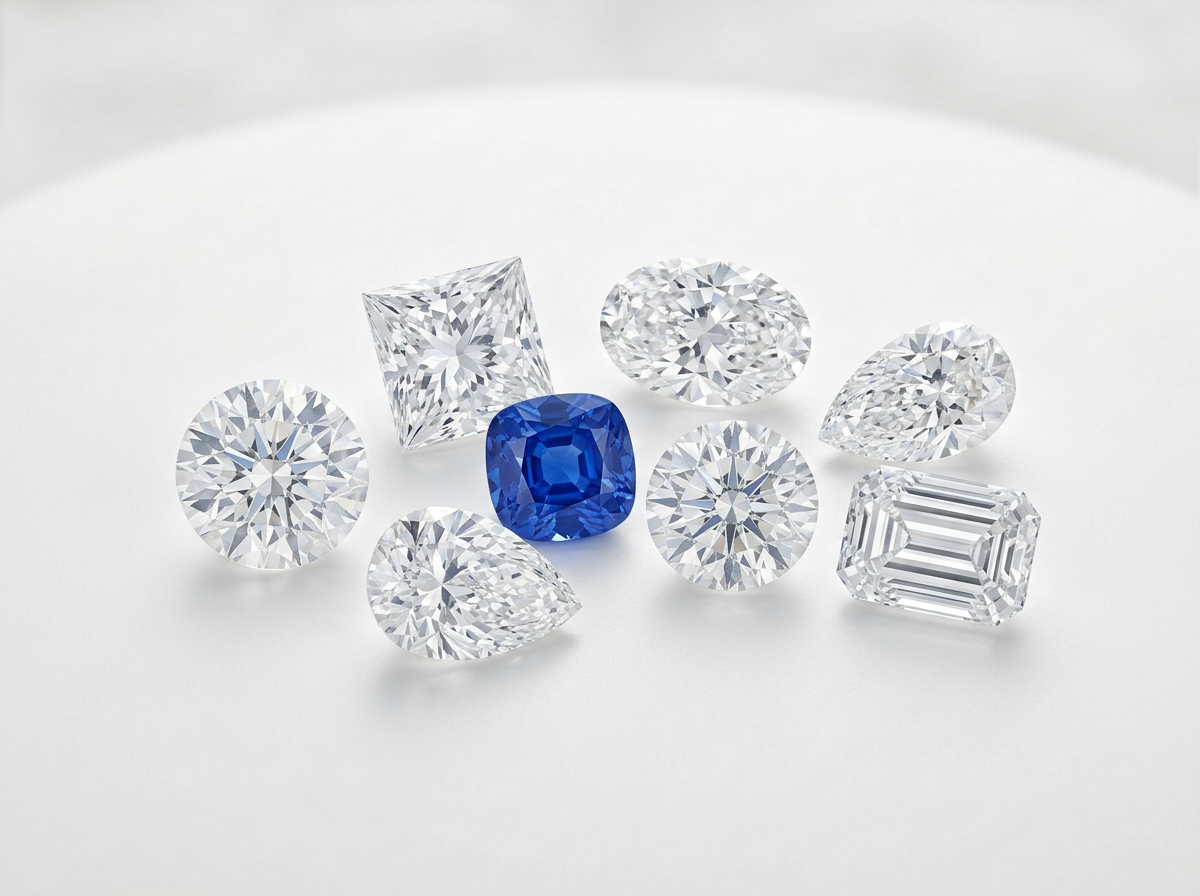
While our focus is on blue sapphires, understanding diamond shapes is valuable as they often influence sapphire cuts or serve as complementary side stones. Popular cuts include:
- Round Brilliant: The most classic and brilliant cut, known for its exceptional sparkle.
- Princess Cut: A modern, square shape with brilliant facets, offering a contemporary geometric appeal.
- Emerald Cut: A rectangular step-cut known for its elegant, sophisticated hall-of-mirrors effect.
- Oval Proportions: An elongated round shape that can make fingers appear longer and offers a unique, vintage-inspired look.
- Cushion Cut: A romantic square or rectangular shape with rounded corners and larger facets, blending classic elegance with modern appeal.
Colored Gemstones and Accent Pairings
Blue sapphires are truly captivating, offering a rich history and profound symbolism. They represent wisdom, self-discipline, clarity of thought, and clear communication, making them a meaningful choice for a lifelong commitment. When considering blue sapphires for your wedding set, you’ll encounter several options:
- Natural Sapphires: These are mined from the earth and are prized for their unique geological origins and inherent variations. They come in a range of blues, from deep, inky navy to vibrant cornflower. Montana sapphires, for example, are celebrated for their distinctive naturally occurring colors, often displaying blue-green teal or even bi-color hues, offering a unique alternative to traditional blues. Sri Lankan sapphires are also highly regarded for their exceptional color and clarity.
- Lab-Created Sapphires: These are chemically, physically, and optically identical to natural sapphires but are grown in a controlled laboratory environment. They offer excellent clarity and color consistency, often at a more accessible price point, and are an ethical and sustainable choice.
- Simulated Sapphires: These are stones that imitate the appearance of sapphire but have a different chemical composition (e.g., blue cubic zirconia or blue glass). While they offer a similar look, they do not possess the same durability or value as natural or lab-created sapphires and are generally not recommended for everyday wear in fine jewelry.
When designing your blue sapphire wedding ring set, consider these popular styles and accent pairings:
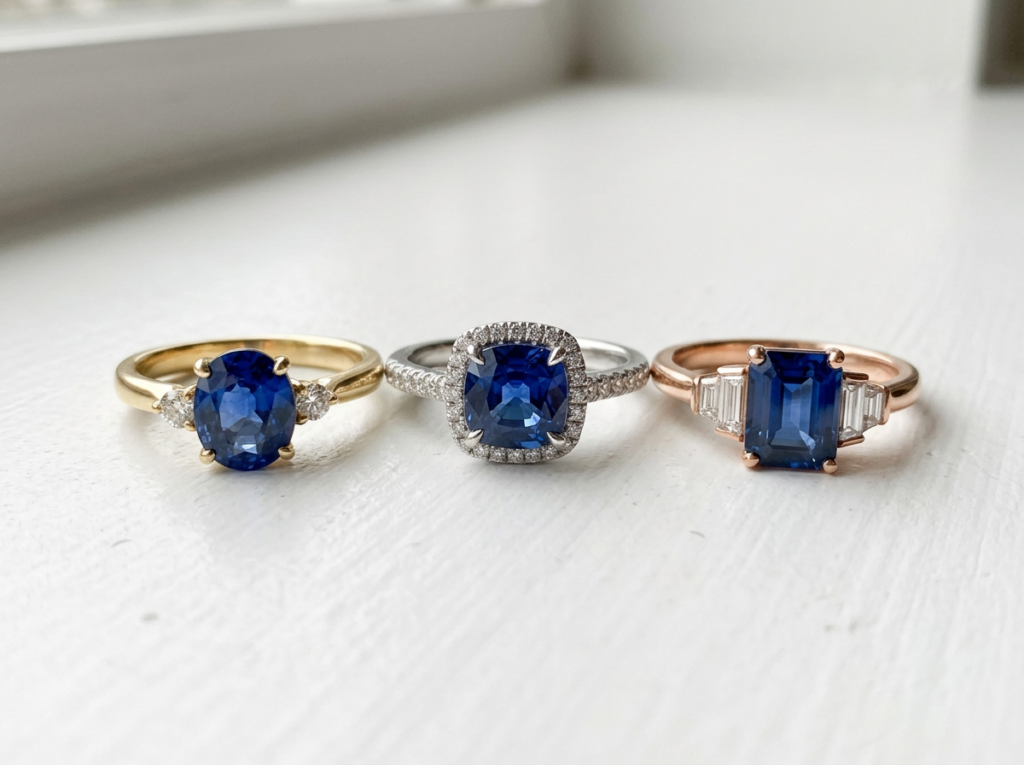
- Halo Settings: Surrounding a blue sapphire with a halo of smaller white diamonds or moissanite accents significantly enhances its visual size and brilliance. This creates a striking contrast, allowing the sapphire’s deep color to pop. A 1.5 CT Princess Cut Blue Sapphire Bridal Ring Set with Moissanite Halo, for example, combines a geometric center stone with dazzling accents for a high-impact look.
- Three-Stone Layouts: A central blue sapphire flanked by two smaller diamonds or other gemstones symbolizes the past, present, and future of your relationship. This classic design is both meaningful and elegant. For a unique twist, consider a central radiant-cut teal sapphire flanked by emerald-cut white sapphire side stones.
- Vintage Styles: Blue sapphires lend themselves beautifully to vintage-inspired designs, particularly Art Deco settings. These often feature intricate metalwork, geometric patterns, and milgrain detailing that complement the sapphire’s rich hue.
- Prong Architecture: The way a stone is set can dramatically alter its appearance. Custom prong shapes, such as squared prongs, can enhance the geometric appeal of radiant or emerald cut sapphires, adding a bespoke touch.
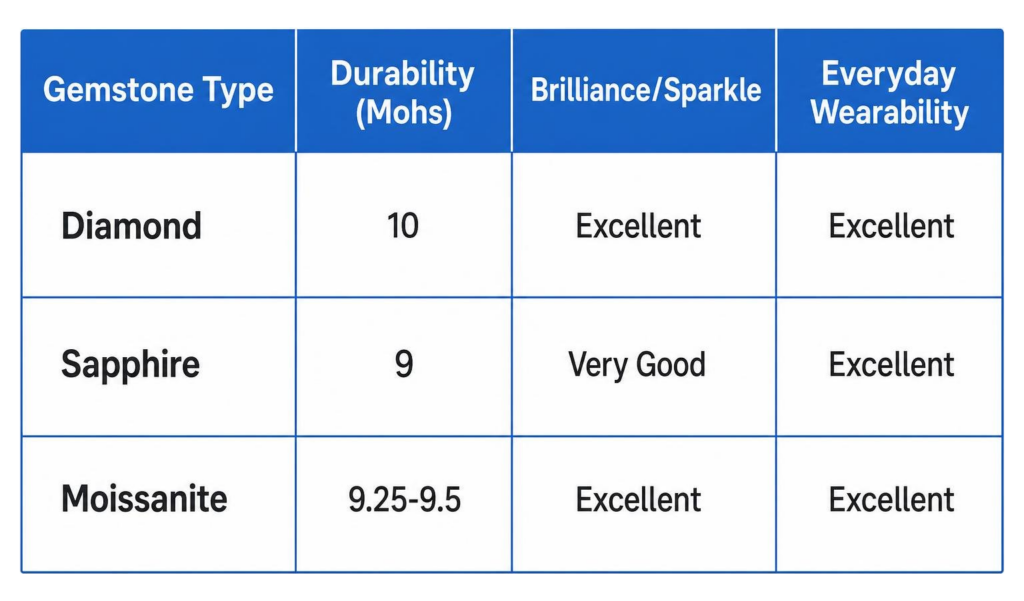
When considering accent stones, moissanite offers high brilliance and durability (Mohs hardness of 9.25-9.5), making it an excellent choice for accent stones in daily wear fine jewelry. White diamond side stones or accent halos are also classic choices that frame dark blue sapphires for enhanced brilliance and contrast.
Here’s a comparison of common center stone options:
Choosing Precious Metals and Band Architecture
The metal you choose for your blue sapphire wedding ring set is more than just a backdrop; it’s an integral part of the design, influencing the ring’s overall aesthetic, durability, and how it complements your skin tone. The right metal ensures not only the longevity of your piece but also the structural durability and security of your precious gemstones.
Precious Metal Properties and Aesthetics
Each precious metal offers distinct characteristics:
- Platinum: Known for its exceptional density and natural white luster, platinum is incredibly durable and hypoallergenic, making it an excellent choice for sensitive skin. Its strength provides superior security for gemstones, and its natural white color will never fade or require re-plating.
- White Gold (14k or 18k): An alloy of gold with white metals (like palladium or silver) and typically plated with rhodium to achieve its bright white finish. 14k gold offers a good balance of durability and affordability, while 18k gold has a higher gold content, making it slightly softer but richer in color. White gold requires occasional re-rhodium plating to maintain its bright white appearance, typically every 1-2 years.
- Yellow Gold (14k or 18k): The classic choice, yellow gold offers a warm, traditional aesthetic. 14k yellow gold is very durable for everyday wear, while 18k yellow gold has a deeper, richer hue due to its higher gold content. Setting blue sapphires in yellow gold offers a unique and timeless aesthetic, creating a striking color contrast where the band acts as a visual pedestal for the center stone. This pairing has seen a resurgence in popularity, offering a distinct look compared to traditional white metals.
- Rose Gold (14k or 18k): An alloy of gold with copper, rose gold boasts a romantic, warm, pinkish hue. 14k rose gold is very durable, and its unique color complements a wide range of skin tones. It creates a softer, more antique feel when paired with blue sapphires.
When selecting your metal, consider its longevity, how it will hold up to daily wear, and how it harmonizes with the blue sapphire. For instance, while all gold alloys are durable, platinum offers superior scratch resistance and does not wear away over time in the same manner as gold.
Designing Coordinated Wedding Band Sets
One of the significant advantages of custom design is the ability to create a wedding band that perfectly complements your engagement ring. This ensures a seamless fit and a cohesive aesthetic for your bridal stack.
- Flush-Fit Bands: The ideal scenario for many is a wedding band that sits perfectly flush against the engagement ring, with no gap in between. This is achieved through precise CAD profile matching, ensuring the under-gallery clearance of the engagement ring allows the band to slide in seamlessly.
- Contoured or Curved Bands: For engagement rings with prominent halos, unique stone shapes (like pear or oval sapphires), or vintage-style settings, a straight wedding band might leave a gap. In these cases, contoured, chevron, or wishbone curved bands are designed to hug the engagement ring’s silhouette, creating a harmonious and secure fit.
- Vintage Eternity Bands: For a timeless and elegant look, a custom vintage-style eternity band with sapphires or diamonds can be designed to sit perfectly beneath your blue sapphire engagement ring, enhancing its beauty.
- Seamless Interlocking: Some custom designs feature interlocking mechanisms or specific cuts in the bands that allow them to click together, creating a unified piece when worn.
- Mixed Metal Stacks: Don’t shy away from mixing metals! A platinum engagement ring paired with a yellow gold wedding band can create an interesting visual dynamic and allow for more personalization. Two-tone gold settings are also an option for those who appreciate the contrast.
Whether you opt for a perfectly matched set or intentionally mismatched rings for a distinctive, personalized look, custom design provides the flexibility to achieve your desired aesthetic and comfort.
Long-Term Maintenance and Everyday Wear
A blue sapphire wedding ring set is designed to be cherished for a lifetime, enduring daily wear as a constant symbol of your commitment. To ensure its lasting beauty and durability, proper care and maintenance are essential. Sapphires, with their Mohs hardness of 9, are highly durable, making them excellent for everyday wear. However, no gemstone or metal is entirely impervious to damage, and regular attention will keep your set sparkling for decades.
Best Practices for Care and Maintenance:
- Regular Cleaning: To maintain your sapphire’s brilliance, clean your rings regularly. A soft toothbrush, mild soap (like dish soap), and warm water are usually sufficient. Gently scrub the stone and settings, then rinse thoroughly under running water and dry with a lint-free cloth. Avoid harsh chemicals or abrasive cleaners, which can damage the metal or dull the stone.
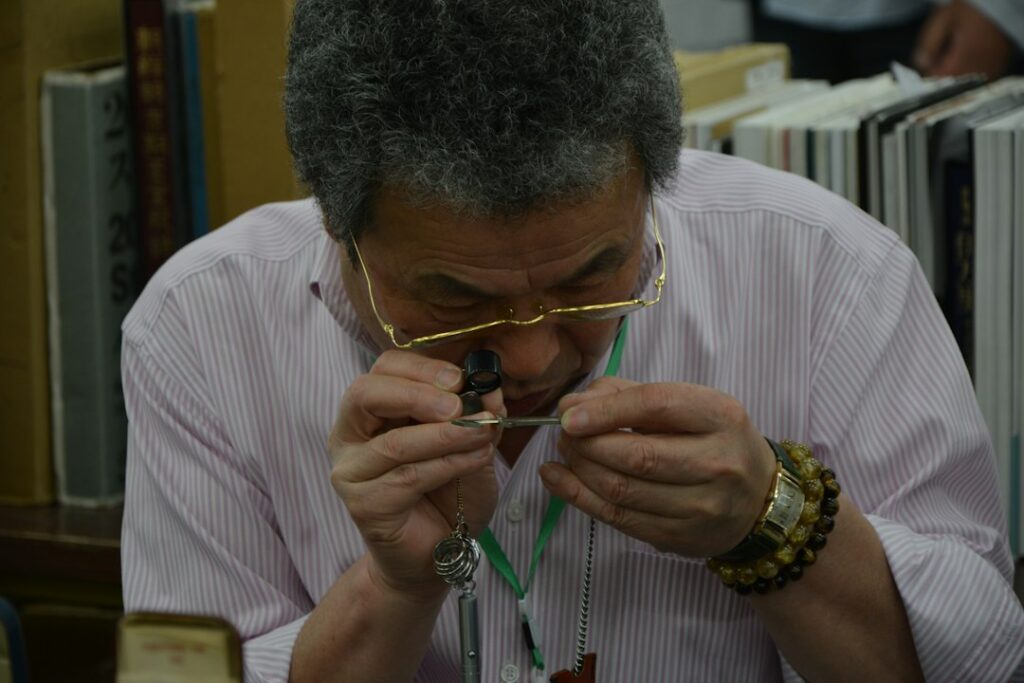
- Professional Inspection: We recommend having your blue sapphire wedding ring set professionally inspected by a jeweler at least once a year. During this inspection, the jeweler will check for any loose prongs, worn settings, or damage to the stones. Prompt attention to these issues can prevent stone loss or further damage.
- Prong Re-tipping: Over time, the tiny metal prongs holding your sapphire in place can wear down. A jeweler can re-tip or rebuild these prongs to ensure your gemstone remains secure.
- Avoid Harsh Chemicals: Remove your rings when cleaning with household chemicals (bleach, ammonia), gardening, or engaging in activities that could expose them to harsh substances. These can dull the metal, damage the rhodium plating on white gold, or even affect certain treatments on sapphires.
- Protect from Impact: While sapphires are hard, a sharp blow can still chip or fracture them, especially along facet edges. Remove your rings during strenuous activities, sports, or heavy lifting to prevent accidental impact.
- Storage: When not wearing your rings, store them in a fabric-lined jewelry box or a soft pouch to prevent them from scratching other jewelry or being scratched themselves.
- Ultrasonic Cleaners: While professional ultrasonic cleaning is generally safe for sapphires, use caution with home ultrasonic cleaners, especially if your sapphire has inclusions, fractures, or has undergone certain treatments (like fracture filling). Consult your jeweler if you are unsure.
Ensuring Durability and Quality for Everyday Wear:
- Metal Choice: As discussed, platinum offers superior durability and hypoallergenic properties, making it an excellent choice for daily wear. 14k gold (yellow, white, or rose) is also very durable, while 18k gold is slightly softer but still suitable for everyday use.
- Setting Style: Bezel settings, where the metal completely encircles the gemstone, offer the most protection for the sapphire’s edges. Prong settings are popular for maximizing light entry but require regular checks to ensure prongs are secure.
- Sapphire Quality: Opt for high-quality sapphires (e.g., AAA grade) with good clarity and minimal inclusions, as these are generally more structurally sound.
- Accent Stone Durability: If your set includes accent stones, ensure they are also durable. Moissanite and diamonds are excellent choices for their hardness and resilience.
By following these guidelines, your blue sapphire wedding ring set will remain a brilliant and enduring symbol of your love for generations to come.
Frequently Asked Questions About Custom Bridal Jewelry
Embarking on the custom design journey often brings a series of practical questions. We’ve compiled some common inquiries to help you navigate the process with confidence.
How long does the custom design process typically take from concept to completion?
The timeline for a custom-designed engagement ring or wedding set can vary depending on the complexity of the design, the availability of specific gemstones, and the jeweler’s current workload. Generally, you can expect the process to take:
- Consultation and Design Phase: 1-3 weeks. This includes initial discussions, concept sketches, and revisions based on 3D digital wax models (CAD).
- Gemstone Sourcing: 1-2 weeks (can be longer for very rare or specific stones).
- Production (Casting and Setting): 3-6 weeks. Once the design is approved, the metal is cast, and the gemstones are meticulously set.
- Final Inspection and Delivery: A few days.
Typical lead times for a complete custom piece usually range from 6 to 12 weeks. It’s always advisable to start the process well in advance of any proposal or wedding dates to allow ample time for design refinements and unforeseen adjustments.
Can family heirloom stones or precious metals be integrated into a new custom setting?
Absolutely! Integrating family heirloom stones or precious metals is a beautiful way to add sentimental value and history to a new custom piece. This practice is often referred to as “repurposing” or “resetting.”
- Stone Unsetting and Integrity Checks: Your jeweler will carefully unset the heirloom stone(s) from their original setting. They will then inspect the gemstone for any existing chips, abrasions, or internal flaws to ensure its integrity before it is incorporated into a new design.
- Metal Recycling: While it’s sometimes possible to melt down and reuse heirloom metal, it’s often more practical and structurally sound to use new metal for the custom setting. The heirloom metal can be refined and credited towards the cost of your new piece, or simply returned to you. This ensures the new ring has the optimal alloy composition and strength for longevity.
- Vintage Resetting: Many couples choose to reset a family diamond or sapphire into a completely new, modern, or vintage-inspired custom setting, giving the stone a new life while preserving its legacy.
Discuss your heirloom pieces with your designer early in the process, as their unique characteristics might influence the design possibilities.
How do custom designers ensure the engagement ring and wedding band sit completely flush?
Achieving a perfectly flush fit between an engagement ring and its wedding band is a hallmark of excellent custom design. Designers employ several precise techniques:
- CAD Profile Matching: This is the most crucial step. During the 3D digital design phase, both the engagement ring and the wedding band are designed together. The CAD software allows the designer to precisely match the contours and profiles of both rings, ensuring there are no gaps or overlaps when they are placed side-by-side.
- Under-Gallery Clearance: The “under-gallery” is the space beneath the center stone of the engagement ring. Custom designers meticulously ensure there is adequate clearance and a specific design element (often a small notch or curve) built into the engagement ring’s structure to allow the wedding band to slide in perfectly underneath without obstruction.
- Curved Contours: For engagement rings with unique shapes (like pear, oval, or marquise) or prominent halo settings, a straight wedding band simply won’t fit flush. Custom designers create curved or contoured wedding bands that precisely mirror the engagement ring’s outline, ensuring a seamless fit. Chevron or wishbone bands are common examples.
- Band Synchronization: The width and height of both bands are also carefully considered. A well-designed set will have bands that are proportional to each other, creating a visually harmonious and comfortable stack.
By meticulously planning and executing these details in the design and manufacturing process, custom jewelers can guarantee that your engagement ring and wedding band will fit together flawlessly, creating a beautiful and unified bridal set.
Conclusion
Crafting your dream custom engagement ring, especially a captivating blue sapphire wedding ring set, is a truly unique and rewarding experience. It’s a journey that allows you to infuse every detail with personal meaning, resulting in a piece that is not only exquisitely beautiful but also a profound reflection of your shared love story. From selecting the perfect hue of blue sapphire to choosing the ideal metal and designing a wedding band that fits like a second skin, the possibilities for personal expression are limitless.
As we’ve explored, blue sapphires offer a blend of stunning aesthetics, rich symbolism, and exceptional durability, making them an ideal choice for a lifetime of wear. Whether you’re drawn to the classic elegance of a three-stone setting, the modern brilliance of a halo design, or the timeless charm of a vintage-inspired piece, a custom approach ensures your vision comes to life with enduring craftsmanship.
In September 2026, as couples continue to seek ways to make their engagements uniquely their own, bespoke bridal wear stands out. By understanding the nuances of gemstone selection, metal properties, and meticulous design, you can create a blue sapphire wedding ring set that is not just jewelry, but a timeless heirloom, a testament to your love, and a cherished symbol for generations to come.