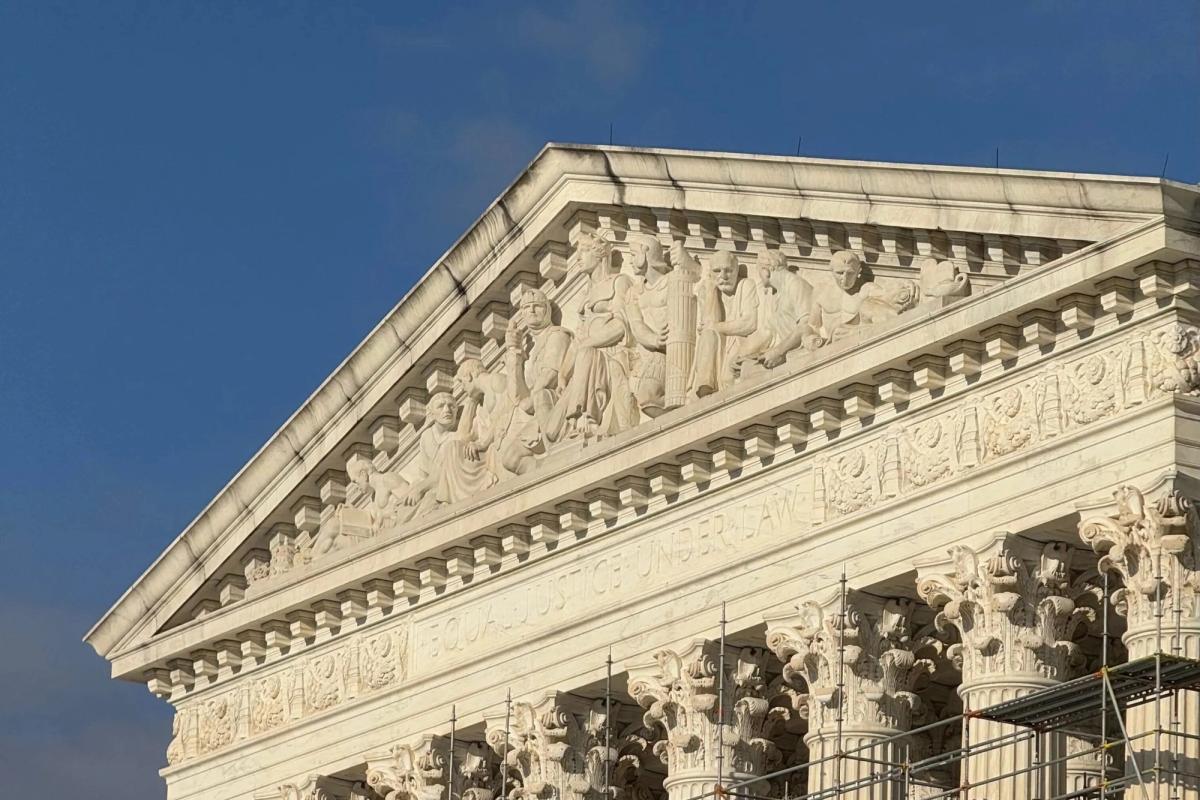
At our term preview event on Wednesday at Johns Hopkins University Bloomberg Center, we explored the Supreme Court’s work – and the upcoming term, in particular – from multiple angles. Speakers discussed highly anticipated oral arguments, ongoing debates over court reform, and how complicated it can be to predict the impact of a ruling in the immediate aftermath of its release.
The event began with a fireside chat between Zach Shemtob, SCOTUSblog’s executive editor, and Elizabeth Prelogar, a partner at Cooley and the former U.S. Solicitor General. Among other topics, they discussed how Prelogar prepares to argue before the court and whether arguments feel easier once you have several under your belt. (She confirmed that they do.) Prelogar also described how arguing before a court with a 6-3 conservative majority differs from arguing before a 5-4 court, explaining that there’s less of an incentive now for advocates to aim their arguments at a single swing justice. Instead, they are “thinking more creatively” to build a coalition of justices in support of their position.
After the fireside chat, Sarah Isgur, David French, and SCOTUSblog’s Amy Howe took the stage for a live recording of the Advisory Opinions podcast. They briefly reflected on the Supreme Court’s decision not to allow the Trump administration to implement parts of a rule on mail-in voting – agreeing that the court hasn’t seen the last of election-related disputes – before turning their attention to the term ahead. Isgur challenged Howe and French to name the most important case that’s been scheduled for argument so far, which led to a discussion of Viramontes v. Cook County, a Second Amendment case on whether bans on AR-15s and similar semiautomatic rifles are constitutional. Isgur contended that the most significant case is Suncor Energy v. County Commissioners of Boulder County, on whether federal environmental law supersedes state-law claims against oil and gas companies over their alleged role in exacerbating climate change. Isgur described it as a “huge culture war case.”
The next session was a discussion on Congress and the court, which featured Sen. Dick Durbin (D-IL) and Rep. Darrell Issa (R-CA), and was moderated by Elie Honig, senior legal analyst for CNN. While Durbin was more critical than Issa of how the Supreme Court is navigating the second Trump administration – for example, Durbin said that it’s a “serious problem” for the court to issue unexplained decisions on the “shadow docket” – both men agreed that it’s a difficult moment for the court, as Americans increasingly view it as a political institution. As to potential court reforms, Durbin asserted that it’s not “realistic” to expect Democrats to be able to increase the number of justices even if the party takes control of the Senate after November’s elections. Instead, he emphasized the need for the justices to consider working on their own to update the court’s ethics code; Issa agreed that it’s important for the ethics code to be strong.
The final panel of the afternoon brought together Brett Gerry, the chief legal officer of Boeing; Brian Callanan, the general counsel for TD Bank U.S.; and Jeff Taylor, the general counsel for ExxonMobil. At moderator David Lat’s prompting, they discussed how AI is affecting their work, what they look for in outside counsel, and their views on the Supreme Court’s “business docket.”
Look for additional coverage of the 2026 SCOTUSblog Summit on SCOTUSblog and Advisory Opinions in the coming days.