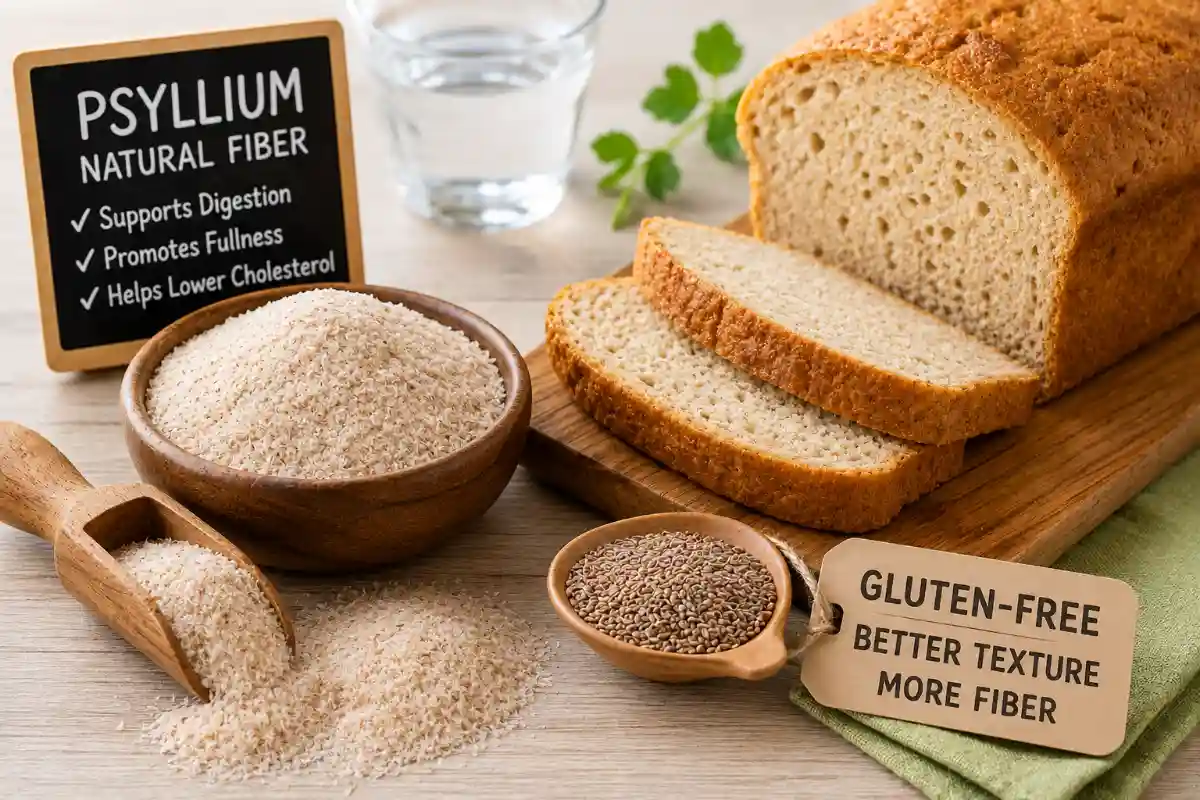
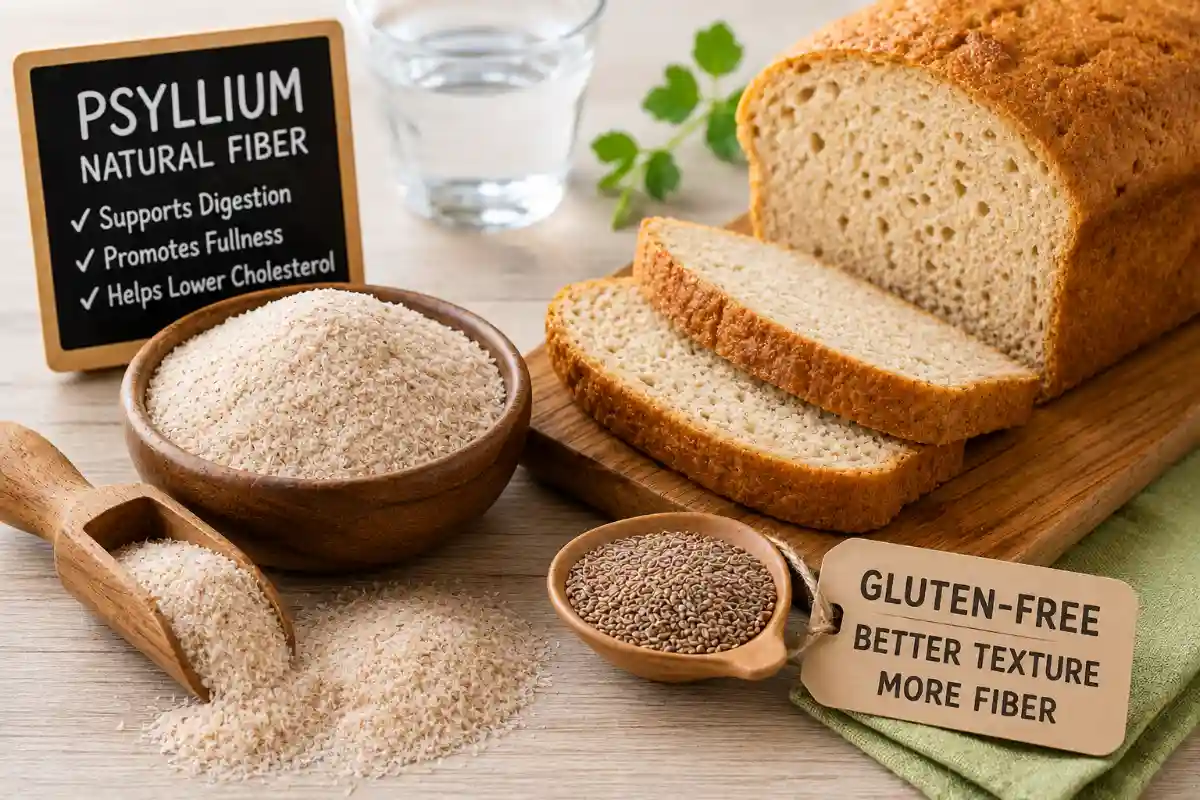
Celiac.com 09/10/2026 – Psyllium has long been associated with fiber supplements and digestive regularity, but food manufacturers are increasingly viewing it as something more versatile. The ingredient is gaining attention not only for its nutritional value, but also for its ability to improve the texture, structure, and moisture of foods.
This combination is especially valuable in gluten-free baking. Without gluten, bread dough and similar products can struggle to hold together, trap air, retain moisture, and maintain a soft texture. Psyllium can help address several of these problems at once, which may explain why it is appearing in a growing number of gluten-free breads, pizza crusts, wraps, pastas, and baked goods.
What Is Psyllium?
Celiac.com Sponsor (A12):
Psyllium comes from the seeds of a plant called Plantago ovata. The outer husk of the seed is rich in soluble fiber and absorbs a large amount of water.
When mixed with liquid, psyllium forms a thick gel. This gel-forming ability is responsible for many of its effects in both digestion and food preparation.
In the digestive system, psyllium can help normalize stool consistency. It can soften hard stools by holding water, but it can also add structure to loose stools. This is one reason it is commonly used in fiber supplements and digestive health products.
In food production, the same water-binding properties can help ingredients stick together, reduce crumbling, improve moisture retention, and create a more stable texture.
Why Psyllium Works Well in Gluten-Free Baking
Gluten gives conventional wheat dough its stretch, strength, and ability to trap gases produced during fermentation. This allows bread to rise and maintain its structure.
Gluten-free flours do not naturally create the same elastic network. Dough made only with rice, corn, sorghum, buckwheat, or other gluten-free flours may be dry, crumbly, dense, or difficult to shape.
Psyllium can form a flexible gel that helps connect the ingredients in gluten-free dough. It holds water and helps the dough retain gas as it rises. This can produce bread with better volume, a softer interior, and slices that are less likely to fall apart.
It may also help gluten-free bread remain softer for longer because the added moisture is retained within the product instead of evaporating quickly.
These properties make psyllium useful in products that require more structure than cakes or cookies. It is increasingly used in gluten-free sandwich breads, pizza dough, rolls, flatbreads, wraps, and pasta.
More Than a Replacement for Gluten
Psyllium is not simply a technical ingredient. It also increases the fiber content of the foods in which it is used.
Many gluten-free products have traditionally been made from refined starches and flours that contain relatively little fiber. Adding psyllium can improve both the physical quality and the nutritional profile of these products.
This gives manufacturers an unusual advantage. Many ingredients are added mainly for nutrition, while others are added mainly for texture. Psyllium can serve both purposes at the same time.
That distinction may help it stand out as interest in high-fiber and digestive-health foods continues to grow.
Possible Digestive and Metabolic Benefits
Psyllium is most strongly associated with digestive health. Its gel-forming fiber can help regulate bowel movements and may be useful for some people with constipation or irregular stool patterns.
It has also been studied for possible benefits involving cholesterol and blood sugar. Because psyllium forms a thick gel, it can slow the movement and absorption of nutrients during digestion.
This may reduce the size of blood sugar increases after meals, particularly when psyllium is consumed with food. Psyllium may also help lower low-density lipoprotein cholesterol, often described as harmful cholesterol.
Some research has also associated psyllium with greater fullness between meals. By absorbing water and expanding, it may slow digestion and help people feel satisfied for a longer period.
These effects depend on the amount consumed, when it is taken, the food in which it is included, and the individual using it. Psyllium should not be viewed as a treatment for a medical condition without appropriate medical guidance.
Where Psyllium May Appear Next
Gluten-free bakery products remain one of the most established uses for psyllium, but manufacturers are exploring many other applications.
It can be used in plant-based meat alternatives to help bind ingredients and create a firmer texture. It may also be added to soups, sauces, prepared meals, breakfast cereals, granola, nutrition bars, and reduced-carbohydrate foods.
Some companies are using psyllium in meal-replacement powders, smoothies, powdered drinks, and other functional beverages. However, beverages present special challenges because psyllium thickens rapidly and can produce an unpleasant texture if too much is used.
Its ability to replace or reduce certain gums, starches, and stabilizers may also appeal to companies seeking shorter or more familiar ingredient lists.
Why Interest in Psyllium Is Growing
Consumer interest in fiber has increased significantly as digestive health has become a mainstream concern. Many shoppers are now looking for foods that provide benefits beyond calories, protein, fat, and basic vitamins.
High-fiber products are receiving more attention, and consumers are becoming more aware of the relationship between fiber, bowel health, fullness, blood sugar, and cholesterol.
Psyllium is well positioned within this trend because it has a recognizable digestive-health purpose and useful food-manufacturing properties.
Its use may also grow as more people take medications that can cause constipation. Food companies may see an opportunity to create fiber-enriched products aimed at digestive comfort and regularity.
Despite this potential, psyllium is still less familiar to the general public than protein, probiotics, or oat fiber. Much of its name recognition remains concentrated among people who use fiber supplements and those who regularly buy gluten-free products.
The Challenges of Using Psyllium
Psyllium is powerful, but this can also make it difficult to formulate with. It absorbs large amounts of water and becomes very thick.
If too much is added, a product can become gummy, heavy, sticky, or difficult to swallow. The wrong amount may also negatively affect flavor release and mouthfeel.
Manufacturers must carefully balance psyllium with water, flour, fat, starches, and other ingredients. A formula that works well for bread may not work for a beverage, snack bar, or sauce.
Higher intakes can also cause bloating, gas, or digestive discomfort, especially when a person suddenly increases fiber without gradually adjusting.
Another obstacle is psyllium’s long-standing association with laxatives. Some consumers may see it as medicinal rather than as a normal food ingredient. This image could make it harder to market in indulgent products such as desserts or premium snacks.
Supply may also be a concern because much of the world’s psyllium production is concentrated in a limited geographical region. Crop problems, transportation disruptions, or changes in demand could affect availability and price.
What This Means for People With Celiac Disease
Psyllium could be especially important for people with celiac disease because it may improve several weaknesses common in gluten-free products.
Many gluten-free breads are dry, fragile, low in fiber, or quick to become stale. Psyllium can potentially improve softness, moisture, flexibility, and slice strength while also adding fiber.
This may lead to gluten-free bread that is easier to use for sandwiches, pizza crust that can be stretched more successfully, and wraps that bend without cracking.
However, the presence of psyllium does not automatically make a product gluten-free. Consumers with celiac disease must still verify the full ingredient list, labeling, and cross-contact controls.
Plain psyllium husk is naturally gluten-free, but it may be processed or packaged in facilities that also handle wheat, barley, or rye. People with celiac disease should look for products labeled gluten-free when purchasing psyllium for home baking.
Anyone who has persistent digestive symptoms should also remember that psyllium may cause gas or bloating, particularly when first introduced. Symptoms after eating a gluten-free product containing psyllium do not necessarily prove gluten exposure.
What This Means for People With Gluten Sensitivity
People with non-celiac gluten sensitivity may also benefit from better-textured and higher-fiber gluten-free foods. Psyllium can make gluten-free products feel more similar to conventional baked goods, which may make the diet easier to maintain.
At the same time, digestive responses vary. A person who is sensitive to rapid increases in fiber may experience bloating, pressure, cramping, or changes in bowel habits.
Introducing psyllium gradually and drinking enough fluid may reduce these effects. Anyone with significant swallowing difficulties, bowel narrowing, severe abdominal pain, or other medical concerns should consult a healthcare professional before using a concentrated psyllium supplement.
Using Psyllium at Home
Home bakers can use psyllium husk or psyllium husk powder in gluten-free recipes, but the two forms may not behave identically. Powder usually absorbs water more quickly and may create a stronger thickening effect.
Recipes designed specifically for psyllium should generally be followed closely. Replacing another binder with the same volume of psyllium may produce an overly thick or dry result.
The dough may look much wetter than conventional wheat dough when first mixed. After resting, the psyllium absorbs water and the mixture often becomes easier to shape.
Because psyllium holds so much liquid, reducing the water without adjusting the rest of the formula can result in dense or dry bread.
The Bottom Line
Psyllium is gaining attention because it offers a rare combination of nutritional and technical benefits. It adds soluble fiber while also helping foods hold water, bind together, and maintain structure.
Its strongest role is likely to remain in gluten-free breads, pizza crusts, wraps, pasta, and other products where gluten would normally provide elasticity and strength. It may also expand into beverages, prepared foods, nutrition products, and plant-based alternatives.
For people with celiac disease or gluten sensitivity, wider use of psyllium could lead to gluten-free foods that are softer, less crumbly, higher in fiber, and more satisfying. It is unlikely to transform every food category, but it has a strong chance of becoming one of the most important functional ingredients in the next generation of gluten-free products.
Read more at: foodnavigator.com