Celiac.com 09/17/2026 – French fries, tortilla chips, chicken wings, hash browns, and other fried foods often look like easy gluten-free choices. After all, potatoes, corn tortillas, plain chicken, and many other basic ingredients do not naturally contain gluten.
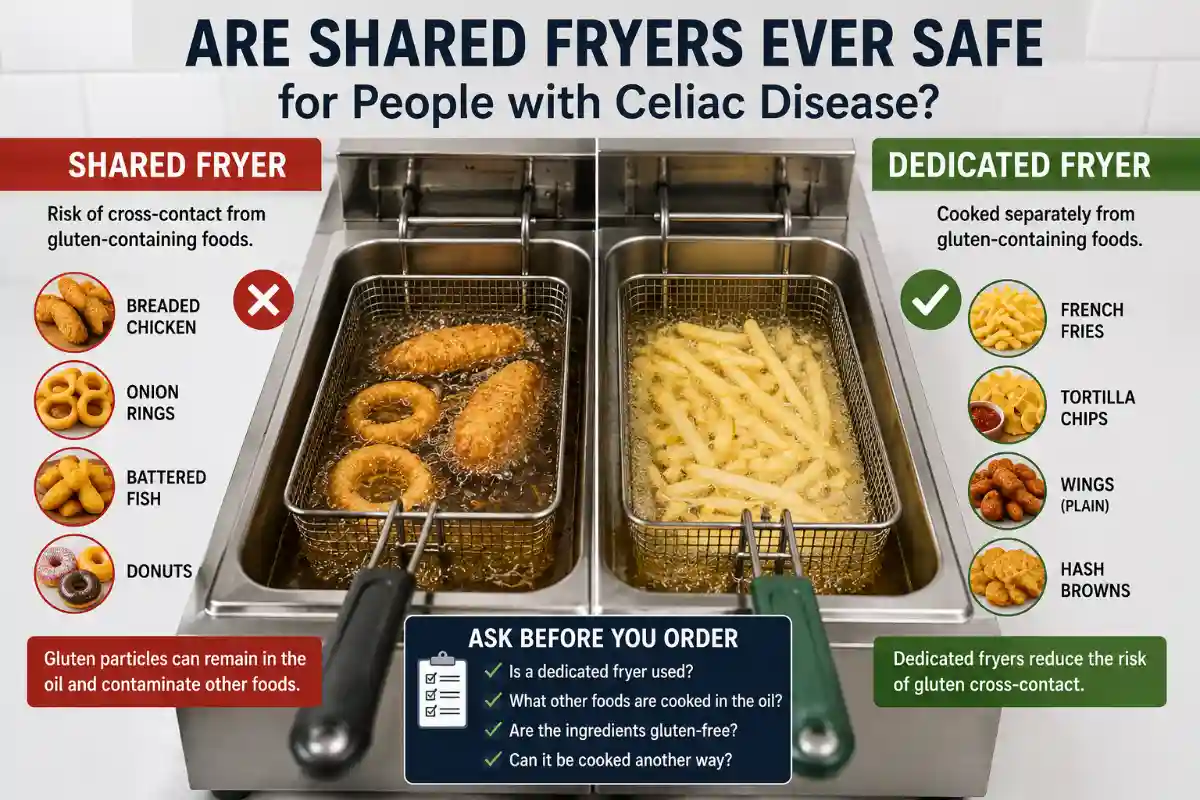
But for people with celiac disease, the ingredients are only part of the story. What happens after those foods enter a restaurant kitchen can matter just as much. If a fryer is also used for breaded chicken, onion rings, battered fish, mozzarella sticks, donuts, or other wheat-containing foods, gluten-containing crumbs and particles can end up circulating through the cooking oil.
Celiac.com Sponsor (A12):
That is why a menu item described as being made with “gluten-free ingredients” is not automatically safe for someone with celiac disease. The preparation method matters, and shared fryers are one of the most common places where an otherwise gluten-free food can encounter gluten.
Why Shared Fryers Can Be a Problem
When breaded or battered foods are lowered into hot oil, small pieces of coating break away. Some settle to the bottom of the fryer, while others remain suspended in the oil or move through the filtration system.
If naturally gluten-free foods are later cooked in that same oil, they can come into contact with those gluten-containing particles.
This means that the oil itself does not need to contain wheat as an ingredient for cross-contact to occur. The problem comes from what has previously been cooked in it.
Restaurants may filter their fryer oil regularly, but filtration does not necessarily remove every microscopic gluten-containing particle. Some establishments also top off old oil rather than completely replacing it, meaning residues from previous foods can remain in circulation.
For someone avoiding gluten by preference, this may or may not be a concern. For someone with celiac disease, however, repeated or meaningful exposure can trigger the autoimmune response that damages the small intestine.
French Fries Are Not Automatically Gluten-Free
French fries are probably the most common food involved in the shared-fryer question.
Plain potatoes are naturally gluten-free, but restaurant fries can present two separate concerns.
First, some commercially prepared frozen fries contain coatings, starch blends, seasonings, or flavorings. A restaurant employee may assume the fries are gluten-free simply because they are made from potatoes, even though the actual product may contain additional ingredients.
Second, even genuinely gluten-free fries may be cooked in the same oil as breaded chicken, onion rings, battered fish, or other foods containing wheat.
For people with celiac disease, one of the most useful questions to ask is not simply, “Are the fries gluten-free?” Instead, ask whether the fries are cooked in a dedicated fryer used only for gluten-free foods.
A server may initially say that the fries do not contain gluten, but that answer does not tell you anything about the fryer.
Tortilla Chips Can Have the Same Problem
Corn tortilla chips are another food that can appear naturally safe.
Packaged tortilla chips labeled gluten-free may be perfectly appropriate for many people with celiac disease. Restaurant-made tortilla chips are different because they are frequently fried on site.
If the restaurant also fries wheat-based foods in the same oil, the chips can be exposed to gluten after they leave the package or kitchen prep area.
This can be particularly confusing at Mexican restaurants because the chips may be made entirely from corn. Staff may sincerely tell you that the chips contain no wheat while overlooking the fact that they share fryer oil with items such as flour tortilla products, battered foods, or desserts.
If a restaurant serves freshly fried chips, asking about the fryer is therefore just as important as asking whether the tortillas are made from corn.
Chicken Wings Depend Heavily on Preparation
Chicken itself is naturally gluten-free, but wings can become complicated quickly.
Some wings are breaded. Others are dusted with flour or a seasoning mixture before frying. Even “naked” wings may be placed into the same fryer as breaded chicken tenders or other wheat-containing foods.
Sauces create another potential source of gluten. Soy sauce, malt ingredients, seasoning blends, or other components may be present in certain wing sauces.
A restaurant might therefore offer wings that contain no gluten ingredients but still prepare them in a shared fryer.
If you have celiac disease, ask about all three parts of the preparation: whether the wings are breaded or dusted with flour, whether the fryer is shared, and whether the sauce or seasoning contains gluten.
Hash Browns and Breakfast Potatoes Can Be Deceptive
Potatoes served at breakfast can present similar problems.
Hash browns may be fried in oil that is also used for breaded foods. Breakfast potatoes may be cooked on a griddle alongside pancakes, French toast, biscuits, or other wheat-containing foods.
Some commercially prepared hash browns also contain added ingredients, so checking the product itself can matter in addition to checking the cooking surface.
Breakfast restaurants are often especially busy, with many foods sharing grills, spatulas, fryers, and preparation areas. Even when the kitchen has gluten-free options, cross-contact procedures can vary substantially.
If the restaurant cannot use a dedicated fryer, a clean pan may sometimes provide a safer alternative for certain potato dishes.
Donut and Dessert Fryers Are Particularly High Risk
Fryers used for donuts, churros, funnel cakes, battered desserts, or similar foods are an obvious source of wheat contamination.
A restaurant or food stand might use the same oil for a variety of savory and sweet foods throughout the day. Even if an item itself contains no gluten ingredients, cooking it in oil heavily used for wheat-flour doughs would create an unnecessary risk for someone with celiac disease.
This is especially worth remembering at fairs, amusement parks, food trucks, and small concession stands, where fryer space may be limited and many menu items are cooked in the same equipment.
Can a Shared Fryer Ever Be Considered Safe?
For someone with celiac disease, a fryer that routinely cooks gluten-containing breaded or battered foods should generally be treated as a cross-contact risk.
The situation is different when a restaurant says it has a “shared fryer” but the other foods cooked in that fryer are also gluten-free. For example, a fryer might be shared between plain French fries and unbreaded corn tortilla chips, with no wheat-containing foods entering the oil.
In that case, the fact that multiple foods share the fryer is not automatically a problem. What matters is whether gluten-containing foods are cooked in it.
This is why the phrase “shared fryer” by itself is incomplete information. The more useful question is: shared with what?
If the fryer is shared with breaded chicken, onion rings, battered seafood, donuts, or other foods containing wheat, that is a meaningful concern for celiac disease. If every food cooked in the fryer is verified gluten-free, the situation is very different.
Why “Gluten-Free Ingredients” Is Not Enough
Restaurants often describe menu items as being made with gluten-free ingredients. That can be useful information, but it does not necessarily mean the finished meal is appropriate for someone with celiac disease.
A restaurant may use gluten-free ingredients while preparing the food on shared equipment.
Fries may enter a shared fryer. Eggs may be cooked on a pancake griddle. Pizza may go into an oven with wheat flour in the preparation area. Meat may be sliced on equipment used for other products. A gluten-free bun may be toasted on the same surface as wheat buns.
The distinction is important because people with celiac disease are not merely avoiding wheat as an ingredient. They are trying to prevent gluten exposure throughout the preparation process.
Questions to Ask at a Restaurant
Rather than asking a vague question such as, “Is this gluten-free?” it can help to ask specific questions about how the food is prepared.
- Is this item cooked in a dedicated gluten-free fryer?
- What other foods are cooked in the same oil?
- Are any breaded or battered foods cooked in that fryer?
- Does the fryer oil circulate through a shared filtration system?
- Are the fries, chips, wings, or hash browns themselves made with gluten-free ingredients?
- Can the item be cooked another way, such as in a clean pan or oven?
- Does the kitchen have procedures for preparing food for customers with celiac disease?
The answers can tell you much more than a gluten-free symbol on the menu.
A Dedicated Fryer Is Usually the Best Option
A dedicated gluten-free fryer provides a much clearer level of separation because wheat-containing foods are not placed into the oil.
Restaurants that operate dedicated fryers should ideally also have procedures to prevent employees from accidentally placing breaded foods into them. Separate baskets, utensils, and clearly identified equipment can reduce mistakes.
It is still reasonable to ask questions, particularly if you are visiting a restaurant for the first time. Procedures can change, equipment can be reassigned, and employees may differ in their understanding of gluten cross-contact.
What About People With Gluten Sensitivity?
People with non-celiac gluten sensitivity may also experience symptoms after eating gluten, but their situation differs from celiac disease because they do not experience the same autoimmune damage to the intestinal lining.
Individual sensitivity can vary widely. Some people report symptoms from very small amounts of cross-contact, while others tolerate incidental exposure without noticeable problems.
Someone with gluten sensitivity may therefore make a different personal decision about shared fryer foods than someone with celiac disease.
Anyone who suspects gluten is causing symptoms but has never been tested for celiac disease should consider medical evaluation before adopting a strict gluten-free diet. Celiac disease testing is generally most reliable while gluten is still being consumed.
Do Not Assume Every Restaurant Is Equally Risky
Restaurant gluten safety is not simply a choice between completely safe and completely unsafe.
Some restaurants have detailed allergen procedures, dedicated equipment, trained staff, and clearly marked preparation areas. Others may have a gluten-free menu but little separation in the kitchen.
National chains can also vary by location. One restaurant may have a dedicated fryer while another location of the same chain does not.
It is therefore worth asking every time rather than assuming that a previous experience at another location applies everywhere.
The Bottom Line
French fries, tortilla chips, wings, hash browns, and many other fried foods can begin with completely gluten-free ingredients and still become problematic for someone with celiac disease if they are cooked in oil shared with wheat-containing foods.
The most important distinction is not simply whether a fryer is “shared,” but whether it is shared with foods containing gluten.
A potato does not stop being naturally gluten-free when it enters a fryer, but the finished French fry can pick up gluten-containing material from breaded or battered foods cooked in the same oil. The same principle applies to corn chips, wings, breakfast potatoes, and many other restaurant foods.
For people with celiac disease, asking about a dedicated fryer is therefore one of the most practical restaurant-safety questions available. “Gluten-free ingredients” is a useful starting point, but it does not tell the whole story. Understanding how the food is cooked can make the difference between a naturally gluten-free ingredient and a meal that is truly prepared with celiac disease in mind.
Watch the video version of Are Shared Fryers Ever Safe for People with Celiac Disease?:
Watch the super short video version of Are Shared Fryers Ever Safe for People with Celiac Disease?: