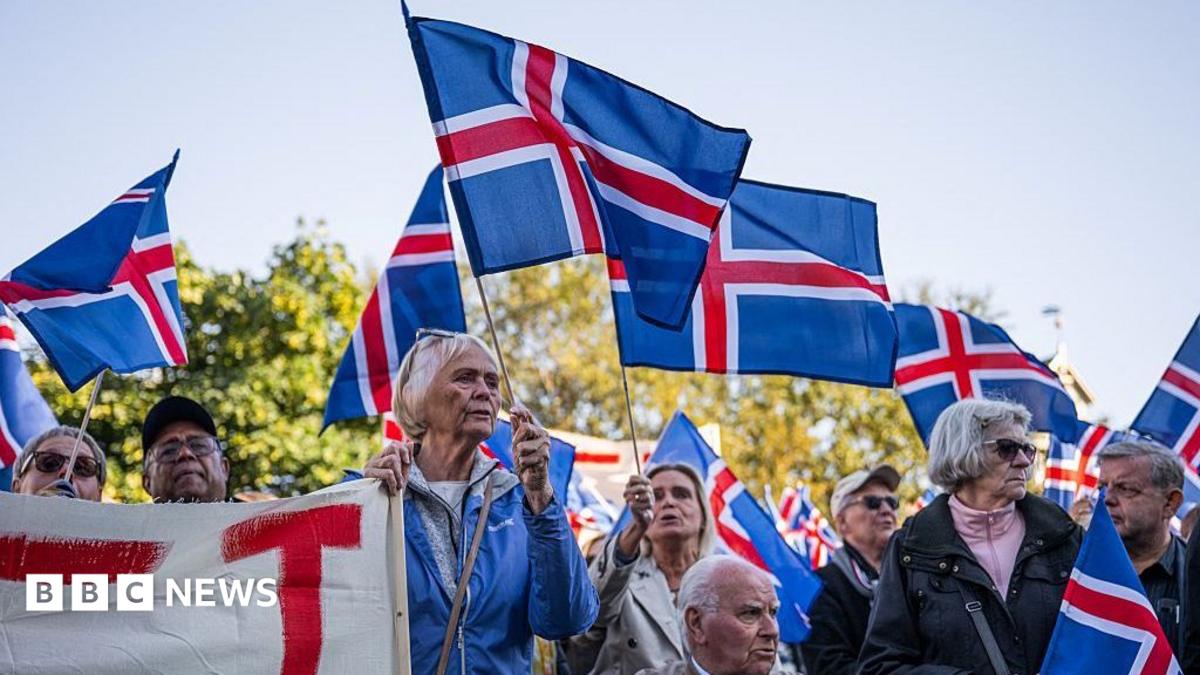
Sovereignty has been a crucial issue in the pre-referendum debate. Iceland fought hard to become fully independent from Denmark in 1944, and its fishing and marine industries make up almost 40% of exports.
The No campaign fears losing control over Iceland’s prized fishing grounds under the EU’s Common Fisheries Policy and has vowed never to share the country’s waters with anyone. Brussels has indicated Iceland could earn some kind of exemption, but it is considered potentially the biggest obstacle to any agreement.
Many Icelanders remember the so-called Cod Wars with the UK that Iceland won in the 1970s. And fisheries was always the issue that stopped Iceland joining the EU before.
However, in the wake of the 2008 financial crisis and the collapse of Iceland’s banking system, Reykjavik moved to start accession talks in 2009, only to bring them to a halt in 2013.
Iceland is now one of Europe’s most affluent nations and Eirikur Bergmann, professor of politics at Bifröst University, told the BBC that “many people attribute this to Iceland’s independence”.
One Icelandic trade union survey suggested this year that the country was the most expensive in the world, far pricier than its Nordic neighbours.
Although it has the fifth highest GDP (economic output) per capita in the world, interest rates are stubbornly high at 8% and inflation has climbed to 5.6%.
Yes campaigners argue that the economic benefits of the EU would help bring the rates down.