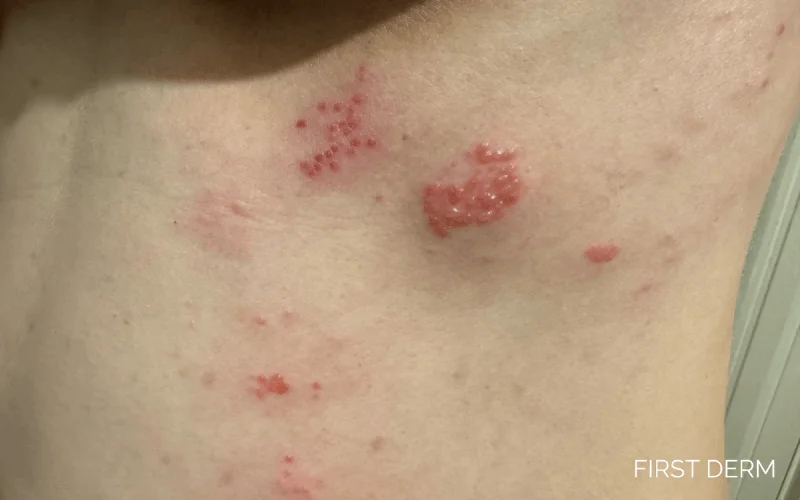
Shingles (herpes zoster) is caused by the reactivation of the chickenpox virus (varicella-zoster virus), which remains dormant in the body after an earlier chickenpox infection. You can only get shingles if you’ve had chickenpox in the past.
Herpes Zoster (Shingles) causing painful, red, fluid-filled blisters on the upper torso. The clusters of blisters are a classic symptom of the reactivation of the varicella-zoster virus
Both men and women of all ages can get shingles, but It is most common in people over 50 years old. For most people, the pain will disappear within one to three months. Older people with shingles sometimes experience very persistent pain that can be difficult to treat. Individuals with a weakened immune system may get a more serious form of the disease and can sometimes require hospitalization. After contracting herpes zoster, the immune system will prevent future outbreaks.
The virus spreads through direct contact. The virus is not spread from someone with shingles. However, it is possible to catch chickenpox from someone with shingles if you’ve never had chickenpox or the chickenpox vaccine.
Symptoms
Shingles usually begins with pain, tingling, or itching in one area of the body, followed by a painful red rash that appears on one side only. The rash commonly forms a stripe or band-like pattern across the chest, back, or face.
The first symptom of shingles is usually an intense pain in one area of the skin. They often also tingle, itch, and ache. The rash occurs in a stripe pattern, which distinguishes it from hives.
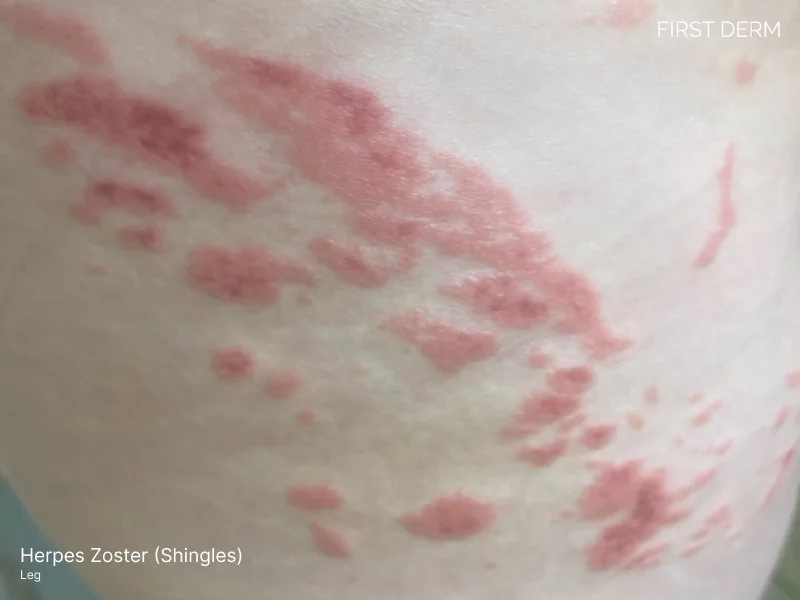
Red rash caused by Herpes Zoster (Shingles) on the right leg, showing a classic presentation of painful, inflamed skin distributed along a nerve pathway.
Typically shingles appear on the upper body, but it can occur anywhere on the body. Headache and fever are also other common symptoms. After one to three days, the rash in the affected areas will turn into blisters. In the beginning, the blisters are clear, but they gradually darken.
The shingles rash typically begins to heal within 7 to 10 days and clears up within 2 to 4 weeks. The pain in the affected area usually disappears within a few months. However, for older people, there is a fairly high risk that the pain will remain for a very long time.
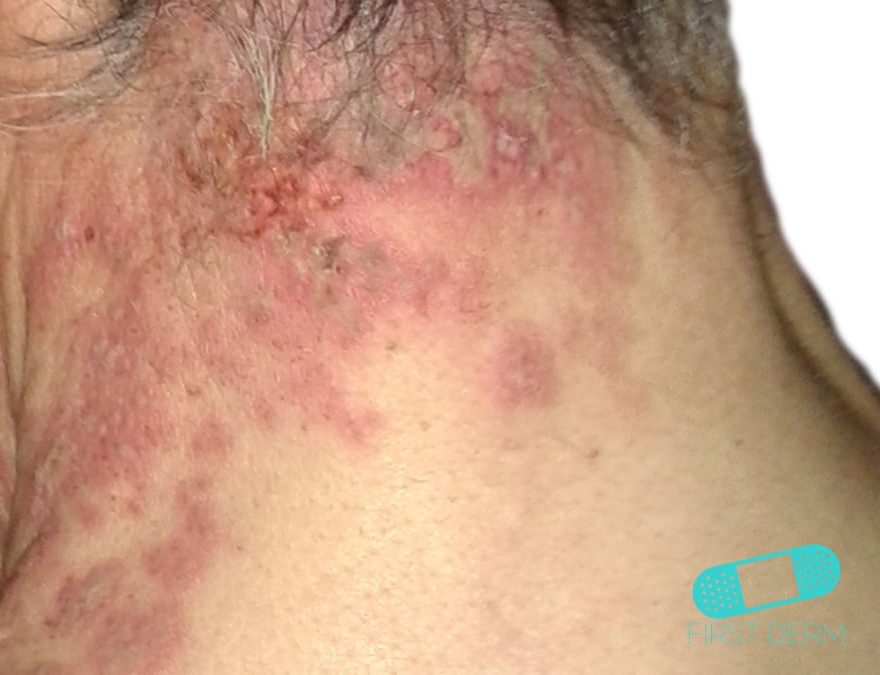
Red rash on the neck caused by Herpes Zoster (Shingles), featuring visible dark patches and open blisters, showing typical progression as the rash advances.
Shingles during pregnancy is uncommon and usually mild. If a pregnant woman develops shingles, there is typically no risk to the baby. However, she should contact a GP for assessment.
What can I do?
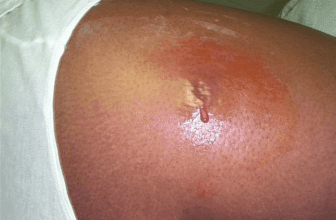
Sometimes you can get a bacterial infection of the skin after wounds of the blisters.
Keep the rash clean and dry to prevent infection. Wear loose-fitting clothing and avoid irritants. Use a cool compress to relieve pain and avoid scratching.
Paracetamol is recommended to relieve pain. A pharmacist may also recommend topical treatments to help with itchiness or inflammation.
If the prescription drugs do not help, contact your GP to get appropriate treatment. You will be primarily treated the pain with painkillers or anti-inflammatory medications. In some cases, it may be necessary to use morphine preparations or nerve blocks.
Should I seek medical care?
It can be hard to determine if you have shingles without a diagnosis or medical examination. If you are older than 50 years or have a weakened immune system, you should promptly consult a physician if you suspect shingles. Regardless of age, you should contact your doctor if you have severe pain, rash on the face (near your eyes) or feel very sick.
See a GP or contact NHS 111 if you think you may have shingles, especially if the rash is on your face or you’re immunocompromised. Antiviral treatment is most effective within 72 hours of the rash appearing.
If you have a rash on the face, especially the eyelids or nose tip, make sure to have an ophthalmologist check the eye in an ophthalmic microscope to see if the cornea is damaged.
Shingles and Eye Involvement (Ocular Shingles)
If shingles affects the area around the eyes, it’s called herpes zoster ophthalmicus and can lead to serious complications. Early treatment with antiviral tablets is essential to reduce the risk of lasting eye damage. You may be referred to an ophthalmologist.
An ophthalmologist (eye specialist) may need to examine your eye to ensure there is no damage to the deeper structures, such as the cornea or retina. This examination can prevent long-term vision problems or even blindness.
Symptoms to Watch For:
If shingles involves the eye area, you may notice:
- Red, painful rash on the forehead, scalp, or around the eyes.
- Eye discomfort, redness, sensitivity to light, or blurred vision.
- Eyelid swelling or discharge.
Involvement of the eye can cause complications, such as keratitis (inflammation of the cornea) or other forms of eye inflammation that may lead to vision impairment. For this reason, it’s crucial to seek medical attention if the shingles rash appears near your eye.
Treatment
The rash heals within 2-4 weeks, but nerve pain can remain for months. The rash pain can be reduced with topical creams. The shingles vaccine (e.g. Shingrix) is available on the NHS for people over 65 and those over 50 with weakened immune systems. It reduces the risk of shingles and post-herpetic neuralgia.
Treatment with anti-virus lasts for a week and is taken in tablet form. Most people tolerate the medication without problems. However, despite the short duration of treatment, there can be a few side effects for some people. The most common side effects include headache, abdominal pain, vomiting and diarrhea. The treatment may also provide more serious symptoms such as confusion, hallucinations and affected alertness. The risk of these side effects increases with weaker kidney function, which is most common among older people. The risk of serious side effects may also increase if you do not drink enough fluids.
Prevention with Vaccination
The best way to prevent shingles and its complications is through the shingles vaccine (Shingrix). Shingrix is over 90% effective at preventing shingles and postherpetic neuralgia (PHN) in adults 50 years and older with healthy immune systems. By preventing shingles, the vaccine also reduces the risk of serious complications, such as PHN—a form of long-term nerve pain that can be debilitating.
Shingrix is recommended by the NHS for adults aged 65 and over, or those aged 50+ with weakened immune systems. It is given in two doses and offers strong protection against shingles and related nerve pain. Although there is no specific claim that Shingrix prevents ocular shingles, reducing the risk of shingles overall can help prevent severe complications, including those that could affect the eye.